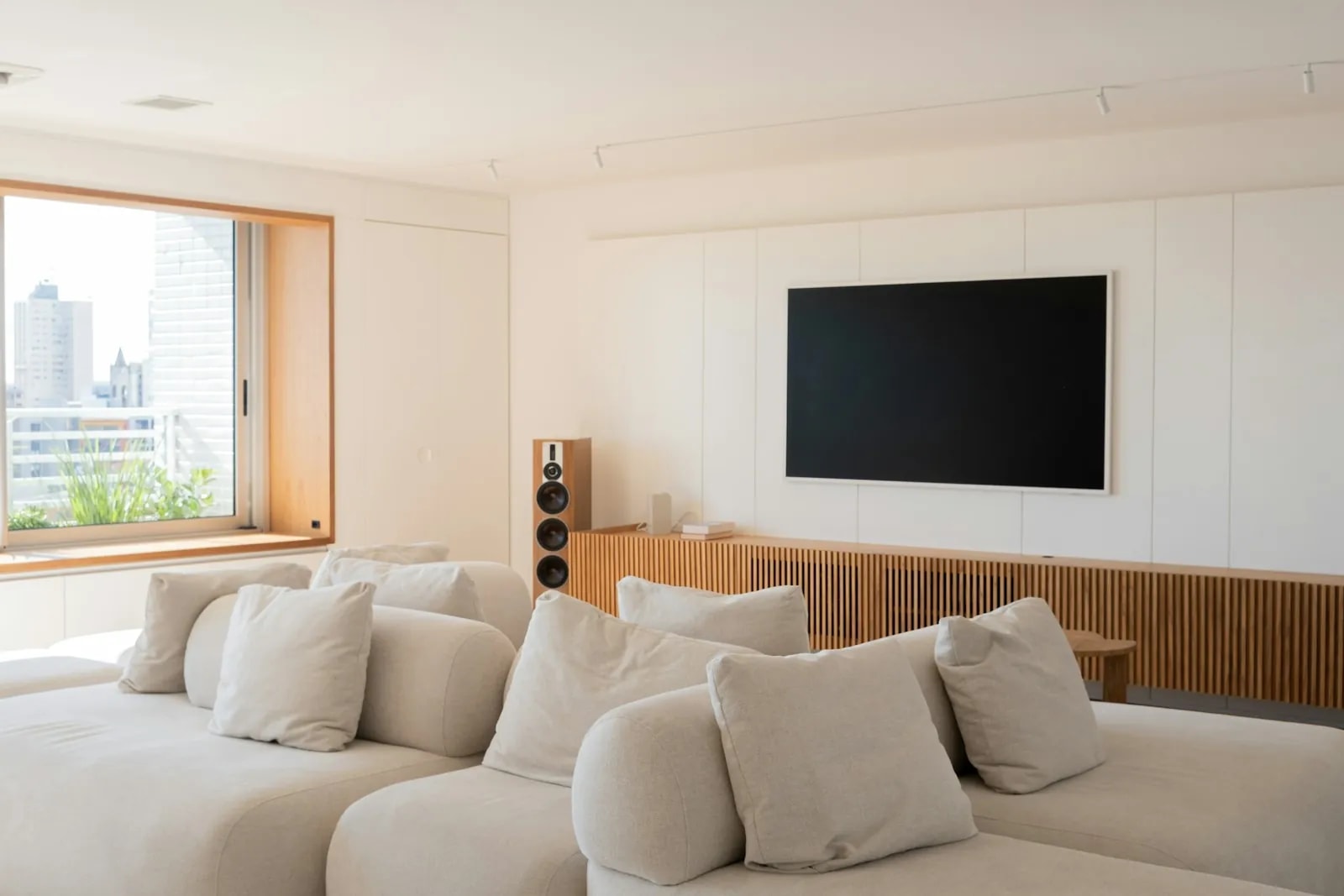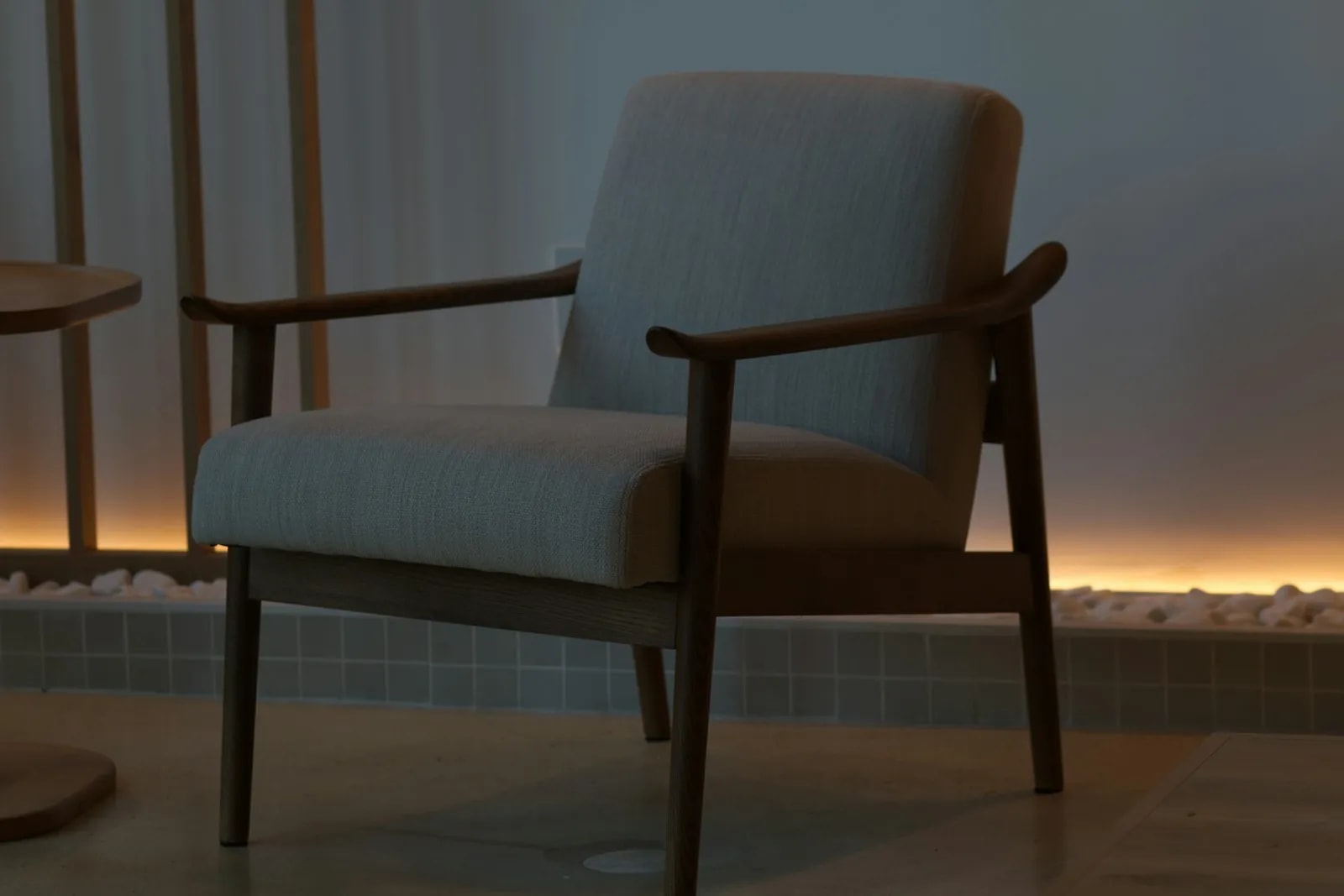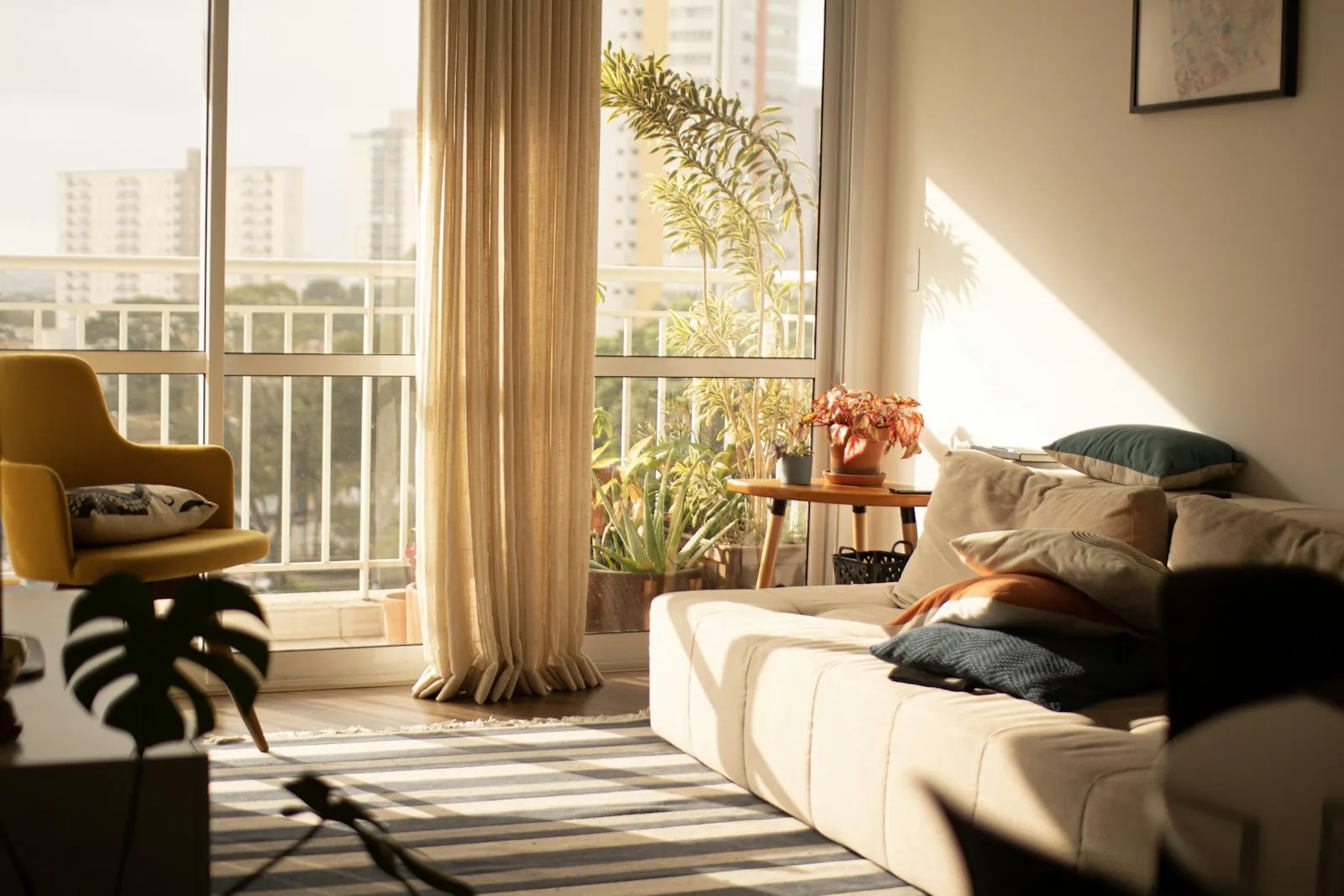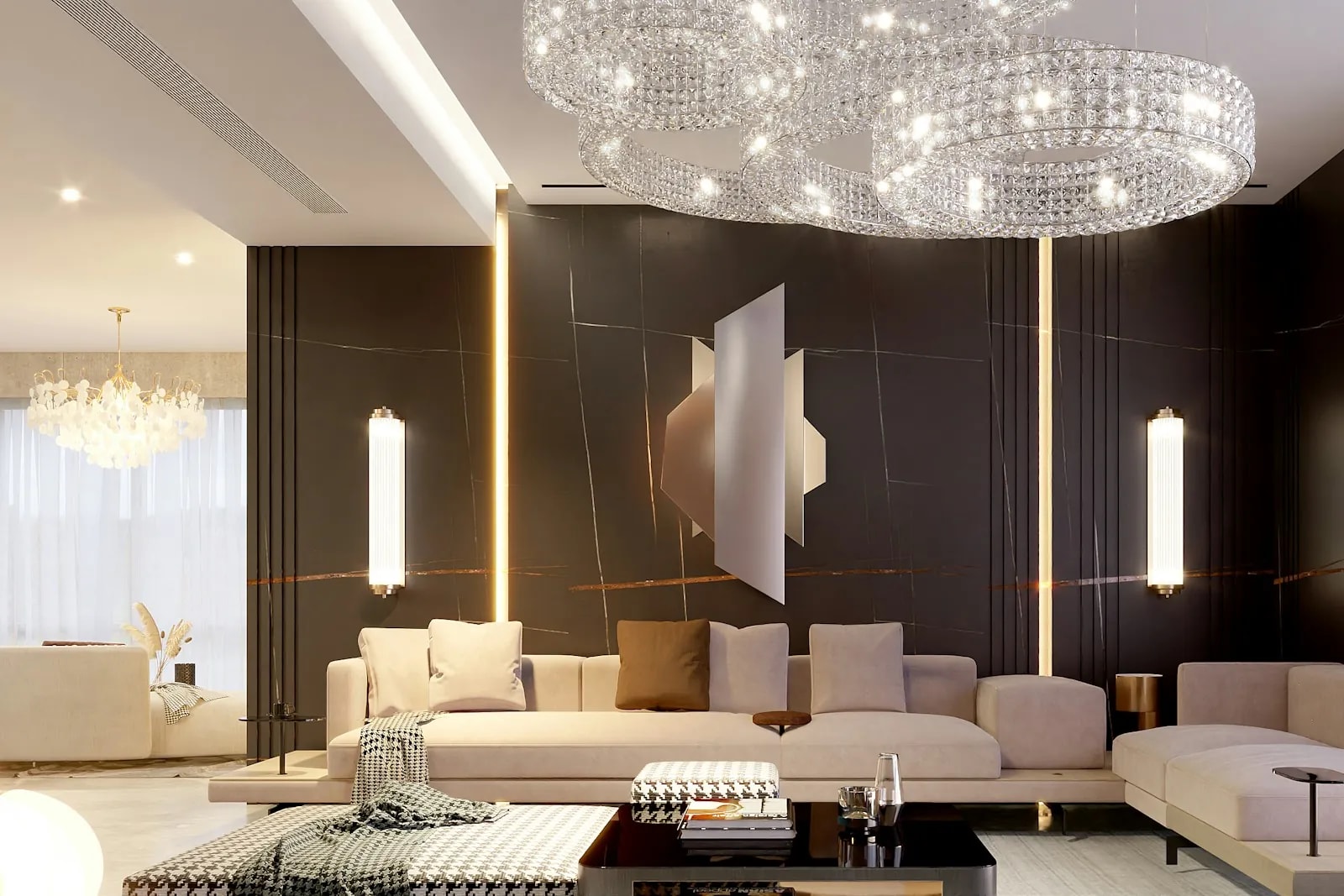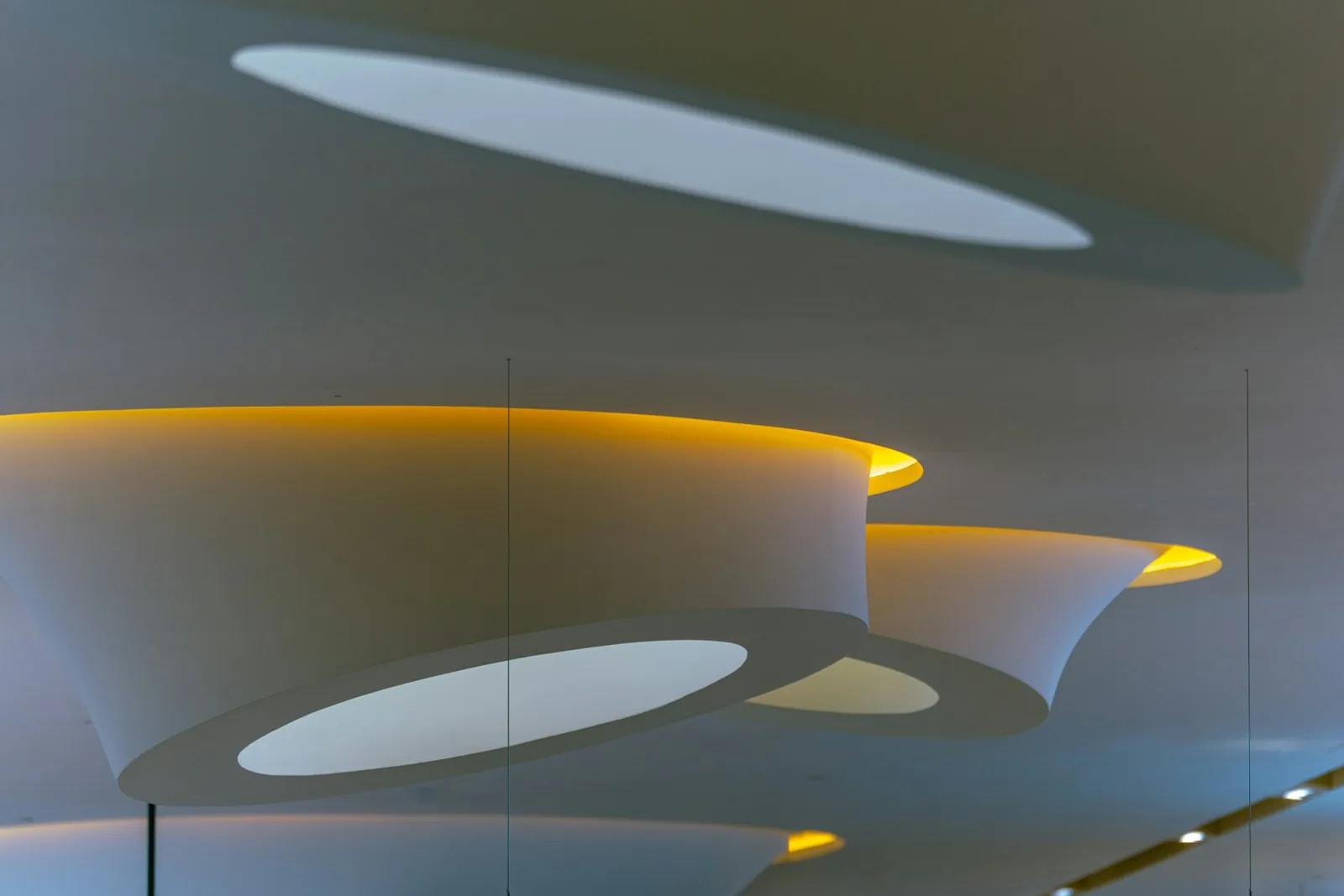
Dubai gets roughly 3,500 to 3,900 hours of sunshine a year, and May alone brings about 350 to 374 hours of it[6]. May is also when the doors close and the air conditioning goes on until September. The light is there. You are just not in it.
That gap is the honest reason tunable-white lighting has real work to do in a Dubai home. This guide covers what circadian lighting actually is, how it is wired and controlled, what it costs here, and, just as importantly, what it does not do. We design it into wellness and comfort builds and coordinate them through installation, so this is written from the project side, not from a brochure.
What is circadian lighting, really?
Circadian lighting is tunable-white lighting on an automated daily schedule. The colour of the light shifts through the day, warm in the morning and evening, cooler around midday, with brightness moving on a similar curve. A controller runs that curve. Nobody presses anything.
The distinction that matters: a colour-changing bulb is not circadian lighting. You can set a smart bulb to 2700K or 6500K from an app, and that is genuinely useful. But the value in a circadian system is the part that happens while you are at work, or asleep, or on holiday. Once a schedule needs a human to remember it, it stops being a system.
Two more terms get mixed up here, so worth separating once:
- Tunable white: the fixture stays inside the white range, from warm white to cool white. This is the correct term for a circadian-capable fitting.
- RGBW or colour-changing: the fixture can go blue, red or green. Fun for a majlis feature wall. Not the same thing.
- Scene lighting: instant ambience you select for an occasion, like Movie Night or an Iftar setting. It is a moment. A circadian schedule is a background that runs all year.
Scenes and circadian schedules live together fine. Scenes sit on top and take over for an hour. The schedule picks up again after. If you want the broader scene-design side at the top of the market, our luxury smart home guide covers it properly.
Why Dubai's sunniest season is its most indoor season
Dubai's daylight problem is not a shortage of sun. It is a shortage of time spent in it. The sunniest stretch of the year, May through July, averages around 12 hours of sunshine a day[6]. It is also the stretch when daytime highs sit at 40C to 45C and night humidity runs 70 to 90 percent.
So the calendar and the thermometer pull in opposite directions. From May to September, life in Dubai runs through air-conditioned rooms: the apartment, the car, the office, the mall, the gym. Daylight length itself barely changes here compared with northern Europe, moving from about 10 hours 35 minutes in December to 13 hours 39 minutes in June[6]. What changes is your access to it.
May is Dubai's sunniest month at roughly 350 to 374 hours of sunshine. It is also the month most households stop going outside.
Real talk: we are not going to put a number on how much daylight a Dubai resident misses in summer. Nobody has measured it, and inventing that figure would be easy and dishonest. The pattern is the point, and the pattern is clear enough without a made-up percentage.
This lands hardest on people who moved here from somewhere with long summer evenings outdoors. The first Dubai summer is the adjustment. Our guide for smart homes for Dubai expats deals with the wider relocation side.
Does light affect the body clock?
Yes, and this part is settled science rather than sales copy. The NIH National Institute of General Medical Sciences describes light and dark as the biggest influence on circadian rhythms[1]. A cluster of cells in the brain called the suprachiasmatic nucleus, or SCN, acts as the body's master clock.
The SCN takes its cue from light landing on the eye. Specialised cells in the retina, called ipRGCs, respond to light separately from the cells you see with. They report to the SCN, and the SCN controls the timing of melatonin, a hormone the body releases on a light-sensitive schedule[1]. In the evening, with less light, the brain is told to make more of it.
A 2019 review in the journal Somnologie describes light as the key zeitgeber, the German term lighting researchers use for a time cue, in the circadian system[3]. The same review is candid that the precise mechanisms are still not fully known. That honesty is the right tone for this whole subject.
Read that as physiology, not as a product claim. Light timing is linked to the body clock in research. What a light fitting in your villa does for you personally is a separate question, and one no installer can answer.
Is there real scientific consensus?
On the mechanism, yes. In 2023, the peer-reviewed journal Frontiers in Photonics published a structured consensus survey of 248 circadian-rhythm researchers, who between them had authored 2,697 peer-reviewed papers[2]. It is the strongest source in this article, so here is what it actually found.
- 95.1 percent agreed that strong circadian rhythms matter for health in general.
- 86.4 percent agreed that regular daylight exposure can enhance sleep at night.
- 82.5 percent agreed evening light should carry as little blue content as is practically possible.
Those are researcher positions about light and the body, not about any product on a shelf. The same paper gives the market number that keeps the topic grounded: under 0.5 percent of lighting sold worldwide has any circadian-supportive design, roughly USD 0.26 billion out of a USD 130 billion market[2].
Quick math on that: 99.5 percent of the lights being sold as smart, warm, dimmable or app-controlled are not doing this at all. If a Dubai supplier is quoting you circadian lighting, ask which fixtures are tunable white, and ask what is running the schedule. Those two answers separate a real system from a relabelled bulb.
What circadian lighting cannot do
This is the shortest section in the article and the one we would most like you to read. Circadian lighting is lighting design, not medicine. It is not a medical device, a treatment, or a therapy, and Dubai Smart Home does not present it as one.
Specifically, it does not:
- Treat or prevent any condition. Not insomnia, not seasonal patterns of low mood, not jet lag, not anything else with a name.
- Guarantee you a result. No installer can promise what a light schedule will do for one person in one bedroom.
- Replace daylight. If you can get outside at 7am in November in Dubai, do that. It costs nothing.
- Replace a doctor. If your sleep is a real problem, see a medical professional. A light fitting is not the answer to that question.
You will read vendor copy claiming lighting enhances melatonin production or improves sleep quality. We will not write that sentence, because it is a promise nobody can keep. What we will say is narrower and true: research links light exposure and its timing to the body clock[1][2], and a tunable-white system lets you design your indoor light around the time of day instead of leaving it at one fixed colour from 6am to midnight.
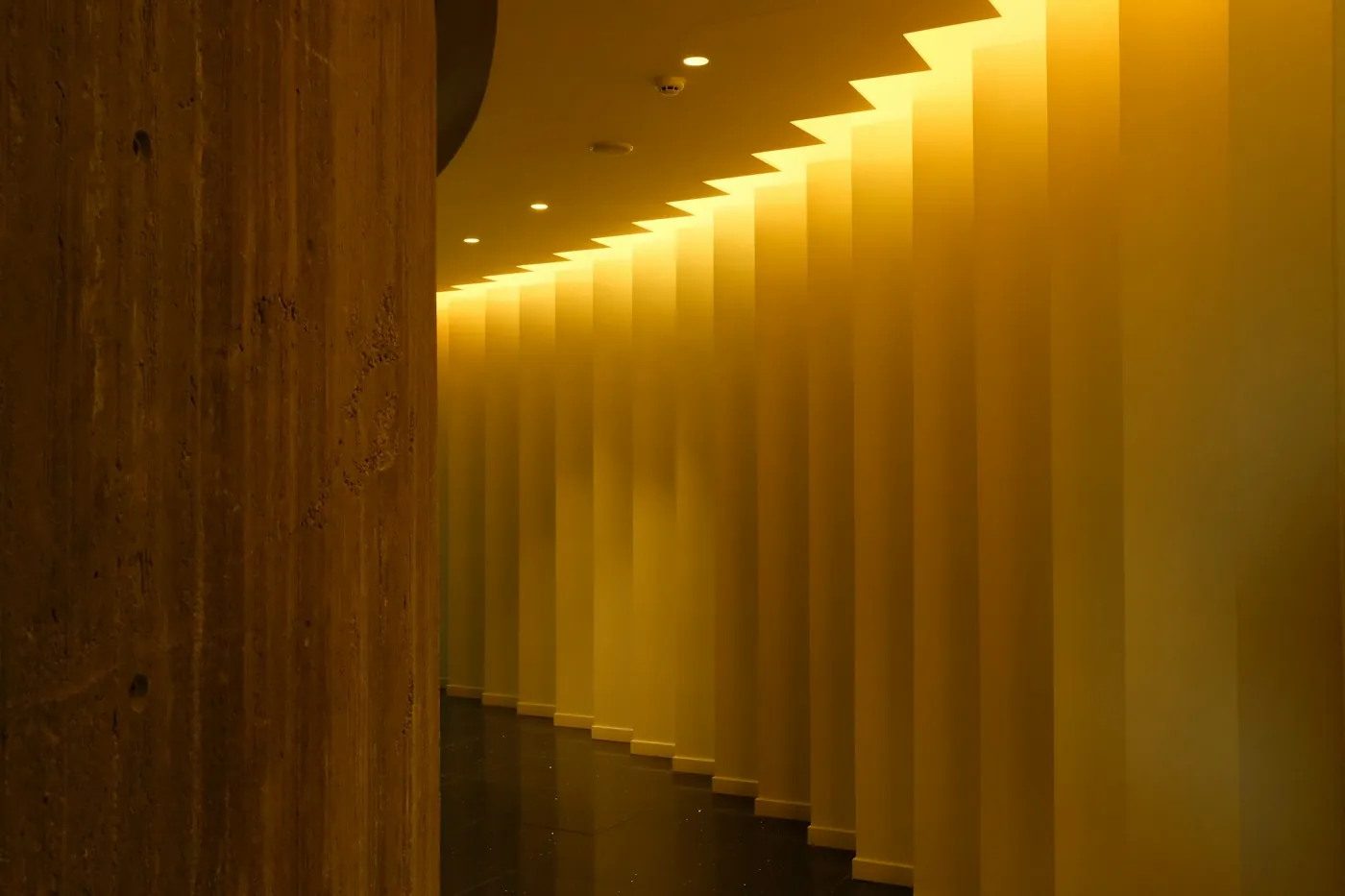
How villa shading and tinted glass change the picture
A well-built Dubai villa is designed to keep sunlight out. That is the correct design, and it is also the reason interior daylight drops. Under Al Sa'fat, Dubai Municipality's green building system, external glazing at the Silver tier must meet a maximum solar heat gain coefficient of 0.25, with U-values typically between 1.9 and 2.1 W/m2K[7].
Solar heat gain coefficient, or SHGC, is simply the share of the sun's heat the glass lets through. A 0.25 rating means the glazing blocks most of it. Add the deep overhangs, screens and recessed windows that a Dubai villa in Arabian Ranches or Dubai Hills Estate uses to shade its west face, and the room behind the glass is getting a fraction of the light that hits the wall outside.
Common mistake: treating this as a design flaw to fix. It is not. That glazing package is what keeps your DEWA bill survivable in July, and cooling is the biggest line on a Dubai summer bill. You would not swap it for clear glass. You would just be honest that the artificial lighting inside now has a bigger job than it would in Manchester or Munich.
That is the mechanical case for tunable white in a Dubai villa. Not a wellness fashion imported from a US sleep blog. A specific, describable consequence of building correctly for 45C.
Do Dubai apartments get enough daylight?
Often less than the window size suggests. Tower apartments in Dubai Marina, Business Bay, JLT and Downtown Dubai commonly share three features that work against interior daylight.
- Single aspect: windows on one side only, so light enters from one direction and stops.
- Deep floor plates: the flat runs back a long way from the glass, leaving second bedrooms, kitchens and corridors far from any window.
- Tinted or reflective glazing: the same heat-control logic as the villa case, applied to a whole tower facade.
So a Marina apartment can have floor-to-ceiling glass in the living room and a windowless kitchen behind it. That is a different daylight-loss mechanism from the villa: orientation and depth rather than shading. It is also why tunable white is not only a large-villa feature. A tunable-white schedule in a single-aspect two-bedroom does real work in the rooms the glass never reaches.
How Ramadan changes the case for a schedule
For one month a year, a fixed sunrise-to-sunset lighting curve is the wrong curve for a Dubai household. During Ramadan the day runs differently: up before dawn for suhoor, fasting through the day, breaking the fast at sunset for iftar, then later evenings for prayers and family visits.
Because the Islamic calendar is lunar, Ramadan moves about 10 to 11 days earlier each year, so it lands in a different season every few years. The next Ramadan is expected in February 2027, subject to moon sighting. A lighting system that only knows one annual pattern cannot follow that.
What a schedule-based system can do: hold a separate Ramadan curve. Warm, low light in the kitchen and dining area before Fajr instead of a cold 5000K wake-up. A brighter, warmer setting at iftar when the majlis fills. A later wind-down across the whole home. Then the normal curve returns after Eid, without anyone rebuilding it.
To be clear about what we are and are not claiming: that is the lighting matching your household's actual routine for the month. Nothing more. We are not saying it corrects, manages or offsets anything about how Ramadan changes your sleep. It simply stops your lights from arguing with your calendar.
The same mechanism covers a night-shift household member, a member of the family who works to European hours, or the week after a long-haul flight. One curve for the house, plus exceptions where a room needs its own.
What a tunable-white fixture does, hour by hour
A tunable-white fixture holds two dials at once: colour temperature and brightness. Colour temperature is measured in kelvin, or K. Lower numbers look warmer and more orange. Higher numbers look cooler and bluer. Most tunable-white fittings cover 2700K to 6500K, and premium architectural lines such as Lutron Ketra use several LED channels per fixture to hold colour accuracy across that range[10].
A daily schedule moves both dials together. Here is the shape lighting designers usually specify.
| Time of day | Typical CCT target | Relative brightness | What the schedule is doing |
|---|---|---|---|
| Early morning, waking hours | 2700K to 3000K, rising | Low, climbing | Starting warm and dim so the house is not at full cool light before anyone is up |
| Mid-morning to midday | 4000K to 5000K | High | Matching the cooler, brighter character of daylight outside |
| Early to mid afternoon | 5000K to 6500K | Peak | The coolest point of the day, useful in deep interior rooms with no window |
| Late afternoon, early evening | 3500K to 4000K | Tapering | Coming back down as the sun drops, so the house does not stay at office light |
| Evening | 2700K to 3000K | Low | Warm light for the majlis, dining and living areas |
| Night, pre-sleep | 2200K to 2700K, or off | Minimal | Very warm, very dim path and bedroom light with as little blue content as practical |
That is a design schedule, not a dosage table. It follows the general daylight-colour pattern lighting designers work to, and the evening end reflects the 82.5 percent researcher agreement that evening light should carry as little blue content as is practical[2].
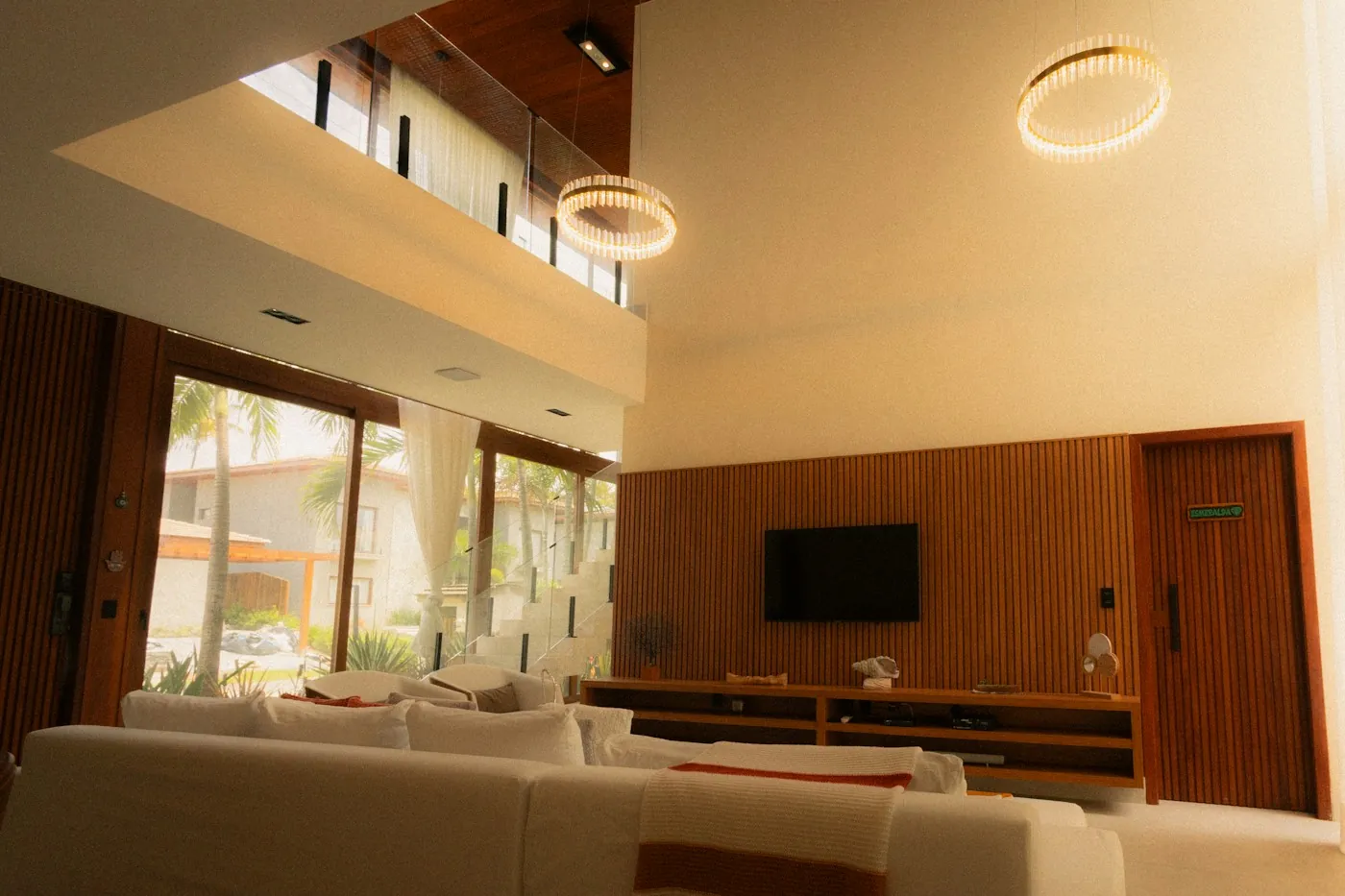
There is a measurement behind all this too. The WELL Building Standard uses equivalent melanopic lux, or EML, which weights light to the eye's non-visual receptors rather than to what you see. Its living-environment guidance points at roughly 200 EML or more during the day, measured on the vertical plane at 1.2m facing forward, and not more than 50 EML at night[4]. The Illuminating Engineering Society covers the same ground for engineers in RP-46-23, summarised as brighter days and darker nights[5].
Those are certification design targets used by architects. They are not medical prescriptions, and we would not present them as such.
DALI, 0-10V, Lutron or KNX: what runs it
Tunable white needs a control path that can send two values to a fixture, not one. That single requirement rules out most standard dimming wiring, and it is why circadian lighting almost always arrives as part of a proper smart lighting control system rather than as a box of bulbs.
The workhorse standard is DALI Device Type 8. DALI is a digital addressable lighting protocol, and DT8 is its colour-control device type, defined under IEC 62386-209. It lets one address carry both brightness and colour temperature for a fitting[8]. Most professional tunable-white installs in Dubai villas sit on DT8 underneath, whatever badge is on the wall keypad.
| System | How it handles tunable white | Works without internet? | Best for | Dubai note |
|---|---|---|---|---|
| DALI DT8 | Native. One address carries brightness and colour temperature together, per fixture | Yes, the bus runs locally | New builds and full rewires where every fitting is addressed | The layer most villa systems here are actually built on, even under a Lutron or KNX front end |
| 0-10V | Poorly. Analogue dimming designed for one value, so tunable white needs a second dedicated channel per fitting | Yes, but it is not addressable | Simple dimming retrofits, not colour control | Common in older Dubai fit-outs. Usually the reason a quote for tunable white comes back high |
| Lutron | Native tunable-white product lines, including Ketra fixtures with multi-channel LEDs, on a Lutron backbone | Yes, schedules and keypads run locally | Villas where lighting quality is the priority and budget follows | The tier we specify for wellness rooms in Palm Jumeirah and Emirates Hills projects |
| KNX | Coordinates the whole home and typically drives the tunable-white layer through a KNX to DALI gateway | Yes, KNX is wired and runs offline | Villas and new builds wanting lighting, climate and shading on one wired backbone | 30-year-plus lifespan, which matches how long a Dubai villa keeps its wiring |
KNX deserves its plain-English line, because it comes up in every villa conversation. KNX is a wired control standard that keeps working when the internet drops, and a KNX to DALI gateway is what carries the tunable-white function into it[9]. If you are weighing the platforms against each other, our KNX vs Control4 vs Home Assistant comparison goes through it properly.
Not sure which of these your villa already has behind the wall? Send us the drawings on WhatsApp and we will tell you what the tunable-white layer would need.
Why a system beats bulbs you adjust yourself
Because the whole point is that it runs without you. A house full of individually app-scheduled bulbs looks like a circadian system on day one and stops behaving like one by month three.
Here is what goes wrong, from installs we have been called in to fix:
- Cloud dependency: a bulb whose schedule lives on a manufacturer's server stops following it when your internet drops or the brand changes its app. A wired DALI, KNX or Lutron schedule keeps running locally.
- Per-device drift: twenty bulbs from three brands do not hold the same colour at the same setting. The living room reads warmer than the corridor at 8pm and it looks wrong.
- The app pile-up: the single most common complaint we hear in Dubai homes is needing a different app for every brand. Circadian scheduling across five apps is not a system, it is homework.
- Nobody maintains it: one person sets it up, the family overrides it, and six weeks later everything is stuck on whatever the last override was.
For a rented apartment, tunable-white bulbs on one hub are a fair, cheap answer and we say so. For anything you own, put the schedule on a controller. Our guide to the best smart lighting in Dubai covers the bulb, switch and system choice in full, so we will not repeat it here.
Pre-wire or retrofit: which is cheaper?
Pre-wire, by a long way. Pre-wiring a lighting backbone during construction costs 60 to 70 percent less than retrofitting the same capability into a finished home[11]. Tunable white is one of the systems that gains most from this, because every fitting needs a control path, not just power.
If your villa is already built, you still have options, in rough order of cost:
- Tunable-white LED retrofit lamps or modules in existing fittings, where the fitting takes them.
- Wireless tunable-white fixtures on a single hub, keeping one scheduler rather than five apps.
- A partial rewire of the rooms that matter most, usually the master bedroom and the majlis, instead of the whole villa.
If you are still at drawings stage on a Tilal Al Ghaf or DAMAC Hills handover, read our smart home pre-wiring guide before the electrical first fix goes in. That is the cheapest hour you will spend on this, and you can book a site visit while the walls are still open.
Where biophilic design fits in
Biophilic design is the idea of connecting an interior back to natural elements: daylight, views, planting, natural materials, water and texture. It is an architectural approach, and it is well established in Dubai hospitality and increasingly in villa interiors.
Lighting is the half of that strategy which covers the hours daylight cannot. Planting and stone give you the material side. Glazing and orientation give you daylight while the sun is up and the shading allows it. A tunable-white schedule handles the deep interior rooms and the evening, which in a Dubai summer is a large share of waking hours.
Kept that plainly, biophilic design is a useful frame. Stretched further, it turns into the kind of vague wellness copy this article is trying to avoid. Natural materials, real daylight where you can get it, and light that changes through the day. That is the whole idea.
Pairing circadian light with motorized shading
Shading and lighting work the same daily curve from opposite ends. Motorized curtains and blinds open during daylight hours so you use the sun you already have, then close against direct west sun in the afternoon to hold the heat out. That is daylight harvesting, and it also cuts cooling load by roughly 15 to 20 percent[11].
The tunable-white schedule then carries the evening and the rooms shading cannot help. On a shared KNX or Lutron backbone, both sit on the same timeline, so the blinds opening and the lights easing off happen as one event rather than two systems disagreeing. Somfy and Lutron shading both integrate this way.
For product-level detail on shading, our smart curtains and blinds guide is the deeper read.
What circadian lighting costs in Dubai
Tunable white is rarely a line item on its own. It arrives inside a lighting package, so the cost depends on how much of the home you are putting on a controller and which fixture tier you specify. These are the typical ranges published on our live service pages.
| Scope | AED range | What it includes | Where it suits |
|---|---|---|---|
| Tunable white inside a smart lighting and climate package | From 4,500 | Tunable-white switches and drivers added to an apartment lighting and zone AC setup | Apartments in Dubai Marina, JLT, Business Bay |
| Villa retrofit, per-room lighting control | 15,000 to 40,000 | Room-by-room lighting control with tunable-white capability in a finished villa | Arabian Ranches, The Springs, Jumeirah Park |
| Single-room wellness retune | 35,000 to 65,000 | One room rebuilt around circadian lighting plus air quality, calibrated at handover | A master bedroom or dedicated wellness room |
| Full villa lighting system, architectural tunable white | 40,000 to 350,000 | Whole-home wired lighting control with fixtures such as Lutron HomeWorks and Ketra | Palm Jumeirah, Emirates Hills, District One |
Those are indicative ranges from our live smart lighting and climate and wellness and comfort pages[11]. What moves the number is fixture count, new build against retrofit, and brand tier. A 40-fitting villa and a 200-fitting villa are not the same job, and no honest quote comes before someone counts the fittings.
From our projects: on the wellness-room tier we calibrate the tunable-white fittings against a colorimeter at handover, then come back at Day 30 to retune the schedule to the household's real wake and sleep times. The Day 30 visit matters more than the spec sheet. The first schedule is always a guess about how a family actually lives.
Our team has worked on 100+ smart home projects in Dubai, UAE since 2016, we are rated 4.9/5 by Dubai homeowners, and we coordinate every lighting job we design. If you want a straight answer on whether tunable white is worth it in your specific villa or apartment, book a consultation or message us on WhatsApp. Sales enquiries are answered within 2 hours.
If you are earlier than that and still mapping out the whole home, start with our complete smart home guide for Dubai. And if the person you are planning for is an older parent, the night-lighting angle in our smart homes for elderly residents guide is a narrower and more useful read than this one.