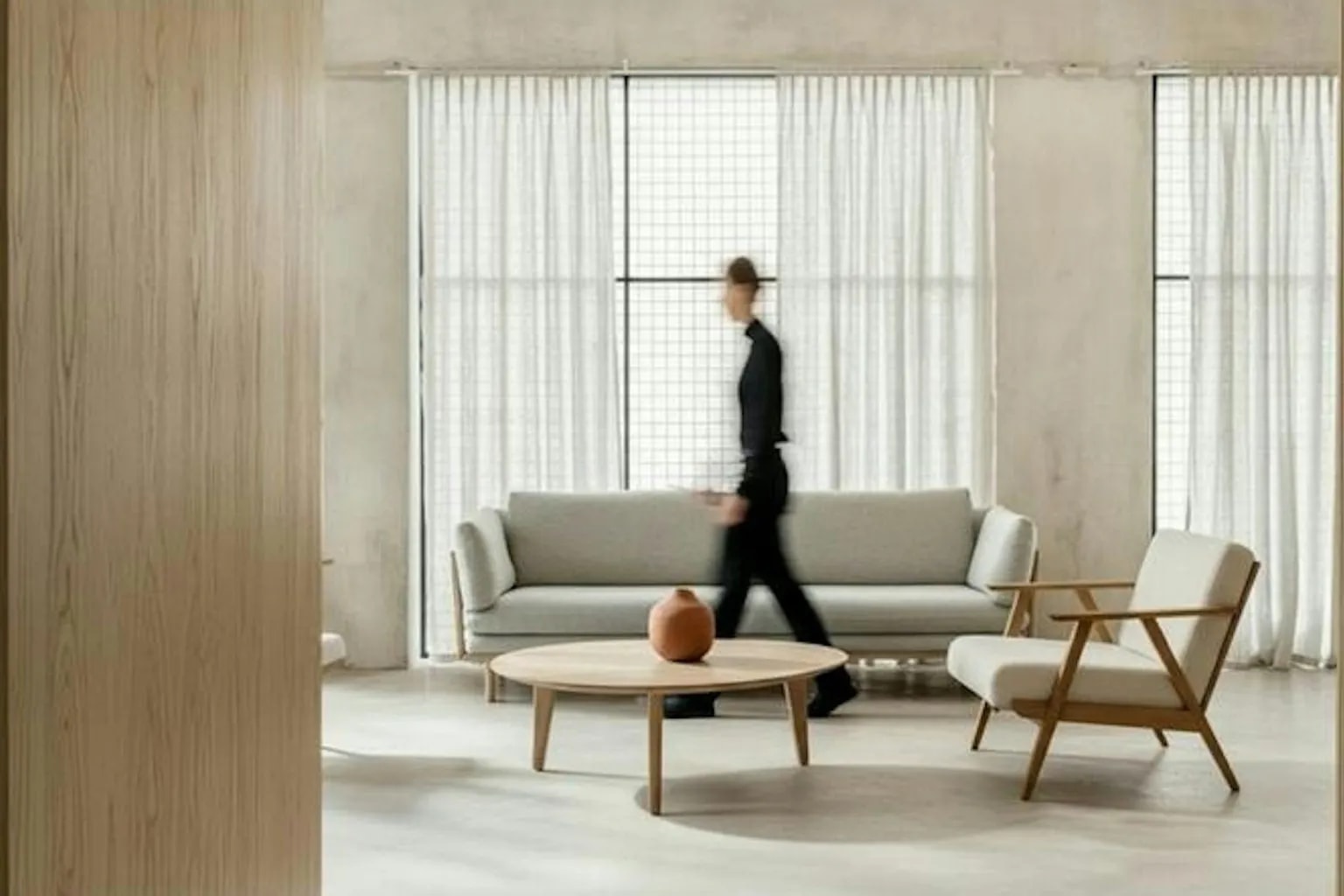
Smart curtains and blinds are the quietest energy upgrade in a Dubai home. The sun does most of the work of heating your rooms, and the glass lets it in. Motorized shading that closes before the afternoon peak keeps that heat out, so your AC runs less. That is the real reason to automate a curtain here, more than the convenience of a button.
We install and support motorized shading across Dubai, from clip-on retrofits in Marina apartments to full Somfy and Lutron rails in Dubai Hills villas, and we have done so since 2016. This guide is written from the install side. It gives you honest AED ranges, the specs that actually matter, and a clear split between what a renter should buy and what an owner should wire in. For the wider picture, see our complete smart home guide for Dubai.
Do motorized blinds actually save energy in Dubai?
Yes. Automated shading that closes before peak sun cuts cooling costs by roughly 15 to 20 percent[9]. On top of that, smart AC and lighting control save another 20 to 30 percent[9]. The saving does not come from owning a motor. It comes from the schedule behind it.
Here is the part most buyers miss. A motorized curtain you open and close by app saves almost nothing extra over a normal curtain. The saving lives in the automation: shades that close on their own at 10am on a west-facing room, every day, without anyone remembering. That is where the 15 to 20 percent shows up.
Quick take: shading is not a gadget, it is a cooling lever. DEWA's own conservation guidance recommends curtains, shades, awnings, and reflective materials to block heat through glass[1]. Automation just makes sure the lever gets pulled at the right time, every day.
Quick math: a villa paying AED 4,000 a month to DEWA in summer can save AED 800 to 1,200 a month with combined smart AC, lighting, and shading control[9]. Across the warm months, that is real money against a motor that often costs a few hundred dirhams per apartment window.
The biggest win comes from pairing shading with your AC. Close the west-facing shades and nudge the AC setpoint up at the same trigger time, and the two work together instead of fighting each other. We cover that pairing in detail in our guide to automating your AC in Dubai, and the full bill math in reducing your DEWA bill with a smart home.
How shading beats the Dubai heat
Windows are the leak. In a UAE home, glass accounts for roughly 20 to 40 percent of the total cooling load, meaning up to 40 percent of the work your AC does is fighting heat that came in through the windows[6]. Block that heat at the glass and the AC has far less to do.
The physics are simple in a Dubai summer. Single-pane glass lets roughly 85 to 87 percent of the sun's heat straight through. Even good double glazing still passes 40 to 60 percent of it[7]. A west-facing window bakes all afternoon, which is exactly when the outdoor temperature is highest and your AC is already working hardest.
Shading fabric cuts that heat before it enters the room. A quality coated blackout curtain reduces heat gain through the glass by about 24 to 33 percent, with a white or silver acrylic backing at the top of that range[7]. The backing colour matters more than the front: a light backing reflects the sun back out, while a dark backing soaks it up and re-radiates the heat into your room.
Keeping shades closed during peak sun, roughly 10am to 4pm on south- and west-facing windows, is the single most effective habit. Automation removes the need to remember it.
The Dubai catch: do not confuse two different numbers. "Heat blocked at the glass" (up to about a third for good coated fabric) is a fabric spec. "Percent off your DEWA bill" (15 to 20 percent) is the cooling saving after that ripples through to AC run-time[9]. They are not the same figure, and any site that quotes one as the other is misleading you.
Orientation decides priority. West- and south-facing glass takes the worst of it, so those rooms earn a motor and a schedule first. A shaded, north-facing bedroom gains far less. In a villa with windows on every side, per-room control captures savings that a single blanket schedule cannot.
The types of smart shading, and which suits you
There are four practical paths: a clip-on motor on your existing curtain, a motorized roller blind, a soft covering like a Roman or zebra blind, or a full pro-installed rail. The right one depends on whether you rent or own, and how heavy your fabric is.
Curtains open and close all the way, and give the best heat and sound insulation once they have a blackout or thermal lining, but they trap dust and need dry cleaning. Roller blinds stop at any height, wipe clean easily, and hold up better in Dubai's dust, which makes them the default for kitchens, bathrooms, and glass-heavy towers. Zebra or day-night blinds give the finest glare control for a home office. Roman shades give a soft fabric look and retrofit through a beaded-chain motor. Sheers on their own have near-zero thermal value, so in Marina and Downtown towers they get layered in front of a blackout or solar-screen layer, never used alone for heat.
| Type | Best for | Retrofit or pro | Power | Approx AED per window |
|---|---|---|---|---|
| Clip-on curtain motor | Renters, apartments, existing rod or rail | Retrofit | Battery, optional solar | 400 to 700 (device plus basic fit) |
| Motorized roller blind | Kitchens, offices, glass-heavy towers | Retrofit or pro | Battery or wired | 700 to 1,500 |
| Roman or zebra blind (motorized) | Bedrooms, home offices, soft look | Retrofit or pro | Battery or wired | 700 to 1,500 |
| Motorized curtain rail (pro) | Villas, formal rooms, heavy drapery | Pro | Wired or battery | 1,000 to 4,000+ |
These are point-in-time ranges gathered from UAE listings and installer quotes, and they move with fabric choice and track length. Treat them as a guide, not a fixed price. Our smart home buyers guide for Dubai covers how to budget the wider system around them.
Retrofit clip-on motors for renters and apartments
A clip-on motor is the answer for a rented apartment. It clamps onto the rod, rail, or beaded chain you already have, drives the existing curtain back and forth, and comes off in seconds when you move. No drilling, no rail swap, nothing touched on the wall.
Best for renters: these motors leave no mark and move with you to the next place. A quick heads-up to your landlord is courteous, but you are not altering anything, so it rarely needs permission. The same no-drill logic we use for smart locks and sensors applies here, covered in our renter smart home guide for Dubai apartments.
- SwitchBot Curtain 3: clamps to a round rod (10 to 40mm) or a U-rail and pushes up to 15 to 16kg of fabric, roughly double the older model. Its quiet mode is fine for a bedroom, the battery lasts about 8 months per charge, and a small solar panel accessory keeps it topped up for good[4]. It works with Alexa, Google Home, and Apple Home through a SwitchBot hub.
- Aqara Curtain Driver E1: a Zigbee 3.0 motor that needs a small Aqara hub, then works with Apple Home, Alexa, and Google Assistant[3]. A good pick if you already run other Aqara sensors.
- Aqara Roller Shade Driver E1: clamps onto an existing roller-tube (37 to 38mm), charges over USB-C, and rates for operation up to 55C, which covers a hot balcony-facing window in Dubai[3].
- RYSE SmartShade: clips onto a beaded roller-shade or Roman-shade chain and lifts up to about 4.5kg, so it suits lighter apartment shades, not heavy drapery. It is US-listed, so confirm current UAE pricing before you buy rather than assuming an AED figure.
- Zemismart: the budget, Matter-first entry point, with battery and optional solar versions. UAE retail pricing is not consistently listed, so check current UAE pricing rather than trusting a global number.
Common mistake: buying a light clip-on for a heavy lined curtain. These motors are rated for apartment-weight fabric (roughly 10 to 16kg). A long, lined villa curtain will stall one. Match the motor to the fabric weight, which we cover under mistakes below.
Pro motorized rails for villas
A villa with heavy lined or blackout drapery needs a proper motorized rail, not a clip-on. The motor replaces or drives the track itself, is usually wired, and is sized to carry real weight across a long run without stalling.
Best for villas: Somfy and Lutron are the two names we install[9]. Somfy's Glydea Ultra handles up to 50kg of fabric and carries a 5-year warranty; its mid-range Irismo handles up to 35kg[2]. Both come in RTS radio versions, with newer Zigbee models alongside, and the TaHoma hub groups the motors into scenes and links them to Alexa, Google Home, and Apple Home[2].
Lutron Serena is the premium choice, and it makes the most sense if your villa lighting already runs on Lutron. Then shades and lights share one keypad and one scene, instead of two apps. Dooya is the OEM tubular motor behind many generic Dubai blind quotes, belt-driven and rated up to 75kg, a budget path without a flagship name. Coulisse supplies motorized tracks that get bundled with a tubular motor and fabric into a single installer quote.
This is also the tier where torque-limiting sensors matter. A better motor detects resistance and slows or stops on its own, protecting both the motor and the fabric. Ask for that spec on any villa-scale order. Owners planning a wider upgrade should read our villa owners smart home roadmap, which sequences shading alongside lighting, climate, and security.
Want a rail sized to your own curtains? Book a free site visit and quote →
Power options: battery, solar, or wired
There are three ways to power a motor: a rechargeable battery, a battery topped up by a small solar panel, or a wired low-voltage circuit. Each fits a different home.
Battery is the simplest for a renter. A retrofit motor runs several months per charge, then you take it down and charge it over USB. The trade-off is remembering to recharge, and a heavier curtain drains the battery faster.
Solar-charged suits Dubai better than almost anywhere. A small panel on a south- or west-facing window trickle-charges the motor all day, so the battery effectively never runs flat, even through a cloudy week[4]. For a sun-facing window you rarely reach, this is the low-maintenance option. It ties into the wider solar and energy story on our energy management and solar page.
Wired is the villa standard. A low-voltage circuit at the window head gives you silent, unlimited operation and no batteries to think about. The catch is that a wired motor stops moving in a power cut, though you can still usually pull the curtain by hand, and it is far cheaper to run the cable during construction than to chase it into a finished wall.
On noise, modern tubular motors run about 25 to 49 dB depending on tier. For a bedroom, ask for a published rating under 40 dB, which is about as loud as a quiet library. Cheap AC-driven motors run louder and are a poor fit where you sleep. A motor mounted on a hollow stud wall also sounds louder than its rating, so the fitting matters as much as the spec.
Which brands to buy in Dubai, and what they cost
For a renter, buy a SwitchBot or Aqara clip-on for a few hundred dirhams a window. For a villa, budget from AED 2,800 for a professionally installed Somfy or Lutron rail[9]. Everything else sits between those two points.
| Brand | Type | Approx AED per window |
|---|---|---|
| SwitchBot Curtain 3 | Clip-on retrofit, battery or solar | 200 to 330 (device) plus basic fit |
| Aqara Curtain / Roller Shade Driver E1 | Clip-on retrofit, Zigbee, needs hub | 419 to 499 |
| Zemismart | Budget retrofit, Matter over Thread | Budget tier, check current UAE pricing |
| RYSE SmartShade | Beaded-chain retrofit for roller shades | US-listed, check current UAE pricing |
| Somfy Irismo / Glydea Ultra | Pro curtain rail (up to 35kg / 50kg) | 1,000 to 2,000 (motor plus install, no fabric) |
| Lutron Serena | Premium pro rail, best on Lutron lighting | Premium tier, quoted per project |
| Dooya / Coulisse | OEM motor and track, bundled quotes | Bundled into installer quote |
Two notes on reading that table. First, a Somfy motor price does not include fabric; a full motorized curtain with blackout fabric runs closer to AED 1,700 to 4,000 per window[7]. Second, RYSE and Zemismart are listed at US or global prices, so confirm current UAE pricing before you commit rather than working off a converted number. All figures here are approximate and point-in-time.
You can buy Aqara and SwitchBot gear through Amazon.ae, Noon, and authorized distributors like Modo Store. Somfy goes through an authorized UAE partner network rather than general retail. Buying through an authorized seller (or through us) avoids grey-market units built for another region's voltage or radio band.
Protocols and ecosystems
The protocol is how the motor talks to your phone and your voice assistant. Get this right and one app runs everything; get it wrong and you own a motor that will not join the rest of your home.
- Zigbee (Aqara drivers): a wireless mesh that needs a small hub, no drilling, batteries last months to years. The renter and retrofit default.
- Matter over Thread (Zemismart, newer SwitchBot combos): works natively with Apple Home, Google Home, Alexa, and SmartThings once paired, with no brand app in the loop. In November 2025, Matter 1.5 added a dedicated "Closures" device type built specifically for blinds, curtains, gates, and doors, so a Matter-labelled motor now gets the same consistent, cross-app control as a Matter light or lock[5].
- RF (Somfy RTS): an older Somfy radio that needs a bridge to reach a voice assistant. Somfy's newer io-homecontrol is the encrypted successor that TaHoma installs use today.
- Wi-Fi: some budget motors connect straight to your router with no hub, at the cost of battery life and extra network load at scale.
Almost every motor here, from an apartment clip-on to a villa Somfy or Lutron system, works with Alexa and Google Home once it is on its hub or bridge, and Apple Home support is common on Zigbee and Matter devices. If you want the full explainer on Zigbee, Thread, and Matter, our smart home protocols guide for Dubai breaks down which to choose.
The automations worth setting
A motor without an automation captures convenience only, and misses most of the cooling saving. Set these scenes and the shading starts paying for itself. Set none, and you have an expensive button.
- Peak-sun schedule. Close west- and south-facing shades before 10am and reopen them in the evening. This is the simplest automation and it captures most of the heat-blocking benefit on its own.
- Sun-sensor tracking. A sun sensor (Somfy's Sunis, or an equivalent) closes shades on the actual sun intensity hitting a facade, not a fixed clock time, which suits a villa with windows facing different directions.
- Wake-up scene. Bedroom shades open gradually at a set time or with sunrise, a soft alternative to an alarm.
- Night privacy scene. Living-room and bedroom shades close at dusk, so you are not relying on memory once neighbouring towers light up. This directly answers the Marina and Downtown "they can see in" concern.
- Away mode. Scheduled open and close while you travel, which looks occupied and keeps the AC from fighting unshaded sun on an empty home. It pairs with DEWA's own away-mode meter feature.
- Wind protection. A wind sensor (Somfy's Eolis) retracts exterior shades and awnings above a set wind speed, which matters for shamal wind events on a villa terrace.
- Combined AC and shading scene. Close the west-facing shades and nudge the AC setpoint at one trigger time. This multi-lever move captures more than treating the two as separate systems, and it is where the biggest saving sits.
- Lighting and shading scene. One "movie" or "afternoon glare" command that lowers shades and dims lights together, through our smart lighting and climate control setup.
Voice sits on top of all of this as the manual override. "Alexa, close the living room blinds" or the same in Arabic, on platforms that support it, so no one is hunting through an app. The point of a good scene is that the family never has to think about it.
Renters versus owners: what to choose
Renters should go wireless and reversible; owners should wire it in, ideally before the walls close. The two paths cost very different amounts and suit different fabric.
| You are a | Go with | Why | Approx AED per window |
|---|---|---|---|
| Renter or apartment owner | Clip-on motor (SwitchBot, Aqara) on the existing rod | No drilling, fully reversible, moves with you, no landlord issue | 400 to 700 |
| Villa owner (finished home) | Pro motorized rail (Somfy or Lutron), retrofitted | Handles heavy lined drapery, ties into a whole-home scene | From 2,800 (service) |
| Villa owner (building or off-plan) | Pre-wired window-head circuits, then pro rail | Pre-wiring during construction is 60 to 70 percent cheaper than a retrofit | Lowest lifetime cost |
If you are building or buying off-plan, ask the builder for a power circuit at every window head during the short window between first-fix wiring and wall close-up. Pre-wiring then costs 60 to 70 percent less than chasing cables into a finished wall later[9]. It is the single cheapest decision in this whole guide, and it is only available once.
Dubai-specific buying notes
Dubai puts three demands on a curtain motor that a European buyer never thinks about: relentless sun, large villa windows, and floor-to-ceiling apartment glass. Buy for those, not for a mild climate.
The sun is hard on both fabric and motors. Choose fabric rated for UV and heat, and confirm the motor's operating-temperature ceiling if it sits on a hot, sun-facing window. Villa windows are often long and heavy, so the motor has to be sized to the hung fabric weight, not the window width. And Marina, Downtown, and Business Bay apartments with floor-to-ceiling glass lose more cooling per square meter than a standard window, so the local fix is a layered sheer plus a blackout or solar-screen layer, automated to close the heat-blocking layer on a schedule.
On regulation, the TDRA (Telecommunications and Digital Government Regulatory Authority) governs radio-frequency device compliance in the UAE, so any Zigbee, Wi-Fi, or RF motor sold here should carry the right regional certification for its radio band[8]. This mostly matters as a reason to skip grey-market units imported for another region's frequency, rather than a curtain-specific rule.
Common mistakes to avoid
Most bad curtain-motor buys come down to four errors. Avoid these and the system lasts.
- Undersizing the motor. The most common mistake by far. People buy for the window's width and ignore how much a lined, pleated, blackout curtain actually weighs once hung. An undersized motor travels slowly, stalls partway, overheats, and fails early. Check the manufacturer's kg limit against the real hung weight of the fabric before you buy.
- No solar or battery plan. A battery motor on a window you rarely reach becomes a nuisance the first time it dies. On a sun-facing window, add the solar panel from the start.
- Ignoring the west sun. Shading a shaded north room first, and leaving the west-facing living room bare, wastes the whole point. Prioritize the hot facades.
- Buying RF-only that will not integrate. An older RF-only motor with no bridge plan cannot join a voice assistant or a wider scene without an extra purchase. Choose Zigbee, Matter, or a Somfy io-homecontrol path if you want it in a scene later.
The thread running through all four is that a curtain motor is a system decision, not a gadget purchase. Sized right and automated right, it quietly cuts your bill for years. Sized wrong, it is a slow motor you stop using.
How Dubai Smart Home does motorized shading
We install motorized shading sized to your fabric and tied into the rest of the home, not bolted on as an afterthought. Our service starts from AED 2,800, using Somfy and Lutron[9], and every motor is matched to the real hung weight of the curtain so it does not stall.
The difference is the scene, not just the motor. We wire the shading into your AC and lighting so one peak-sun trigger closes the west-facing shades and nudges the cooling together, which is where the saving actually lands. Explore the full motorized curtains and blinds service for what a job includes.
Our engineers are in-house and based in Dubai, we do not subcontract, and every system works in English and Arabic. Since 2016 we have completed 100+ projects across Dubai villas and apartments, and we are rated 4.9/5 by Dubai homeowners. As Dubai Smart Home, we map the windows, plan for the cooling saving first, then quote.
Ready to block the heat and cut your cooling bill? Book a free site visit and quote → or message our team on WhatsApp →. Enquiries are answered within 2 hours.