Most people buy a smart home in the wrong order. They start with a video doorbell because it looks good, then a smart speaker, then a pile of bulbs, and only later work out that nothing talks to each other. You end up with seven apps and a bill you cannot explain.
This smart home buyer's guide for Dubai and the wider UAE fixes that. It gives you a clear buying order, a short skip list, and the Dubai-specific checks that no global buying guide covers. We install and support smart systems across Dubai, from Marina apartments to Dubai Hills villas, and we have done so since 2016. So this is written from the install side, checked against named sources. For the bigger picture first, read our complete smart home guide for Dubai.
What should you buy first for a smart home in Dubai?
Buy smart AC control and lighting first. Cooling is the biggest line on a Dubai DEWA bill in summer, and smart AC plus lighting control cut that cost 20 to 30 percent[3]. That is money back every month, from the cheapest tier of kit.
Quick take: before any device, pick one ecosystem (Alexa, Google Home, or Apple Home) and check your Wi-Fi reaches every room. Then buy in this order: AC and lighting, then leak sensors and security, then comfort gear like blinds and audio, then a wired backbone if you want the whole house tied together.
The logic is simple. Buy in order of how much pain each device removes, how cheap and reversible it is, and whether it depends on a choice you have not made yet. A one-room starter setup runs AED 2,000 to 5,000 and installs in a day[9]. You do not need to spend more than that to find out if smart home tech is worth it for you.
Step 0: choose one ecosystem before you buy anything
Pick your ecosystem first. This is the single most important decision, and it comes before your first purchase. Choose Alexa, Google Home, Apple Home, or a professional system, then buy devices that fit it.
Common mistake: buying gadgets in increments with no ecosystem decided. You collect a speaker here, a plug there, then settle on a system and find half your kit is redundant. That is the most-cited buying regret across every 2026 guide we reviewed.
For Dubai, check official availability first. Alexa has been officially supported in the UAE since December 2021, with Khaleeji Arabic. Apple runs official UAE retail stores. Google has no official Store listing for the UAE. Our Alexa vs Google Home vs HomeKit guide compares all three for local use, and our voice control and AI page covers English and Arabic setups.
You do not have to marry one brand for every device. Matter is a shared standard from 2022. One Matter-certified device works with Apple, Google, and Amazon together, so device-level lock-in is much weaker than it used to be. But do not trust a "Works with Matter" label on the box alone. Check the certification on the Connectivity Standards Alliance ledger before you buy[2]. Our smart home protocols guide explains Matter, Zigbee, and Z-Wave in plain terms. New to all of this? Start with smart home systems explained.
The smart home buying order, step by step
Here is the full order in one table. Start at the top and work down. Do not jump to the comfort or backbone rows before the first two are solid.
| Order | What to buy | Why now | Typical AED |
|---|---|---|---|
| Step 0 | Ecosystem choice plus solid Wi-Fi or mesh | Everything else depends on this decision | Wi-Fi upgrade varies |
| Step 1 | Smart AC control and lighting | Biggest DEWA payback, cheap, no wiring | 2,000 to 5,000 per room |
| Step 2 | Leak sensors, then smart locks and cameras | Highest-consequence risks, moderate cost | within 8,000 to 15,000 |
| Step 3 | Motorized blinds, whole-home audio, cinema | Comfort upgrades, not pain removal | shading from 2,800 |
| Step 4 | KNX backbone, pool, solar, wellness | Biggest spend, usually a pro install | villa from 30,000 |
All figures are typical installed ranges from our own Dubai projects[9]. The sections below explain each step, so you know what to buy and why it sits where it does.
Buy first: smart AC control and lighting
Buy this first: smart AC control and smart lighting. This is the biggest DEWA pain and the fastest money back. Smart AC and lighting control cut cooling costs 20 to 30 percent[3].
Quick math: a villa paying AED 4,000 a month to DEWA in summer can save AED 800 to 1,200 a month once smart AC and lighting are in[9]. A smart AC controller often pays for itself inside a year from energy savings alone. No other smart device gives you that.
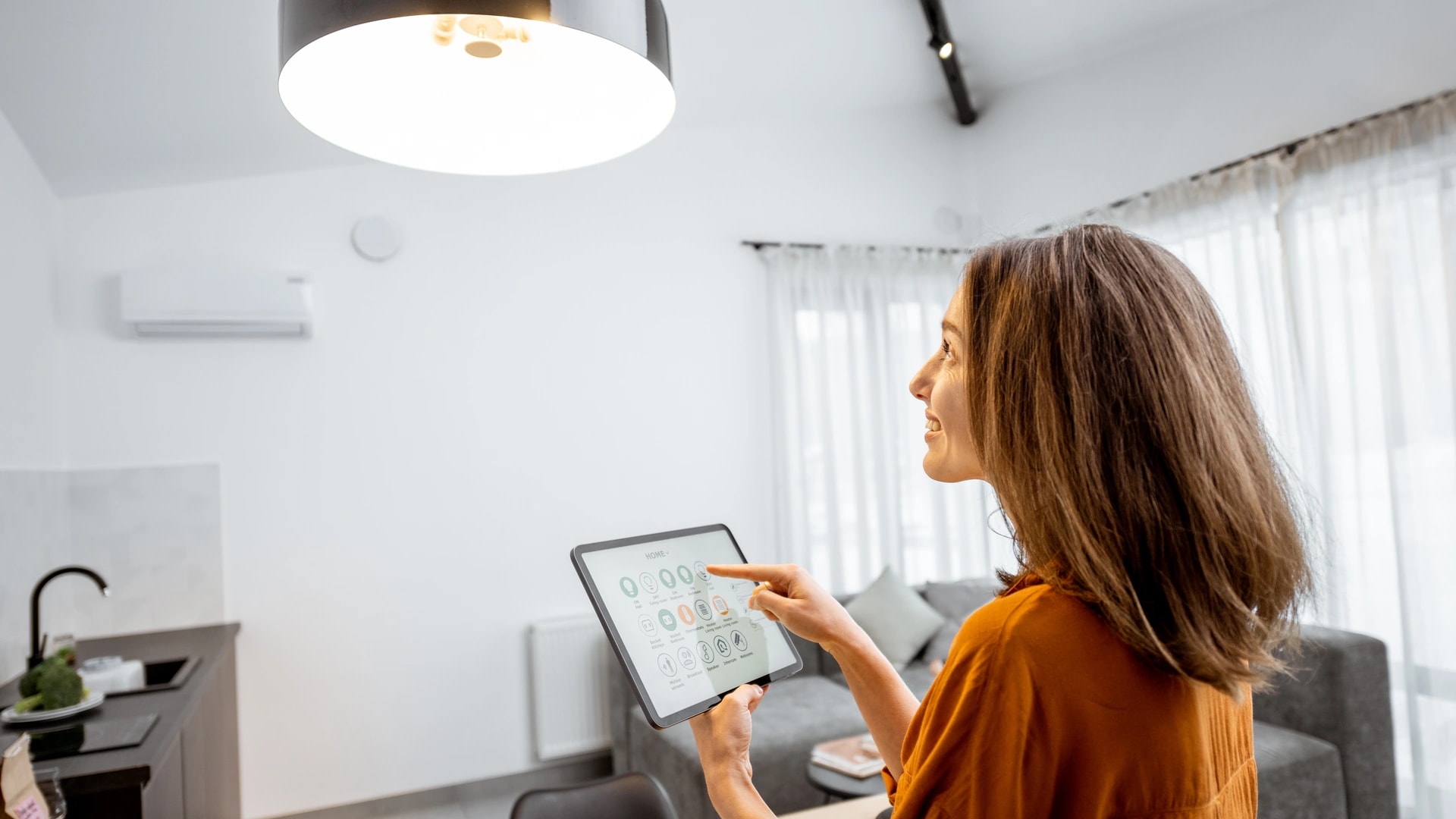
Lighting pairs naturally with the AC purchase. Both usually run through the same starter hub or app, so you buy them together. Smart lighting is also the device most people say makes a home feel different fastest. A scene that dims the living room and cools it for the evening is one tap or one voice command.
Renters can do all of this without drilling. An infrared AC controller clips near your existing unit, and plug-in or clip-on lighting travels with you when you move. Our smart lighting and climate control work covers zone AC control for apartments and villas. For the full cost picture by home size, see our smart home cost guide.
Want a real number for your home? Book a free site visit and quote →
Buy next: the security basics
Buy next: a water leak sensor first, then smart locks and cameras. Leak sensors are the highest-return sensor you can buy. A burst pipe or an AC condensate leak costs far more to fix than the sensor costs to fit.
Common mistake: buying a showy video doorbell before a boring leak sensor. The doorbell looks impressive, but the leak sensor protects against the bigger bill. Buy the boring one first. A hidden water leak behind a kitchen unit can run into thousands of dirhams of damage before you even notice it.
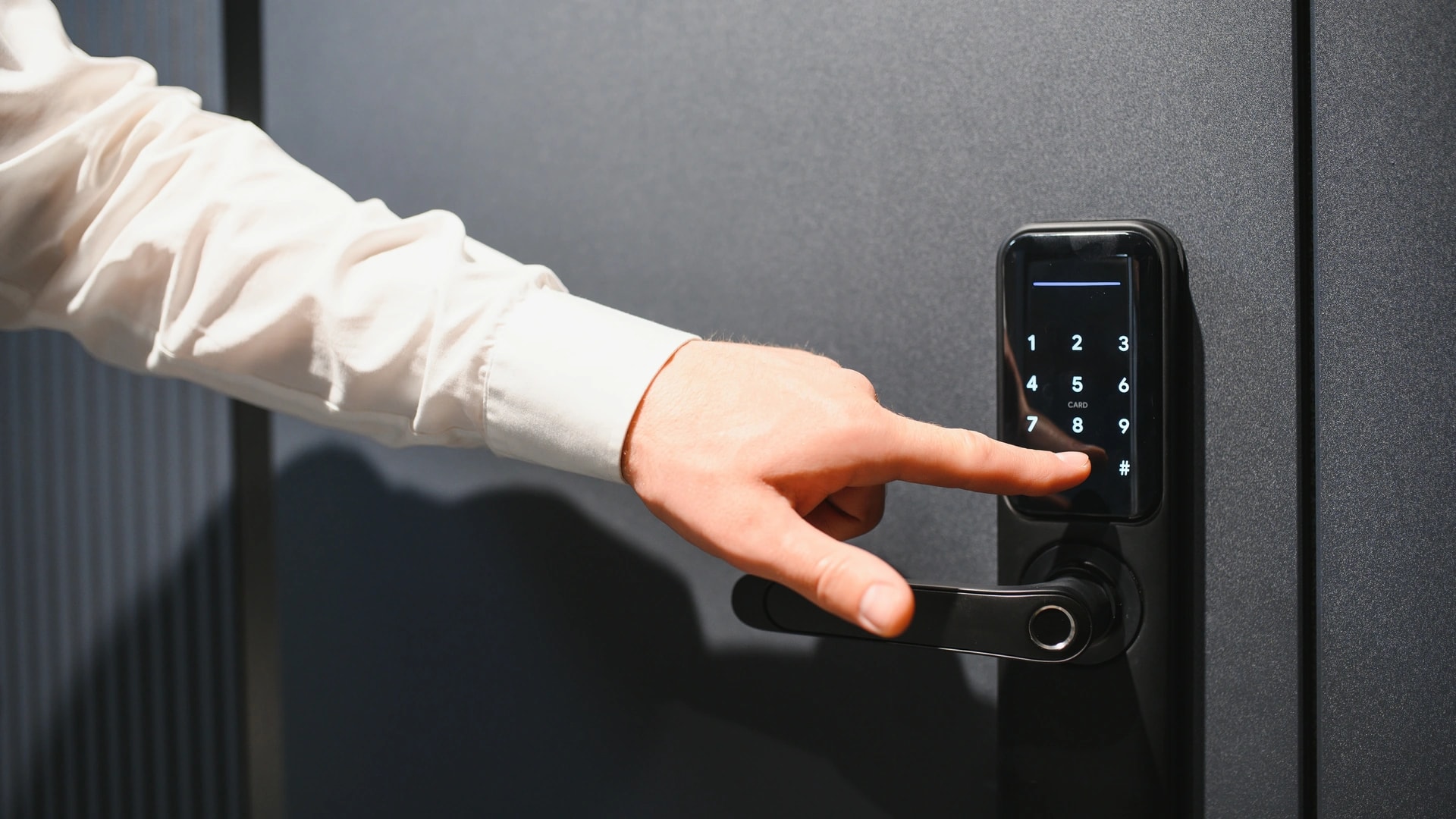
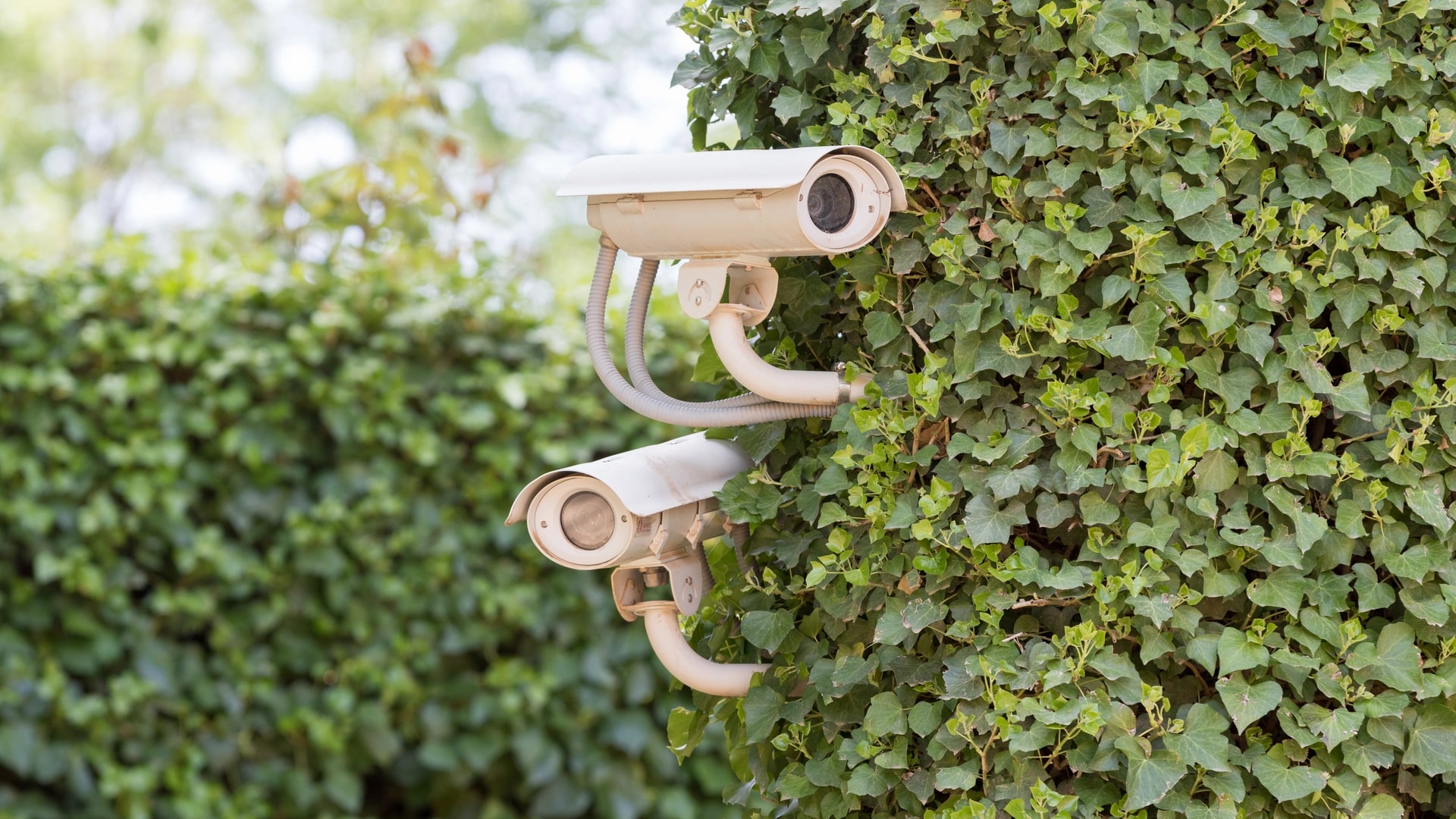
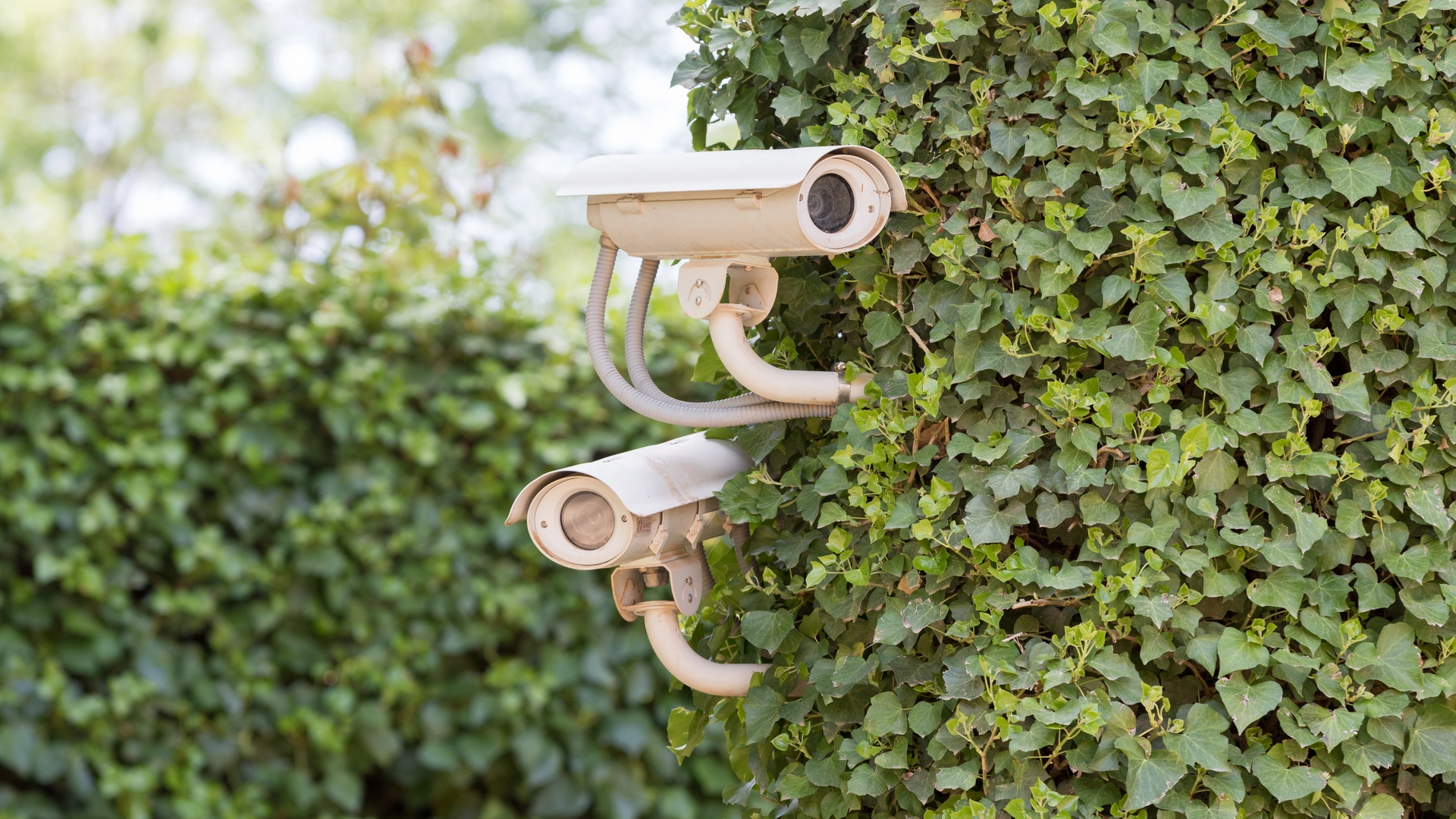
Smart locks and cameras come next. They give immediate value: see who is at the door, get an alert on your phone, let a guest in remotely. For renters, several smart locks fit over the existing lock and come off clean when you move. Cameras that need SIRA compliance in Dubai should be 1080p HD minimum with 31 days of stored footage[9]. Our SIRA CCTV requirements guide explains what applies to a private home.
This is also the step where the Dubai heat check matters most, because locks and cameras are the hardware most exposed to summer sun. More on that below. Our security and surveillance page covers cameras, locks, and alarms, and smart gate and access control handles gates and video intercom.
Buy later: the comfort layer
Buy comfort gear third, after AC, lighting, and security are settled. Motorized blinds, whole-home audio, and a home cinema are genuine upgrades. They just do not fix a bill or a safety risk the way the first two steps do.
Motorized shading does have a real payback. Smart blinds save roughly 15 to 20 percent on cooling load in a sun-facing room, on top of your AC savings[9]. But it is a bigger single spend, from AED 2,800 per window scope, so it sits after the cheap wins. Our motorized curtains and blinds page covers the options.
From our projects: the buyers who are happiest with audio and cinema are the ones who added them last, not first. A single speaker is a simple buy. In-ceiling whole-home audio or a Dolby Atmos cinema room is a planned install, because retrofitting the wiring later is more disruptive than adding it as a proper third step. See whole-home audio and home cinema for what each involves.
Buy last, or hire a pro: the whole-home backbone
Buy the backbone last, or skip buying and hire a pro instead. A wired KNX system or a branded controller (Control4, Crestron, Savant) ties every room into one system. It is the biggest single decision and the biggest single spend, so it is the step where DIY buying correctly becomes commissioning an installer.
KNX is a wired system that runs without the internet, best for villas and new builds, with a 30-year-plus lifespan. When the Wi-Fi drops, your switches, AC, and scenes keep working. That is the honest reason to wire a villa, not a buzzword.
Pool and outdoor automation, energy and solar, and wellness rooms sit at this tier too. They are real value for the right home, but they are the last layer most buyers add, and almost never a self-install. See our energy management and solar work, plus pool and outdoor automation and wellness and comfort.
Real talk: if you are building or buying off-plan, plan the backbone now. Pre-wiring during construction is 60 to 70 percent cheaper than retrofitting a finished home[9]. Villa owners should read our villa owner upgrade roadmap for the full phased plan.
What to skip: the money-wasters
Skip the gadgets that look clever but fix nothing. The pattern across every 2026 review is the same: boring devices that touch a bill, a risk, or a daily habit beat flashy ones on real value. Here is the short skip list.
- Skip it: smart kitchen appliances. A smart toaster still just toasts, and a smart fridge rarely earns its premium. This is the most-criticized category in current reviews.
- Skip it: robot gadgets beyond the robot vacuum. Smart mops, pool bots, garden bots, and AI pet feeders mostly cost more than the job is worth.
- Skip it: swapping every bulb for a connected bulb "because you can." A cheap motion sensor or timer solves a closet or hallway light better, and nobody has to open an app.
- Skip it: buying anything before you choose an ecosystem. That is how you end up with redundant kit.
- Skip it: a no-name cheap device with no local warranty. In Dubai heat, cheap unrated outdoor gear fails fast.
None of the comfort and backbone items are on this list. Blinds, audio, cinema, pool, and a KNX backbone are not "skip," they are "not yet." Buy them in Step 3 or 4, not Step 1.
What it costs at each budget tier
Match your spend to your home. A single room starts at AED 2,000 to 5,000, a full apartment runs AED 8,000 to 15,000, and a villa starts from AED 30,000[9]. Here is what each tier buys.
| Tier | AED range | Time | What you get |
|---|---|---|---|
| Starter, one room | 2,000 to 5,000 | Same day to 1 day | AC controller, lighting, one plug, ecosystem hub |
| Comfort, full apartment | 8,000 to 15,000 | 2 to 4 days | Whole-home AC and lighting, leak sensor, doorbell, one or two locks, mesh Wi-Fi |
| Villa essentials | from 30,000 | varies | Whole-villa AC, lighting, security, and basic entry |
| Villa fully wired | 150,000 to 250,000+ | 5 to 14 days | KNX or branded backbone plus cinema, audio, pool, energy, wellness |
| Maintenance, optional | 5 to 10 percent of project a year | ongoing | Support and updates across any tier |
Fixed-price packages start from AED 2,000 for a defined scope[9]. The rule for every tier is the same: buy for one clear pain point, get it working, then expand. Our smart home cost guide breaks each tier down further.
Renter or owner, apartment or villa
Buy according to how long you will stay and what you can change. Renters buy reversible, no-drill devices. Owners can fix hardware to the walls and plan wiring. The buying order stays the same, but the type of device changes.
If you rent: start wireless so everything comes off clean when you move. Infrared AC controllers, plug-in lighting, plug-in sensors, and over-the-lock smart locks need no drilling and travel with you. Our renter and apartment smart home guide lays out the no-drill device tiers in detail.
If you own a villa: decide before the walls close if you are building. Pre-wiring during construction is 60 to 70 percent cheaper than retrofitting later[9]. A wired KNX backbone makes sense in a villa because it lasts as long as the house wiring. The villa owner roadmap covers the three-phase plan we use.
The Dubai catch: concrete apartment towers block Wi-Fi signal more than the timber-frame homes these US guides assume. Check your mesh coverage before you buy a batch of Wi-Fi devices, or half of them will feel unreliable rather than faulty. Our home networking and IT work sorts coverage first.
Where to buy smart home devices in Dubai
Buy from a UAE retailer for single devices, and from a local installer once you move to whole-home or wired systems. A UAE retailer sidesteps two problems at once, which we cover in the traps section below.
- Amazon.ae: the broadest catalogue. Check the seller, since third-party marketplace listings can vary on warranty and returns[7].
- Noon: a UAE and GCC marketplace with a smart-home storefront, often with cash on delivery and free returns[7].
- Sharaf DG: stores plus online, with a smart-devices section carrying Google, Amazon, Eufy, Ring, and Xiaomi. Useful when you want to see a device first[7].
- Jumbo Electronics: a long-established Dubai retailer with Echo devices, robot vacuums, and Nest Hub, plus some in-store help[7].
- A local installer, like us: the right channel once a purchase moves past a single device into whole-home, wired, or KNX territory, with hardware chosen for Dubai conditions.
Dubai is building more smart-ready communities each year, so a lot of new homes already ship with some wiring in place[8]. Check what your developer has already fitted before you buy anything.
The Dubai buying traps
Four Dubai-specific traps catch buyers who follow a US guide. None of them make a device useless, but all four are real costs. Check each one before you buy.
Region-locked gear. A US-region Echo brought to the UAE loses shopping, podcasts, and several US-only skills, and its warranty does not transfer[4]. US-bought Z-Wave hardware runs on 908 MHz, but the UAE uses the 868 MHz band, so a US Z-Wave lock or sensor may not work here at all[5]. Buy voice assistants and radio devices through UAE retail, not imported.
Heat and IP rating. Dubai summer air regularly passes 45 C, and many standard smart locks are rated only to 40 to 50 C. Look for a lock rated to 60 to 70 C or higher, with a metal body and an IP65 or IP66 seal[6]. An outdoor camera on a west-facing wall in August can hit 60 to 65 C surface temperature, above a 50 C-rated camera's ceiling, so ask for the operating-temperature and IP67 rating before you buy anything mounted outside[6].
TDRA type approval. The UAE regulator requires type approval for Wi-Fi, Bluetooth, and other radio devices before local sale, and it keeps a live approved-equipment registry[1]. Buy through a mainstream UAE retailer and this step is already handled for you. The real exposure is personal import, where a unit was never registered for UAE use and customs may ask for a separate release permit.
220V and warranty. UAE mains is 220 to 240V with the Type G three-pin plug. A 110V US smart plug is a safety risk here, not just an inconvenience, so buy UAE-market electrical devices. And warranty is honored by the region you bought in, not the region you use it in. Our protocols guide covers the Z-Wave frequency detail in full.
Best value versus nice-to-have
Best value: smart AC control, leak sensors, smart lighting, and smart plugs. These four solve a real bill, a real risk, or a daily habit, and they cost the least. Everything else is nice-to-have until these are in.
The test to apply before every purchase, not just the first, is one question. Does this remove real pain, a bill, a risk, or a daily friction, or does it just look impressive? If the honest answer is "it looks good," it goes to the bottom of the list.
- Best return: smart AC control. Pays back fastest through the DEWA saving of 20 to 30 percent on cooling[3].
- Best cheap insurance: a leak sensor. A few hundred dirhams against a claim worth thousands.
- Best daily win: lighting scenes and a couple of smart plugs. Small spend, used every day.
- Nice-to-have: video doorbell, whole-home audio, cinema, novelty gadgets. Good later, not first.
Prefer to talk it through before you spend? Message an engineer on WhatsApp →
Your pre-purchase checklist
Run through this before you buy anything. Each answer should be yes, or a "no" you are choosing on purpose. It is the same list we use when we plan a client's first order.
| Check | Why it matters |
|---|---|
| Have you chosen an ecosystem? | Alexa, Google, Apple, or a pro system. Everything else follows this. |
| Is your Wi-Fi solid in every room? | Dubai concrete towers block signal, so weak coverage feels like faulty kit. |
| Are you renting? | If so, buy no-drill, reversible devices that move with you. |
| Is the device UAE-retail? | TDRA-registered, correct frequency and plug, locally warrantied. |
| Is outdoor gear heat-rated? | 60 to 70 C for locks, IP67 for cameras, for Dubai summer. |
| Have you set a budget per tier? | Match the AED ranges above so you do not overbuy. |
| Did you verify any Matter claim? | Check the CSA ledger, not just the box. |
| Does it remove real pain? | A bill, a risk, or a daily friction, not just a good look. |
Before you buy: if you cannot tick the first two boxes, stop and sort them first. Ecosystem and Wi-Fi are the foundation, and every later purchase depends on both.
How Dubai Smart Home helps you buy right
We give you honest advice on what to buy and what to skip. Our engineers are in-house and based in Dubai, we do not subcontract, and every system works in English and Arabic. Since 2016 we have completed 100+ projects, and we are rated 4.9/5 by Dubai homeowners.
The way we work maps to this guide. We help you settle on one ecosystem so you are not stuck with seven apps. We plan the DEWA saving first, then security, then comfort, so your spend follows the payback. And we choose hardware that is TDRA-registered, correctly frequency-matched, and heat-rated for Dubai, with a local warranty behind it. You can browse the full range at Dubai Smart Home.
If a purchase is a simple plug or bulb, we will tell you to buy it yourself and save the money. If it is a whole-home system or anything wired, that is where a professional install earns its keep, across lighting and climate, security, and networking.
Ready to plan your smart home in the right order? Book a free site visit and quote → or message our team on WhatsApp →. Enquiries are answered within 2 hours.