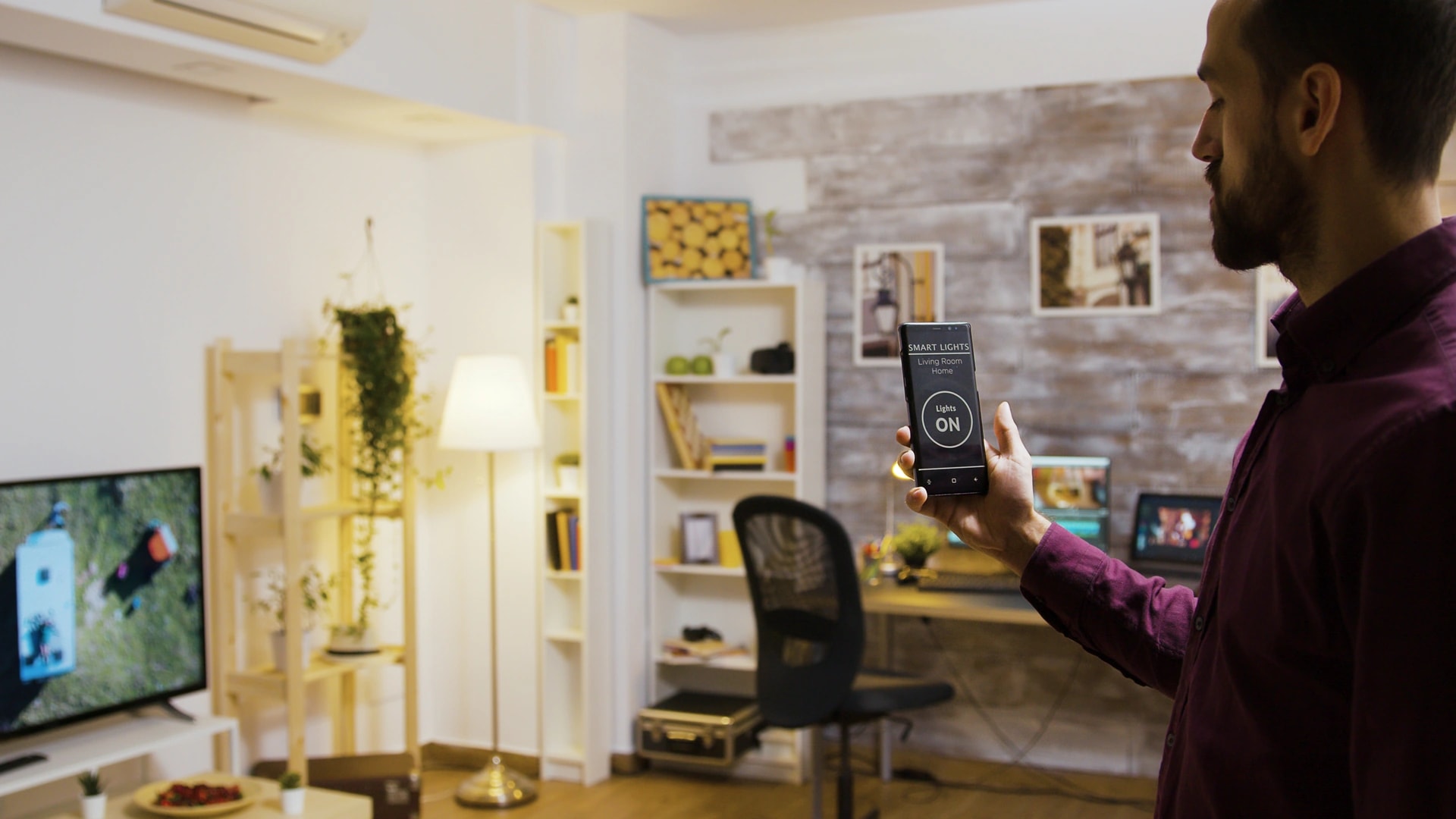
Alexa vs Google Home vs Apple HomeKit is the question we hear most from Dubai homeowners setting up their first smart home. Should you buy an Amazon Echo, a Google Nest, or an Apple HomePod? All three are sold here. All three speak some Arabic. But they are not equal in the UAE, and the gaps are specific.
We design, install, and support smart systems across Dubai, from Marina apartments to Dubai Hills villas, and we have done so since 2016. So this guide is written from the install side, not from a spec sheet. Every hard number carries a named source, and we correct the stale claims still floating around online.
Which voice assistant is best for a Dubai home?
Short answer: all three work in Dubai, so the best smart home platform for the UAE depends on your phone and your priorities. Alexa gives you the widest device support, the cheapest speakers, and the best Arabic music. Apple Home is the most private and works the same in Dubai as anywhere. Google Home has the weakest official UAE support of the three today.
Here is the honest split we see across Dubai homes.
- Choose Alexa if you want low-cost speakers, the biggest range of compatible devices, and Anghami by voice. It is the easy starting point for a renter or an apartment.
- Choose Apple Home if your family already lives on iPhones or you care about privacy. It also suits a villa system that keeps running when the internet drops.
- Choose Google Home if you are on Android and accept a small account workaround. Just check the Nest thermostat and camera gaps first, which we cover below.
From our installs: most Dubai homes end up mixed, not loyal to one brand. A house might run Alexa in the kitchen and Siri on every iPhone. The Matter standard now makes that mix normal, and we explain it later. If you want this planned properly, our voice control and AI team sets it up in English and Arabic.
Does Alexa work in Dubai?
Short answer: yes, officially, and better than most people think. Amazon launched Alexa here with a purpose-built Khaleeji Arabic voice in December 2021. Amazon's own developer documentation now lists the UAE as a supported Alexa market[1]. This is not a workaround or a gray import.
Common myth: "Alexa does not work in Dubai." That was true years ago, and old forum posts still repeat it. It is wrong now. Echo speakers are sold at Amazon.ae, Sharaf DG, Virgin Megastore, Jumbo, and Noon, and they run in English and Khaleeji Arabic out of the box.
Usage here is real, not a token gesture. Amazon data reported by Khaleej Times counts more than 500 million voice interactions across the UAE and Saudi Arabia in 2025. About 175 million of those were smart home commands[2]. So the Arabic support is used every day, at scale, in real homes.
The Dubai catch: the gaps are commerce and content, not voice control. UAE accounts cannot use Alexa voice shopping or in-skill purchases, and Apple Music is not on Amazon's supported list for the UAE. Anghami, the region's own music app, has a dedicated official Alexa skill, so local music is well covered.
One more gap matters. Alexa+, Amazon's new generative-AI upgrade from 2025, is not in the UAE as of 2026. Amazon has named ten launch markets, and none are in the Middle East[3]. Any new Echo you buy in Dubai today runs classic Alexa, not the AI version. That may change, so check the current status before you buy on that feature alone.
Does Google Home or Nest work in the UAE?
Short answer: it works for basics, but it is the most workaround-dependent of the three, and it has the clearest hardware mismatch. There is no official Google Store for the UAE, and the Google Home app has no UAE option in its country list. Every UAE setup runs on an unofficial "set your account to a supported country" step.
The hardware is still easy to buy. Nest Mini, Nest Hub, and Nest cameras are sold through Amazon.ae, Sharaf DG, Carrefour, Noon, and Jumbo, often as imported US-spec stock. So getting a device is not the problem. The account region and the newest features are.
The Dubai catch: Google Assistant is being replaced by Gemini for Home, Google's 2025 to 2026 AI overhaul. It has reached the US and more than a dozen other countries by 2026. The UAE and Arabic are not in any announced wave[4]. UAE users stay on the older Assistant for now. On Arabic, Google leans on Modern Standard Arabic and is not tuned for Gulf dialect. Its own support community has years of open complaints about recognition accuracy.
The single biggest practical issue is the Nest thermostat. It is built for North American forced-air systems with a common wire. Most Dubai homes use split AC or fan coil units instead. A stock Nest cannot wire into those without a third-party adapter, and VRF systems must be checked case by case[5]. So before you buy one, get your AC wiring type checked. Our smart lighting and climate control team does this on every site visit.
There is a second cost. Nest Aware, the paid cloud recording plan for Nest cameras and doorbells, is switched off for UAE accounts because Google Store does not bill here. So you can buy the camera, but the headline "smart alert" and continuous cloud recording features are gone unless you route through a foreign account. For serious cameras, a local security and surveillance setup is the cleaner path.
Is Apple HomeKit available in the UAE?
Short answer: yes, and with the fewest asterisks of the three. Apple runs three of its own stores in the UAE, at Dubai Mall, Mall of the Emirates, and Al Jimi Mall in Al Ain. HomePod and HomePod mini are also sold through iSTYLE, Sharaf DG, Virgin Megastore, Jumbo, Amazon.ae, and Noon.
The reason HomeKit is so clean here is technical. Apple Home runs through a local Home Hub, which can be a HomePod, HomePod mini, or an Apple TV. Your commands are handled and encrypted between your devices and that hub, not routed through region-specific cloud servers[6]. So the core system works the same in Dubai as it does in London or New York, with no country switch to fake.
The Dubai catch: there is a real shopping trap with Thread. Thread is the low-power radio many door sensors and some locks use, and it needs a border router in the home. HomePod mini and the second-generation HomePod both work as one. The cheaper Apple TV 4K variant does not include Thread, only the higher model does. So a HomePod mini is the cheapest way to get Thread into an Apple Home.
Best for: iPhone households, privacy-first buyers, and villas that want control which survives an internet outage. The main trade-off is a smaller shelf of HomeKit-certified devices in UAE shops, which the Matter standard now helps solve.
| Platform | Official UAE support | Arabic voice | Music that works here | Newest 2026 AI here? |
|---|---|---|---|---|
| Amazon Alexa | Yes, supported market since Dec 2021[1] | Khaleeji and English, purpose-built | Anghami, Spotify, Amazon Music | No, Alexa+ not in the UAE yet[3] |
| Google Home / Nest | No official store, account workaround needed | Modern Standard Arabic, mixed reviews | Anghami, YouTube Music | No, Gemini for Home not in the UAE[4] |
| Apple HomeKit | Yes, five official Apple stores | Arabic since 2015, quality contested | Apple Music, AirPlay | Partial, new Siri AI has no Arabic |
How good is Arabic voice control on each platform?
Short answer: all three handle Arabic at a functional level, and none of them match their own English quality. So do not choose a platform expecting flawless Arabic from any of them. This is honest advice, and it matters in a city where many homes mix Arabic and English every day.
Here is how they stack up, without crowning a winner, because the quality claims are genuinely contested.
- Alexa has done the most Gulf-specific work. Its 2021 launch covered Khaleeji dialect and Modern Standard Arabic, with local skills and the Anghami music skill built for the region. It has the most usage data behind it too[2].
- Siri has the longest track record, with a dedicated UAE and Saudi Arabic locale since 2015. But quality is a split story: marketing sites call it excellent, while independent language researchers document real dialect problems. Treat it as mixed, not settled.
- Google Assistant supports Arabic but leans on Modern Standard Arabic, and its own community threads show years of unresolved accuracy complaints.
The Dubai catch: code-switching is the shared weak spot. Mixing Arabic and English in one sentence, the way many people in Dubai actually talk, still trips up all three. Most assistants run separate language pipelines rather than one bilingual model. Researchers were still building basic Emirati Arabic training data in 2026, so this is a young field, not a solved one. If Arabic matters most to your household, test a device in your own accent before you commit.
Alexa vs Google Home vs HomeKit: the full comparison table
Quick take: read this table by your top priority, not top to bottom. If privacy is your thing, read that row. If Arabic is, read that one. No single platform wins every row. That is why the best smart home platform in the UAE depends on your home, not a ranking.
| Dimension | Amazon Alexa | Google Home / Nest | Apple HomeKit |
|---|---|---|---|
| Officially supported in the UAE | Yes, since Dec 2021[1] | No official store or country listing | Yes, five Apple stores |
| Arabic voice | Khaleeji and MSA, purpose-built | MSA-oriented, mixed reviews | Since 2015, quality contested |
| Newest 2026 AI upgrade here | No (Alexa+ not in UAE)[3] | No (Gemini for Home not in UAE)[4] | Partial (new Siri AI, no Arabic) |
| Works without internet | Cloud-dependent, limited local mode | Cloud-dependent, limited local mode | Strongest, local Home Hub[6] |
| Default privacy posture | Keeps recordings by default[9] | Opt-in, not stored by default[9] | Random ID, on-device, most private[9] |
| Matter support (2026) | Certified controller[7] | Certified controller[7] | Certified controller[7] |
| Biggest UAE-specific gap | Voice shopping and Apple Music blocked | Nest thermostat AC mismatch[5], Nest Aware off | Smallest certified-device shelf here |
| Best for | Widest devices, cheapest, Arabic music | Android homes that accept a workaround | Apple homes, privacy, villa resilience |
Want help matching this to your own home? Book a free consultation and quote →
Are smart speakers private and legal under UAE law?
Short answer: yes, they are legal, and UAE law does cover your voice data, but not with any smart-speaker-specific rule. The UAE Personal Data Protection Law, Federal Decree-Law 45 of 2021, names voice as a personal-data identifier and treats biometric data as sensitive. It requires clear, documented, and withdrawable consent[8].
Common myth: that a specific UAE rule governs "always listening" speakers. It does not. The law predates wide smart-home use here, so there are no IoT or smart-speaker-specific provisions in the text. We say that plainly rather than overclaiming. Your voice data is covered by the general rules, not by a device-tailored one.
Default data handling differs a lot by platform, per an independent Mozilla Foundation review. Alexa keeps voice recordings by default unless you turn on auto-delete or opt out. Google does not store recordings by default and needs you to opt in. Apple tags Siri requests with a random rotating identifier instead of your account name, and handles much of it on the device[9]. Apple states it does not sell voice data or use it for ads[6]. On default privacy, Apple keeps the least.
Every modern smart speaker has a physical mic-mute button that cuts the microphone circuit. That is a real hardware switch, not just a setting, and it is the honest answer to "can I stop it listening."
Do voice assistants work without internet?
Short answer: mostly no. Alexa and Google send your voice to the cloud to understand it, so they go quiet when the internet drops. A few Echo models run a limited offline mode for basic commands. Apple Home is the strong exception, because its automations run on the local Home Hub and keep working through an outage[6].
This is why we tell Dubai villa owners not to lean on cloud voice for anything critical. A dropped Etisalat or du line should never lock your front door, kill your AC schedule, or stop your security lights. Voice is a nice input, not a safety system.
From our installs: the homes that never go dark run a wired backbone underneath the voice layer. KNX is a wired system that runs without the internet and lasts 30 years or more. Your keypads, scenes, and AC control keep working even if every cloud service is down. Voice then sits on top as a convenience. Our guide to smart home protocols explains how KNX, Zigbee, Thread, and Matter fit together.
Matter: can you mix Alexa, Google, and Apple?
Short answer: yes, and it is normal now. Matter is a shared standard, run by the Connectivity Standards Alliance, that lets one certified device work with Alexa, Google Home, and Apple Home together. It launched in 2022, and all three platforms are certified Matter controllers in 2026[7]. So the old "pick one ecosystem forever" fear is largely gone.
Matter has a feature called multi-admin. It lets a single device, say a smart lock, pair to more than one platform at once. So one lock can answer to Siri on your iPhone and to Alexa on the kitchen Echo, without a fight. That is genuinely useful in a mixed household.
Quick take: Matter helps, but it is not magic yet. Some device types are still not covered, and firmware quality varies between brands. In dense Dubai towers, the bigger real-world issue is radio. Thread and many smart devices share the crowded 2.4GHz band with your Wi-Fi, so a clean network matters. A solid home network is the quiet foundation that keeps all of this stable.
Best smart speakers and music services in the UAE
Short answer: the Echo range is the widest and cheapest smart speaker line in Dubai. HomePod fits Apple homes best, and Nest sits in the middle with the account caveat. On music, Anghami is the local hero, and it is the one to check for Arabic and regional playlists.
On hardware, the picture is simple. Amazon sells the most Echo models here, from tiny speakers to screens, at the lowest entry prices. Apple keeps a short line, the HomePod and HomePod mini, tuned for iPhone homes. Google Nest speakers and displays are sold widely, but you carry the account workaround with them.
On music, what plays matters more than the brand.
- Anghami is the region's main music and podcast app. It has an official Alexa skill built for the UAE and Saudi market, and it works with Google Assistant too. This is a real local win.
- Spotify and YouTube Music work across the platforms, with YouTube Music the default on Google.
- Apple Music is native on HomePod and Siri. On Alexa in the UAE it is not supported, which is a real gap if Apple Music is your main service.
Best for: if you live in Anghami and want it by voice, Alexa is the smoothest. If your whole family is on Apple Music already, a HomePod removes the friction entirely.
Price and value: what you actually pay
Short answer: Alexa is the cheapest way in, Apple has the highest price floor, and Google sits close to Alexa. But the speaker price is the small part. What you spend on lights, AC control, locks, and cameras is where the real budget goes.
Basic smart speakers are cheap on all sides, often a few hundred dirhams for an entry model, so device price rarely decides the platform. Prices shift with promotions, so check current listings rather than trusting a fixed number. The bigger figure is the full setup.
Quick take: a one-room starter setup runs about AED 2,000 to 5,000 installed. A full apartment setup lands around AED 8,000 to 15,000, including hardware, wiring, programming, and the app[11]. The voice assistant is a small slice of that. So do not let a AED 200 speaker choice drive a AED 12,000 project. Our smart home cost guide breaks the numbers down by home size, and renters should read our rental apartment guide first.
Best assistant for which home
Best for: here is the plain-language match by home type and priority. Use it as a starting point, then let the details above fine-tune your choice.
| Your home or priority | Best pick | Why |
|---|---|---|
| Renter or budget apartment | Alexa | Cheapest speakers, widest devices, easy to take with you when you move |
| Apple household | Apple HomeKit | Works with your iPhones, most private, local hub keeps running offline |
| Android household | Google Home or Alexa | Google fits Android, but check the Nest and workaround gaps; Alexa is the safer pick |
| Privacy-focused buyer | Apple HomeKit | Random identifier and on-device processing keep the least data by default[9] |
| Big villa or new build | A pro system with voice on top | Voice alone is not enough; layer it over a wired KNX or Control4 backbone |
Voice as one layer of a real system
Short answer: a voice assistant is a convenience input, not the brain of your home. It should sit on top of a proper system, not be the whole system. This is the single most useful mindset shift for a villa owner.
Think of Alexa, Google, and Siri as one way to give a command, next to a wall keypad, a touch panel, and an app. In a serious install, the real control lives in a wired backbone like KNX or a professional controller like Control4 or Crestron. The voice assistant just passes the request along.
From our installs: Control4 supports both Arabic and English voice. It can layer Alexa, Google, or Apple Home on top of one backend[11]. So a family can run the same villa in two languages, by voice, keypad, or app, on one system. If you are weighing a full luxury setup, our Control4 vs Crestron vs Savant guide compares the main controllers for Dubai homes.
The takeaway is simple. Pick your consumer assistant for the day-to-day voice feel, then build the actual automation on hardware that lasts and works offline. That order protects your money and your home.
Common mistakes and myths
We see the same avoidable errors on site visits across Dubai. Here are the ones that cost people the most.
- "Alexa does not work in Dubai." Wrong since December 2021. Alexa is officially supported here, in English and Khaleeji Arabic[1]. Do not let a stale forum post decide your setup.
- Buying a Nest thermostat blind. A stock Nest cannot wire into most Dubai split-AC and fan-coil systems without an adapter[5]. Check your AC wiring type before you buy.
- Expecting flawless Arabic. All three are functional in Arabic and none is perfect, and code-switching still trips them up. Test in your own accent first.
- Relying on cloud voice for critical control. Never let a dropped internet line lock your door or stop your cameras. Keep critical control on a wired or local system.
- Buying region-locked hardware. Check the account region and feature list before you import a US or UK device, or you may lose music, alerts, or setup options. Wireless devices sold through UAE retailers must carry type approval from the TDRA, the UAE telecoms regulator[10]. That is one more reason to buy local stock.
Prefer to talk it through before you spend? Message an engineer on WhatsApp →
How Dubai Smart Home helps
We help you pick the right platform, then build the system underneath it so voice is the easy part. Our engineers are in-house and based in Dubai, we do not subcontract, and every system works in English and Arabic. Since 2016 we have completed more than 100 projects across Dubai villas and apartments. Dubai homeowners rate us 4.9 out of 5.
On a site visit we check your AC wiring, your network, and your phones before we recommend anything. Then we tie the assistant you choose into one setup across voice control, lighting and climate, and security. You are not left juggling seven apps. We install and support the major consumer platforms and the professional controllers. We also set up Arabic voice profiles properly, since they are not always on by default.
Trying to choose between Alexa, Google Home, and Apple HomeKit for your Dubai home? Book a free site visit and quote → or message our team on WhatsApp →. Sales enquiries are answered within 2 hours.
Keep reading: see our complete smart home guide for Dubai, learn what AI actually does in a smart home, and get the wiring basics in smart home protocols explained.