If you have shopped for smart home gear lately, every box says "AI." Most of it means very little. A few features have genuinely improved, and a few are still a demo dressed up as a product. This guide sorts one from the other.
We install and support smart systems across Dubai, from Palm Jumeirah villas to Business Bay apartments, and we have done so since 2016. So this is written from the install side, and checked against named sources. The goal is simple: tell you what AI really does in a house in 2026, and what it does not.
What does AI actually do in a smart home?
In 2026, AI does four real and narrow things well. It classifies what a camera sees. It learns your AC and lighting habits. It senses when a room is occupied. And it lets you set some routines by talking, instead of tapping through menus.
None of that is a home that thinks for you. It is a set of small, useful tools bolted onto normal automation. The control layer underneath (KNX, Control4, Zigbee, or Wi-Fi) still does the actual switching. AI just makes a few parts smarter or easier to set up.
Real today: a camera that tells a person from a cat, a thermostat that learns your week, a sensor that starts the fan when a room gets warm. Still hype: a house that runs itself with no setup and never gets it wrong.
Two quick terms, explained once. KNX is a wired system that runs without the internet, best for villas and new builds, with a 30-year-plus life. Matter is a shared standard from 2022, so one device can work with Apple, Google, and Amazon together. Our pillar guide, the complete smart home guide for Dubai, covers how these pieces fit. This article zooms in on the AI part.
AI home automation in 2026: real versus hype
Here is the honest split. The table lists the smart home AI features marketed in 2026 and whether each one is real and shipping, or still a claim. Every "yes" is hedged to what the feature actually does, not what the ad promises.
| Feature | Real and shipping in 2026? | Note |
|---|---|---|
| Camera person, vehicle, and package detection | Yes, mature | Cuts false alarms about 90 to 95 percent versus old motion sensors[9] |
| Unusual-activity camera alerts | Yes, new for 2026 | Ring showed this at CES 2026; it learns a home's normal pattern, then flags what is odd |
| Learning thermostat schedules | Yes, mature | Settles into a learned schedule in about 1 to 2 weeks |
| Presence and temperature routines (Amazon Omnisense) | Yes, and in the UAE | Ships on 2025 to 2026 Echo hardware sold here[2] |
| Robot vacuum mapping and object recognition | Yes | Higher-end models spot 100-plus object types, like a cord versus a shoe |
| Multi-step voice commands in one sentence | Yes, a small step | "Dim the lights and set the AC to 23" now works on current assistants |
| Natural-language routine setup | Yes, but early | US and English first, and still inconsistent |
| Josh.ai voice on Control4 or Crestron | Yes | Natural-language voice riding on a wired backbone |
| Matter cross-brand control | Yes, better in 2026 | Matter 1.6 and 700-plus certified products[5] |
| "The home that thinks for you" | Hype | Independent testing found it fails at basic tasks |
| "Just talk to your house, no setup" | Hype (overstated) | The feature is real, but new and unreliable |
| Buyers demanding AI features | Hype (reversed) | Ranked last, at 12 percent, in a 5,000-home survey[8] |
| An "AI" label means real learning | Hype | Often just a scheduled timer with a sticker |
| Home robots doing your chores | Hype for now | Best models cost 8,000 dollars-plus and hit 70 to 80 percent on simple tasks |
In a summer-long real-world test in 2025, The Verge found AI voice control still failed at basic jobs like turning on a light, because the same command can give a different result each time.
AI in security cameras: the most useful feature today
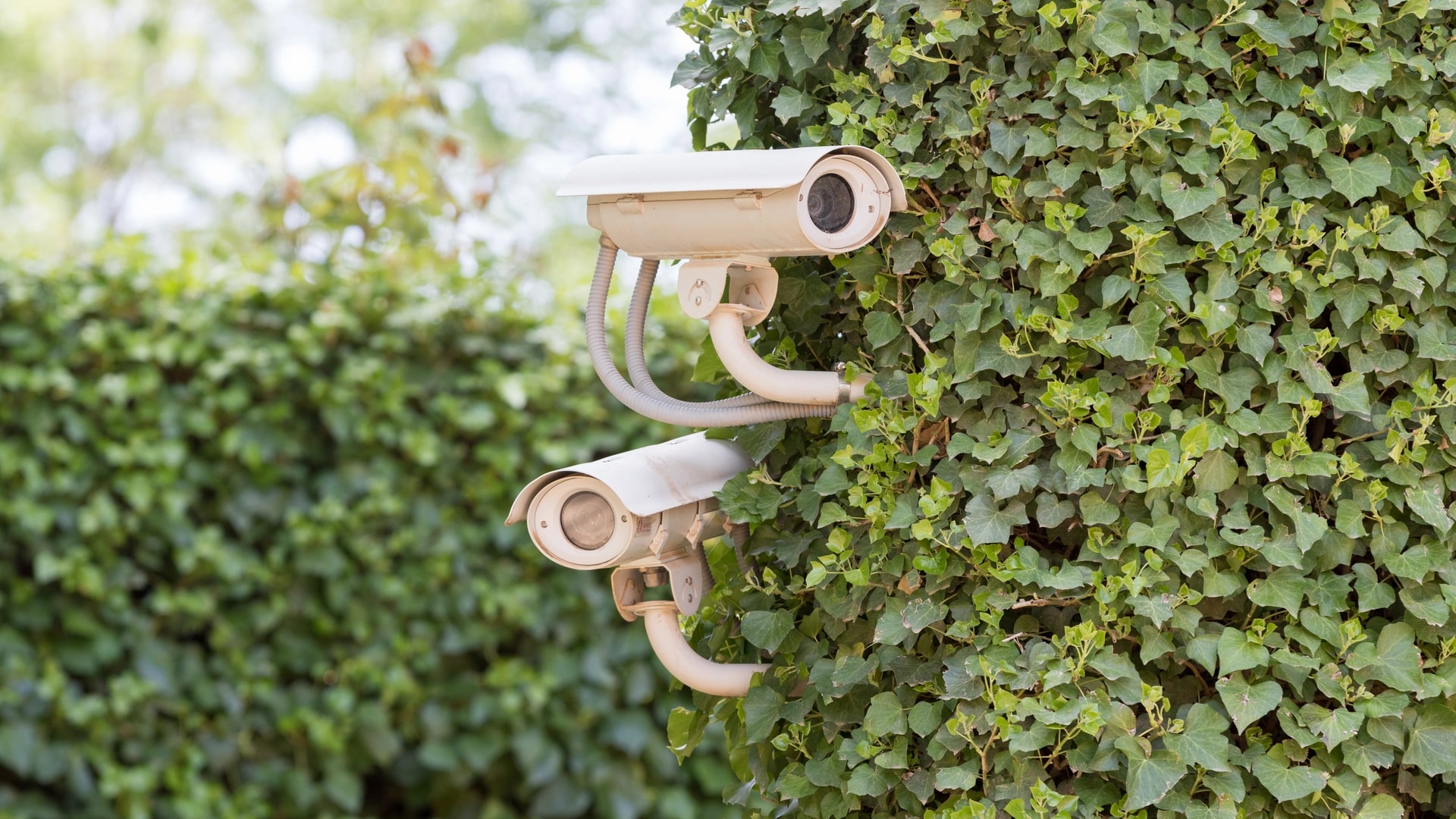
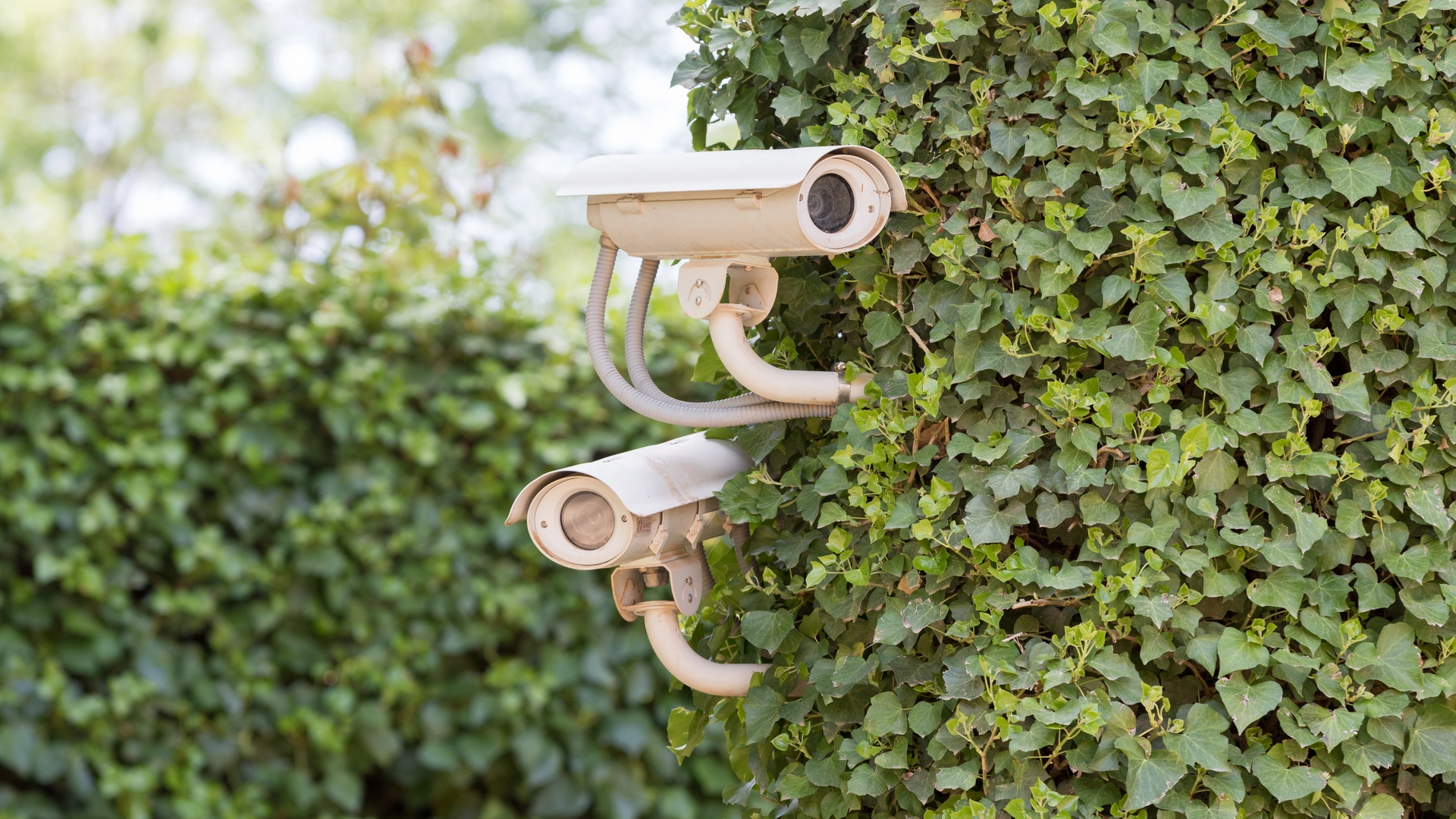
The strongest real AI feature in a home right now sits in the security camera. It tells a person from a car, a package, or a cat, and cuts false alarms by about 90 to 95 percent compared with old motion-only sensors[9]. That is the difference between one useful alert a day and thirty pointless ones.
Older cameras fired on any pixel change: a shadow, a passing car, a palm frond in the wind. Newer cameras run a neural network that labels what moved. You can then tell the camera to alert you for a person at the gate, but stay quiet for a street cat. This is mature, multi-vendor, and several years in the market, not a 2026 novelty.
The new part for 2026 is pattern learning. Ring showed AI Unusual Event Alerts at CES 2026: the camera learns what a normal day looks like at your home, then flags the odd event, and writes a plain-text line describing what set off the clip. It is helpful, though it also means the camera is building a picture of your daily routine (more on that under privacy).
The Dubai catch: the rules still apply on top of the AI. SIRA, Dubai's security regulator, sets a 1080p HD minimum and 31 days of stored footage for regulated premises, a sensible bar for a home too. Our security and surveillance work sets cameras up to that standard, and the guide to securing a smart home from hackers covers the network side.
From our installs: AI detection is the upgrade Dubai clients notice most, because it turns a noisy camera into one they actually check. One honest note: AI visual smoke or flame spotting exists, but the careful vendors call it a supplement, never a replacement for a code-required fire alarm.
AI in climate and energy: where it pays in Dubai
A learning thermostat or an occupancy-based AC schedule is the AI feature that pays back fastest in Dubai. Cooling is the biggest line on a summer DEWA bill, so trimming it is cash back every month. Smart AC and lighting control cut cooling costs 20 to 30 percent[10].
The AI adds precision, not magic. A learning thermostat studies your temperature, timing, and occupancy for a week or two, then holds a schedule that matches how you actually live. Presence sensors go a step further: they cool a room when someone is in it, and ease off when it empties. Amazon's Omnisense platform does this today on Echo hardware sold in the UAE, starting a fan or adjusting a routine when a room gets warm[2].
Quick take: a villa paying AED 4,000 a month to DEWA in summer can save AED 800 to 1,200 a month with smart AC and lighting control in place[10]. AI helps you reach the top of that range by pre-cooling before a predicted heat spike and by not cooling empty rooms.
Be careful with the bigger numbers online. Some Dubai and Abu Dhabi property blogs claim 35 to 50 percent savings from AI with no study behind them. Use the verified 20 to 30 percent figure and treat the rest as marketing. Our smart lighting and climate control work ties the AC, lighting, and shading into one schedule so the savings hold.
AI voice assistants and large language models
The big AI voice upgrades of 2026 are not available in the UAE at the time of writing. Amazon's Alexa+, Google's Gemini for Home, and Apple's new Siri layer are all absent here as of 2026. What you get on new hardware in Dubai is the classic voice assistant, with steady machine-learning basics.
Those upgrades replace the old command-and-response assistant with a large language model, the same kind of AI behind chat tools. The promise is natural, back-and-forth talk and multi-step actions. Alexa+ is confirmed live only in the US, Canada, Mexico, the UK, and a handful of European markets plus Brazil, with more countries named for 2027 but not the UAE[1]. Gemini for Home has reached the US and about sixteen European and Asia-Pacific countries, with the UAE absent from every wave[3].
These rollouts move month to month, so this is a snapshot as of 2026. For a full platform-by-platform view, see our comparison of Alexa, Google Home, and HomeKit for Dubai. If you want one assistant set up properly across your home, that is what our voice control and AI work handles.
Natural-language and generative automations
You can now set up some routines by describing them in plain words, instead of building each step by hand. It is real, but it is early, English-first, and sometimes unreliable. Treat it as a bonus, not a reason to buy.
The old way meant opening an app and stacking rules: if motion, then light, between these hours. The new way lets you say something like "turn the porch light on at sunset and off at midnight," and the assistant builds the routine for you. Alexa+ and Gemini for Home both offer a version of this, and it does change how setup feels.
Common myth: that AI means no setup at all, that you just talk to your house and it sorts itself out. Reviewers who have used these tools daily report the opposite. The routines it writes are not always the routines you meant, and a system still needs a proper install underneath. The natural-language layer speeds setup up; it does not remove it.
On-device AI versus cloud AI: what runs where
Some AI runs on the device inside your house. It is fast, more private, and keeps working when the internet drops. Some AI runs on a company's servers in the cloud. It needs a connection and adds delay. Most 2026 systems blend the two.
The split matters for three plain reasons: speed, privacy, and what happens during an outage. The less raw data (your voice, a face image) that leaves the house, the smaller the risk if a server is breached. And anything that depends on the cloud stops the moment your Wi-Fi does. Here is where common features actually run.
| AI task | Where it runs | Why it matters |
|---|---|---|
| Wake-word detection ("Alexa," "Hey Google") | On-device | Audio is sent to the cloud only after the wake word fires |
| Thermostat learning (newer Nest) | On-device | A fast local loop, no round trip for each reading |
| Camera object tagging (person, car, pet) | On-device or local hub | Less footage has to leave your home |
| Familiar-face storage (newer Nest) | On-device, encrypted | Smaller exposure than a cloud face database |
| Apple Home automations | Local hub (HomePod or Apple TV) | The most locally anchored of the big three |
| Generative reasoning (Alexa+, Gemini for Home) | Cloud | Needs internet; stops if the connection drops |
| Agentic web actions (booking a service) | Cloud | Depends on the wider internet, not your home |
| Cloud video storage and review | Cloud | A paid subscription, separate from on-device detection |
The Dubai catch: the flashy generative layer is the cloud-dependent part. If your internet drops, the AI chat goes quiet. This is the "smart home becomes a dumb home" worry, and it is exactly why a wired backbone matters. Local control on your network is also steadier: our home networking and IT work builds that base, and the smart home protocols guide explains how Matter and Thread keep control local.
AI in luxury systems: Josh.ai on Control4 and Crestron
In high-end Dubai villas, the AI layer usually means Josh.ai, a natural-language voice control that sits on top of a Control4 or Crestron system. It understands a plain request and routes it through the wired backbone that actually runs the house.
Josh.ai auto-discovers the devices a Control4 or Crestron installer has already programmed, using its own knowledge graph. So you can say "the den wants to watch something," and it works out the room, the screen, and the source, without a pre-built scene for every request. The point is that Josh.ai is the voice; Control4 or Crestron is the muscle. If the AI voice ever goes down, the keypads and wired logic still run.
That layered design is the honest way to add AI to a serious system. Control4 also supports Arabic and English voice control, set up at install. For the full picture of these platforms, see our comparison of Control4 versus Crestron versus Savant, and our voice control and AI work covers the Josh.ai integration.
Does an AI smart home work in Dubai?
Partly, and that is the honest answer. As of 2026, the headline generative-AI voice upgrades are not in the UAE yet. But real AI features do work here today: camera detection, adaptive climate, and Amazon's Omnisense presence routines all run on hardware you can buy in Dubai now.
| Platform or feature | 2026 AI upgrade | In the UAE as of 2026? |
|---|---|---|
| Amazon Alexa+ | Generative Alexa, agentic web actions | No, not launched here[1] |
| Amazon Omnisense sensing | Presence and temperature routines | Yes, on Echo hardware sold here[2] |
| Google Gemini for Home | Generative Assistant replacement | No, not launched here[3] |
| Apple new Siri layer | Gemini-powered Siri, predictive Home | No, and no Arabic support[4] |
| Classic voice assistants | Wake word, basic commands, routines | Yes, these work now |
So a Dubai buyer picking up the newest Echo, Google, or Apple hardware gets the classic assistant, not the new AI layer being sold in US tech press. No company has published a reason for the delay; it looks like a standard phased rollout, not a block on the UAE. Expect it to arrive later, on no confirmed date.
The wider context is that Dubai residents are unusually comfortable with AI already. Around 64 percent of UAE residents use generative AI tools, per Microsoft data reported by Rest of World, one of the highest rates worldwide. Dubai is also investing heavily in AI at the city and government level, through Digital Dubai. That is macro context, not a sign that home AI is more advanced here; the availability gap above is the real, current picture.
Arabic-language AI: contested, not solved
No AI assistant has a proven lead in Arabic as of 2026. Ignore any "near-human Arabic fluency" claim you see on a property blog, because none of them show a benchmark. The honest picture is a work in progress, not a solved problem.
Two things make Arabic hard for these models. First, most train mainly on Modern Standard Arabic, while the Gulf (Khaleeji) dialect spoken in Dubai homes has its own words and rhythm. Second, code-switching, mixing Arabic and English in one sentence, is common in Dubai and still largely unsolved, because most assistants run separate language pipelines rather than one bilingual model.
The research backs the caution. A 2026 academic paper describes building a new Emirati-Arabic speech corpus, direct evidence that basic training data is still being gathered. In one survey, 92 percent of UAE respondents said they wanted an AI assistant built for the region, per Arab News reporting, which is a live gap, not a settled win. So we do not crown a winner. Each platform has strengths and clear misses in Arabic, and any daily use should be tested in your own accent before you rely on it.
This is one reason a professional system helps. Control4 handles Arabic and English at the keypad and touch panel, configured by an installer, which sidesteps the dialect and code-switching problems a single consumer assistant still struggles with.
Privacy and your data
AI features that watch and listen collect real personal data, and that is the tradeoff behind the convenience. UAE law, the Personal Data Protection Law (PDPL, Federal Decree-Law 45 of 2021), requires clear consent for voice and biometric data, including a face used to identify someone[6]. It has no smart-speaker-specific rules, so the general consent rules apply, not a device-specific guarantee.
Are they always listening? A smart speaker listens locally for its wake word only, then records and sends audio to the cloud once the wake word fires. That on-device gating is real. The catch is false triggers: a Northeastern University study found over 1,000 word combinations that can wake a device by mistake. The surest control is the physical mic-mute switch every modern speaker has, which cuts the microphone circuit.
Face recognition is the sharper risk. In the US, Google has faced class actions over Nest cameras collecting facial data without consent, and settled a related biometric-data case with Texas in 2025; the feature is switched off entirely in Illinois under that state's stricter law. There is no UAE case like this, so treat it as an illustration, not local precedent. The lesson holds: under PDPL, a face the camera stores is sensitive data, so get real consent from guests and staff, not just household members.
Defaults differ by platform. Per the Mozilla Foundation's independent review, Amazon Alexa keeps voice recordings indefinitely by default unless you opt out, Google does not store them by default, and Apple's Siri does the most on-device processing and uses a rotating identifier; Mozilla judged Apple the best bet for privacy-conscious buyers[7]. For the wider legal side, our Dubai smart home laws guide covers PDPL in detail, and the securing a smart home guide covers the technical protections.
Is an AI smart home worth it in 2026?
Some of it, yes. Buy now for the features that are proven and useful today. Wait, or treat as a bonus, for the ones that are still unreliable or overpriced. The split is clear once you separate the demo from daily use.
Worth buying now:
- AI camera detection. The clearest win, cutting false alarms about 90 to 95 percent[9].
- Adaptive climate control. Real DEWA savings in Dubai's heat, within the 20 to 30 percent range[10].
- Robot vacuum mapping. Object recognition genuinely beats the old bump-and-turn navigation.
Wait, or treat as a bonus:
- Generative "chat with your house." Not in the UAE yet, and still inconsistent where it is live.
- Home robots for chores. 8,000 dollars-plus and only 70 to 80 percent reliable on simple tasks.
- Flawless Arabic voice. Contested across every platform, as above.
A reality check worth keeping in mind: in a December 2025 survey of 5,000 US homeowners, AI ranked dead last in priority at 12 percent, behind ease of use, real-time alerts, and backup power during an outage[8]. Most people want a home that simply works. AI is a nice extra on top of that, not the goal.
Want to know which features fit your home and budget? Book a free site visit and quote →
AI is a layer, not the foundation
The smart part of a smart home should be the reliable part, not the AI. Build on a wired backbone or a professional controller that works from the wall switch, then add AI on top as a convenience. Do it the other way round and the whole house depends on a cloud connection.
This is the single most useful idea in this article. KNX and Control4 keep your lights, AC, and core scenes running from local logic, even when the internet or the AI cloud goes down. AI voice, camera analytics, and generative routines ride on top of that. When they work, they are handy. When they do not, the house still runs.
It matters most in a full villa, where a lot of systems have to work together every day. Our guide for villa owners planning an upgrade walks through building that reliable base first, then layering AI where it earns its place. Get the foundation right, and AI becomes an easy addition later, not a rebuild.
Prefer to talk it through? Message an engineer on WhatsApp →
How Dubai Smart Home uses AI sensibly
We use AI where it earns its place, and skip it where it does not. In practice that means AI camera detection, adaptive climate control, and Josh.ai voice on a wired system, all set up privacy-first and in English and Arabic. No feature goes in because the box says "AI."
Our engineers are in-house and based in Dubai, we do not subcontract, and we install and support 12 smart-home systems. Since 2016 we have completed 100-plus projects across Dubai villas and apartments, and we are rated 4.9 out of 5 by homeowners. We tie the AI features that are genuinely useful into one reliable system, so lights, AC, cameras, and voice run from a single app or a single command.
If the AI layer ever changes or goes offline, your Dubai Smart Home setup keeps working, because the foundation is local and solid. That is the difference between a home built to last and a pile of gadgets.
Thinking about adding AI features to your Dubai home the sensible way? Book a free site visit and quote → or message our team on WhatsApp →. Enquiries are answered within 2 hours.