If you are about to put CCTV cameras on your Dubai villa or apartment, you have probably run into scary claims online. Some installer sites say you need a SIRA permit. Others say 4K is now the law for 2026. Most of that is wrong for a private home. Here is what Dubai's CCTV rules actually say, and what you should get right.
We fit cameras every week across Dubai, from Palm Jumeirah villas to Marina apartments, as one part of a full home security setup. So this is written from the install side and checked against the current Dubai laws. Where a rule applies to shops and offices but not your home, we say so plainly.
What is SIRA, and what does it regulate?
SIRA is the Security Industry Regulatory Agency, a Dubai Police body that regulates the security industry in Dubai. It licenses security companies, guards, and installers, and it sets camera standards for commercial premises like malls, hotels, and banks[1]. It does not issue permits for a family's home camera.
SIRA was created by Dubai Law No. 12 of 2016. That law replaced the older Law No. 24 of 2008 and the former Department of Protective Systems[3]. You may still see blogs quoting the 2008 law. Ignore them, because it was repealed years ago[7].
SIRA also runs a monitoring portal called VideoGuard that commercial buildings connect their recorders to. It checks whether a business system is online and working, and it does not apply to a home camera[1].
So SIRA sits over the companies that sell and fit security systems, and over commercial buildings. Your private villa or flat is not on that list.
Do homeowners need SIRA approval for home CCTV?
No. A private villa or apartment used only as a home does not need SIRA registration, a permit, or approval for its own cameras[8]. There is no service to register your doorbell camera, because that is not how the rules work for residents[1].
Real talk: plenty of installer websites blur this line on purpose. A "SIRA permit required" scare makes their service sound essential. For your own home, that permit does not exist. SIRA fines start at AED 10,000, but they target security companies and commercial premises, not a family's home camera[3].
Two narrow exceptions apply:
- You run a business from the address. If your home is also a registered commercial address, the commercial rules can apply.
- Your community sets its own rule. Some building or community agreements ask for a security standard, which is a private contract, not a SIRA permit.
One layer sits above you, not on you. Shared parts of an apartment tower or gated community, like lobbies, lifts, and parking, do fall under SIRA-standard cameras[1]. That job belongs to the building owner or the owners' association, not to you as a single unit owner.
What CCTV resolution does SIRA require: 1080p or 4K?
1080p Full HD is enough, and no rule forces 4K. As of 2026, the current SIRA manual, Administrative Resolution No. 13 of 2025, sets the camera minimum at 1080p Full HD, not 4K[2]. That figure is written for commercial premises, and it is a sensible bar to aim for at home too.
The current SIRA manual sets 1080p Full HD as the minimum, not 4K. Any "4K is now mandatory in 2026" claim you read online does not come from an actual Dubai law or resolution.
Common mistake: believing the "4K 2026 mandate" headline. Some Dubai CCTV sites print it, but none of them cite a real law or resolution number. We checked the actual manual text, and it says 1080p[2]. The only place a higher bar appears is high-risk commercial zones, like bank counters and jewellery displays, quoted around 8 megapixel, still not "4K everywhere."
We do fit 4K cameras when a client wants sharper detail on a long driveway or a wide gate. That is a choice, not a rule. For most homes, good 1080p cameras placed well beat cheap 4K cameras placed badly. Not sure which cameras to buy? Ask an engineer on WhatsApp →
How long must you keep CCTV footage in Dubai?
The SIRA retention rule is 31 days, but that is for commercial premises, not homes. The 2025 manual asks regulated businesses to store footage for at least 31 days at full quality[2]. High-risk sites like banks keep it longer, around 90 days.
Your home has no fixed legal minimum. Even so, 2 to 4 weeks of rolling storage is a sensible baseline, since most incidents get noticed and reported inside that window. A basic recorder with a decent hard drive holds that easily.
Quick math: four 1080p cameras recording on motion, not around the clock, fit about a month of footage on a 2 terabyte drive. That is why 1080p and motion recording matter. They keep a useful month on hand without a huge storage bill.
Where can you point a home CCTV camera under UAE law?
Point cameras at your own property, never into someone else's private space. Recording a neighbour's garden, window, or balcony without consent is a privacy breach under the UAE Personal Data Protection Law[5]. That law is Federal Decree-Law No. 45 of 2021. Footage of a face counts as personal data, so it has to respect consent[5].
Common mistake: angling a gate camera so it sweeps the neighbour's front door or the pavement. A neighbour's complaint about your camera angle carries real weight in Dubai. The fix is almost always a small angle change at install time.
Three practical rules keep you clear:
- Tell your household and staff. Cameras and smart locks that record faces or fingerprints need consent, so let everyone who lives or works in the home know[5].
- Mind the audio. Recording sound without consent is treated more strictly than video. Be careful with two-way doorbell cameras aimed at people outside your home.
- Put up a sign. A small notice that the area is under CCTV is good practice at your entry points. It keeps things clear with guests, staff, and delivery drivers.
Nanny and maid cameras are allowed, but tell your domestic staff a camera is present, and never place one in their bedroom or a bathroom. That is a privacy breach no matter who owns the home.
What do developers and communities allow?
Your community's design guidelines are the rule most likely to affect your camera, not a SIRA permit. Master developers like Nakheel, Emaar, and DAMAC each set their own rules for exterior cameras, and they enforce them.
Nakheel's published villa design guidelines are the clearest example. They allow cameras only on the inner side of your boundary wall, for monitoring inside your own plot[6]. No cameras are allowed on the outer side or on top of the wall. The feed must not watch neighbouring plots or public areas[6].
DAMAC generally allows cameras on your own driveway and entry. A view into communal areas needs management review, and a camera pointing at a neighbour's plot can get a removal request. Emaar communities run exterior changes through a No-Objection Certificate process. Check your own Design Guidelines Manual, or ask community management before you mount anything outside.
From our projects: we survey the plot and set camera angles to pass community review the first time. Moving a wrongly placed camera later costs you time and money, and sometimes a formal notice. Want your cameras placed to pass review? Book a free site visit and quote →
When do you need a SIRA-licensed installer?
You are not legally required to use a SIRA-licensed installer for your own home, but it is the smart choice. Commercial sites must use a licensed company[1]. For a home, the value of a licensed installer is quality and accountability, not a legal box to tick.
A good installer knows the resolution and storage that make footage usable for a police report or an insurance claim. They also know your community's placement rules, and they fit approved kit. Every smart camera, router, and hub sold in the UAE needs TDRA type approval[9]. A proper installer sticks to approved equipment and sound home networking.
Here is the whole picture in one view.
| Rule | What SIRA requires | What it means for your villa |
|---|---|---|
| Camera resolution | 1080p Full HD minimum, for commercial premises | 1080p is enough. 4K is optional, never mandatory. |
| Footage retention | 31 days for commercial premises | No legal minimum at home. 2 to 4 weeks is a sensible baseline. |
| Licensed installer | Required for commercial sites | Not required for you, but the smart, accountable choice. |
| Homeowner permit | None issued to private homes | You do not apply to SIRA for anything. |
What is Dubai Police Smart Home Security?
Dubai Police Smart Home Security (SHS) is an optional monitored service, not a legal requirement. It starts from about AED 147 a month on a three-year plan, and includes professional installation, 24/7 monitoring, and maintenance[4]. Alerts are checked at a command centre and linked to Dubai Police.
Think of it as a layer on top of your own cameras and alarm, for people who want a monitored, police-linked response. You can run full SIRA-standard equipment with no SHS plan, or take SHS without ever dealing with SIRA yourself. They are separate things.
Quick math: SHS at AED 147 a month is about AED 5,290 over three years. It is worth it if you travel often and want someone watching the alerts. It is easy to skip if you just want to review your own footage from your phone.
How CCTV fits an integrated smart-security system
Cameras work best as one part of a whole home security setup, not a lone gadget. In our installs, cameras tie into smart locks, the gate and video intercom, alarms, and lighting, all in one app[10]. A camera sees an event, and a smart lock, gate, or light can respond to it.
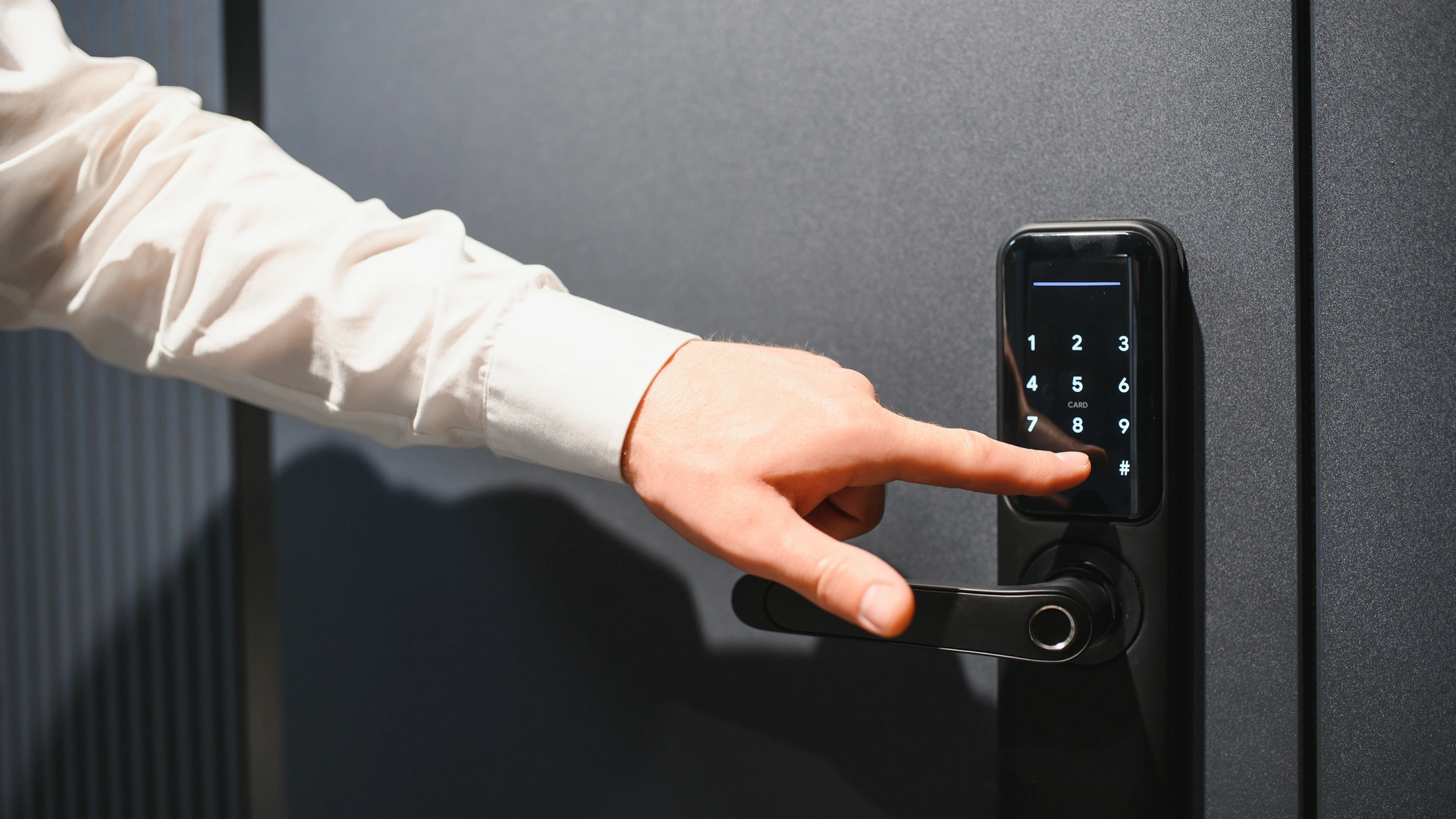
That is how we handle security and surveillance: 1080p HD cameras with 31 days of storage. We wire them into smart gate and access control, so you get staff PINs, video intercom, and one record of every entry. Our engineers are in-house and based in Dubai, and the system works in English and Arabic.
Planning the wider budget too? Our guide on smart home cost in Dubai breaks down what a full setup runs by home size.
Want your cameras placed right the first time and tied into one system? Get a free site visit and quote → or message our team on WhatsApp →. We are rated 4.9/5 by Dubai homeowners, and we answer enquiries within 2 hours.
Keep reading: start with our complete smart home guide for Dubai, learn how to secure your smart home from hackers, and see what else the rules cover in our guide to smart home laws in Dubai.