Downtown Dubai is the first community in this series where the reader is usually not a villa owner. In a tower here, your title covers the Unit you live in. The shell around it is held in common with every other owner in the building[1].
That one line shapes more of your smart home plan than budget or brand ever will. This page is the apartment companion to our 19-community smart home readiness comparison. The wider view sits in our complete smart home guide for Dubai.
What makes smart home automation different in a Downtown Dubai apartment?
Downtown Dubai is different because you do not own the building. Under Dubai's Jointly Owned Property Law, an apartment owner holds a Unit. The facade, the risers, the corridors and the shared cooling equipment are Common Parts[1]. That changes the answer to almost every question a villa guide asks.
In Arabian Ranches or Emirates Hills, an owner asks a community developer whether they may alter their own house. In a Downtown tower, large parts of what feels like your home are not legally yours to alter at all.
- Cooling comes from a shared plant. Your apartment has a fan coil unit fed by chilled water, not a compressor on a balcony. That decides which thermostats work.
- The structure is reinforced concrete. No chasing walls, and Wi-Fi drops between rooms far more than it does in a villa.
- Most towers here are heavily glazed. More sun through the glass means shading carries more of the comfort load.
- Access is a building system, not yours. The lobby, the lift and the concierge desk sit with building management.
Real talk: this page covers the ownership layer, the part almost no installer explains. It does not repeat the no-drill device tiers in our renter's guide to a smart home in a Dubai apartment, and it does not rebuild the fan coil mechanics in our district cooling thermostat guide. Both are linked where they apply.
Who owns the walls, risers and facade in a Downtown Dubai apartment?
The building does, through the owners as a group. Article 7 of Dubai's Jointly Owned Property Law lists what counts as a Common Part. The list is longer than most residents expect[1]. Structural walls, facades, pipes, ducts, cooling equipment and shared wiring are all on it.
The law calls your own space a Unit. It calls the shared elements Common Parts, and it puts them under a Management Entity. That entity is the developer, a management company, or a hotel project management company[1].
| Element | Who controls it | What that means for your smart home |
|---|---|---|
| Facade, external glazing and structural walls | Common Part, managed by the building | No fixings into the curtain wall frame or structure. Shading and brackets go inside the unit instead |
| Fan coil unit and shared cooling equipment | Cooling systems and equipment are listed as Common Parts | The wall panel is normally treated as your fitting. The chilled water side is not, so nothing touches the valve piping without the building |
| Risers, ducts and shared conduits | Common Part, managed by the building | New structured cable cannot be pulled through a shared riser on your own decision |
| Electrical and telecom wiring serving more than one Unit | Common Part, managed by the building | Anything that reaches another unit's supply is a building matter, not a resident one |
| Inside your own Unit: fittings, your own circuits, low-voltage devices | You, as the Owner | Switches, sensors, hubs, curtain motors, cameras and a fan coil thermostat swap are yours to decide |
Common mistake: assuming the wall behind your air conditioning is yours because it is inside your front door. Structural walls and cooling equipment are both named in Article 7[1]. Where the two meet is the exact spot people plan work they cannot do.
What is an Owners Committee, and when do you need its sign-off?
An Owners Committee is a group formed from the owners of a jointly owned building, defined in Dubai's Jointly Owned Property Law and governed by a Statute[1]. It reviews budgets and maintenance priorities. Dubai Land Department and RERA both encourage owners to register for one[2].
You will hear the phrase "Owners Association" used in Dubai property talk, including in some public communications. The law's own terms are Owners Committee and Management Entity, and those are the two you want to use in writing.
- The Management Entity is your day to day contact. It runs, maintains and repairs the Common Parts, and it is the office you ask before any work that could reach one[1].
- The Owners Committee sits above the routine. It reviews budgets and building maintenance priorities rather than approving one resident's thermostat[2].
- Common Parts cannot simply be altered. The law bars altering, redesigning or shutting down Common Facilities in a way that restricts other owners, without the required prior approvals[1].
Real talk: we are not printing an approval fee or a turnaround time on this page. No Emaar or Dubai government source publishes one for apartment fit-out work, and the figures circulating on consultancy blogs are not something you can plan a project around. Ask your own building management in writing, and get the scope confirmed before you order hardware.
What can a tenant change, and what can only an owner request?
A tenant can change anything reversible inside the unit. Only an owner can request work that reaches a Common Part. The law is direct about it: an owner may lease a Unit, but the owner and the tenant both stay bound by the building's Statute and management rules. The owner also stays liable for service charges[1].
- Tenant, no permission needed: wireless bulbs, smart plugs, stick-on sensors, an infrared AC controller, a clip-on curtain motor, and an indoor camera facing your own space.
- Tenant, message the landlord first: a retrofit smart lock, a wall panel thermostat swap, and anything wired. The fan coil panel sits partway between your unit and the building's cooling network, so it is the owner's call.
- Owner living in the unit: all of the above, plus a hardwired fan coil thermostat on the unit side of the existing wiring, without asking anyone.
- Owner leasing it out: the same rights, arranged around the tenant's access, and still liable for the service charges even if the tenant does not pay them[1].
- Nobody, without the building: anything reaching the facade, a riser, a shared conduit, or the lobby access system.
The device-by-device version of the tenant list, with deposit protection and the message to send a landlord, sits in our renter's guide to a Dubai apartment. If you own and rent out, our landlord guide covers the other side.
Who runs district cooling in Downtown Dubai?
Tabreed runs district cooling in Downtown Dubai, not Empower. In April 2020 Tabreed acquired an 80 percent stake in Emaar's Downtown Dubai district cooling business. The concession covers up to 235,000 refrigeration tons and serves landmark developments including Burj Khalifa and Dubai Mall[3].
This matters because pages on the open web still name the wrong provider for Downtown. If you are checking a rate, a permission rule or a service line, you want the right company. Tabreed handles residential billing and metering through its Tasleem business[4].
Other Dubai districts run on other networks. Palm Jumeirah, for example, is on Empower, which is why the cooling advice in our Palm Jumeirah page points at a different invoice from this one.
How to confirm it yourself: look at the header on your cooling invoice. It arrives separately from DEWA, and it is priced in refrigeration tons rather than kilowatt hours. That header is the only proof you need.
What part of your Tabreed bill can a smart thermostat actually cut?
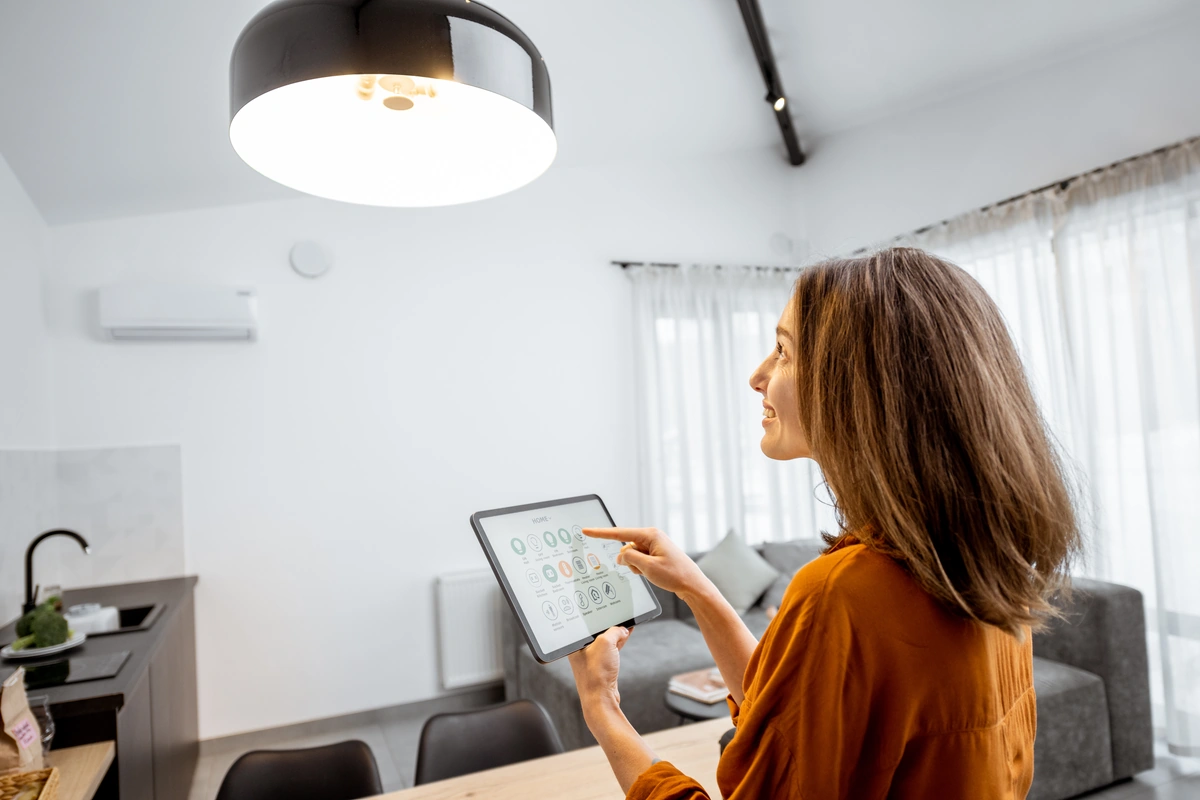
A smart thermostat can cut only the consumption half of your Tabreed bill. Dubai's district cooling regulator, the Regulation and Supervisory Bureau, requires every licensed provider to bill in two parts. The capacity charge covers the cooling reserved for your apartment. The consumption charge covers the cooling you actually use[5]. A thermostat reaches one of them.
| Charge | Fixed or variable | Billed on | What a smart thermostat can do |
|---|---|---|---|
| Capacity charge | Fixed | The refrigeration tons reserved for your apartment, per year, billed monthly | Nothing. It is set by your unit's allocation and does not move with use |
| Consumption charge | Variable | The refrigeration ton hours you actually draw | Cuts it, through scheduling, setback while you are out, and holding a steady setpoint instead of a swing |
Real talk on the rate: Tabreed does not publish a per refrigeration ton figure for its Downtown Dubai network on its own site, so we are not going to print one. The structure above is fixed by regulation and applies to every provider in Dubai[5]. The two rates that apply to your apartment are printed on your own invoice, so read that rather than a number from a blog.
Quick math: a thermostat only reaches one of the two lines. Whatever percentage you save, you save it from the consumption line, not from the total. Our district cooling thermostat guide works through the sums with a sample invoice.
What thermostat actually works on a Downtown Dubai fan coil unit?
A Downtown fan coil unit takes a thermostat built for fan coils, not for compressors. Your wall panel here opens a chilled water valve and picks a fan speed. Nest, Ecobee and standard Sensibo modes are built to switch a compressor on and off, so they do not control a fan coil natively.
That rules out most of the shelf at a consumer electronics shop. The devices that do work are purpose-built fan coil thermostats, or a fan coil controller inside a wired system such as KNX or Lutron.
The device list, the 2-pipe against 4-pipe difference, and what a clean retrofit looks like are all covered in our district cooling smart thermostat guide. Two points are specific to Downtown Dubai and worth adding here:
- The panel is usually yours, the pipework is not. A swap at the existing wall stat stays on the unit side. Anything at the valve or the chilled water pipe is shared cooling equipment under Article 7[1].
- Ask in writing anyway if you are a tenant. Buildings vary in how they treat the wall panel, and one email costs less than a removed device.
The install side sits with our smart lighting and climate team. Want the right device confirmed for your own panel? Ask an engineer before you buy.
Why can't you drill into a Downtown Dubai apartment's walls?
You cannot drill here for two reasons, one legal and one physical. Structural walls are a Common Part under Article 7, so they are not yours to cut into[1]. They are also reinforced concrete, which makes chasing a cable run slow, messy and expensive even where it is allowed.
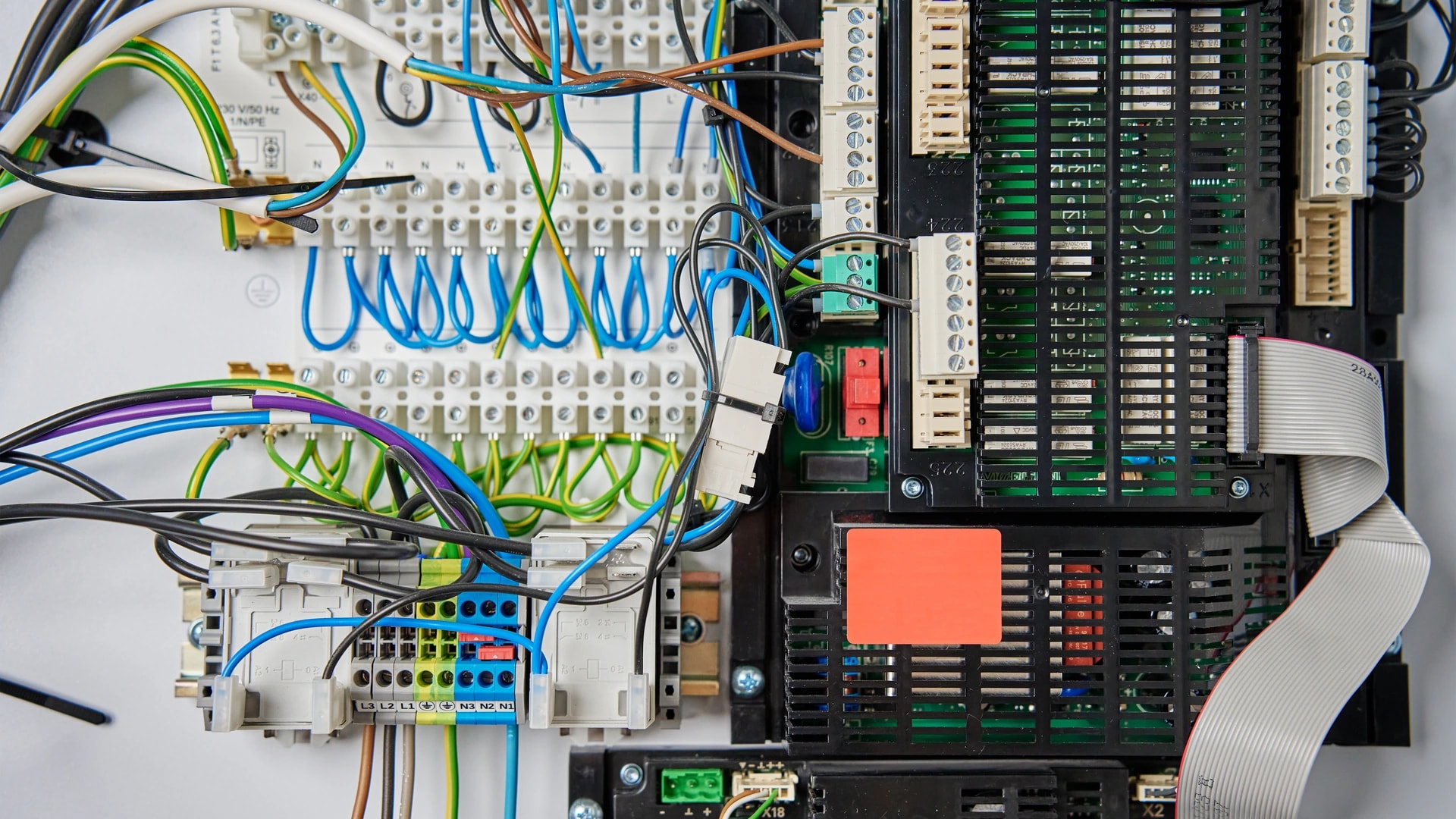
The same applies to the risers. The building's ducts, pipes and the electrical and telecom conduits serving more than one unit are all named as Common Parts[1]. An owner cannot pull new structured cable through them on their own decision.
This is the real difference between a Downtown apartment and a villa, and it is not about money. A villa owner with AED 150,000 to spend can wire the whole house. An apartment owner with the same budget still cannot open a riser.
- What you can still wire: anything inside the unit's own walls and on its own circuits, using routes the fit-out already left behind.
- What you cannot: a new cable path between floors, a new feed from a shared board, or a fixing through a structural wall.
- What to ask for instead: the fit-out drawings for your unit, if the building or the developer still holds them. Existing conduit is worth more than any brand choice.
Common mistake: buying a fully wired system on the assumption that a Downtown apartment is just a small villa. Our retrofit versus new build guide covers the general trade-off. In a jointly owned tower, the structure decides it for you.
What does a wireless-first setup look like in a concrete tower?
A wireless-first tower setup is a mesh network with battery and plug-in devices, plus one or two wired exceptions inside the unit. Wireless-first is not a compromise here. It is the only approach the building's own structure allows.
Three wireless systems do the work, and it helps to know which is which:
- Zigbee and Z-Wave: low-power wireless mesh systems that need no drilling, with batteries that last years. Best for sensors, buttons and door contacts.
- Matter: a shared standard from 2022, so one device works with Apple, Google and Amazon together. Useful when a household runs mixed phones.
- Wi-Fi: what your phone already uses, with no hub required. Fine for a few devices, but it drains batteries once you have a dozen.
Coverage is the part people underestimate. Reinforced concrete floors and walls block Wi-Fi far harder than villa masonry. A one to three bedroom apartment commonly needs one or two mesh nodes beyond the router the operator supplied.
From our projects: the usual Downtown dead spot is a far bedroom sitting behind a concrete core and a riser cupboard at the same time. Moving a node one room closer to the core fixes more than upgrading the router does. Our home networking team maps that before any device is ordered, and our Dubai Wi-Fi troubleshooting guide covers the rest.
Why do curtain walls and floor-to-ceiling glass matter more here?
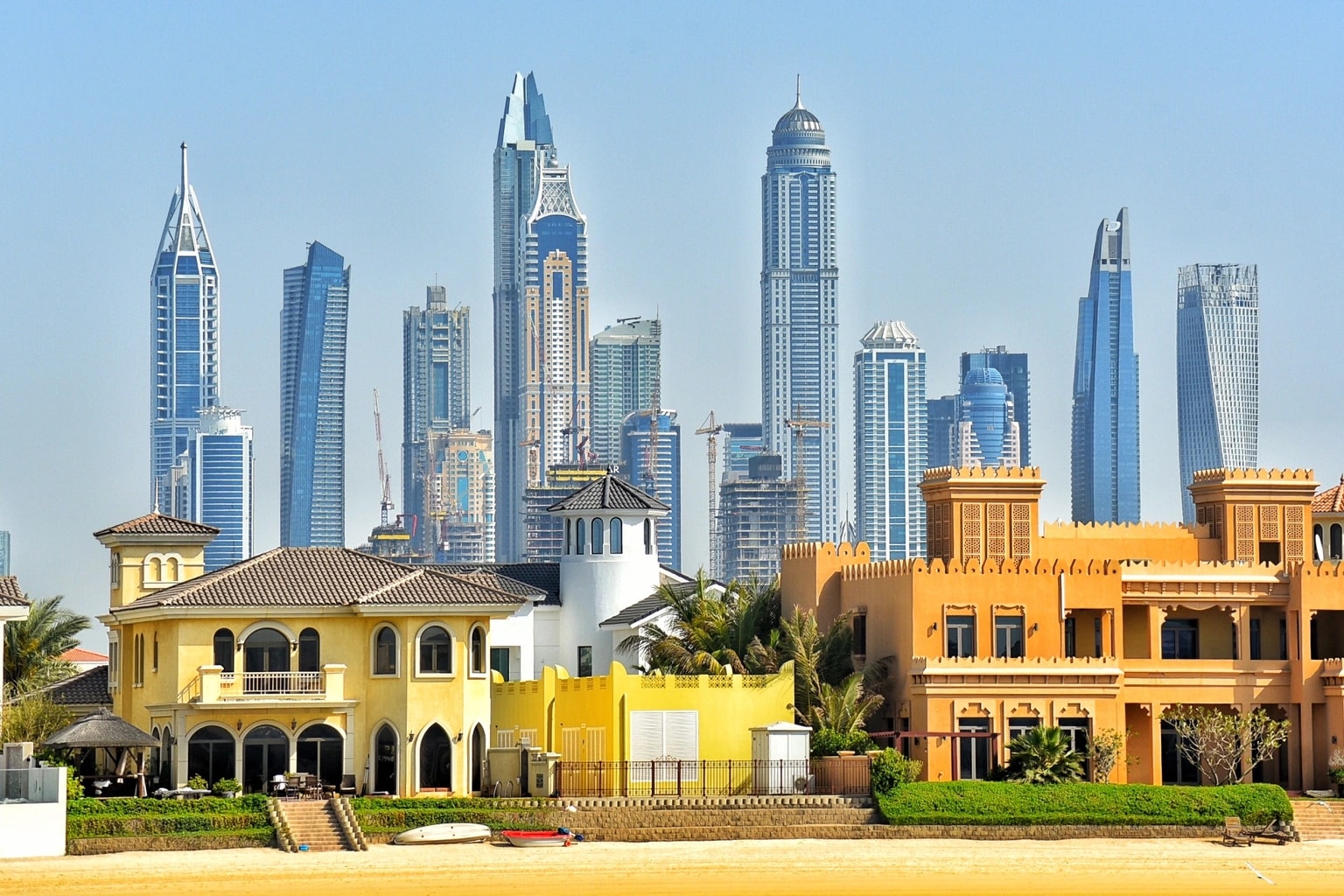
The glass here is both the biggest source of heat and the one surface you cannot fix anything to. Most Downtown Dubai towers are contemporary high-rise buildings with large glazed facades[6]. This is not true of every building here, so check your own, but it is the pattern.
Large unshaded glass facing direct Dubai sun means more solar heat gain than a villa's smaller punched windows. Your fan coil then runs longer to hold the same room temperature, which lands straight on the consumption line of your cooling invoice.
Motorised shading does more work per window in an apartment like this than in a villa. Smart shading saves roughly 15 to 20 percent on cooling in a Dubai home, and glazed towers sit at the useful end of that range.
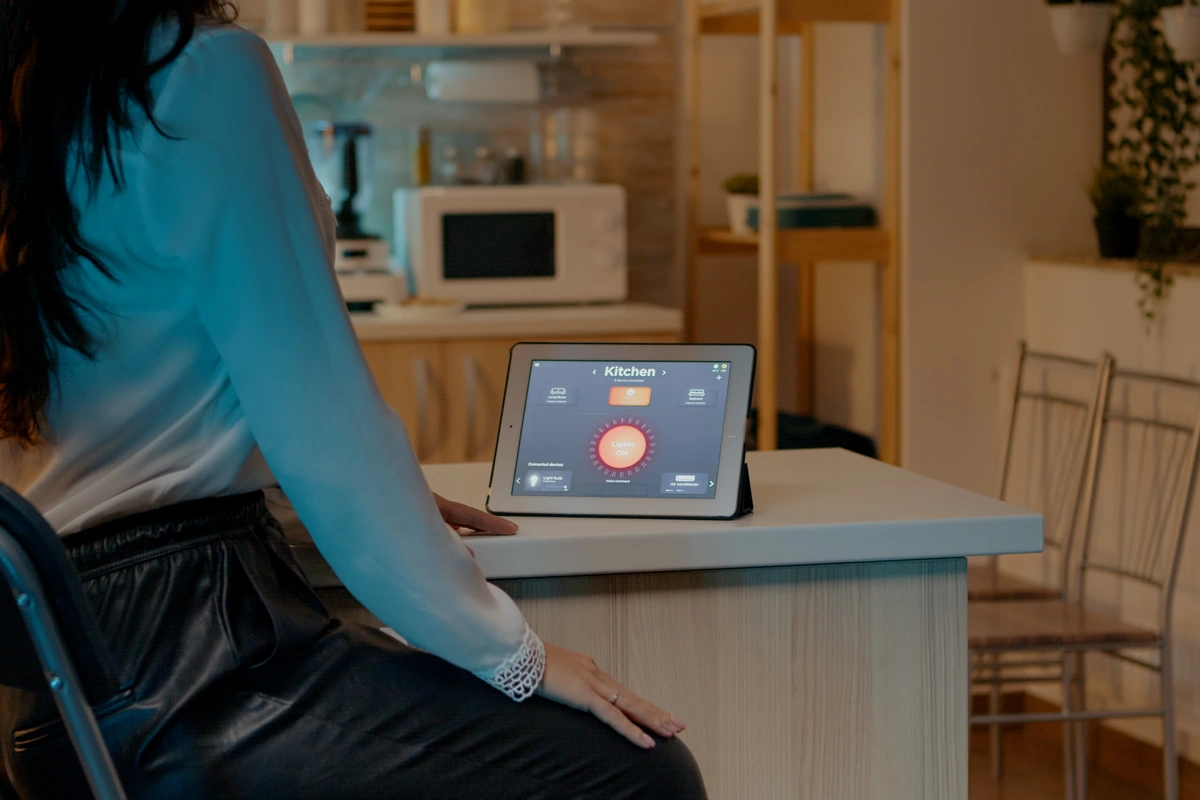
The fixing rule follows from the law. Facades are Common Parts[1], so a track cannot go into a curtain wall mullion or the structural frame.
- Fix inside the reveal or to the ceiling. Both sit within your unit and need no sign-off.
- Reuse the existing curtain track where one exists. A clip-on motor on a track the fit-out already installed is the cleanest retrofit in an apartment.
- Leave external shading alone. Louvres or screens on the outside of the glass touch the facade and are a building decision, not a resident one.
Our motorised curtains and blinds team handles the fixing survey, and our smart curtains and blinds guide covers the device choice.
What replaces the villa gate: building access, concierge and parcel handling?
A lobby access system and a concierge desk replace the villa gate, and neither belongs to you. Emaar's own Downtown Dubai page lists concierge services as a resident amenity across the community's towers[6]. The fob or PIN at the lobby and the lift is part of the building, not part of your home.
Parcels work the same way. The law defines mail, parcel and cargo delivery as a utility service that the Management Entity is responsible for, alongside electricity, water and telecom[1]. Your smart lock does not replace the parcel desk.
So the plan is to build around the building's layer rather than over it:
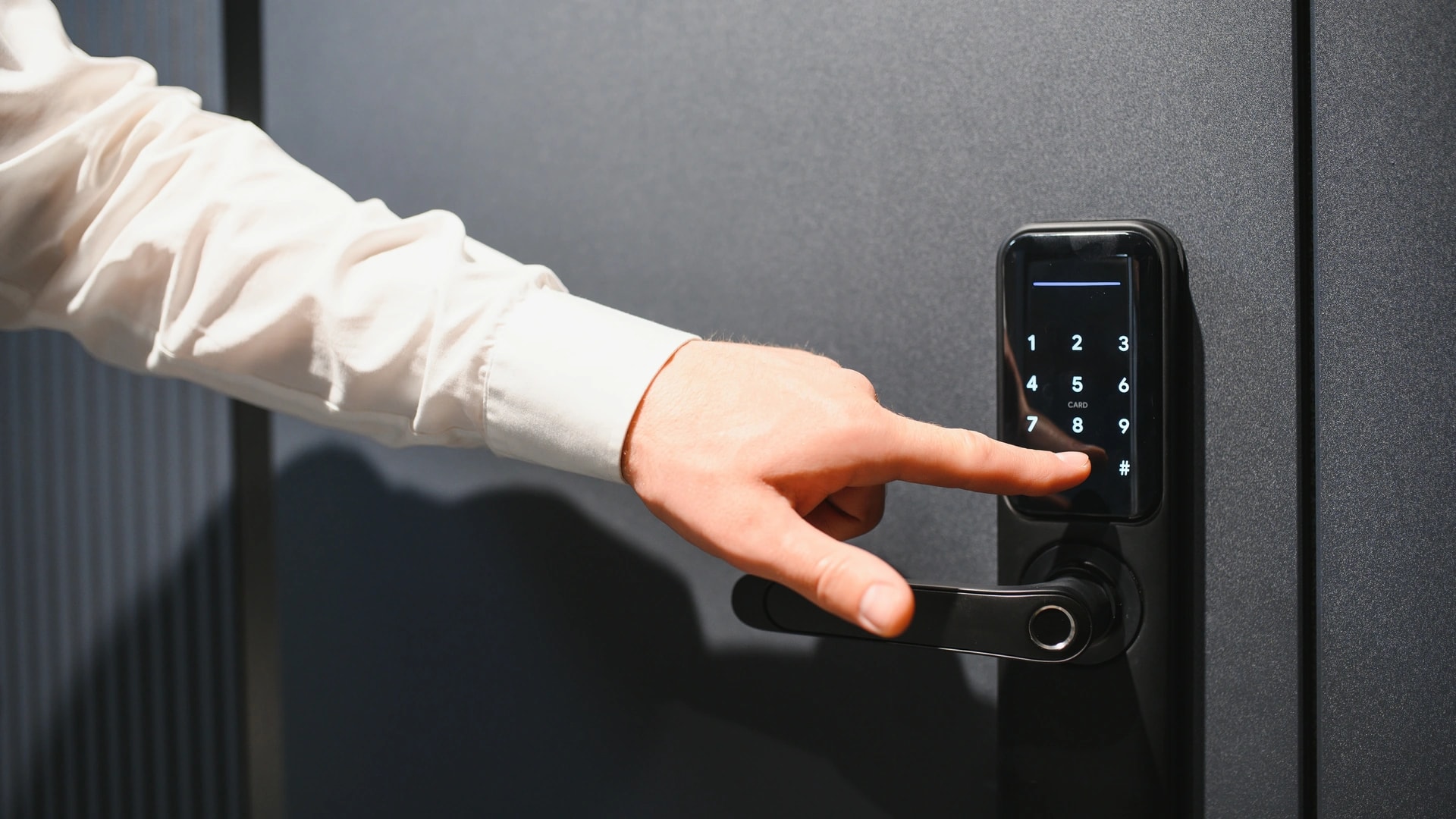
- Your front door is yours. A smart lock or a video doorbell facing your own entrance needs no building sign-off in most towers, though a tenant should still tell the landlord.
- The lobby is not. Integrating with the building's access system is a Management Entity conversation, and the answer is often no.
- Give the concierge a workflow, not a device. A one-time code for a delivery, plus a notification from your own door sensor, beats trying to automate a desk you do not run.
Cameras are where residents get this wrong. An indoor camera facing your own space is your business. A lens that reaches the shared corridor or the lift lobby records other people. The UAE Personal Data Protection Law requires consent for camera data of identifiable people[7]. SIRA's rule of 1080p HD minimum with 31 days of stored footage governs the building's own shared CCTV rather than your indoor camera[8].
Our SIRA CCTV guide and our Dubai smart home laws guide cover the rules in full. The hardware sits with our smart gate and access control team.
Which internet provider serves your Downtown Dubai tower?
The provider depends on your building, and you have to check. Only two licensed fixed-line operators serve the UAE, du and e& (Etisalat), both regulated by the TDRA. It requires operators to publish Service Coverage Interactive Maps so a resident can check an address[9].
Most residential towers are wired for one primary operator rather than both, so this is rarely a preference. No building-by-building map of Downtown Dubai exists in public, and anyone who tells you which operator serves your tower without checking is guessing.
- Check before you sign anything. Use the TDRA map or the operator's own address checker, with your exact tower and unit[9].
- Do not design a plan around a speed you have not confirmed. Camera storage, video calls and streaming all sit on the upload figure, which is the one people forget to look at.
- Keep the automation working offline. A hub that runs scenes locally means the lights and the curtains still work when the line drops.
Our internet speed guide for smart homes covers what a full apartment setup actually needs. If you are new to Dubai and setting up from scratch, our expat guide runs the whole sequence.
What does smart home automation cost in a Downtown Dubai apartment?
A full one to three bedroom apartment lands at AED 8,000 to 15,000 and installs in 2 to 4 days[10]. A single room starts at AED 2,000. Those are the same Dubai prices we publish everywhere. The ownership limits in a tower shape the scope rather than the rate.
| Scope | Installed price (AED) | On-site time | What it fits in a Downtown Dubai apartment |
|---|---|---|---|
| Starter, one room | 2,000 to 5,000 | Same day | Lighting and a curtain motor in the living room, or the bedroom you actually use in the evening |
| Full apartment, 1 to 3 bedrooms | 8,000 to 15,000 | 2 to 4 days | Lighting, a fan coil thermostat, sensors, a smart lock, curtain automation and a mesh network across the unit |
| Penthouse or large unit | Priced after a site visit | Varies by unit | Multiple fan coil zones and shading across a long glazed elevation, where the fixing survey decides the number |
| Support and maintenance | About 5 to 10 percent of project value a year | Optional, ongoing | Worth it if you travel, because nobody else in the building will reset a hub for you |
The full breakdown by home size sits in our smart home cost guide. Buying off-plan in Downtown rather than living in a finished unit? Our off-plan guide covers what to check in the spec sheet first.
Want a real number for your own apartment? Book a free site visit and quote, or message us on WhatsApp.
In what order should you do the work?
Ownership first, network second, devices third. In a villa the order is set by the walls. In a Downtown apartment it is set by what you are allowed to touch, so the paperwork step comes before the shopping step.
- Draw your own line. Walk the apartment and mark what is inside the Unit and what reaches a Common Part: the facade, the riser cupboard, the chilled water pipework[1].
- Ask the Management Entity in writing. Only for the items that crossed the line. Get the answer before hardware is ordered, not after.
- Fix the network. Confirm which operator serves your address, then place mesh nodes for the concrete, not for the floor plan[9].
- Do lighting and climate next. These are the two systems you touch daily, and the fan coil thermostat is the one that reaches your cooling invoice.
- Add shading. Track or reveal fixings inside the unit, sized after the network so the motors have signal where they sit.
- Finish with locks, sensors and cameras. Your own door and your own rooms, aimed inward.
- Programme scenes people actually use. A wall keypad by the door beats an app for everyone who does not want to hunt through a phone.
Common mistake: buying the thermostat first because it is the exciting part. In a jointly owned tower it is the one device whose answer depends on your building. That makes it the worst thing to have sitting in a box while you wait for an email.
How does Dubai Smart Home handle a Downtown Dubai project?
Ownership first, then devices. We start a Downtown apartment with the Common Parts question rather than a product list. That is the step that decides what is possible[10].
- We map the line on site. What sits inside your Unit, what reaches the facade, the riser or the shared cooling side, before a quote goes out.
- We check the fan coil panel first. Whether it can take a hardwired thermostat on the unit side, and which device suits the pipe configuration behind it.
- We plan wireless-first for concrete. Mesh coverage designed around the core and the riser cupboard, with wired work kept to what stays inside your walls.
- We put the awkward question in writing. Where something touches a Common Part, we help word the request to your building management and wait for the answer.
- Our engineers are in-house. Based in Dubai, no subcontracting, support running 24/7, and enquiries answered within 2 hours.
We have run 100+ smart home projects across Dubai and the UAE since 2016, we install and support 12 systems, and Dubai homeowners rate us 4.9/5. Systems run in English and Arabic, which matters in a household where not everyone reads the same one.
Own or rent in a Downtown Dubai tower? Dubai Smart Home will tell you what your apartment can actually take before you spend anything. Get a free consultation, or send us a message on WhatsApp.