Every smart home page in Dubai says the same four words: Alexa speaks Arabic. Siri speaks Arabic. Google speaks Arabic. Each claim is technically true and practically incomplete.
The gap is not marketing spin. It is that "the assistant speaks Arabic" and "my house understands me in Arabic" are two different things, and almost nobody separates them. This guide states what each platform actually supports, in Dubai, in 2026, and what you have to set up yourself before Arabic feels native in your home.
Does Arabic voice control actually work in a Dubai smart home?
Yes. Arabic voice control works in a Dubai smart home, but unevenly, and in two layers that get mixed up constantly.
Layer one is whether the assistant understands spoken Arabic at all. Alexa does, in both Gulf and formal Arabic, since December 2021[1]. Classic Siri has done it since December 2015[5]. Google Assistant does it on a phone, but not on a Nest speaker[8].
Layer two is whether your lights, rooms and scenes carry names the assistant can match in Arabic. That layer is set up by a person, not by Amazon or Apple. Skip it and you get an Arabic wake word bolted onto an English house.
Real talk: most of the disappointment we see in Dubai villas is layer two, not layer one. The assistant was fine. The device names were all typed in English on install day and never touched again.
Which assistant has the best Arabic support in 2026?
Alexa has the best Arabic support of any voice assistant in the UAE in 2026, on the evidence available. On the dialect side it is not close. The table below is the honest status of each platform, stated exactly as each company documents it.
| Platform | Arabic support | Dialect | Bilingual with English? | Newest AI layer in Arabic? | UAE hardware status |
|---|---|---|---|---|---|
| Amazon Alexa | Yes, since December 2021 | Khaleeji and Modern Standard, purpose-built | No, Arabic is not a supported pair | Alexa+ not launched in the UAE | Officially supported market |
| Siri (classic) | Yes, since December 2015 | One Arabic locale, no published dialect split | No documented bilingual mode | Apple Intelligence: no Arabic, no date given | Built into iOS, no separate launch needed |
| Google Assistant | Yes on the phone app, from 2019 | Leans on Modern Standard Arabic | Not documented | Gemini for Home: no Arabic, no UAE | Arabic not listed for Nest speakers or displays |
| Josh.ai | No, English only | Not applicable | Not applicable | Not applicable | See the Josh.ai section below |
Choosing an ecosystem is a wider question than Arabic alone. Cameras, hubs, app quality and price all matter, and we cover those in our Alexa vs Google Home vs Apple HomeKit guide for Dubai. This article stays on the language question.
Six common claims about Arabic voice control, checked
These six lines appear on Dubai smart home sites constantly. Five of them are wrong, and one is wrong in a way that costs money.
| The claim | Is it true in 2026? |
|---|---|
| "Alexa, Siri and Google all speak Arabic the same way." | No. Each supports it differently and to a different depth. |
| "If the assistant speaks Arabic, my smart home understands Arabic." | No. Device, room and scene names have to be set in Arabic too. |
| "Apple's new AI Siri already speaks Arabic." | No. Apple Intelligence does not list Arabic, and no date is committed. |
| "Google Home speaks Arabic the same as it does on my phone." | No. Arabic is not listed for Nest speakers, displays or clocks. |
| "Alexa mixes Arabic and English mid-sentence like it does with Hindi." | No. Arabic is not in Alexa's bilingual mode pair list. |
| "Josh.ai supports Arabic." | No. Josh's own FAQ says English today. |
What "supports Arabic" really means: three separate layers
"Supports Arabic" really means three separate layers: the assistant's language, the specific hardware, and your device, room and scene names. All three have to line up before a command works in Arabic. Marketing pages only ever describe the first one.
- Layer 1, the assistant: does it understand and reply in spoken Arabic? This is the yes or no headline every brand quotes.
- Layer 2, the hardware: does Arabic run on the specific box sitting on your shelf? Alexa: yes, on Echo speakers. Classic Siri: yes, on iPhone and HomePod. Google: yes on the phone app, not listed for Nest speakers[8].
- Layer 3, the names: are your devices, rooms and scenes actually named in Arabic? A command only resolves if the name matches what you said.
Layer 3 is where Dubai homes fall down. Say your living room lights were added as "Living Room Lights" during setup. Switching Alexa to Arabic does not rename them. You now have an Arabic assistant listening for an English device name.
Rename that same group to غرفة الجلوس and the command resolves. Nothing else changed. The assistant was always capable. The house was not set up for it.
In an Amazon-commissioned survey of UAE and Saudi residents, 65 percent said they prefer using Arabic with a voice assistant. 56 percent said understanding local accents and expressions matters to them.
This is the work we describe on our voice control and AI setup page. Not buying speakers. Naming every device, room and scene in the language the family actually speaks at home.
Does Alexa speak Arabic in Dubai?
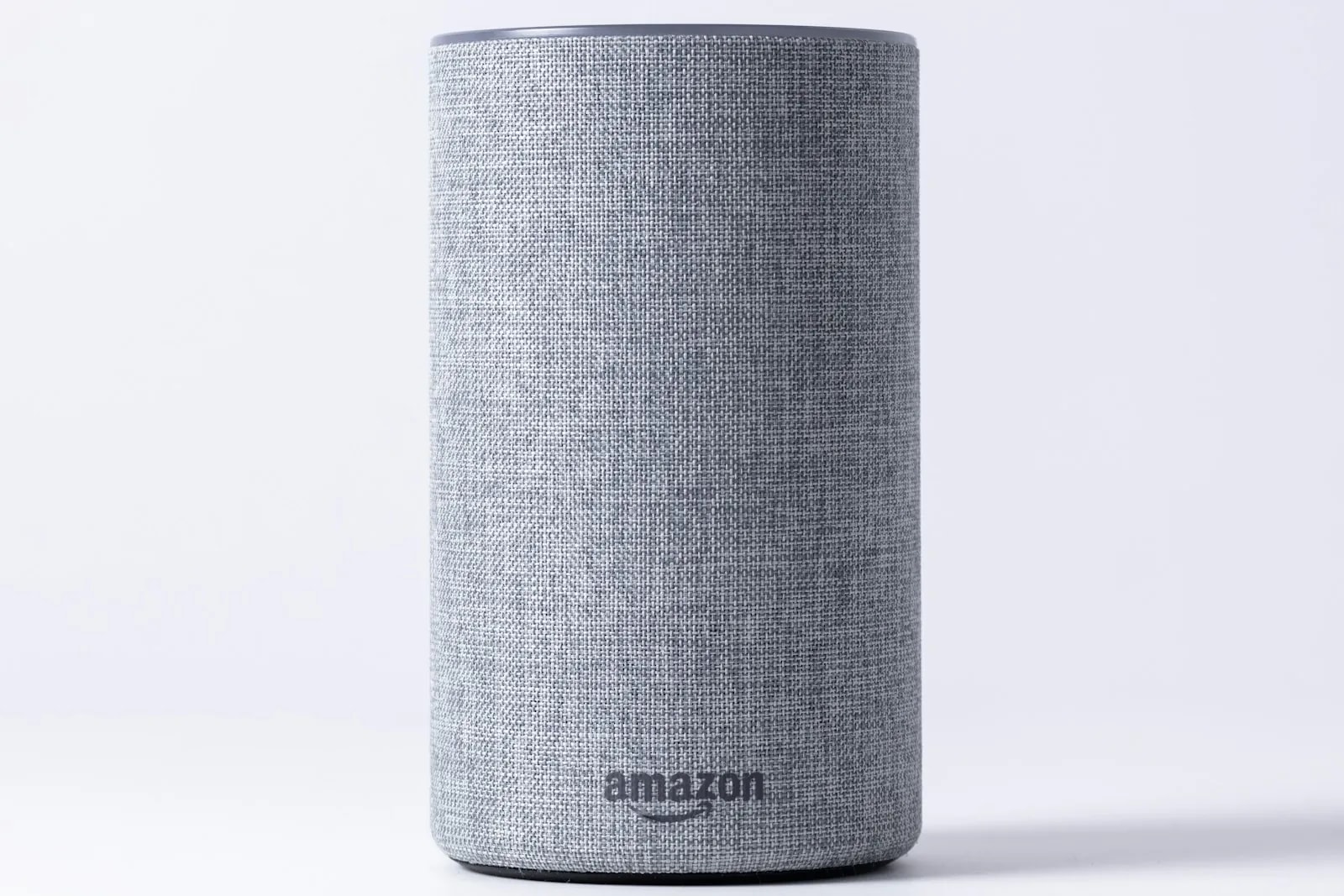
Yes. Alexa speaks Arabic in Dubai, with the deepest Arabic build of any assistant you can buy here. Alexa has been an officially supported product in the UAE since 7 December 2021[1], launching with a purpose-built Arabic voice rather than a translated English one.
Amazon's own engineering account describes what that took[2]. The team trained a trilingual understanding model across Arabic, French and English so training data could carry across languages. They then added a diacritization step that converts Modern Standard Arabic text into Khaleeji pronunciation for the spoken reply.
The practical result: Alexa answers in Modern Standard Arabic for formal or informational replies, and in Khaleeji for casual confirmations, and understands you speaking either. That dual-dialect design is documented for no other platform.
Usage backs it up. Amazon data reported by Khaleej Times counts more than 500 million voice interactions across the UAE and Saudi Arabia in 2025, including 175 million smart home commands[12].
The limit nobody mentions: Alexa's bilingual mode, the feature that lets one device follow two languages in the same conversation, does not include Arabic. Amazon lists the supported pairings as English with German, French, Canadian French, Japanese, Spanish, US Spanish and Hindi[3]. At the time of writing, Arabic is not one of them.
For a Dubai household that means one language per device, not one device that follows both. The kitchen Echo can be Arabic and the study Echo can be English. Asking a single unit to move between them mid-sentence is not a supported behaviour. For general Alexa setup in the UAE, from account region to Wi-Fi, see our guide to using Alexa in Dubai.
Does Siri speak Arabic, and is the new AI Siri different?
Classic Siri has spoken Arabic since iOS 9.2 in December 2015, covering the Saudi Arabia and UAE locales[5]. That is six years earlier than Alexa's UAE Arabic launch and the longest Arabic track record of any assistant active in the region.
It reaches your smart home too. Apple Home commands are processed as Siri intents in whatever language Siri is set to, so there is no narrower "smart home Arabic" vocabulary to worry about. If Siri is in Arabic, your lights and AC answer in Arabic.
Quality is a different question, and an honest answer is that it is contested. Marketing sites call Siri's Arabic excellent. Independent language researchers document real dialect and recognition problems. Treat it as mixed, not settled, and test it in your own accent before you commit a villa to it.
Now the distinction almost every page gets wrong. Apple Intelligence, the newer generative AI layer behind rewritten notifications, on-device summaries and the more conversational Siri, is a separate feature set with its own language rollout. Apple's feature availability page lists the languages it supports, and Arabic is not on that list[6]. Apple has committed to no date.
So both statements are true at once. Your Arabic-speaking father can run the whole house by voice on an iPhone today. The newer AI layer on that same phone does not work in his language yet. Anyone telling you Apple's new AI Siri already speaks Arabic is repeating something Apple has not published. Our Apple HomeKit in the UAE guide covers the hub and hardware side.
Does Google Assistant or Gemini speak Arabic in the UAE?
Google Assistant speaks Arabic on the phone app, but Arabic is not listed for Nest speakers, displays or clocks. That split is the single most useful fact in this article, and it is checkable in Google's own documentation.
Google Assistant gained Arabic from a 2019 rollout that started in Egypt and Saudi Arabia and reached 15 more Arab countries the same year[7]. Real support, properly launched, still working.
But Google publishes supported languages per device category. Its Assistant help pages list separate language sets for smart speakers, smart displays and smart clocks, and Arabic does not appear in any of those hardware lists[8]. Same account, same Google, different device, different answer.
So the person in Dubai Marina who says "my phone understands Arabic but my Nest Mini ignores me" is not misconfigured. They found a documented gap.
Gemini for Home, Google's newer assistant, does not close it. Its international rollout covers 10 languages across 16 countries, listed as Danish, Dutch, English, French, German, Italian, Japanese, Norwegian, Spanish and Swedish[9]. Neither Arabic nor the UAE appears in any announced wave[10].
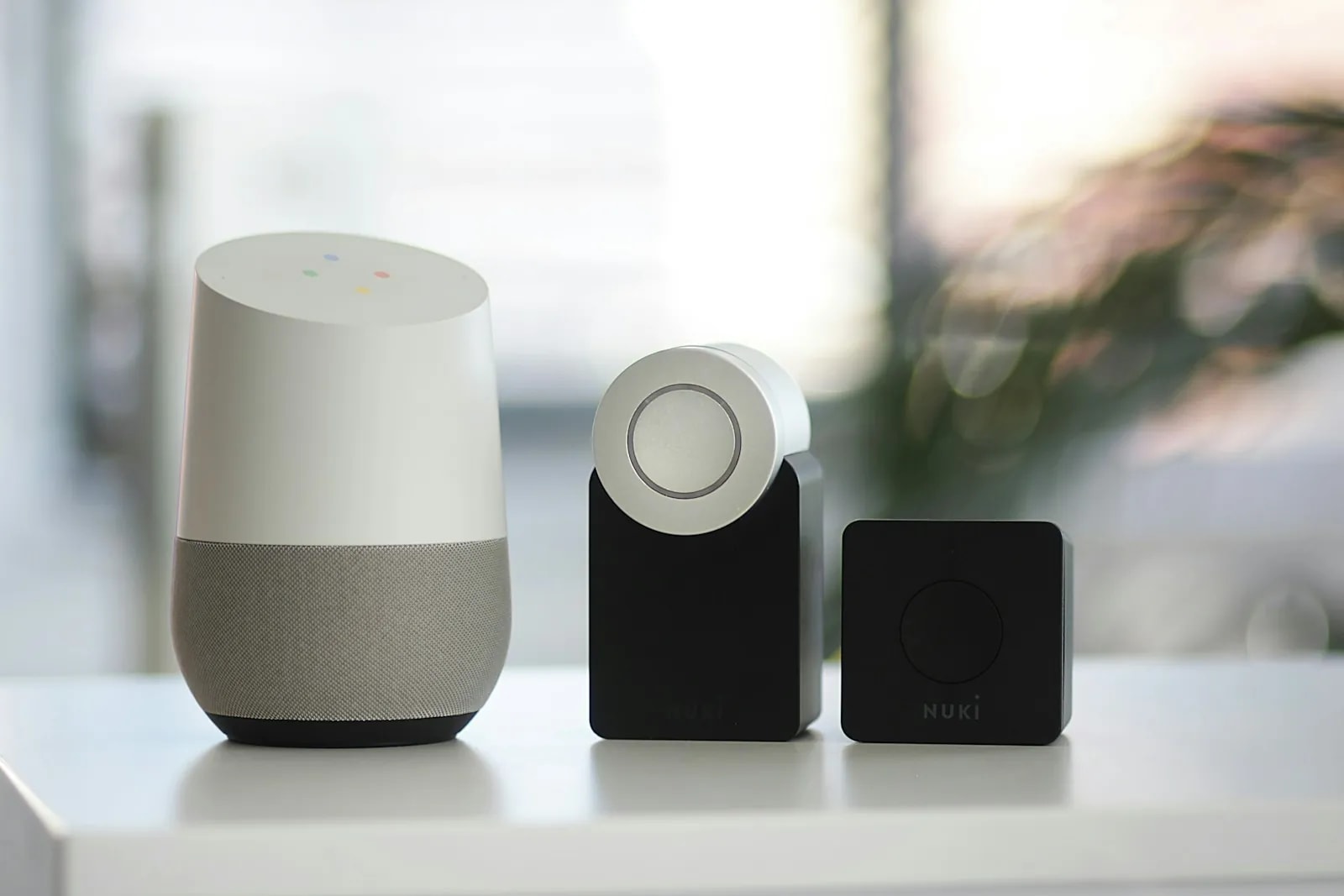
Google also has no official UAE store listing for its Home and Nest hardware, so buying and setup already rely on an account region workaround. Add the Arabic gap on top, and Google is the weakest of the three for an Arabic-speaking Dubai household right now.
Does Josh.ai support Arabic?
No. Josh's own FAQ states that Josh supports English today, with more languages in the works, and gives no timeline[11]. That is the whole honest answer.
It matters because Josh.ai is the premium voice option integrators reach for in high-end villas, and it is genuinely good at what it does. If Arabic is a requirement in your home, it is not the system that meets it today. A properly configured Alexa or Apple Home setup, or a professional platform with its own voice layer, is the better fit. We compare the two on price and behaviour in our Josh.ai vs Alexa guide for Dubai.
Can you name your devices and rooms in Arabic on each platform?
Mostly yes. Alexa and Apple Home both accept Arabic device and room names, and this naming step decides whether Arabic voice control feels native.
| Platform | Arabic device and room naming | What to know |
|---|---|---|
| Amazon Alexa | Yes, with documented rules | Amazon publishes Arabic naming rules that block certain connecting words and any wake word inside a name. Arabic is parsed natively, not phonetically. Pick one language per device, since Arabic is not in bilingual mode. |
| Apple Home | Yes, free text | Rooms and accessories take any text you type, Arabic script included, and Siri matches the name you set. Apple publishes no Arabic-specific accuracy guarantee, so keep names short. |
| Google Home and Nest | Moot on the hardware | Arabic is not listed for Nest speakers or displays, so naming a device in Arabic does not give you Arabic voice control on that hardware. |
| Control4 and other professional systems | Yes, at the platform level | Names and scenes live in the automation system, not inside one assistant. Voice, keypad and app all point at the same room, so language rules stop being a constraint. |
Amazon's Arabic guidance is worth reading before you name anything. Its developer documentation sets out which words cannot sit inside a name[4]. That covers Arabic connecting words such as من, في and عن, plus the wake words themselves. Arabic script is treated as a first-class part of the locale, not a workaround.
Common mistake: people forget scenes and routines. A "good morning" routine created in English on install day stays English forever. Saying صباح الخير to it will do nothing until someone renames it.
Khaleeji or Modern Standard Arabic: which do voice assistants understand?
Two forms of Arabic matter for a voice assistant, and they are not interchangeable.
Modern Standard Arabic, or Fusha, is the formal written and broadcast standard used in news, schooling and official documents across the Arab world. Khaleeji is the everyday spoken Gulf Arabic used in the UAE and neighbouring states. You read one and you speak the other.
An assistant trained only on Modern Standard Arabic can pass a demo and still miss how a family talks in its own kitchen. That is why Amazon's dual build matters. It is also why 56 percent of surveyed UAE and Saudi residents said local accent recognition matters to them, with Khaleeji the most requested dialect[13].
- Alexa: the only platform with documented support for both, defaulting to Modern Standard Arabic for formal replies and Khaleeji for casual ones[2].
- Google: leans on Modern Standard Arabic and is not tuned for Gulf dialect. Its 2019 rollout did include a distinct Egyptian experience[7], but nothing comparable is documented for the Gulf.
- Siri: Apple treats Arabic as one locale and publishes no dialect split, so there is no Khaleeji-versus-Fusha claim to check either way.
Dubai is also home to a large Levantine and Egyptian Arabic-speaking population, and no platform publishes a dialect-by-dialect accuracy breakdown. Google's Egyptian work is the one documented data point. Everything else is directional, so test before you buy.
One thing to be clear about. Where recognition is weaker for a dialect or an accent, that is a limit in the training data, not a fault in how anyone speaks. Emirati-specific speech datasets were still being assembled in academic work through 2026. This is a young field on every platform.
Can any assistant handle Arabic and English in one sentence?
No assistant reliably handles Arabic and English mixed in one sentence in 2026. Mixing languages mid-sentence is how bilingual Dubai families talk every day, and it gets the least reliable results of anything in this guide.
The reason is architectural. Most assistants run one language pipeline per spoken request rather than a single model that hears both at once. The request gets assigned a language, then parsed in that language.
Alexa's bilingual mode is the clearest evidence available. Amazon built a real feature to solve exactly this, and it works. The pairs it covers are English with German, French, Canadian French, Japanese, Spanish, US Spanish and Hindi[3]. Arabic is outside it at the time of writing.
Treat any page claiming one assistant "handles code switching better" with suspicion. None of the three publishes evidence for that. The honest position is that this is an industry-wide gap, not a weakness in one brand.
How many people in the UAE actually use Arabic voice assistants?
Enough to make Arabic voice a mainstream requirement in UAE homes, not a niche request. Khaleej Times reported an Amazon-commissioned survey of UAE and Saudi Arabia residents in November 2025. It found 85 percent had tried a voice assistant, and 43 percent used one regularly[13].
Within that group, 65 percent said they prefer using Arabic. Another 56 percent said understanding regional accents and local expressions matters, naming Khaleeji as the dialect they most want recognised.
Two more findings are worth carrying into a family conversation. 50 percent said assistants help younger family members keep up their Arabic. 48 percent said assistants help older relatives use technology they would otherwise avoid.
The same reporting is honest about the ceiling. One UAE resident quoted in the piece described loving asking questions in Arabic, then added that the tone still feels more rigid than the English version. That matches what we hear on site visits.
What does a mixed-language Dubai household actually need?
A very normal Dubai home has an Arabic-speaking parent, kids who answer in English, and a helper who speaks neither fluently. Design for that, because it is the majority case in the villas we work in, not an edge case.
The answer is not one global language setting. It is per room and per person.
- The majlis and the parents' wing: devices set to Arabic, rooms and scenes named in Arabic, short simple names the family already says out loud.
- The kids' rooms and study: devices set to English, named in English. No one is forced into a second language to turn on a lamp.
- Anything the helper needs: should not depend on speech at all. A wall keypad, a labelled scene button or a single app tile works identically in any language.
From our projects: the household member who quits first is almost always the one asked to speak a language they do not use at home. Once the naming matches how each person actually talks, daily use holds[15].
How does a professional smart home system handle Arabic?
A professional platform such as Control4, Crestron or KNX solves this differently, and better, because language stops being the thing the house depends on.
KNX, for the reader who has not met it, is a wired control system that runs without the internet and lasts 30 years or more. Control4 and Crestron are professional automation platforms that sit above your lights, AC, blinds and audio and run them as one system.
On that kind of system, a scene is an identifier in the automation platform. "Evening" is one instruction that dims the lights, drops the AC and closes the blinds. What triggers it is separate: a keypad press, an app tile, an Arabic phrase, an English phrase, or all four.
Control4 supports Arabic and English on its own interfaces, and can layer Alexa, Google Assistant or Apple Home on top of the same backend. So one villa runs in two languages, by voice, keypad or app, without waiting for any single consumer assistant to add a language.
That is also why the naming work belongs at the platform level. Rename a room once and every control path follows, instead of editing the same room separately inside each assistant's app. It pairs naturally with smart lighting and climate control, where the scenes people actually call by name live.
One practical prerequisite: voice only feels instant on a network that holds up. Dropouts get blamed on the assistant's Arabic when the real cause is Wi-Fi coverage across a three-floor villa. We size that separately under home networking and IT.
On privacy, the rules are the same in any language. UAE PDPL, Federal Decree-Law 45 of 2021, treats voice as personal data and biometric data as sensitive, so consent has to be documented and can be withdrawn[14]. Nothing about speaking Arabic to a device changes that.
Common mistakes when setting up Arabic voice control in Dubai
Five errors account for most of the Arabic voice setups we are asked to rescue in Dubai villas.
- Assuming the assistant's language renames your devices. It does not. Switching Alexa or Siri to Arabic leaves every English device name exactly where it was.
- Leaving scenes and routines in English. Device names get attention; routines almost never do. That is why a house feels half-translated.
- Expecting one speaker to follow both languages mid-sentence. Arabic is not in Alexa's bilingual pair list, so set each device to one language and use two devices where you need two.
- Buying Nest speakers because the phone app speaks Arabic. Google lists supported languages per device category, and the speaker list is not the phone list.
- Choosing long, formal Arabic names. A short everyday phrase is recognised far more reliably than a long one. Name things the way the family says them, not the way a brochure would write them.
If you are still deciding on the underlying platform rather than the language, our Control4 vs Crestron vs Savant comparison covers what each one costs and suits in Dubai.
How Dubai Smart Home sets up bilingual voice control
We are a smart home automation company in Dubai, UAE. Our team has worked on 100+ completed projects since 2016, and we coordinate each one from the design stage through to handover. Homeowners rate us 4.9/5, and sales enquiries are answered within 2 hours.
On voice specifically, the work is naming and structure rather than hardware. Rooms, devices and scenes get set up in the languages the household actually uses, per room and per person. Nobody has to think about which language they are speaking. Our voice control and AI assistant setup tier runs AED 10,000 to AED 40,000 for an apartment or the key rooms of a villa, bilingual Arabic and English configuration included.
If you are earlier in the process and want the wider picture first, start with our complete smart home guide for Dubai.
Tell us who speaks what in your home and which rooms they use most, and we will map the naming before anything gets installed. Book a free consultation or message the team on WhatsApp. Already have Echo or HomePod units in place? We rework the naming on what you own before recommending a single new device. Send us your current setup and we will tell you what needs changing.