This guide is for the people who decide what goes into a building before a single buyer exists: a developer's design lead, an MEP consultant, a project manager, a procurement head. It is not a homeowner buying guide. Our guide to smart home pre-wiring in Dubai covers the same walls from the buyer's side. This one covers the spec sheet.
We are Dubai Smart Home. Our team has designed and supported smart home automation in Dubai, UAE since 2016, across more than 100 projects, designing each system and coordinating the works around it.
A smart home specification is not a shopping list of devices. It is four decisions, and each one is expensive to reverse once the walls close.
- Scope: pre-wire provision only, or a fitted and commissioned system.
- Platform: an open standard any certified integrator can service, or a proprietary platform tied to one dealer network.
- Economics: cost per unit against the premium the market will actually pay.
- Ownership: who supports the system after handover, and who the buyer calls in year three.
What do Dubai buyers expect as smart in a 2026 handover?
App control of lighting and AC, a video intercom at the door, and smart metering are close to table stakes in a 2026 Dubai handover. A fitted, commissioned whole-home system is still a differentiator rather than a norm.
Read the competition carefully. Every large Dubai developer now markets smart features, and almost none publish the technical specification behind the words. Everything in this list is marketing language, not a verified building fact.
- Emaar markets developments as smart-home ready, and Etherea Villas at Dubai Hills Estate as ultra-luxury smart homes. No public technical specification.
- DAMAC markets home automation as standard across recent launches, including themed villa clusters at DAMAC Lagoons. No public technical specification.
- Sobha Realty is the clearest of the group. Its unit descriptions say "provisions for a smart home automation system" covering lighting, temperature, curtains and video communication with visitors[1]. The word provisions is doing honest work there.
- Tilal Al Ghaf frames smart narrowly, around energy, lighting and AC management. A limited claim, clearly stated.
Nakheel, Meraas, Azizi and Dubai South use smart language at masterplan level. We found no disclosed in-unit specification for any of them, which is itself the pattern. The market advertises the category and hides the detail.
That gap is your opportunity and your risk. A buyer who reads "smart home" and receives a video intercom feels misled at handover. A buyer who reads "provisions for" and receives conduit, a neutral wire and a data point feels informed.
One requirement is not marketing. Al Sa'fat, Dubai Municipality's green building system, sets a mandatory baseline for new mainland buildings that includes smart meters for real-time water and electricity monitoring[2].
Is smart-ready the same as a smart home?
No. Smart-ready means the infrastructure is in the walls. A smart home means devices are installed, programmed, commissioned and handed over working. The gap between the two is most of the cost and all of the buyer experience.
A provision is conduit, a cable pulled to a point, a neutral wire at every switch box, a data point at the TV wall, and space with power in a comms cupboard. A fitted system is dimmers, thermostats, keypads, a controller, programmed scenes, a tested network and a document pack.
Both are legitimate specifications. Selling one as the other is where developers get into trouble at the handover desk.
Set tiers rather than one specification for every unit. A studio does not need what a five-bedroom villa needs, and pricing a villa specification into a studio kills the margin on your smallest units.
| Unit type | Table-stakes provision | Mid-tier partial fit-out | Premium fully fitted, open backbone |
|---|---|---|---|
| Studio / 1BR apartment | Video intercom, neutral wire at every switch box, one data point per room, DEWA smart meter | Adds app-controlled AC thermostat, dimming on living and bedroom circuits, a wired Wi-Fi access point | Adds fitted lighting scenes, a motorised blind at the main window, one-app control handed over commissioned |
| 2-3BR apartment | Video intercom, neutral wires throughout, data points in every bedroom and living room, spare conduit to the panel | Adds room-by-room AC zoning, dimming on main circuits, wired access points, smart lock at the entry door | Adds whole-home control on an open backbone, motorised shading, curated scenes, as-built pack and credentials |
| Townhouse | Neutral wires throughout, structured cabling to a small comms enclosure, conduit to roof and garden, gate video intercom | Adds multi-zone AC and lighting control, wired Wi-Fi coverage on both floors, cabled camera and door points | Adds a wired open-standard backbone, shading, garden circuits on the same system, commissioned and documented |
| Villa | Comms room with power and cooling, Cat 6A to every room, conduit to gate, garden, pool and roof, neutral wires throughout | Adds lighting and AC control on main floors, cabled camera and access points, a designed Wi-Fi layout | Adds whole-home lighting, climate, shading, audio and access on one open backbone, voice control, full handover pack |
Read that table as scope, not as a price list. Per-unit cost moves with your unit mix, your electrical contractor's rates, and how much of the work sits inside the main contract.
Decision 1: pre-wire provision only, or a fitted system?
Provision on volume units, fitted systems on the premium tier, and never fitted without a support plan behind it. That is our default on most Dubai projects.
Three reasons to hold the volume range at provision level:
- Cost certainty. Cable and conduit are commodity items you can bill through the main electrical contract. Devices, programming and commissioning are a separate trade with a separate risk profile.
- Buyer choice. Switch plates, keypads and apps are personal. A buyer who dislikes your choice will replace it, and you paid for it.
- Obsolescence. A controller picked at design stage can be two product generations old by the time a unit hands over three years later. Conduit does not date.
The counter-argument at the top of the range is real. At villa prices, an empty conduit reads as an unfinished home. Buyers in Emirates Hills or Palm Jumeirah expect lighting scenes working on day one. Lighting and climate control is usually the first system to move from provision to fitted, because a buyer touches it every day.
Quick math: pre-wiring during construction costs 60 to 70 percent less than retrofitting the same home once it is finished[11]. That single figure is the argument for provision-level scope on every unit in the project, including studios. It costs little now and saves your buyer most of the retrofit premium later.
Real talk: treat any per-unit price as an estimate until the unit mix, the drawings and the contract split are fixed. Retail ranges for a single home do not transfer to a 400-unit procurement. Bulk pricing, main-contract labour and repeated unit types all move the number, usually down. To model it against a real drawing set, book a developer consultation.
Decision 2: an open standard or a proprietary platform?
For anything you will not personally service in 2036, specify the open standard. KNX is a global open standard for building control, published by the KNX Association, and any certified integrator can pick up a KNX installation and service it[3]. Control4 is a proprietary platform, and support runs through its authorised dealer network.
For a homeowner that is a preference. For a developer it is a liability question, and it is the most consequential line on the spec sheet.
Think in fleet terms. You are not choosing a system for one home. You are setting the support conditions for every home in the project, for a decade, while your own sales team moves to the next launch within two years.
| Decision factor | KNX (open standard) | Control4 (proprietary platform) |
|---|---|---|
| Ownership model | Open standard published by the KNX Association; one protocol shared by competing manufacturers[3] | Single-vendor platform, owned by Resideo since its 2024 purchase of Snap One[4] |
| Who can service it after handover | Any KNX-certified integrator, in Dubai or anywhere else | An authorised dealer, subject to who holds that authorisation locally |
| Expected working life | Wired backbone measured in decades, and it runs without the internet | Tied to the platform's own product and subscription roadmap |
| Programming access at handover | Project file can be handed to the buyer, so a later integrator can pick it up | Dealer-held programming; handover terms must be written into the contract |
| Buyer lock-in risk | Low. The buyer can change integrator without changing the system | Higher. Support, updates and changes route through one dealer relationship |
| Where it fits in a project | Villas, townhouses and any unit you want serviceable in 10 years or more | Premium units where a specific interface is part of the sales pitch and dealer continuity is contracted |
We design and support both. Our KNX versus Control4 versus Home Assistant comparison weighs them feature by feature for a homeowner. At project scale the comparison shrinks to one question: if the manufacturer changes its terms, or the local dealer closes, can somebody else still service this building?
A hybrid answers it on premium villas. Put an open wired backbone under lighting, shading and climate, then a proprietary interface layer on top for the user experience. The backbone survives even when the interface is replaced. Write the split down rather than assume it.
What does platform lock-in cost a developer after handover?
Platform lock-in costs a developer the support tail. Every unit sold on a proprietary platform is a unit whose owner calls your customer care team when the platform changes, the dealer moves on, or a subscription appears.
Platforms change hands. Control4 sits inside Snap One, which Resideo acquired in June 2024 in a deal worth about USD 1.4 billion[4]. That is not a criticism of the product, just the kind of event a developer cannot control and has to plan around.
Ask three questions of any platform before it reaches a specification:
- If the manufacturer changed its licensing or subscription terms next year, what would a buyer in this project have to pay?
- If the local dealer closed, how many other UAE companies could service this installation next month?
- At handover, does the buyer receive the programming file and admin credentials, or does a third party keep them?
If the answer to the last one is a third party, your buyer does not fully own the system inside their own home. That is a conversation you will have at a handover desk, not in a design meeting.
An open standard lets a buyer change integrator without changing their system. A proprietary platform can mean changing the integrator costs them the hardware too.
Decision 3: does a smart home specification pay for itself?
Yes, modestly, and the honest figure is smaller than the marketing suggests. The best Dubai evidence puts villas with smart or green features at about 4 to 7 percent higher resale and 8 to 12 percent higher rent than comparable homes without them[5]. The figures come from a H1 2025 brokerage survey quoted by Mario Volpi of Eva Real Estate in The National.
Two caveats belong in any board paper that uses them. The survey covers villas, and it bundles smart with green credentials rather than isolating automation. Volpi also notes the premium narrows as smart features become standard rather than rare[5].
Do not build a business case on the bigger numbers online. Branded residence premiums, off-plan appreciation and willingness-to-pay surveys all get quoted as smart home premiums. None measures what a specification adds to an unbranded Dubai unit. Our property value guide works the same evidence from an owner's side.
The stronger argument at project level is rent, not resale. An 8 to 12 percent rent premium repeats every year and shows up in the yield an investor models before signing[5]. Much of Dubai's off-plan stock is bought to let, so the rental case often sells the specification better.
The payback test is simple. Does the added cost per unit sit below what the market pays for it? It passes most reliably on villas and townhouses, where the 4 to 7 percent evidence sits. It is weakest on studios, where no equivalent Dubai figure exists.
Decision 4: who supports the system after handover?
By default nobody does, and that is the failure. The developer's obligation ends with the defects liability period. The MEP contractor demobilises. The integrator has no contract with the buyer. Write the answer into the specification instead of letting it fall through the gap.
Three models work in Dubai:
- Developer-appointed integrator. One company designs, installs, commissions and offers buyers an annual maintenance contract at handover. Cleanest accountability, provided the integrator still exists in year five.
- Open specification, buyer's choice. An open backbone with full documentation handed over. The buyer appoints anyone they like. Lowest ongoing obligation for you, and it only works if the handover pack is complete.
- Split by boundary. Building-level systems (common-area CCTV, gates, network) sit with the owners association under a service contract. In-unit systems belong to the buyer. Most large projects end up here.
Whichever you pick, the handover pack decides whether it holds: as-built drawings, device inventory, network diagram, admin credentials, warranty terms and a named contact.
Real talk: the complaint we hear most from Dubai owners is not that a system is bad. It is that the installer disappeared after setup. At project scale that complaint attaches to your brand, not to the subcontractor who left.
What warranty or AMC should sit around a smart home spec?
The contractual defects liability period in most Dubai sale and purchase agreements runs 12 months from handover for non-structural items, while structural defects carry a separate 10-year statutory liability from the completion certificate[6]. A smart home system is MEP-adjacent, not structural, so it sits inside the 12-month window unless you specify something longer.
That is the gap worth closing at tender stage. A wired backbone will outlive the defects liability period by decades. A controller, an app and a wireless sensor will not.
Three practical moves:
- Buy extended manufacturer warranty at procurement, while order volume is still on your side of the table.
- Contract a 24 or 36 month maintenance agreement on building-level systems, which stay your problem or the association's regardless.
- Offer buyers an optional annual maintenance contract at handover, priced and explained in the handover pack. As a planning figure, support contracts typically run about 5 to 10 percent of project value a year[11].
The period that governs is the one written into your own sale and purchase agreement, not the market norm.
Where do smart home decisions belong in the build programme?
Smart home decisions belong at design and MEP drawing stage, before first fix. Everything after that is either more expensive or impossible without opening a wall.
| Stage | What gets decided | Cost of getting it wrong |
|---|---|---|
| Design and MEP drawings | Platform, cable types, conduit routes, panel and comms room sizing, neutral wire policy, specification tier per unit type | Lowest. A drawing revision |
| First fix | Conduit, structured cabling, back boxes, neutral wires, containment to gate, roof, garden and pool | High. Changes mean re-routing before plaster, or chasing walls after |
| Second fix | Keypads, thermostats, panels, dimmers and fixtures connected to the first-fix infrastructure | Moderate. A device swap is easy, a missing cable is not |
| Testing and commissioning | Programming checked against the specification, network tested, firmware updated, documentation compiled | High and late. Defects found here hit the handover date |
| Handover | As-built drawings, device inventory, admin credentials and warranty terms passed to the buyer | Falls on customer care for years afterwards |
| Defects liability period | Who answers faults, under which contract, and for how long | Reputational. The buyer calls your brand, not the subcontractor |
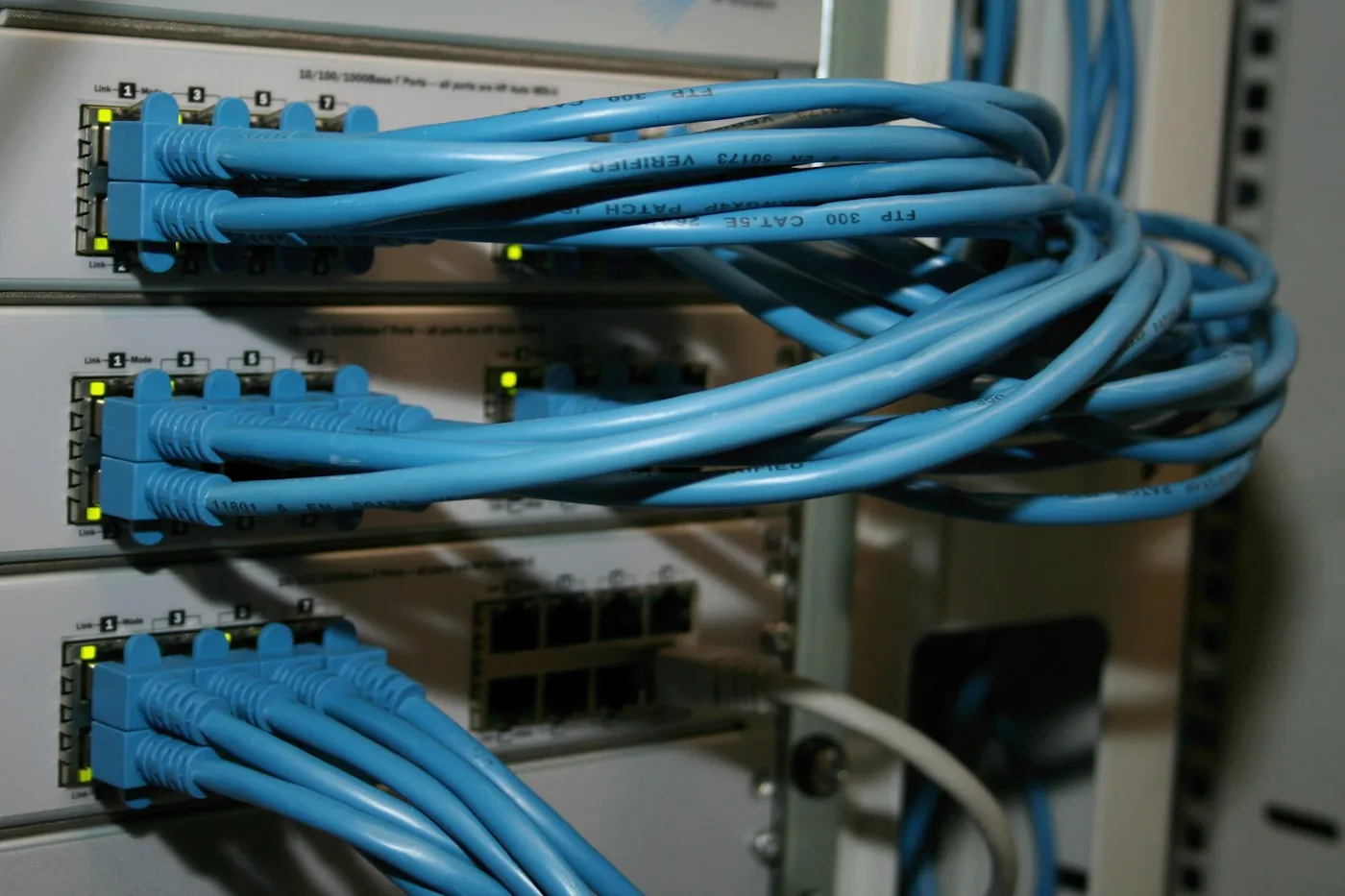
From our projects: the two items most often missing from a first-fix drawing set are a neutral wire at every switch box and a rack position with power and ventilation. Both cost almost nothing on paper, and both are why a buyer can add nothing sensible later.
Our pre-wiring guide covers first fix and second fix in buyer-facing detail, so this article skips the mechanics. A buyer's window opens at booking and closes when their own walls close. Yours opens and closes much earlier, on a drawing, before any buyer exists. To have a specification reviewed against that programme, talk to our team at drawing stage rather than at snagging.
What happens if smart home scope is added after first fix?
You pay retrofit prices in the middle of your own build. Once conduit is cast and walls are plastered, one extra cable means chasing, patching, re-plastering and repainting a finished surface, across every repeated unit.
Pre-wiring during construction costs 60 to 70 percent less than retrofitting a finished home[11]. Mid-programme the arithmetic is not quite that stark, because the units are not yet furnished or occupied, but the direction is identical and the multiplier compounds across hundreds of identical rooms.
There is one cheaper late answer. Zigbee and Z-Wave are battery-powered wireless mesh systems that need no new cable, and they cover sensors, locks and some switching. The trade-off is battery replacement across a whole building.
Common mistake: deciding the smart specification during sales rather than during design. Sales language is written after the drawings are issued, so a marketing promise made in month 18 lands on infrastructure frozen in month 6. Fix the specification first, then write the brochure from it.
Which Dubai authorities shape a smart home specification?
DEWA governs connection and metering, Dubai Municipality sets the green building baseline through Al Sa'fat, and Dubai Civil Defence governs anything touching life safety. None of the three mandates a fitted smart home. All three can stop a specification getting sign-off.
- DEWA. Dubai Electricity and Water Authority approves the electrical design and load, and provides the smart metering that produces real-time consumption data[7]. Design any energy dashboard around what that meter actually reports, not around what a vendor demo shows.
- Al Sa'fat. Dubai Municipality's green building system sets Silver as the mandatory baseline for new mainland buildings, and smart meters for real-time water and electricity monitoring form part of that baseline[2]. Al Sa'fat is about building performance, not home automation. Automated energy management can support a rating, but the system does not compel you to fit it.
- Dubai Civil Defence. Hassantuk, the smart monitoring system run under Civil Defence, provides round-the-clock monitoring of fire alarm and life-safety systems[8]. The rule for a specification writer is short. An automation layer may read status from life safety. It must never sit between a fire alarm control panel and its monitoring connection.
Write compliance ownership into the contract as well. Whether the developer, the MEP contractor or the integrator carries approval responsibility for each system is far cheaper to settle in the tender than at inspection.
Do cameras and wireless devices need SIRA or TDRA approval?
Yes to both, in different scopes. SIRA governs CCTV in common areas and commercial premises. TDRA governs anything that emits a radio signal, anywhere in the building.
SIRA is Dubai's security regulator, under Dubai Police. Its published technical specification sets 1080p HD as the minimum camera resolution, with visible rather than hidden cameras, digital recording and IP66-rated hardware[9]. Standard footage retention is 31 days. Common-area CCTV in a residential development also needs an approved security plan and SIRA-approved installers.
Ignore the vendor claims circulating that SIRA now demands 4K. SIRA's own specification document says 1080p HD[9]. Specify to the regulator, not to a supplier's brochure. Our SIRA CCTV requirements guide covers the full standard, and security and surveillance covers how we design to it.
TDRA, the UAE's telecom regulator, requires type approval for radio and telecommunications terminal equipment before it is sold or used in the country[10]. That covers routers, access points, Zigbee and Bluetooth hubs, wireless sensors and wireless locks. Certificates run for three years, take about three to five weeks to issue, and the applicant must be a UAE-registered company[10].
At project scale this is a procurement control, not a technical one. Write TDRA type approval into the supply requirement so a container of unapproved hubs never reaches site.
What goes wrong when a smart home specification is wrong?
Six failures repeat across Dubai handovers. Each is cheap to design out on a drawing and expensive to fix once people live in the building.
- A proprietary system with no local support. The product is fine, the dealer has gone, and the buyer owns hardware nobody will touch. Design out: specify an open backbone, or contract dealer continuity in writing.
- A video intercom marketed as a smart home. A door station and an app is access control, not automation. Design out: describe scope in sales material using the same words the specification uses. Gate and access control is a real system in its own right, and it is fine to sell it as one.
- No neutral wire at the switch. Most smart switches need one. Without it, a buyer who wants smart lighting later has to open walls or settle for battery devices. Design out: a neutral at every switch box, on every unit type, including studios.
- No spare conduit. A single spare route from the distribution board to the ceiling void turns a wall-chasing job into an afternoon's work. Design out: spare containment to the ceiling, the gate, the roof and the garden.
- No comms room or rack provision. A router balanced on a shoe shelf is where Dubai Wi-Fi complaints begin. Design out: a ventilated cupboard with power and a cable route in villas and townhouses, and a defined riser position in apartments. Our home networking page covers what it must hold.
- Handover with no documentation or credentials. A commissioned system with no as-built drawings and no admin login is a locked box. Design out: make the document pack a contractual deliverable, not a courtesy.
Common mistake: treating the first three as savings. They are deferrals, and the buyer pays them at retrofit rates.
How should a developer choose a specification partner?
Choose on serviceability and accountability, not on the showroom demo. The demo will look good from every supplier in Dubai. What separates them is what happens in year three, after the sales gallery has closed.
Five questions worth putting in a tender:
- Can any certified integrator service this system after you, or only your own company?
- Who holds the programming file and admin credentials at handover, and does that pass to the buyer?
- Who carries out the installation, and who answers a fault in year three?
- What does the specification look like at each unit tier, described in scope, so sales and legal can quote it accurately?
- What does an annual maintenance contract cost the buyer, and who prices it?
The Dubai Smart Home team has designed and supported smart home automation in Dubai, UAE since 2016, across more than 100 projects and 12 systems, rated 4.9/5 by Dubai homeowners. Our team is based in Dubai and coordinates each project from specification to handover, and the systems we hand over work in English and Arabic.
For developers and MEP consultants we work at specification level: tiered scope across unit types, drawings and cable schedules for first fix, platform selection, commissioning before handover, the document pack that goes with the keys, and support after the defects liability period ends.
If you are setting a smart home specification for a Dubai project, book a developer consultation or message the team on WhatsApp. Sales enquiries are answered within 2 hours.