Most articles on this topic are guesswork. This one is not. Every risk below is tied to something that already happened, on a date, to real owners. Insteon, Revolv, Wink, Philips Hue, and Control4 each gave us a lesson we can point at.
If you are still deciding what to install, start with our complete smart home guide for Dubai. This page assumes you are close to signing, and asks a narrower question: in ten years, who can switch your house off?
What does a future-proof smart home in Dubai actually mean?
Future-proofing means reducing the number of single points of failure you depend on. A smart home lasts 10 to 20 years, and over that span companies get sold, servers get switched off, and terms get rewritten.
Four dependencies are worth counting before you sign:
- One dealer. A single company holds the right to service your system, and nobody else can touch it.
- One cloud. Your lights or locks only respond while a company's servers answer.
- One subscription. A yearly fee stands between you and features you already paid for in hardware.
- One hub maker. Every device in the house speaks only to a box that one firm builds and supports.
A home with all four is fragile. One or two is normal and manageable, as long as you know which ones you have. The goal is not zero. It is knowing the number and having a way out of each.
Does buying the newest protocol future-proof your home?
No. A protocol version number tells you what a standard can do on paper. It tells you nothing about whether the company that made your specific device will still be around, or still care, in 2036.
A homeowner reads that a new version shipped, assumes it settles the question, and buys a shelf of devices from a brand nobody has heard of. The standard is fine. The brand is the risk.
People miss a second gap. A standard adding a feature does not mean your app can use it. The device has to be certified for it, and the platform maker has to update their app to expose it. That lag is real, and the box on the shelf never shows it.
Real talk: the useful question is not "what is newest?" It is "what has already broken, and why?" That question has answers, with dates, and they point at the same two causes every time.
What has already gone wrong, and when?
Seven documented events, all within the last ten years, cover almost every way a smart home gets stranded. Each one has a date and a source.
| Risk | Real example, with date | What reduces it | What it costs you |
|---|---|---|---|
| A company switches off its cloud with no warning | Insteon shut its servers down abruptly on 25 April 2022, leaving owners with dead hubs until a community buyout later revived the service[1] | Choosing a system where the control logic lives in the home, not on a vendor's server | Local-first systems cost more upfront than a cloud hub starter kit |
| A "lifetime" promise is withdrawn | Google's Nest disabled the Revolv hub in 2016, about a month after announcing the shutdown, despite the hub being sold with a lifetime subscription[2] | Treating any lifetime cloud promise as marketing, not a guarantee | Nothing in cash. It costs the discipline to read past the sales line |
| Existing owners are moved onto a new paid plan | Wink moved existing owners onto a mandatory monthly subscription in 2020, and cut access for those who did not pay[3] | Checking a vendor's subscription history, not just today's price | An hour of research before you sign, not money |
| Sign-in becomes mandatory after you own the hardware | Philips Hue made a Hue account mandatory to use the app, a change introduced in 2023[4] | Buying devices that keep working locally once set up, even if setup needs an account once | A little convenience at first setup |
| A third-party outage takes down cloud features | An AWS outage on 7 December 2021 took down Control4's cloud and the OvrC platform. Lights, comfort, music, and security kept working from the wall. Remote access and voice did not[5] | A design where core functions run locally, and physical switches that never depend on an app | Nothing extra if it is specified at install. A lot if it is retrofitted |
| A dealer-locked platform changes corporate owners | Control4 merged with SnapAV in 2019[6], Resideo completed its purchase of Snap One on 14 June 2024 for about 1.4 billion dollars[7], and Resideo filed in 2026 to spin off ADI Global Distribution, the group that holds Control4[8] | Full documentation and project backups at handover, plus knowing the dealer transfer path before you need it | Nothing if you ask in writing at handover. Real money if you rebuild it later |
| A subscription rule flips direction more than once | Control4 Connect became required for systems moving to X4 around April 2024[9], then optional again for new X4 systems from 12 November 2025, with existing systems following at renewal from Q1 2026[10] | Reading the terms at the moment you sign, and never assuming today's terms are permanent | Nothing directly, but keep budget room for a fee line that could return |
Common mistake: reading that list as a reason to buy nothing. It is not. Every one of these was survivable for owners who had local control, open standards, or paperwork. The pattern behind all seven is the same: control that lived somewhere other than the house, held by one company.
Why does relying on a single dealer create risk?
A single dealer is a risk because one company decides whether your system can be changed. On some platforms that is written into how the product works, not a local habit.
Control4 is the clearest example. Every Control4 home is tied to one authorised dealer, called the Dealer of Record. That dealer routes service and grants or withdraws remote access permissions for the system[11]. If that company closes, moves on, or stops answering, your system keeps running, but nothing about it can be changed until someone else takes it over.
The designation is transferable. Another authorised dealer can adopt the system. The catch: it is a formal handover, not a password swap, and no dealer wants to inherit programming they cannot read.
Real talk: in Dubai, the pool of integrators willing to adopt someone else's undocumented work is smaller than in the US or UK. That is a market size fact, not a Control4 flaw, and it makes your paperwork worth more here than in London. Our full and honest Control4 review covers the dealer mechanic in detail.
Why is cloud dependency a risk, even for a big brand?
Cloud dependency is a risk because your house can go quiet without your vendor doing anything wrong. The clearest proof is dated 7 December 2021, and it did not involve a failed company at all.
On that day an Amazon Web Services outage took down Control4's cloud and the OvrC remote management platform. Control4 is a large, healthy brand backed by a large parent. It still lost its cloud layer for the day, because the servers underneath belonged to someone else[5].
Local functions kept working. Owners could still control lights, comfort, music, and security from a wall keypad, because the controller sits inside the home and holds the logic. What stopped was remote access from outside the house, voice control, and streaming[5].
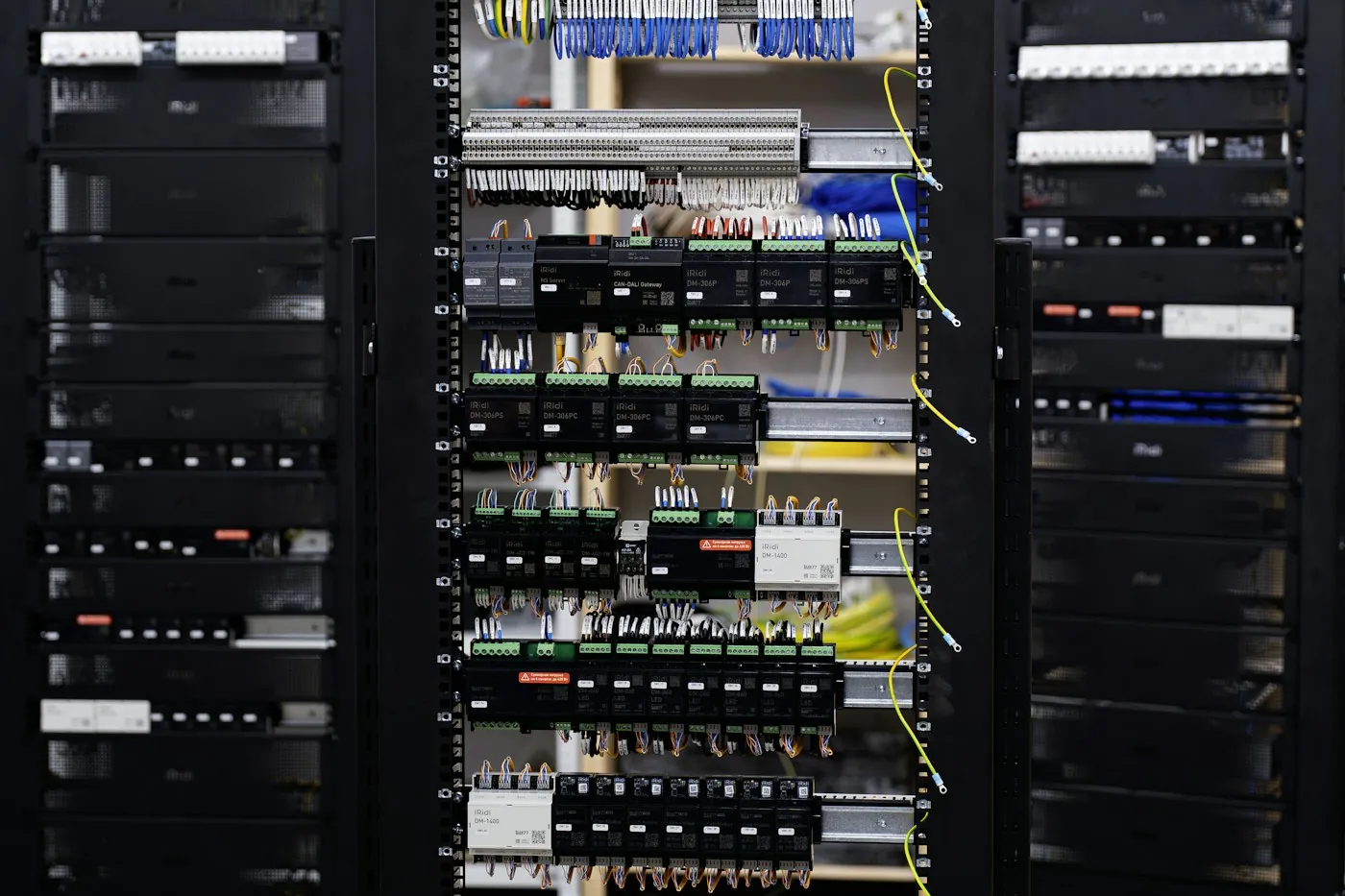
That split is the whole lesson. A well-built system fails partially, not completely. A cloud-only system fails all at once, and you find out at the front door.
So ask any installer one question. If the internet dies at 8pm, which switches still work? If the honest answer is "none of them", you are buying four dependencies in one box. This is also why we treat wired home networking as its own trade, not an afterthought.
Why do mandatory accounts matter for future-proofing?
Mandatory accounts matter because an account is a switch that someone else holds. Philips Hue made a Hue account mandatory to use its app, a change introduced in 2023[4]. The account is free, and Hue lights are good. That is not the point.
The point is that the rule changed after people had already bought the bulbs. Nobody who bought a Hue kit in 2019 agreed to a sign-in, and nobody was asked.
Most articles skip an honest distinction. An account you create once at setup is a much smaller risk than an account you need every day to turn a light on. The first is an annoyance. The second means daily control routes through a server you do not own.
So ask the narrow question, not the broad one: once the system is set up and my phone is offline, does the house still respond? A yes means the account is a formality. A no means the account is the product.
What actually survives: wired infrastructure and open standards
Two things outlive the companies that sold them to you: cable in a wall, and a standard that no single business owns. Everything else is a service that can be withdrawn.
KNX is the clearest example of the second. It is a wired system that runs without the internet, governed by a non-profit association rather than a company. The control logic sits in the bus and the actuators, inside your walls, so a KNX house keeps running when the Wi-Fi or the cloud does not[12].
The governance is what makes that durable. More than 500 member manufacturers are listed in the KNX Association's own directory[13]. Its certified product directory lists over 8,000 devices, covering lighting, climate, shading, and security[14]. Both counts keep climbing. If one manufacturer stops making a dimmer you like, a few hundred others build one to the same standard.
No single company can switch off an open standard. Any company can switch off its own product.
Wiring is the other survivor, and it is the one homeowners underrate. Cable does not have a business model, a licence, or a parent company. If it was installed to a proper spec and documented, a completely different integrator can pick it up in 2036 and know what is behind every wall plate.

| Layer | What survives | What strands you | Why it works out that way |
|---|---|---|---|
| Control logic | Logic that runs locally, in the wall or the actuator, as KNX does | Logic that runs only in a vendor's cloud, with no local fallback | Local logic keeps working if the company, the internet, or the app disappears |
| Governance | An open standard run by a non-profit, with hundreds of member manufacturers | One company's private ecosystem, however good the app is today | Nobody can switch off a standard they do not own |
| Wiring | Structured cabling with a documented as-built pack, done at construction stage | No cabling record, or cable pulled with nothing written down | A future integrator can pick up a documented wired system. Nobody works safely on an undocumented one |
| Service relationship | A dealer relationship that can be transferred, with documentation in your name | One dealer, no handover pack, and credentials you have never seen | Platforms do allow reassignment, but only if the paperwork exists to make it real |
| Device layer | Devices carrying an open cross-brand badge, checked on the standard's own certification list | Devices that only ever work inside one brand's app | An open device standard changes which brand you are married to, without touching the wiring underneath |
| Accounts | Credentials issued in the homeowner's own name and known to the homeowner | Accounts held only by the installer, or by one family member | If the one person who set it up is gone, an undocumented account strands you as badly as a shutdown |
Wired lighting and climate control is where this shows up first in a villa. That is why we treat smart lighting and climate as infrastructure, not a gadget purchase. For the full standard-by-standard comparison, read our guide to smart home protocols.
Does Matter solve lock-in? What it can and cannot do
Matter solves lock-in only partly, and only at the device layer. It is a shared standard launched in 2022, run by the Connectivity Standards Alliance, that lets one certified device work with Apple, Google, and Amazon together. The current version is Matter 1.6, released on 17 June 2026[15].
That is useful: a sensor or a plug is no longer married to one voice platform for life, and switching ecosystems later does not mean rebuying hardware.
Now the honest limits, which matter more here:
- It does not replace wiring. Matter is a device language. It does not put cable in a wall or move control logic out of a cloud.
- App support lags the spec. A version shipping does not mean your hub's app exposes it yet, and the packaging will not tell you.
- It does not cover everything. Plenty of categories in a Dubai villa, including most wired lighting and climate control, sit outside it entirely.
- It cannot keep a maker in business. A certified device from a company that folds is still a certified device from a company that folded.
Our full Matter guide for Dubai has the release table and the limits in detail. Here, Matter is one lever on one layer, not the whole answer.
Is Control4 a bad choice, then? The honest answer
No. We design Control4 systems for Dubai villas and we would recommend it for yours. It is a capable system with a polished app, wide device support, and a dealer network that actually shows up. This section is not a warning against buying it.
It is a warning against buying it without reading the terms. A smart home is a 10 to 20 year purchase, and over the last seven years the company setting Control4's prices, features, and support policy has changed hands twice. SnapAV merged with it in 2019[6]. Resideo completed its purchase of Snap One on 14 June 2024, in a deal worth about 1.4 billion dollars[7]. Resideo then filed in 2026 to spin off ADI Global Distribution, the group that now holds Control4[8].
The subscription story is the sharper one, because it moved twice in under two years. Control4 Connect became a required subscription for systems moving to X4 around April 2024[9]. Then it became optional again for new X4 systems from 12 November 2025, with existing systems following at renewal from the first quarter of 2026[10].
Real talk: a homeowner who researched Control4 in mid-2024 got a different answer to "must I pay yearly?" than one researching it today. The fee itself is not the problem. Two reversals in under two years is the problem, and it is fair to weigh that before a 15 year commitment.
The mitigation is not avoiding Control4. It is doing four things at handover, while everyone is still friendly:
- Get the as-built documentation and project backup files in writing, as a deliverable, not a favour.
- Get the account credentials in your own name, and log in once yourself to prove they work.
- Ask how the Dealer of Record is reassigned[11], and get the answer in an email before you need it.
- Ask which subscription rule applies to your exact system, and what happens at your renewal date.
For the complete verdict, including what Control4 does better than the alternatives, read our honest Control4 review for Dubai. For a side-by-side against the open-standard route, see our KNX and Control4 comparison.
Is a wired KNX system completely risk-free?
No. A wired KNX system is not risk-free, and any installer who says otherwise is selling. An open standard removes one risk. It does not remove all of them.
A KNX system still has to be programmed and commissioned by a certified integrator using the ETS software. The standard cannot be switched off, but the person who understands your specific project can leave, close, or simply stop replying. If they programmed it well and documented nothing, the next company starts cold.
Dubai's pool of KNX-certified integrators is real, but smaller than in Germany or the UK, where the standard grew up. So the practical cost of the open-standard route here is a shorter shortlist of people who can work on it, not a licence fee.
What this cannot protect you from: a bad first choice of integrator. Reducing lock-in changes how badly a bad choice hurts, because someone else can in principle take the system over. It does not remove the need to pick well the first time, on either KNX or Control4.
Not sure which route fits your villa? Book a free site visit and we will map it →
What goes into a future-proof smart home in Dubai at build stage?
Three physical things, and none of them needs a brand decision: cabling, a comms room, and conduit. They all get cheaper the earlier you decide them, and none depends on a company surviving.
- Structured cabling to a real spec. Written into the drawings, with cable types and termination standards named. Cable outlives every controller you will attach to it.
- A comms room sized for growth. Ventilated, with power and space to spare, since it holds the home network everything else runs on. A cupboard that fits today's rack exactly will not fit the one you need in 2033.
- Conduit for the changes nobody can predict. Empty routes to the ceiling, the gate, the pool, and the roof. Conduit is the cheapest insurance in the whole build.
The full room-by-room list is in our Dubai pre-wiring guide. The cable spec itself, including rack sizing and labelling, sits in our structured cabling guide.
What should you ask a vendor before you sign?
Ask five questions, and none of them are about the brand. They are about what happens to you if the relationship ends badly, which is the only part of a quote nobody volunteers.
Ask them in an email, not on a site visit. You want the answers in writing, and a company that will not put them in writing has told you the answer anyway.
| Question to ask | Why it matters | Red flag answer |
|---|---|---|
| Is the dealer relationship or service account transferable to another company? | It decides whether you are stuck if the vendor closes or you want to switch | "There is no transfer process", or a vague answer that avoids the word transfer |
| Who holds the admin credentials for my system? | It decides whether you can recover access without the original installer | "We hold them, and we do not share them with clients" |
| What documentation do I receive at handover? | It decides whether a different company can pick the system up later | "Nothing written. Just call us and we will sort it" |
| Can any subscription or fee change after I sign? | It decides whether today's price is the real price for the next ten years | No clear answer, or a refusal to put the current terms in the contract |
| What happens to my system if you close, or if I want a different installer? | This is the direct question, and the reaction tells you as much as the words | Evasion, offence, or "that will never happen" |
From our projects: the answers separate companies far better than the brochures do. A good integrator has heard all five before and answers them flatly, because the paperwork already exists. A weak one treats the questions as an insult.
The post-signing version of this, covering response times, backups, and what a support contract must name, is in our smart home AMC checklist.
What documentation should you hold, and who should hold it?
You should hold the documentation yourself, not only your installer. This is the least technical lever in this article and the one homeowners skip most.
Three things are worth chasing at project close, while the team is still on site:
- The as-built pack. What is behind which wall, how it is labelled, and where each cable terminates. Our structured cabling guide sets out exactly what a proper pack contains.
- Credentials in your own name. Not the installer's email address, not a shared company login. Log in once yourself before final payment.
- The warranty and support terms. Written scope, response times, and what is excluded, covered fully in our AMC guide.
Common mistake: assuming the technology choice is the decision that protects you. It is not. A KNX villa with no documentation is harder to rescue than a Control4 villa with a full handover pack. The paperwork outranks the protocol.
Does a device bought abroad stay supported in Dubai?
Sometimes, and three things decide it: voltage, regulation, and the account layer. Voltage and plug shape are the obvious one, and the easiest to spot before you buy.
The second is regulatory. Radio equipment sold and used in the UAE needs type approval from the TDRA, the UAE's telecom regulator[16]. A device that never went through that process can be legal to own and still be a poor bet for a permanent install.
The third is the account layer, and it catches people out most often. Some brands region-lock the account itself, so a hub bought in one country will not fully activate on a UAE address, no matter how good the hardware is.
We cover this brand by brand in our guide to smart home devices that do not work in Dubai. The short version is to check before you pack it, not after you land.
How Dubai Smart Home builds for the long term
Our team has worked on Dubai smart homes since 2016, across 100+ completed projects, and we program and support the systems we design[17]. That last part matters for this topic: the people who program your system are the people who still answer the phone in year six.
We design both routes. Wired open-standard systems like KNX suit villas where the walls are still open. Control4 suits families who want the app and the device breadth.
What does not change between them is the handover. Documentation, project backups, and credentials in your name, every time, because that is the part that decides whether anyone can help you in 2036. Dubai Smart Home is rated 4.9/5 by homeowners here, and support runs 24/7 with enquiries answered within 2 hours.
Planning a villa or a retrofit and want the long-term questions answered properly? Book a free site visit and quote → Or, if it is easier, message us on WhatsApp →