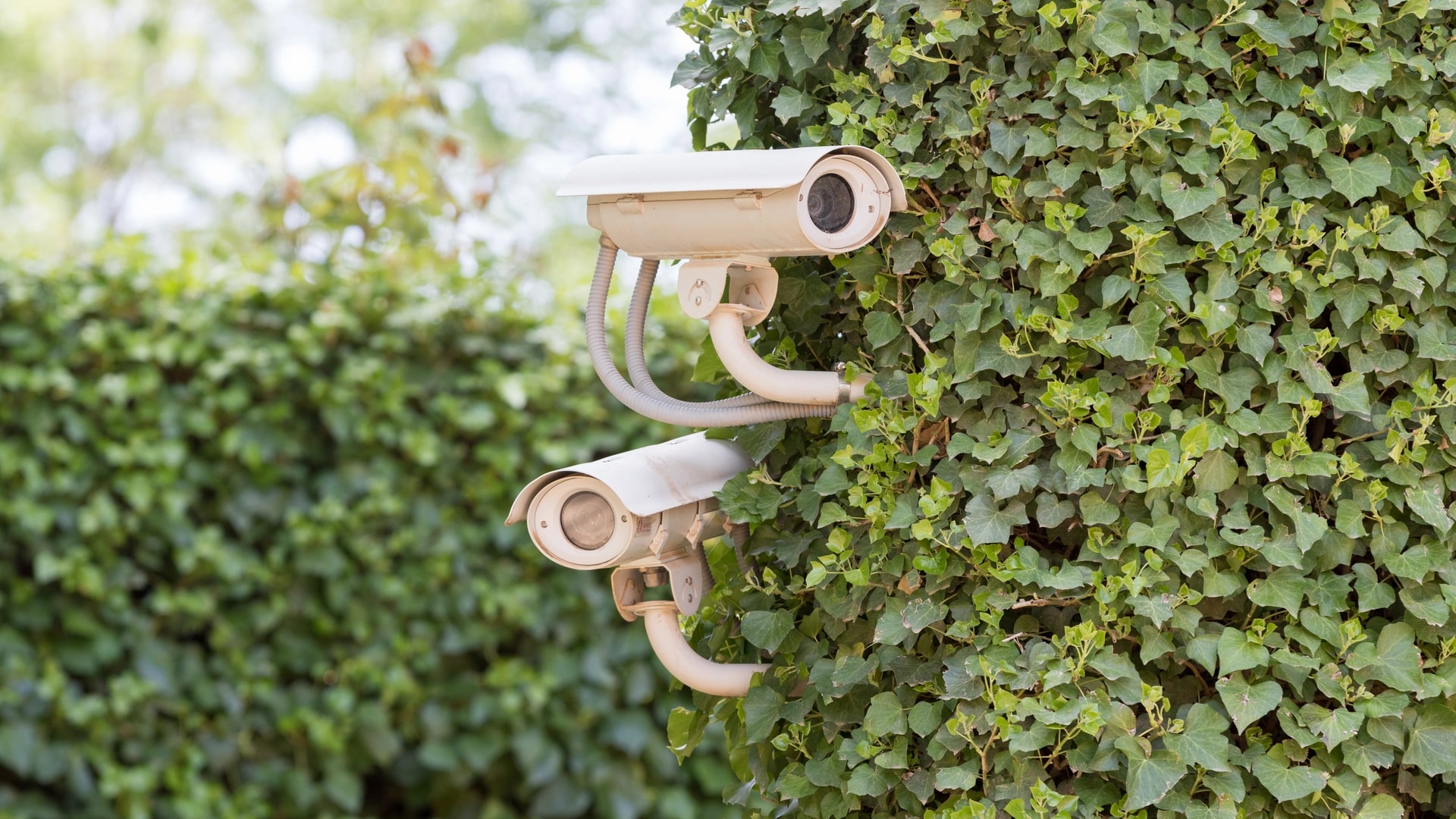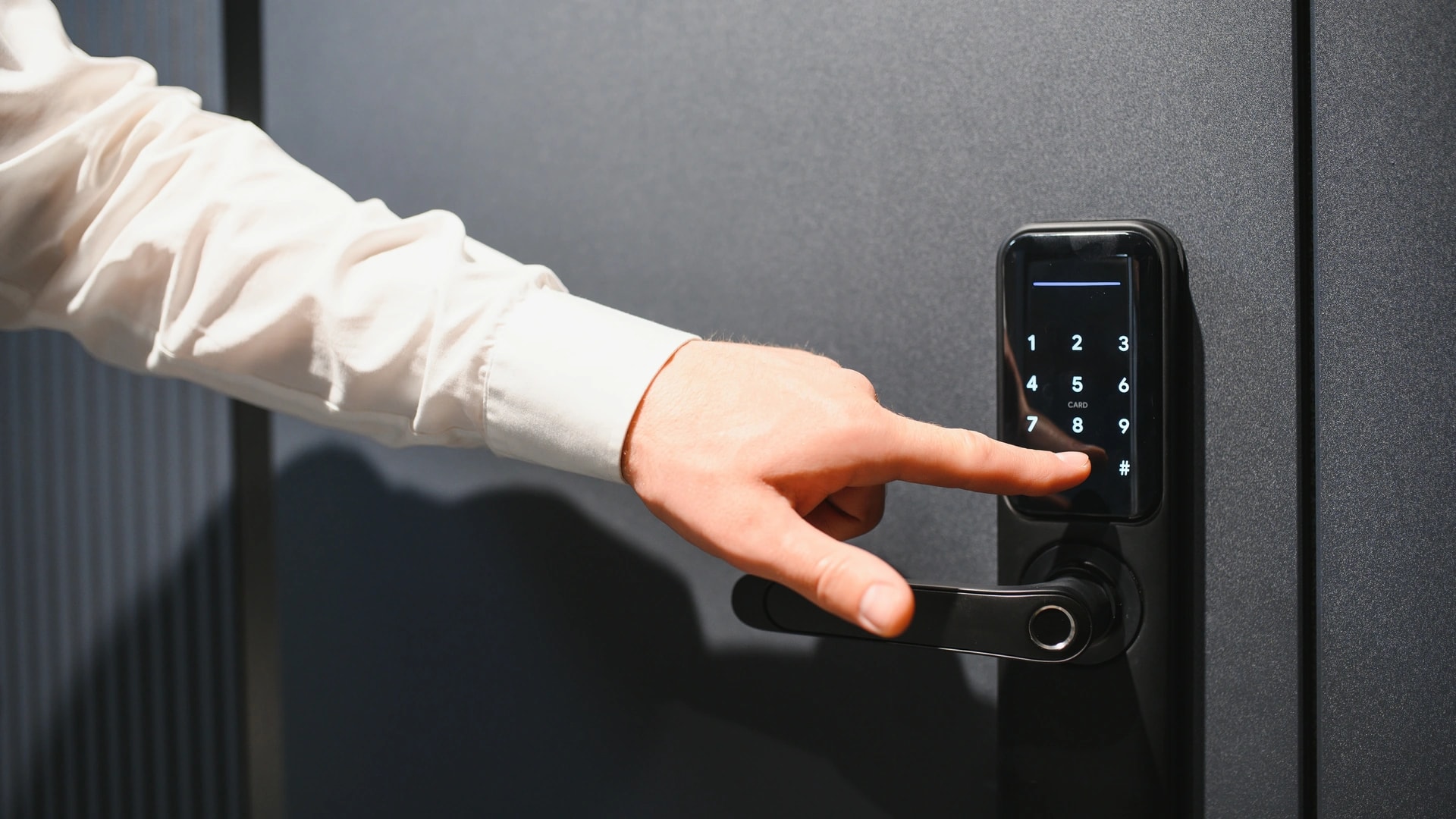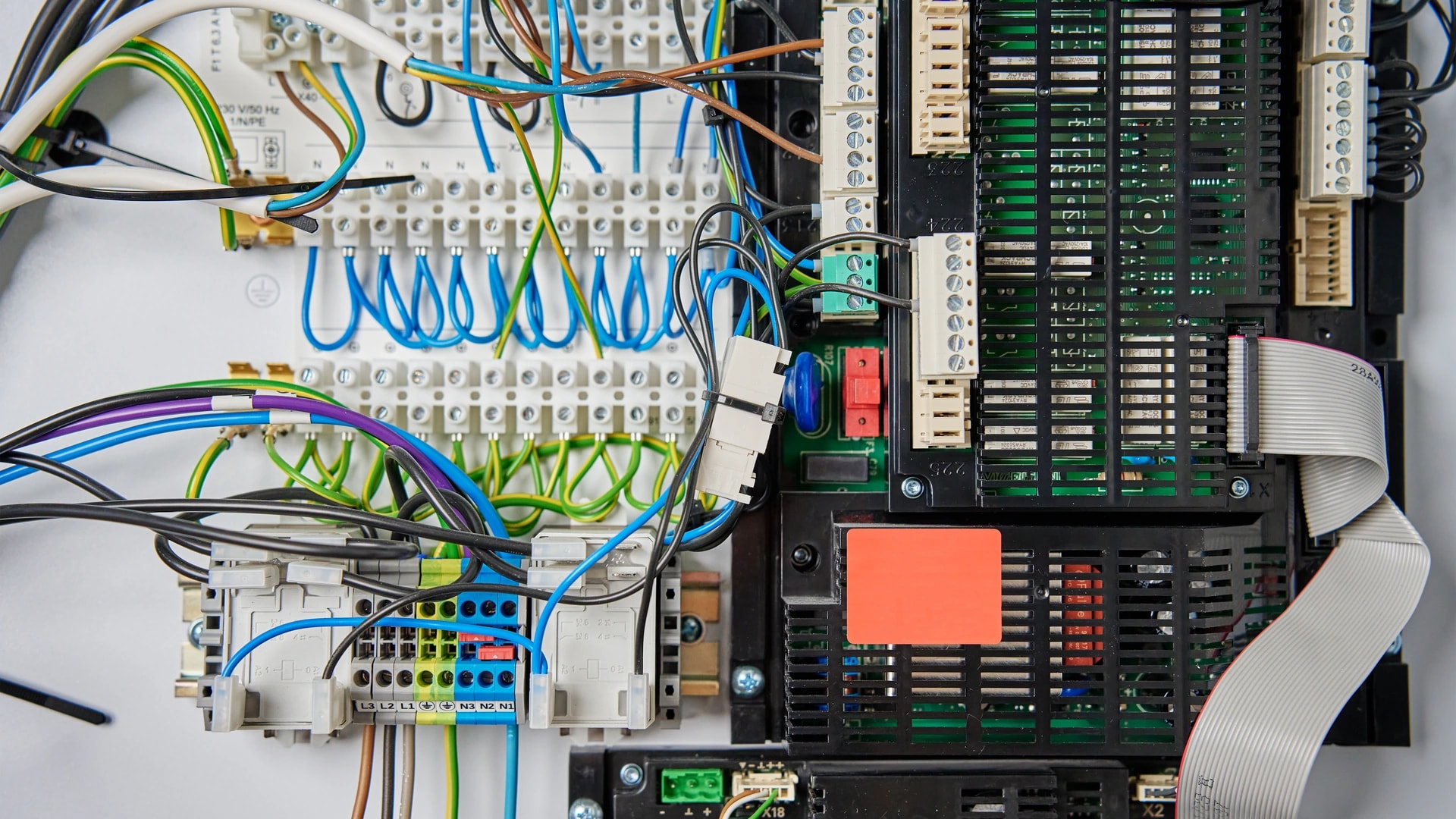
You are on a checkout page, or holding a box a friend carried over from the US. One question matters: will this work in my Dubai home? This page answers it by failure type, and names a replacement for every device that fails.
There is no government blacklist of smart home devices in the UAE. What exists is seven repeating failure patterns. A device can trip any one of them on its own, which is why a product with 40,000 good reviews abroad can still be useless in Dubai Marina. For the order to buy things in, read our smart home buyer's guide for Dubai. This page is about what specifically breaks, and why.
Which smart home devices do not work in Dubai?
The smart home devices that do not work in Dubai fall into four groups. Region-locked platforms: Google Nest and Google Home, SimpliSafe, ecobee. Power mismatches: fixed 120V US electronics, and US switches that need a neutral wire. AC mismatches: Nest and Ecobee on district cooling, Sensibo-style controllers on wired fan coil panels. Climate and radio: US-frequency Z-Wave gear, and outdoor cameras or locks rated to only 40 to 45°C.
Real talk: none of those are bad products. They are products built for a different power supply, a different AC system, a different radio band, or a different climate. A Nest thermostat is excellent in a Toronto house with a furnace. It has nothing to control in a Business Bay apartment fed chilled water.
Every claim on this page carries a source. Where we could not verify something, we left it out.
Why does a device that works everywhere else fail in Dubai?
Three separate problems get bundled under "does not work in Dubai": an account or software gate, a physical or electrical mismatch, and the climate. They are independent. A device can pass two and still fail on the third, which is why "my friend's one works fine" is weak evidence.
Here are the seven patterns and where this page covers each one.
| Failure category | What goes wrong | Covered in |
|---|---|---|
| Region and account lock | The brand does not list the UAE, or a paid tier is switched off for UAE accounts | Region-locked brands |
| Power and plug | The unit is rated 120V only and Dubai supplies 220 to 240V | US plugs and voltage |
| Wiring and fit | No neutral wire at the switch, or the back box is too shallow | Switches and wall boxes |
| HVAC mismatch | The thermostat expects a compressor; a district-cooling fan coil unit has none | Thermostats and district cooling |
| Radio and regulatory | Wrong Z-Wave frequency, or a commercial import question the buyer misreads | Radio bands and TDRA |
| Heat | The device stops above 40 to 45°C and Dubai air reaches 47 to 50°C | Heat ratings |
| Service, warranty and law | A feature is not offered here, and a grey import has no local claim path | Warranty and consumer law |
Which brands are region-locked or account-locked in the UAE?
Google Nest, SimpliSafe and ecobee are the three names to check first, and Google is the clearest case. Google's own regional availability documentation does not list the UAE for its Nest devices and services[1]. Nest Aware, the paid cloud video recording plan, has been reported as deactivated for UAE accounts across Google's own Nest Community threads for years. You can often get the hardware onto your Wi-Fi, then find the subscription you were counting on is closed to you.
SimpliSafe is blunter about it. Its own support page states the system is sold and monitored in the United States and United Kingdom only[2]. The monitoring subscription is the entire point of a DIY alarm, so a forwarded box is a keypad and some sensors with nothing behind them.
ecobee is a third pattern: not blocked, just absent. We found no confirmed official UAE distribution or support channel for ecobee, and it is marketed to the US and Canada. That means no local warranty path and no local support line.
Z-Wave gear bought in the US is a hardware problem, not an account problem. The UAE uses the European Z-Wave band at 868.4 and 869.85 MHz, while the US and Canada use 908.4 MHz[4]. Z-Wave is a low-power wireless standard for locks and sensors. A 908 MHz device physically cannot pair with a UAE hub. Our guide to smart home protocols in Dubai has the full breakdown.
Plenty of well-known brands work here perfectly well
Do not read this section as "big brands are traps". Ring has an official UAE presence, including its own UAE subscription plans page[3]. Amazon Alexa has been officially supported in the UAE since December 2021, including Khaleeji Arabic, as covered in does Alexa work in Dubai.
Apple Home has no regional gate at all, because it is a built-in iPhone feature rather than a separate service you subscribe to by country. Our Apple HomeKit in the UAE guide covers that in full. Josh.ai, the premium voice system, publishes a current focus on the United States and Canada. Treat a UAE install as a conversation with an integrator, not an off-the-shelf buy.
Why will a US smart plug not work on Dubai power?
Because Dubai runs 220 to 240V at 50Hz through a UK-style three-pin Type G socket[5], and a US smart plug is often built for 100 to 120V only. Plugging a 120V-only unit into a Dubai socket runs it at roughly double its rated input. It can die on the spot, and at worst it can start a fire.
A travel adapter changes the pin shape. It never changes the voltage.
This is the single most expensive misunderstanding we correct on site visits. The adapter fits, the light comes on for a second, and the device is gone.
The check that takes five seconds
Read the small print on the plug body or power brick. "INPUT: 100-240V, 50/60Hz" means the device is dual-voltage and needs only a shape adapter. A single figure, such as "120V~60Hz", means it needs a real step-down transformer or, more sensibly, replacing with local stock.
Common mistake: trusting the brand instead of the SKU. TP-Link's Kasa smart plug line is genuinely mixed. The KP125 is rated 100 to 120V, while the KP303, EP10, HS105, HS107 and KP200 are rated 100 to 240V. Same brand, same shelf, different fine print. TP-Link's own support FAQ also states its products are only guaranteed to work in their region of sale, with no cross-region international warranty[6].
Buy instead: any smart plug labelled 100 to 240V. Or buy the same product from Amazon.ae, Noon or Sharaf DG, where the stock already carries the right voltage rating and Type G pins.
Why will a US smart light switch not fit a Dubai wall?
A US smart switch fails a Dubai wall for two physical reasons: the wiring and the box depth. Many US smart switches need a neutral wire present inside the switch box to stay powered when the light is off. UAE wiring follows the British standard convention, where lighting circuits are commonly looped in at the ceiling rose, so only a switched live and an earth run down to the wall switch.
Note the word commonly. Wiring varies by building age and electrician, so some Dubai properties do have a neutral at the switch. Check before you buy, not after you open the wall.

The second reason is depth. US smart switches are designed around deeper North American wall boxes to fit their electronics. UK and UAE back boxes are commonly shallower, at 16mm, 25mm or 35mm, so a bulky US switch may not seat without swapping the box or adding a spacer ring.
Buy instead: Lutron Caseta dimmers and switches are built to install without a neutral wire[7], which removes the guesswork on a retrofit. Lutron is one of the brands we already fit on smart lighting and climate control projects, from AED 4,500. For a new build or a full villa, KNX keypads sit in standard boxes and are wired to suit the property from the start.
Not sure what is behind your switch plate? Send us a photo on WhatsApp and we will tell you what fits.
Will a Nest or Ecobee thermostat control a district-cooled apartment?
No, not natively. A district-cooled apartment in Downtown Dubai or Business Bay has a fan coil unit. That is a coil and fan box fed chilled water from a central plant run by Empower, Emicool or Tabreed. There is no compressor in your home to switch on.
Nest and Ecobee are built around 24V call-for-heating and call-for-cooling wiring for furnaces and heat pumps[8]. A fan coil unit needs something different: a water valve opened and closed, plus two or three fan speeds. It is an architecture mismatch, not a fault in the thermostat.
Buy instead: a thermostat built for fan coil units. The Salus FC600 has explicit 2-pipe and 4-pipe support with fan-speed and valve terminals[9]. The Aqara Smart Thermostat S3 supports water system fan coil units with three relay circuits[10]. On a villa, KNX fan coil actuators do the same at scale. The full device-by-device matrix sits in our guide to district cooling and smart thermostats in Dubai.
Does a Sensibo-style controller work on every AC in Dubai?
No. Sensibo's own compatibility page states its products need an air conditioner controlled by an infrared remote. Systems with only a wired thermostat and no remote are not supported[11]. A district-cooling fan coil panel is exactly that: wired, no remote, nothing for an infrared blaster to talk to.
Where Sensibo-style devices do shine is a split unit with a handheld remote, which is standard in older Dubai apartments and many townhouses. No wiring, fitted in minutes, and it works.
The rule of thumb: if your AC came with a handheld remote, an infrared controller is a fair bet. If it is a panel on the wall, you need a thermostat wired to the valve and fan instead. Our guide to automating air conditioning in Dubai matches each AC type to the right device.
Do you have to register an imported smart device with TDRA?
No, not for personal, non-commercial use. TDRA is the UAE's telecom regulator, and its Type Approval regime applies to radio equipment sold or resold on the UAE market[12]. Bringing a hub, speaker or camera in your luggage, or ordering one for your own home, runs through a standard customs release instead.
The internet is full of the opposite advice. You are not expected to file a type-approval application for your own router. What you cannot do is import a pallet of them and sell them locally.
Buying from UAE retail removes the question entirely, because that stock is already the approved regional version and the approval sits with the importer. Our guide to smart home laws in Dubai covers the wider rules.
| What you are checking | What "works in Dubai" looks like | What fails |
|---|---|---|
| Voltage label on the brick | INPUT: 100-240V, 50/60Hz | A single fixed rating such as 120V~60Hz |
| Plug shape | Type G three-pin, or a detachable cable you can swap | Moulded US two-pin on a fixed 120V unit |
| Z-Wave frequency | 868.4 or 869.85 MHz, the EU version | 908.4 MHz, the US and Canada version |
| Neutral wire at the switch | A no-neutral switch such as Lutron Caseta | A US switch that requires a neutral you may not have |
| TDRA status | Bought from UAE retail, so approval is already handled | Commercial import for resale without type approval |
| Operating temperature | Rated to 55°C or 60°C for anything outdoors | A 40°C or 45°C ceiling on a sunlit wall |
Can an outdoor camera or smart lock survive a Dubai summer?
Only if its stated ceiling clears Dubai's summer air. NCM data reported in the UAE press puts July and August average maximums at roughly 48°C in the shade[13], with daily peaks reported at 49°C and above[14]. Popular battery cameras stop lower: eufy Outdoor Cam at about 45°C[15], Arlo Pro and Ultra at 45°C[18]. That gap is the whole problem.
A device housing sitting in direct sun runs hotter than the shade-air figure. We are not going to put a number on that, because no source we trust publishes one. It is enough to know the direction of travel: the sunlit wall is worse than the weather report.
Smart locks have the same issue. Many standard consumer locks are rated only to 40 to 50°C, while Dubai summer air regularly passes 45°C and a west-facing lock body runs hotter still on its own surface[16]. The failure is gradual: the battery drains faster, then the plastic warps, then the board gives up.
Buy instead: for cameras, wired professional lines such as Hikvision or Dahua rate to 60°C with IP67 sealing. Our Dubai camera spec guide lists the ceiling for every major brand. For locks, look for a metal body rated 60 to 70°C with IP65 or IP66 sealing, the bar set in our smart locks in Dubai guide. We fit both on security and surveillance projects.
Door format matters as much as heat. August's own compatibility list rules out mortise locks, double-cylinder deadbolts and any deadbolt needing more than a full turn[17], which covers most Dubai villa and apartment doors. Yale and Aqara mortise-compatible models are the usual answer.
What happens to battery-powered devices left in direct sun?
They shut themselves down, and then they age faster. eufy's own support documentation puts its Outdoor Cam at roughly 45°C with an in-app overheating warning and an automatic shutoff near 50°C[15]. Arlo's knowledge base documents the same behaviour on its Pro and Ultra lines, rated to 45°C[18].
That is the manufacturer protecting the battery, and it is the right call. It also means your camera is offline in the hottest hours of a Dubai afternoon.
Quick math: lithium cells hold their capacity best in roughly a 10 to 25°C band. A Dubai balcony in August is nowhere near that, so a battery device outdoors here gives you fewer days per charge and a shorter useful life than the same unit in London.
Where the battery is sealed and not user-replaceable, a faded cell means replacing the whole unit rather than a battery. A solar panel accessory helps with charging, but it does not raise the camera body's own thermal ceiling. Buy instead: wired, mains-powered cameras in any sun-exposed position, and keep battery units for shaded side doors, covered porches and indoors.
Which voice assistant features are simply not offered in the UAE?
Alexa works well in the UAE, but a few features are switched off for UAE accounts. Voice shopping and in-skill purchases are not available, and Amazon's supported content services for the region leave out Apple Music, Audible, Amazon Podcasts, Pandora, iHeartRadio and SiriusXM[19]. Spotify and Anghami are the two that work smoothly.
Alexa calling to a normal phone number supports US, UK, Canada and Mexico numbers only, so you cannot call a UAE mobile that way. Alexa-to-Alexa Drop In between your own devices is unaffected. Alexa+, the newer generative AI version, is not live here: Amazon's own launch list covers North America, the UK, several European markets and Brazil, with no UAE date announced[20].
On the Google side, Assistant's Arabic support is phone-app level rather than speaker level, and Gemini for Home's announced rollout does not include Arabic or the UAE. On Apple, classic Siri has handled Arabic since 2015, while Apple Intelligence does not list Arabic yet. Full detail sits in does Alexa work in Dubai, Apple HomeKit in the UAE and Arabic voice control in Dubai.
Buy instead: nothing, in most cases. Pick the assistant whose missing feature you do not care about. If Arabic voice control across the whole house is the requirement, that is a job for a configured voice control and AI layer rather than an off-the-shelf speaker.
Does a warranty from home cover a smart device in Dubai?
Usually not. Samsung's own published Gulf warranty policy ties local warranty cover to the country of purchase[21], and the same pattern runs across the industry. TP-Link states plainly that its products are guaranteed only in their region of sale, with no cross-region international warranty[6].
"International warranty" printed on a box rarely means you can walk into a Dubai service centre. In practice it usually means shipping the unit back to the country where it was bought, at your cost, and waiting.
For a AED 200 sensor, nobody bothers. For a AED 4,000 lock set, that is a real loss. Check the warranty terms before you save 15 percent buying abroad.
Is a grey-market device covered by UAE consumer protection law?
Generally, no. UAE Federal Law No. 15 of 2020 on Consumer Protection, amended by Federal Decree-Law No. 5 of 2023, requires UAE-registered suppliers to repair or replace a faulty product free of charge. It also forces a refund or replacement if the same fault returns three times in the first year[22].
The important part for an importer: that cover excludes transactions with foreign-registered e-commerce sellers[22]. Order straight from an overseas website and the purchase sits outside the UAE statute.
So a grey import carries two gaps at once, not one. No local manufacturer claim path, and no UAE consumer-protection claim path. Buying the same device through Amazon.ae, Noon, Sharaf DG or an authorised distributor closes both in a single step.
Which smart devices work in the UAE, and what should you buy instead?
Every device that fails here has a UAE replacement: Ring for Nest, Salus or Aqara thermostats for district cooling, Lutron Caseta for no-neutral switches, wired 60°C cameras for the heat. This is the table to screenshot before you order anything.
| Category | Example that fails | Why it fails in Dubai | Buy this instead |
|---|---|---|---|
| Region and account lock | Google Nest and Google Home | No UAE listing in Google's regional availability documentation, and Nest Aware reported deactivated for UAE accounts[1] | Ring, which has an official UAE presence[3], or an Apple Home camera on iCloud+ |
| Region and account lock | SimpliSafe | Sold and monitored in the US and UK only[2] | A specified alarm through security and surveillance, or Dubai Police Smart Home Security monitoring from about AED 147 a month |
| Region and account lock | ecobee | No confirmed UAE distribution or support channel, and no fan coil support | Salus FC600[9] or Aqara Smart Thermostat S3[10] |
| Power and plug | TP-Link Kasa KP125 smart plug | Rated 100 to 120V only, against Dubai's 220 to 240V supply[5] | Kasa KP303, EP10, HS105, HS107 or KP200 at 100 to 240V, or any UAE retail smart plug |
| Wiring and fit | A US smart switch that requires a neutral | A neutral is commonly absent at the wall switch under British-standard wiring, and US switches need deeper back boxes | Lutron Caseta, built to install with no neutral wire[7] |
| HVAC mismatch | Nest or Ecobee on district cooling | Built for 24V compressor calls; a fan coil unit has no compressor, only a valve and fan speeds[8] | Salus FC600, Aqara Smart Thermostat S3, or KNX fan coil actuators on a villa |
| HVAC mismatch | Sensibo on a wired fan coil panel | Needs an AC controlled by an infrared remote; a wired panel has none[11] | A wired fan coil thermostat. Keep Sensibo for split units with a handheld remote |
| Radio | A US-bought Z-Wave lock or sensor | 908.4 MHz hardware cannot pair with the UAE's 868.4 and 869.85 MHz band[4] | The EU-frequency version of the same product, or a Zigbee or Matter equivalent |
| Heat | An outdoor camera rated to 40 or 45°C | Dubai shade air averages about 48°C in July and August[13], with peaks at 49°C and above[14] | Wired Hikvision or Dahua class cameras rated to 60°C with IP67 sealing |
| Heat | A battery camera such as eufy Outdoor Cam or Arlo Pro | Shuts off near 45 to 50°C to protect the battery[15][18] | A mains-powered camera in any sunlit spot. Keep battery units for shade and indoors |
| Heat | A consumer smart lock rated 40 to 50°C | Dubai summer air regularly passes 45°C and the lock body runs hotter on a sunlit door[16] | A metal-body lock rated 60 to 70°C with IP65 or IP66 sealing |
| Door format | August smart lock | Its own list excludes mortise locks, double-cylinder deadbolts and deadbolts needing more than a full turn[17] | Yale or Aqara models made for mortise and euro-cylinder doors |
| Service availability | Alexa voice shopping, phone calling, Alexa+ | Blocked or not launched for UAE accounts[19][20] | Alexa still works well for control, music on Spotify or Anghami, and Arabic commands |
| Warranty and law | Any grey-market import | Warranty is tied to the country of purchase[21], and UAE consumer law excludes foreign e-commerce sellers[22] | The same device from Amazon.ae, Noon, Sharaf DG or an authorised distributor |
Want this checked against your actual apartment or villa before you order? Book a free consultation and we will go through your list.
How do you check any device before you buy it?
Six checks catch every failure pattern in this article, and they take about four minutes on a product page. Run them on anything you are importing or buying from a seller outside the UAE.
- Voltage: find "100-240V" on the spec sheet or the plug body. One fixed figure means stop.
- Account region: open the brand's own supported-countries page and search for United Arab Emirates. Absent means the app and any subscription may not work.
- Radio band: for Z-Wave, confirm the EU 868 MHz version. Zigbee, Thread, Matter and Wi-Fi are the same worldwide.
- AC type: handheld remote means an infrared controller is fine. A wall panel fed by chilled water needs a fan coil thermostat.
- Operating temperature: for anything outdoors, look for 55°C or higher. Anything at 40 or 45°C belongs indoors or in deep shade.
- Warranty and seller: a UAE-registered seller gives you both a local claim path and consumer-law cover. A foreign site gives you neither.
Prices move constantly, so we have not printed a figure for any device here. Check the current listing on the day you buy, and check the seller's country while you are there.
How does Dubai Smart Home catch this before it costs you money?
We run every device we specify through these seven checks before it reaches a quote, not after it reaches your wall. Our engineers are in-house and based in Dubai, UAE, we have completed 100+ smart home automation projects since 2016, and we are rated 4.9/5 by Dubai homeowners[23].
So the thermostat on your Empower fan coil is one that can drive a valve. The camera on your west wall is rated for August. The switch in your wall fits the box already there. It is unglamorous work, and it is the difference between a system that runs for ten years and a drawer full of returns.
If your Wi-Fi is the weak link rather than the devices, that is a separate fix, and our home networking and IT team handles it. For the wider list of avoidable errors, read our smart home mistakes in Dubai guide, or start small with a Dubai smart home starter kit.
Send us your shopping list before you order. Get a free consultation, or message us on WhatsApp. Sales enquiries are answered within 2 hours.