The best smart home starter kit in Dubai is not a single boxed product. It is a budget. This guide gives you three shopping lists, capped at AED 1,000, AED 5,000, and AED 10,000, so you can walk into Amazon.ae or Noon this weekend and buy the right kit for what you want to spend.
Every price here is a retail, self-install snapshot, not an installed-system price. Check the current listing before you buy, because retail prices move. The Dubai Smart Home team has designed smart home automation across Dubai, UAE since 2016, so this list is written from the project side by Dubai Smart Home.
If you want the buying order rather than the shopping list, our smart home buyer's guide for Dubai covers what to buy first and why. For the big picture, start with our complete smart home guide for Dubai.
What's the best smart home starter kit for Dubai?
There is no single best smart home starter kit for Dubai. The right kit is the budget tier that matches what you want to spend. Under AED 1,000 buys a one-room taste. Under AED 5,000 buys a real starter system. Under AED 10,000 buys a proper apartment-wide kit.
Read this first: every AED figure below is a retail price you pay yourself at a UAE shop, checked at the time of writing. It is not the same as a professionally installed system. A one-room setup designed by Dubai Smart Home typically runs AED 2,000 to 5,000 installed, which includes design, wiring, and a 12-month workmanship warranty that can vary by product, on top of the hardware[9]. The two numbers answer different questions, so we keep them apart throughout.
Here is the spine of this guide in one table. Read down the tier that matches your budget, then jump to its full shopping list below.
| Tier | Retail range, self-install | What's inside | What it covers | Honest limit |
|---|---|---|---|---|
| Under AED 1,000 (a taste) | ~AED 400 to 1,000 | Voice hub, 2 to 3 smart bulbs, 1 to 2 smart plugs | Lights and a couple of plugs in one room, by app or voice | No security, no AC saving yet, one room only |
| Under AED 5,000 (a real starter) | ~AED 2,000 to 5,000 | Lighting for 1 to 2 rooms, an AC or IR controller, a doorbell or camera, a retrofit lock, a hub | Lights, cooling, and entry for one or two rooms, plus the first DEWA saving | Not whole-apartment, no mesh or curtains unless you trim |
| Under AED 10,000 (an apartment starter) | ~AED 6,000 to 10,000 | Multi-room lighting, AC control for 2 to 3 rooms, a small camera set and doorbell, a lock, curtains for one room, mesh Wi-Fi | A 1 to 3 bedroom apartment covered for lighting, cooling, entry, and Wi-Fi | No monitored CCTV, no wired backbone, villa scale is out |
All prices in that table are snapshot retail figures, self-install, checked at the time of writing. Confirm current listings before you buy.
What can you get for a smart home under AED 1,000?
Under AED 1,000 buys a genuine taste of a smart home in one room. It is the cheapest real way to start a smart home in Dubai, and it buys convenience, not security or a lower DEWA bill. Here is the shopping list.
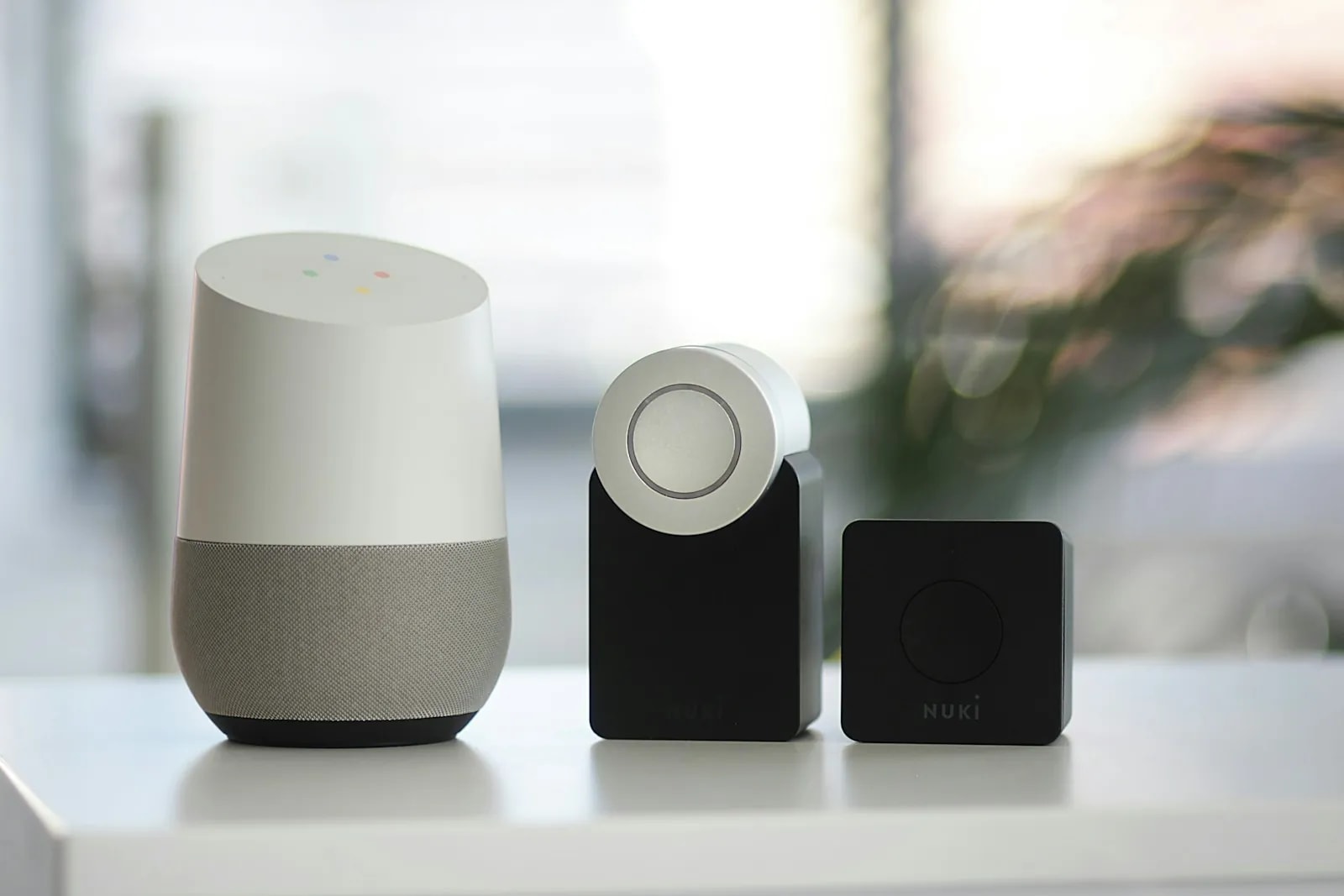
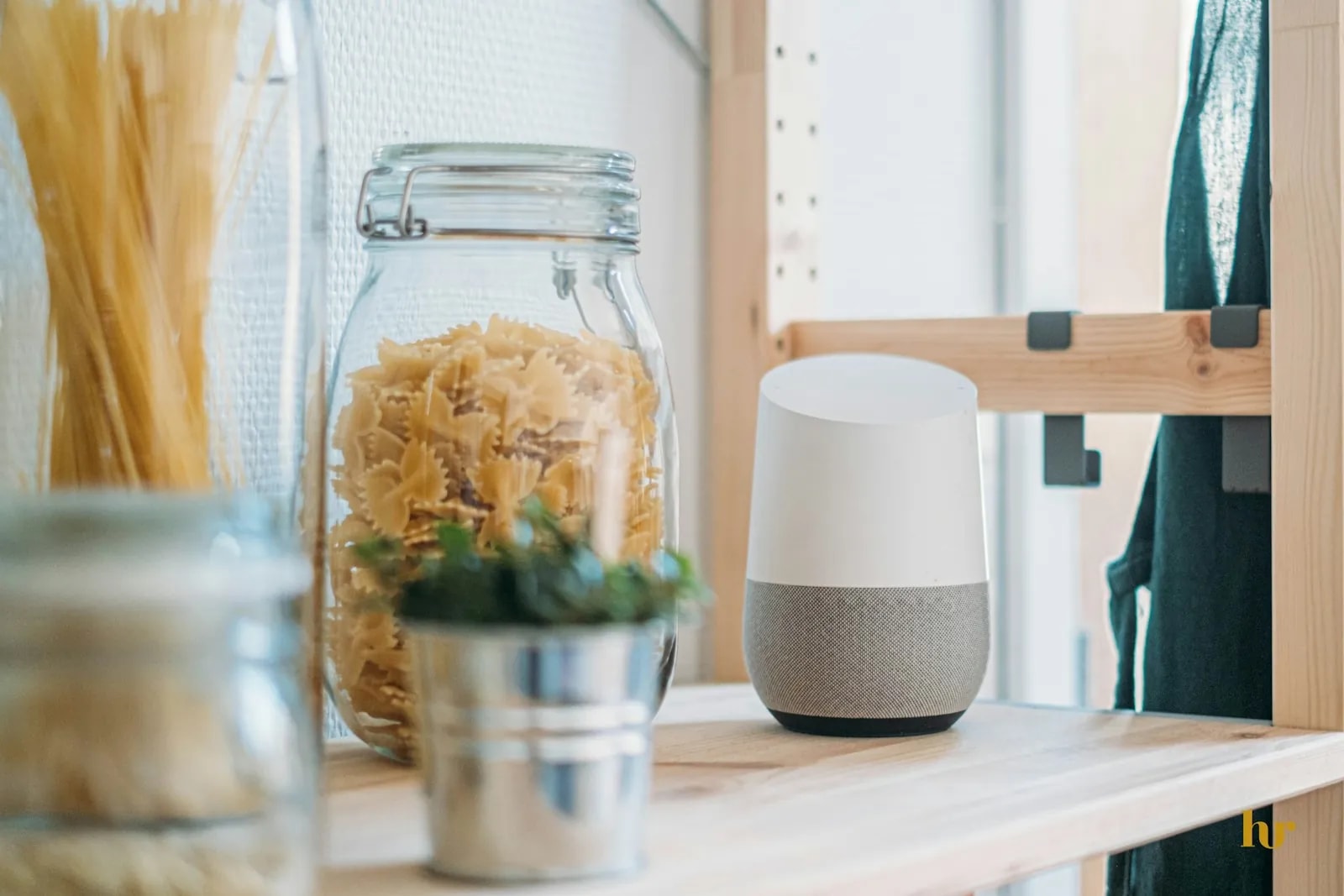
- A voice hub or smart speaker: an Echo Dot or Google Nest Mini class speaker, roughly AED 160 to 300 at the time of writing. Check the current listing on Amazon.ae, Noon, or a local store. This is your first ecosystem choice, so read the ecosystem section below before you tap buy.
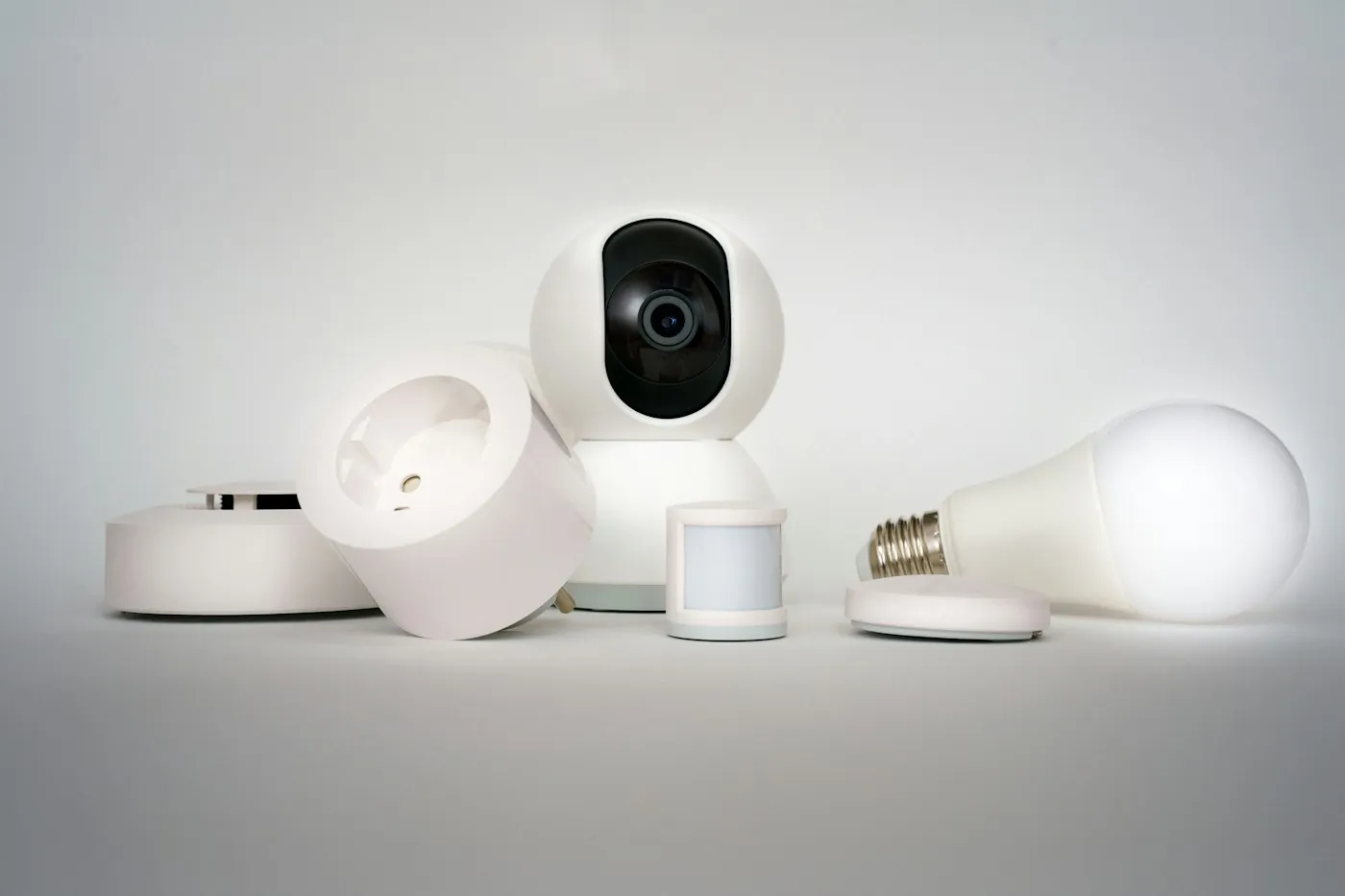
- Two or three smart bulbs: roughly AED 40 to 150 each, depending on brand and colour. They screw into your existing fittings, so nothing is drilled or wired.
- One or two smart plugs: roughly AED 60 to 150 each. A plug sits between the wall socket and a lamp or fan, and makes a plain device switchable by app or voice.
Honest limit: this tier is one room and pure convenience. There is no camera, no lock, and no AC control, so it does not lower your DEWA bill yet. Cooling is the biggest summer line on that bill, and the saving only starts once a kit includes AC control[1]. That is Tier 2. Every device here is screw-in or plug-in, so it is fully renter-safe and moves with you.
What can you get for under AED 5,000?
Under AED 5,000 buys a real starter system for one or two rooms, and it is where the DEWA saving begins. This tier adds cooling control, a camera, and a lock to the Tier 1 basics. Here is the list.
- Smart lighting for one or two rooms: a set of bulbs, or plug-in and clip-on fittings, building on the Tier 1 bulbs.
- A smart AC or infrared controller: roughly AED 250 to 450 for a typical model, though some single units sell for as little as AED 130 and premium ones cost more. The spread is wide, so treat it as a range and check the listing. This device reads your existing AC remote, and it is the reason this tier starts saving on cooling[1].
- A video doorbell or entry camera: an entry model like an Ezviz runs roughly AED 257 to 309, while premium doorbells reach around AED 1,600. Pick based on how much you want it to see.
- A retrofit smart lock: the device is roughly AED 400 to 1,200, with premium branded locks around AED 2,300 to 3,000. A fitter, if you want one, adds about AED 250 to 350. A retrofit lock mounts over your existing one, so a renter can remove it clean.
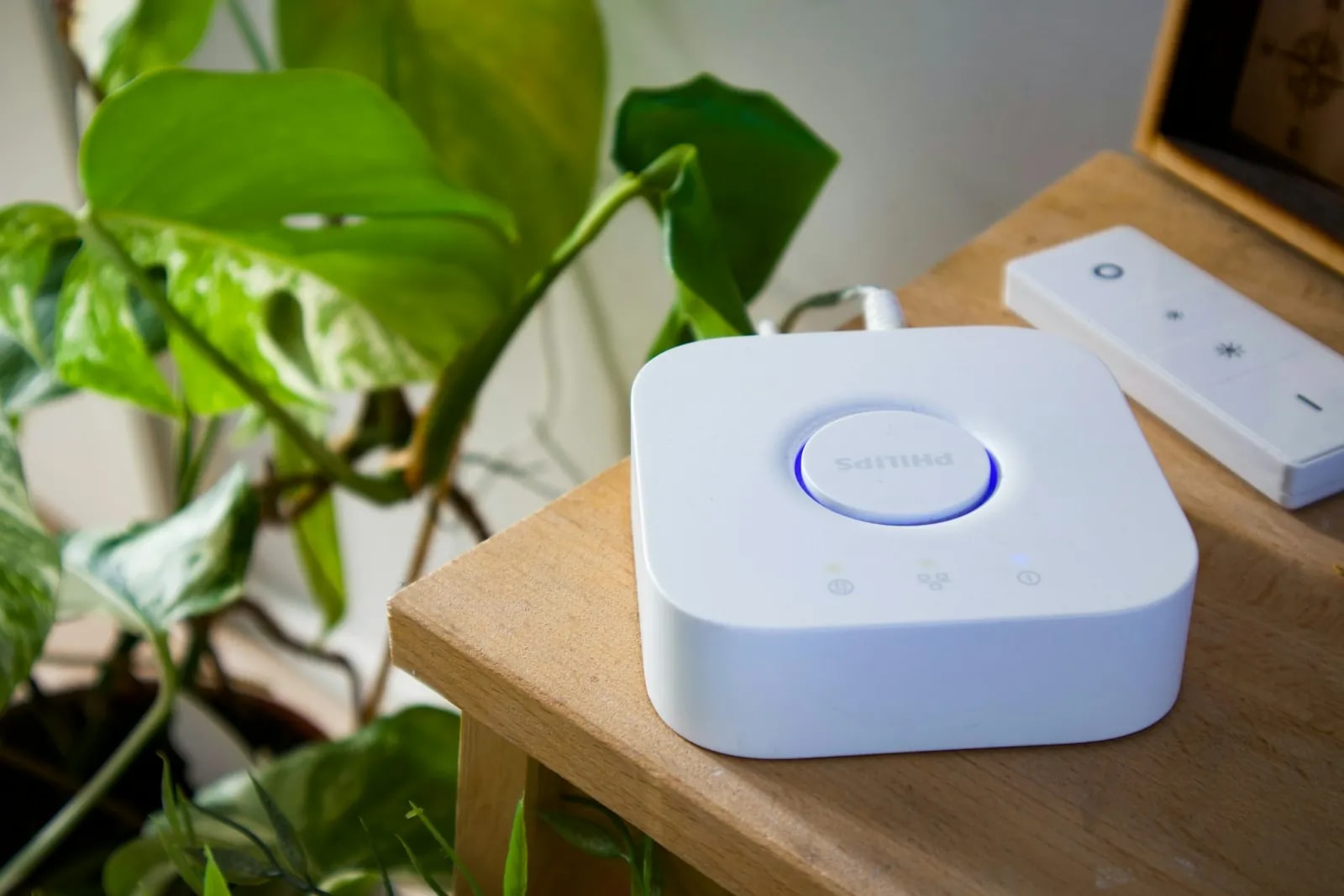
- A hub or speaker: the same ecosystem hub from Tier 1 ties the lock, camera, and lights into one app.
Honest limit: this is a one-to-two-room system, not a whole apartment. If you add mesh Wi-Fi or curtains at this budget, something else has to come out. For zone AC control and lighting done properly across more rooms, our smart lighting and climate control work picks up where a DIY kit stops.
What can you get for under AED 10,000?
Under AED 10,000 buys a proper apartment-wide starter kit for a one to three bedroom home. It covers lighting, cooling, entry, and Wi-Fi across most rooms. Here is the list.
- Lighting across most rooms: smart bulbs or fittings for the living room, bedrooms, and hallways.
- AC control in two or three rooms: an infrared controller per split unit, at the same roughly AED 250 to 450 each, checked at the time of writing.
- A small camera set with a doorbell: one or two entry cameras plus a doorbell, drawing on the same AED 257 to 1,600 range per device.
- A retrofit smart lock: one door, at the roughly AED 400 to 1,200 device range.
- Motorised curtains for one room: a clip-on curtain motor is roughly AED 239 to 340 for the bare motor unit, or roughly AED 400 to 700 per window once you add the mounting hardware and rail to fit it fully. Budget the fitted figure, not the bare-motor one.
- A mesh Wi-Fi upgrade: roughly AED 300 to 500 per node, and a one to three bedroom apartment usually needs two or three nodes, so about AED 600 to 1,500 in total.
Honest limit: this kit covers an apartment, but it stops at real edges. There is no monitored CCTV, no wired backbone, and villa scale is out of reach. This is the natural point where a household starts thinking about a professional install, which we come back to below.
Not sure which tier fits your apartment? Message an engineer on WhatsApp →
Which ecosystem should you choose before buying anything?
Choose your ecosystem before your first device, not after. This is the one decision that shapes every later purchase. Your options are Amazon Alexa, Google Home, and Apple Home.
In the UAE, local support matters as much as features. Alexa has been officially available here since December 2021, and it speaks English and Khaleeji Arabic[5]. Apple runs three official UAE retail stores for HomeKit gear. Google Home has no official UAE store listing, so support is thinner. Our Alexa vs Google Home vs HomeKit guide compares all three, and does Alexa work in Dubai covers the local Arabic setup.
You are not locked to one brand forever. Matter is a shared standard from 2022, so one Matter device works with Apple, Google, and Amazon together[7]. Buy Matter-labelled devices where you can, but check the certification on the Connectivity Standards Alliance ledger, not the box alone[7]. Our Matter protocol guide explains it in plain terms.
A single Echo or Nest speaker is enough voice for a starter kit. If you later want one voice layer across a whole home, in English and Arabic, our voice control and AI work covers Josh.ai, Crestron, and Apple Home setups.
What should you prioritise first, whichever tier you pick?
Prioritise AC control and lighting first, then the security basics. Smart AC and lighting control cut cooling costs 20 to 30 percent, and cooling is the biggest line on a Dubai DEWA bill in summer[1]. That is the fastest money back in any tier.
Security comes next: a lock, a doorbell, and a stick-on leak sensor before anything flashy. We do not re-run the full buying order here. For the step-by-step sequence and the reasoning behind it, read our smart home buyer's guide for Dubai.
What should you skip or buy later?
Skip the gadgets that look clever but fix nothing, and delay the big-ticket items until the basics are in. The buyer test is simple: does this device remove a real bill, a real risk, or a daily annoyance, or does it just look impressive? Boring beats flashy on value nearly every time.
| Category | Skip or buy later? | Why | Buy this instead, or when it is worth it |
|---|---|---|---|
| Smart kitchen appliances | Skip | A smart toaster still just toasts, and a smart fridge rarely earns its premium | Spend the money on AC control instead |
| Robot gadgets beyond a vacuum | Skip | Smart mops, pool bots, and pet feeders cost more than the job is worth | A robot vacuum is the one that earns its keep |
| Swapping every bulb for a smart one | Buy later | An app-controlled bulb in a closet or hallway is overkill | A motion sensor or timer, roughly AED 60 to 120, solves it cheaper |
| A video doorbell before a leak sensor | Reorder | A hidden leak costs thousands; the doorbell only looks impressive | Buy the leak sensor first, then the doorbell |
| Region-locked imported gear | Skip | No TDRA registration, no local warranty, and lost features | Buy the UAE-retail version of the same device |
| Whole-home audio, cinema, or a wired backbone | Buy later | This is a planned, wired, professional install | Add it once the apartment basics are solid |
Nothing on the buy-later rows is a mistake. Blinds beyond one room, whole-home audio, a cinema, and a wired backbone are real value for the right home. They are just a second or third purchase, or a professional job, not a first starter-kit buy.
Where should you actually buy these devices in Dubai?
Buy from a mainstream UAE retailer, not an overseas seller. Amazon.ae, Noon, Sharaf DG, and ACE all stock TDRA-registered smart home gear with a local warranty[8]. That one choice avoids the import traps in the next section.
- Amazon.ae: the broadest single catalogue, with Echo speakers, Tapo plugs, Aqara locks, and infrared AC controllers all listed.
- Noon: a UAE marketplace with its own smart-home section, often with cash on delivery.
- Sharaf DG and ACE: physical stores plus online, useful when you want to see a doorbell or lock before you buy.
Here is a snapshot of what each device category costs across these retailers. Every figure is a retail range checked at the time of writing, not a fixed price, so confirm the current listing before you buy.
| Device category | Snapshot AED range | Renter-safe, no drill? | Which tier(s) |
|---|---|---|---|
| Voice hub or smart speaker | ~160 to 300 | Yes | 1, 2, 3 |
| Smart bulb (each) | ~40 to 150 | Yes | 1, 2, 3 |
| Smart plug (each) | ~60 to 150 | Yes | 1, 2, 3 |
| Smart AC or infrared controller | ~250 to 450 typical, some ~130 | Yes | 2, 3 |
| Leak, door, or motion sensor | ~60 to 120 | Yes | 2, 3 |
| Video doorbell or entry camera | ~257 to 1,600 | Yes, wireless | 2, 3 |
| Retrofit smart lock | ~400 to 1,200 device, ~2,300 to 3,000 premium | Yes | 2, 3 |
| Clip-on curtain motor | ~239 to 340 bare motor, ~400 to 700 fitted per window | Yes | 3 |
| Mesh Wi-Fi node | ~300 to 500 each, 2 to 3 per apartment | Yes | 3 |
| Matter or Thread mini hub | ~200 to 500 | Yes | 1, 2, 3 |
Once your apartment has Wi-Fi dead zones that two or three retail mesh nodes cannot fix, that is the point to call in a proper network. Our home networking and IT work covers mesh, Wi-Fi 7, and dual-ISP coverage for larger homes.
What Dubai-specific buying traps should you avoid?
Four Dubai traps catch buyers who follow a US or UK guide. Buying UAE-retail avoids all four at once, but here is what each one is.
- TDRA type approval. The UAE regulator requires type approval for Wi-Fi, Bluetooth, and Zigbee devices before local sale, and keeps a live approved-equipment registry[2]. UAE retail stock is already registered. The exposure is a personal import that was never registered here.
- Region-locked devices. A US-region Echo brought to the UAE loses shopping, podcasts, and several skills, and its warranty does not transfer[3]. Buy voice hubs from UAE retail.
- Grey-import warranty risk. Grey-market and personally imported electronics usually carry no manufacturer warranty in the UAE, so you would have to service the device back in its country of purchase[4].
- 220V and the Type G plug. UAE mains is 220 to 240V at 50Hz on a Type G three-pin plug[6]. A device built for 110V US mains is a safety risk here, not just a plug-adapter problem. Check the label for a 100 to 240V rating before you use any imported unit.
Does your apartment's AC setup change what you should buy?
Yes, your apartment's AC setup decides whether a smart AC device works at all. If your building runs on district cooling (Empower, Emicool, or Tabreed, common in Business Bay, Dubai Marina, JLT, and Downtown Dubai), the wall panel is a fan coil, not a compressor. Mainstream smart thermostats like Nest and Ecobee are built for compressor wiring and generally do not support it.
A separate cooling bill from Empower, Emicool, or Tabreed is the tell-tale sign. If that is you, buy smart lighting and a plug at Tier 1, not an AC thermostat, and read our district cooling smart thermostats guide for what actually works before you spend on AC control.
Is a smart home starter kit renter-friendly in Dubai?
Yes, all three starter kit tiers are renter-safe by design. Every device in this guide is screw-in, plug-in, adhesive, or clips over your existing hardware, so nothing needs a drill or a landlord's sign-off. Bulbs, plugs, infrared AC controllers, stick-on sensors, clip-on curtain motors, and retrofit locks all pack up and move with you.
Even the Tier 3 mesh Wi-Fi and multi-room lighting stay in the no-drill zone. For the full device-by-device breakdown by landlord risk, our rental apartment smart home guide tiers every option green, amber, or red.
How does a DIY smart home starter kit compare to a professional install?
A DIY starter kit is retail hardware you buy and fit yourself, with no design, no wiring, and no workmanship warranty. A professional setup from Dubai Smart Home is a system we design and configure, professionally wired, with a workmanship warranty behind it. The two are different products, not the same product at two prices.
The price sets are different too. This guide's tiers are retail-only: roughly AED 400 to 1,000, then up to AED 5,000, then up to AED 10,000, self-installed. A professionally installed one-room setup runs AED 2,000 to 5,000, and a full apartment AED 8,000 to 15,000, with design and wiring included[9]. For the full installed cost breakdown by home size, see our smart home cost guide.
The honest rule: buy the plugs, bulbs, and infrared controllers yourself and save the money. Once you want zone AC and lighting wired properly across a whole apartment or villa, our smart lighting and climate control work is where a professional install earns its keep.
What should a starter kit prioritise for Dubai's biggest pain points?
Two device categories are worth stretching your budget for first: cooling control and security. They map to the two biggest pains in a Dubai home, a high summer DEWA bill and keeping the place secure.
Cooling first. An infrared AC controller is cheap and needs no wiring, yet it is the device that starts the DEWA saving. Smart AC and lighting control cut cooling 20 to 30 percent[1].
Smart AC and lighting control cut cooling costs 20 to 30 percent, the biggest summer line on a Dubai DEWA bill.
Security second. A retrofit lock, a doorbell, and a stick-on leak sensor cover entry and water damage for a few hundred dirhams each. A retail kit stops at a doorbell and one lock, though. For 1080p HD CCTV that meets Dubai's SIRA rules, plus alarms and access control, our security and surveillance work goes past what a starter kit can do.
When should you stop buying a kit and call a professional?
Stop buying kit and call a professional once a want crosses one of four lines: multi-room wiring, a new circuit, monitored security, or a wired backbone that ties every room together. A bigger DIY basket cannot cross those lines; an installer can. Villa-scale coverage is past the ceiling too.
We do not re-run the full decision test here. Our DIY versus professional smart home guide has the task matrix and the questions to ask. Once a DIY kit hits its ceiling, Dubai Smart Home designs and supports the professionally installed version, from a single-room upgrade to a fully wired villa. Book a free site visit and quote →
What are the most common mistakes when buying a first smart home kit?
Most beginner smart home buyers in the UAE make the same five mistakes. Here they are, so you can skip the wasted spend.
- Buying flashy before boring. A video doorbell looks impressive, but a leak sensor protects against a bigger bill. Buy the boring, protective device first.
- Skipping the ecosystem decision. Collecting a speaker here and a plug there before you pick Alexa, Google, or Apple is how you end up with several apps and redundant kit.
- Importing region-locked gear. A US-region Echo loses features and its warranty in the UAE[3]. Buy the UAE-retail version instead.
- Ignoring the district-cooling trap. Buying a Nest for a fan-coil apartment is money wasted. Check your cooling bill first.
- Buying a device that needs a drill in a rental. Stick to screw-in, plug-in, and retrofit devices so your kit moves with you.
Get those five right and a first kit is hard to regret. If you would rather talk it through before you spend, book a free consultation with Dubai Smart Home or message our team on WhatsApp →. Enquiries are answered within 2 hours, and we are rated 4.9/5 by Dubai homeowners.