Most Dubai smart home guides assume you live in the home. This one assumes you do not, at least not most nights.
If you let your Dubai apartment or villa on Airbnb, the problems automation solves are different. A stranger needs a door code every few days. Nobody but you pays the DEWA bill when the AC runs all night against an open balcony door. You are often not even in the country to notice.
This guide covers guest access, cooling waste between stays, cleaner turnover, and where Dubai's holiday home rules and Airbnb's privacy rules draw the line on cameras. It is not a lock buying guide (see smart locks in Dubai) or the DEWA walkthrough for a home you live in (see reducing your DEWA bill).
Read this first: nothing here is a way to watch guests. Cameras never go inside the unit, and no device in this article listens to anyone. Airbnb banned indoor cameras worldwide on 30 April 2024, with no exceptions.[4]
What does a smart home solve for a Dubai Airbnb host?
Three problems: guest access, cooling waste, and distance. A holiday home is a small business with a building attached, and automation earns its place by fixing the parts that break when you are not there.
- Access: a new person needs the door open every few days, and the last person needs it shut behind them.
- Cooling waste: the guest pays nothing for electricity, so the AC runs the way a hotel AC runs.
- Distance: a leak, a party, or a lock with a flat battery costs far more when you are eight hours away by plane.
Everything else is nice to have. A voice assistant is a pleasant touch, but it does not stop an overstay or a burst hose.
Real talk: automation does not make an unpermitted listing legal, and it does not replace a building no objection certificate. Get the paperwork right first, then wire the unit.
How does keyless guest access work for a holiday home?
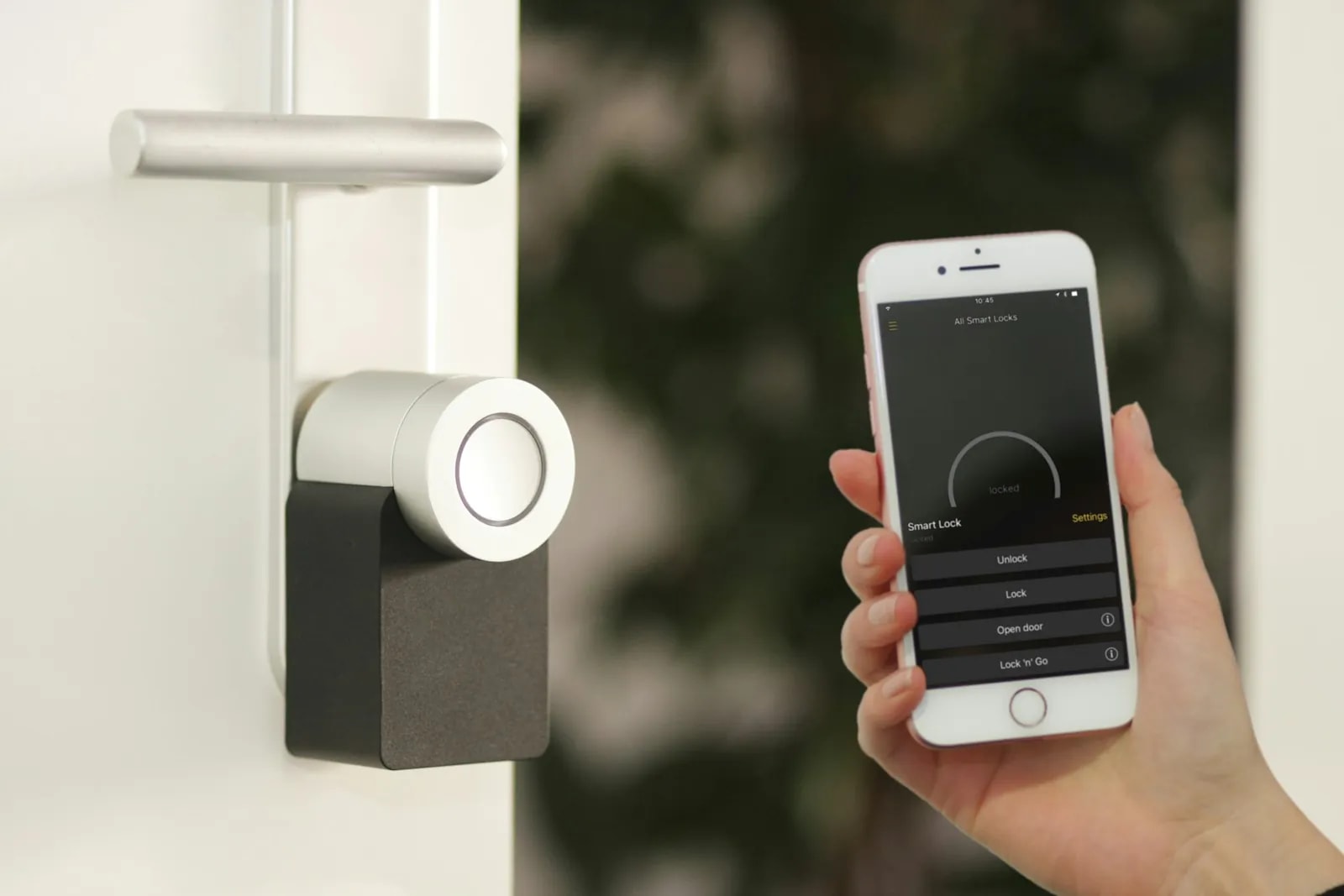
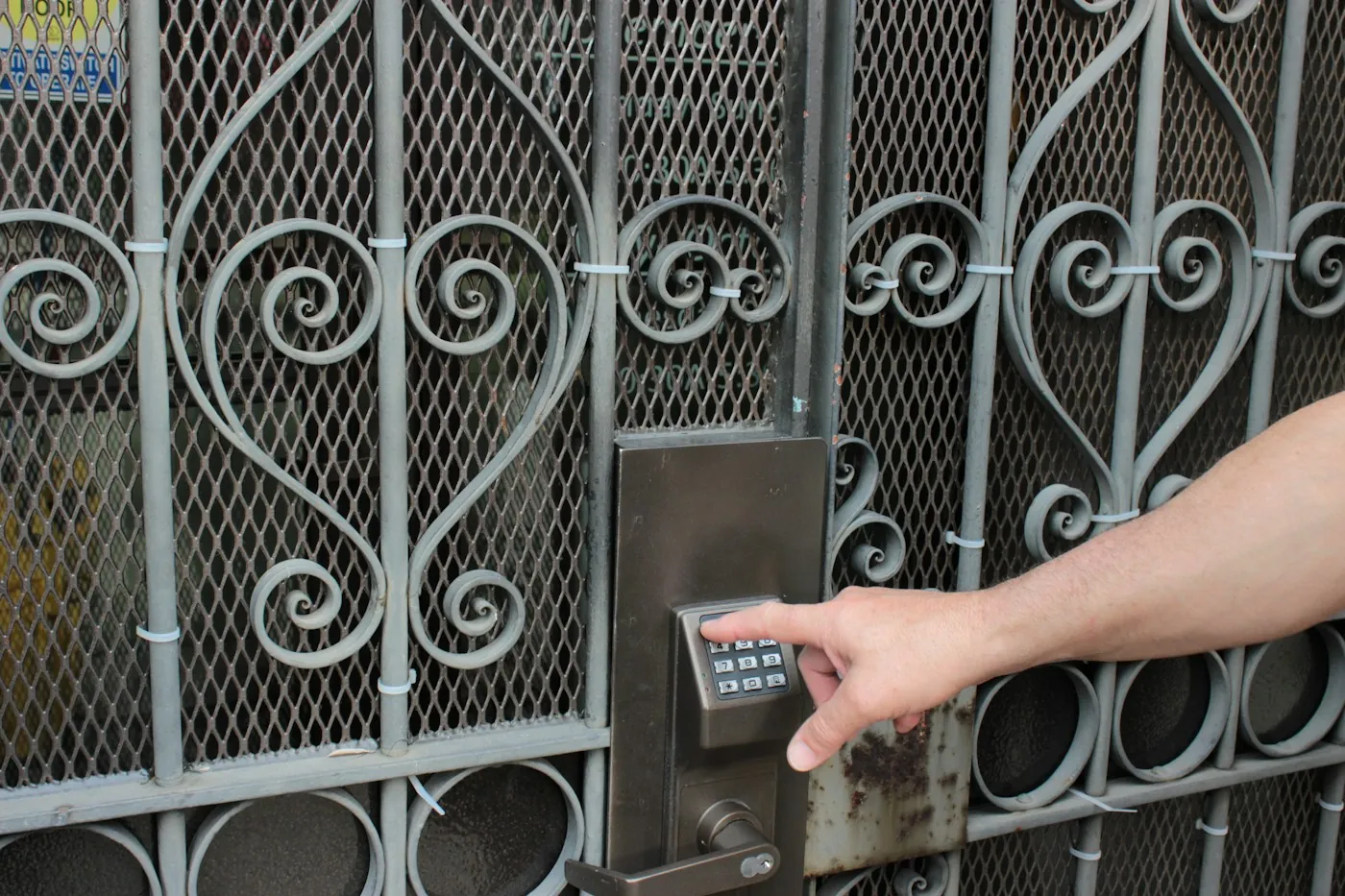
You give each booking its own door code, active from check in and dead at checkout. No key handover, no lockbox on a drainpipe, no meeting a guest at 2am because a flight from London slipped four hours.
A smart lock built for this holds separate codes with a start and end time on each. You set the window once when the booking confirms. The lock runs the rest on its own clock, and the log shows the exact minute the guest first opened the door.
The workflow across one stay:
- Booking confirms: you generate a fresh code for that guest only.
- Check in day: the code activates at your published check in time, not before.
- During the stay: the guest opens the door with a number, and you never touched a key.
- Checkout: the code expires by itself. There is nothing to collect.
- Turnover: a separate scheduled code lets the cleaner in for the window you set.
Two practical notes from projects across Dubai, UAE. Keep codes six digits or longer, because four digits get shoulder surfed in a shared lobby. And check the lock's battery before every long gap between bookings, since a flat lock in Dubai Marina at midnight is a locksmith call, not a support ticket. The full setup, including gates and video intercoms for villas, sits on our smart gate and access control page.
What happens if a guest does not leave on time?
The code stops working at checkout, so the overstay shows up the moment it happens rather than when your cleaner phones you.
This matters more than the convenience. A verbal agreement about an 11am checkout has no enforcement behind it. A code that expires at 11am does. If the guest steps out for coffee at 11.15am, they cannot get back in, and you learn it from a failed entry in the log instead of a cancelled turnover.
Build a small buffer in. We usually set the code to die 30 minutes after the published checkout, which covers a guest carrying bags down in two trips without giving away half a day. Guests needing a real late checkout ask, and you extend the window from your phone.
Common mistake: reusing the same code for the next guest because the last one worked fine. A code that two strangers have used is not a code any more. Generate a new one every time, or let the platform integration do it for you.
How do you stop guests wasting AC in Dubai?
Put a contact sensor on every balcony and patio door, and wire it to the thermostat. When the door opens, the AC steps back or shuts off. When the door closes, it returns to the guest's setting.
This one problem costs Dubai hosts more than every other automation issue put together. A guest sets the AC to 18C, props the balcony door open for the view over Business Bay, and goes to sleep. The unit runs flat out for nine hours cooling the outside air, and no bill ever reaches the person who did it.
Smart AC and lighting control cut cooling costs 20 to 30 percent, and cooling is the biggest line on a summer DEWA bill.[8][9] In a holiday home that waste repeats with every new arrival, because each guest starts from zero and none of them are the one paying.
A setup that annoys nobody:
- Door and window contacts: AC pauses after the door has been open two minutes, not instantly, so a quick step outside does nothing.
- A sensible temperature floor: cap the coldest setting at around 20C rather than letting a thermostat sit at 16C all week.
- A note in the house manual: tell guests the AC pauses when the balcony door is open. Surprise reads as a broken unit, and a broken unit reads as a bad review.
The thermostat and zone control side lives on our smart lighting and climate page.
Smart AC and lighting control cut cooling costs 20 to 30 percent. A property paying AED 4,000 a month to DEWA in summer saves AED 800 to 1,200.
What should the AC and lights do between bookings?
Hold a setback temperature rather than switching everything off. An empty Dubai apartment sealed up in August at 45C outside gets humid fast, and humidity brings musty smells and mould at the window seals.
The pattern we set up on holiday homes across Dubai, UAE is simple:
- Vacant: thermostat holds a setback, usually around 26C to 28C, enough to keep the unit dry without cooling an empty room to guest comfort.
- One hour before check in: the thermostat pulls the apartment down to the arrival temperature by itself.
- Lights: everything off at checkout, with one lamp and the entrance light on a timer at check in so nobody walks into a dark flat.
- Water heater: off or scheduled during vacancy instead of heating a tank for nobody.
Pair it with DEWA's own free Smart Living tools, which show your consumption and send usage alerts while you are away.[8] That gives you two views: the thermostat says what the AC is doing, and DEWA says what the meter thinks. When they disagree, something needs a look.
Quick math: a unit at 60 percent occupancy sits empty around twelve days a month. Twelve days of full cooling for nobody is a straight loss with no revenue against it. The tariff mechanics and Away Mode setup sit in our DEWA bill guide.
How do you give your cleaner access without a key?
Give the cleaner their own code that only works during the turnover window, then expires. One code per person, never one code shared by a cleaning company.
The difference matters when staff change. Cleaning companies rotate people. If the code lives with the company, you have no idea who is standing in your Downtown Dubai apartment on a Tuesday.
What we set up for a standard turnover:
- A recurring window: the code works 11am to 3pm on turnover days only, and does nothing at any other hour.
- Its own log line: you can see the cleaner arrived at 11.40am and left at 1.05pm, without a camera anywhere.
- A same day revoke: when a cleaner leaves the company, you delete their code that afternoon, not next month.
The same one code per person logic covers a maintenance visit, a laundry pickup, or a handyman fixing the shower door. The household version, including UAE employer duties for domestic staff, sits in automating domestic staff access. Want yours mapped before the next booking? Book a consultation or send the floor plan on WhatsApp.
How do you handle noise without breaking Airbnb's rules?
Use a decibel only noise monitor in a shared living area, disclose it, and never record audio. Airbnb allows a device that measures sound level. It does not allow a device that captures or transmits conversation.[5]
The three rules are hard limits, not preferences:
- Decibel level only. No audio recording, no live listening, no transmitting what anyone says. A device that can hear words is not allowed and should not be in the property.
- Shared areas only. A living room, dining area, or hallway. Never a bedroom, never a bathroom.
- Disclosed. Say it is there, in the listing, before the guest books.
What you get is a number and a trend. If the living room sits above your threshold for twenty minutes at 11pm, you get an alert and send a polite message, before a neighbour calls building security rather than after.
On thresholds, general Dubai noise guidance puts residential daytime levels around 55 dB and night levels around 45 dB, with quiet expected from 10pm. That is context for setting your alert level, not a holiday home rule from DET. No decibel limit specific to holiday homes is published.
Real talk: a noise monitor is a courtesy device, not a security camera by another name. If you find yourself wanting to hear what is being said, stop. That crosses a line Airbnb, UAE data protection law, and basic decency all draw in the same place.
How do you hold guests to the booked headcount?
You cannot count people without watching them, so do not try. Set the limit in the listing, price by guest, and use the tools that do not involve looking inside the unit.
What is fair and available:
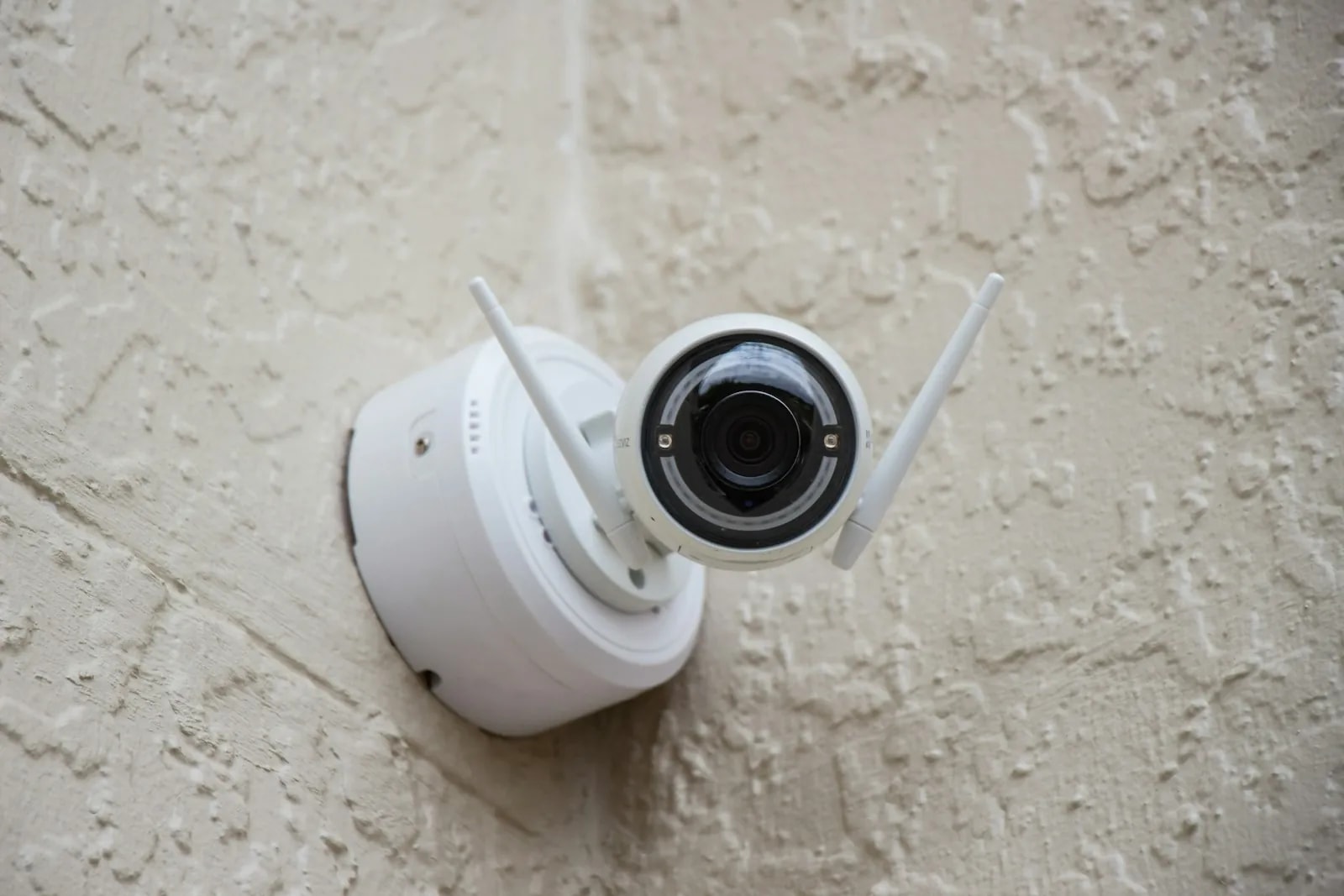
- Entry camera at the front door, disclosed: it films the doorway of your own property, not the inside. This is the only headcount signal Airbnb's policy permits.
- Access log patterns: a two guest booking where the door opens fourteen times on a Friday night tells you something without a lens indoors.
- Noise level: a party of twenty is loud before it is visible.
Registering guests is a separate, real duty. Dubai requires holiday home operators to submit guest identity details through DET's system as ongoing compliance.[3] Building security may run its own advance notice process too. Check both, because the submission timing quoted online is not consistent.
What not to do: no occupancy camera in the living room, no motion sensor sold as a people counter inside the unit, no smart speaker used to listen in. All three sit outside the rules and outside what a guest agreed to.
Can you watch over the property while you are abroad?
Yes, and the useful version has nothing to do with cameras. What you want from Frankfurt or Mumbai is the building's condition, not the guest's evening.
The four alerts that earn their keep:
- Water leak sensors: under the kitchen sink, in the laundry area, and beside the water heater. Add a smart shut off valve and the water stops before the flooring is ruined. A leak in an occupied home is a mop. In an empty holiday home it is a service charge dispute.
- Lock battery and access events: a battery warning three days out saves a midnight locksmith, and a failed code attempt tells you the code you sent did not land.
- DEWA consumption alerts: DEWA's Smart Living tools send usage summaries for a unit you are not standing in.[8] A spike during a vacant week means something is running that should not be.
- Entry camera at the door, disclosed: exterior only, useful for deliveries and access disputes. Rules below, and the wider Dubai CCTV picture is in our SIRA CCTV guide.
All of it depends on the internet staying up. A holiday home's Wi-Fi carries the guest experience and every alert you rely on, and a router in a cupboard behind a fridge does neither well. Guest Wi-Fi should also sit on its own network, separate from your locks and sensors. Our home networking page covers that setup.
Which device solves which host problem?
Eight problems cover most of what goes wrong in a Dubai holiday home. Here is what each one needs.
| The problem | What fixes it | Where it sits |
|---|---|---|
| Guest leaves the AC running with the balcony door open | Smart thermostat plus door contact sensor. AC pauses while the door is open. | Smart lighting and climate |
| No key handover, no lockbox, late flights | Smart lock with a per stay code that activates at check in and expires at checkout. | Smart gate and access control |
| Cleaner needs access only during turnover | A scheduled recurring code for the turnover window, with its own log line. | Smart gate and access control |
| Party and noise complaints from neighbours | Decibel only monitor in a shared area, disclosed. Never audio, never a bedroom. | Security and surveillance |
| Water leak while you are out of the country | Leak sensors at sink, laundry and heater, plus a smart shut off valve. | Smart lighting and climate |
| Guest overstays past checkout | Code expiry at checkout time, with the failed attempt logged. | Smart gate and access control |
| Cooling an empty unit between bookings | Vacancy setback schedule, pre cool before check in, water heater off. | Smart lighting and climate |
| Alerts and guest Wi-Fi both unreliable | Proper access points, plus a guest network kept separate from locks and sensors. | Home networking |
Not sure which row applies to your unit? Ask us or send photos on WhatsApp.
Do you need a permit to Airbnb your property in Dubai?
Yes. Every unit let short term in Dubai needs a Holiday Home Permit from the Department of Economy and Tourism (DET), the authority formerly called DTCM. The framework sits in Decree No. 41 of 2013 and its implementing bylaw, Administrative Resolution No. 1 of 2020.[1][2]
This applies whatever platform you use. Airbnb, Booking.com, Vrbo, or a direct booking from a friend of a friend all sit under the same rule, and Airbnb asks for a valid permit number before a Dubai listing goes live.
| Requirement | What applies | Source |
|---|---|---|
| Permit | Mandatory DET Holiday Home Permit before you list, on any platform. | Decree 41 of 2013[1] |
| Legal basis | Decree No. 41 of 2013, implemented by Administrative Resolution No. 1 of 2020. | Dubai Legislation Portal[2] |
| Scope | One permit per unit. A second apartment needs its own permit. | DET portal[3] |
| Who can apply | Owner, a long lease tenant holding a landlord no objection certificate, or a licensed holiday home operator. | DET portal[3] |
| Building approval | A building or Owners' Association no objection certificate is commonly required alongside the application. | DET portal[3] |
| Validity | One year, renewed annually. A lapsed permit takes the listing offline. | DET portal[3] |
| Classification | The unit is self classified as Standard or Deluxe, and you have to keep it at that level. | DET portal[3] |
| Unit type | Whole self contained units only. Private or shared single rooms are not part of the framework. | DET portal[3] |
| Tourism Dirham | A per bedroom, per night fee collected from guests and remitted to DET. | DET portal[3] |
| Guest details | Guest identity information is submitted through DET's holiday homes system as ongoing compliance. | DET portal[3] |
| Safety baseline | Smoke detectors, a fire extinguisher, a first aid kit, clear exit routes, working utilities. | DET portal[3] |
| Fees | Fees apply and vary with unit size and classification. Check DET's own portal for the current schedule. | DET portal[3] |
Published guides quote permit fees that do not agree with each other, and the same is true of the guest registration deadline. We will not print a number we cannot stand behind. Read the current fee schedule on DET's own service page and confirm the registration timing there.[3] Operating without a permit brings fines and listing removal, and it is the cheapest part of the setup to get right.
Which Dubai communities and buildings allow holiday homes?
Only your building management or Owners' Association can answer that for your unit, and you need the answer in writing before you spend anything.
Here is the part that catches people out. Building and community rules are binding on their own, and a DET permit does not override them. A unit can hold a fully valid permit and still be in breach of its own building bylaws. The permit is a licence from the regulator, not permission from the people who run your building.
The broad pattern reported across Dubai:
- Family villa communities such as Arabian Ranches, Mudon, The Springs and Emirates Hills commonly restrict short letting through Owners' Association bylaws. Restrictions here are frequent, not universal.
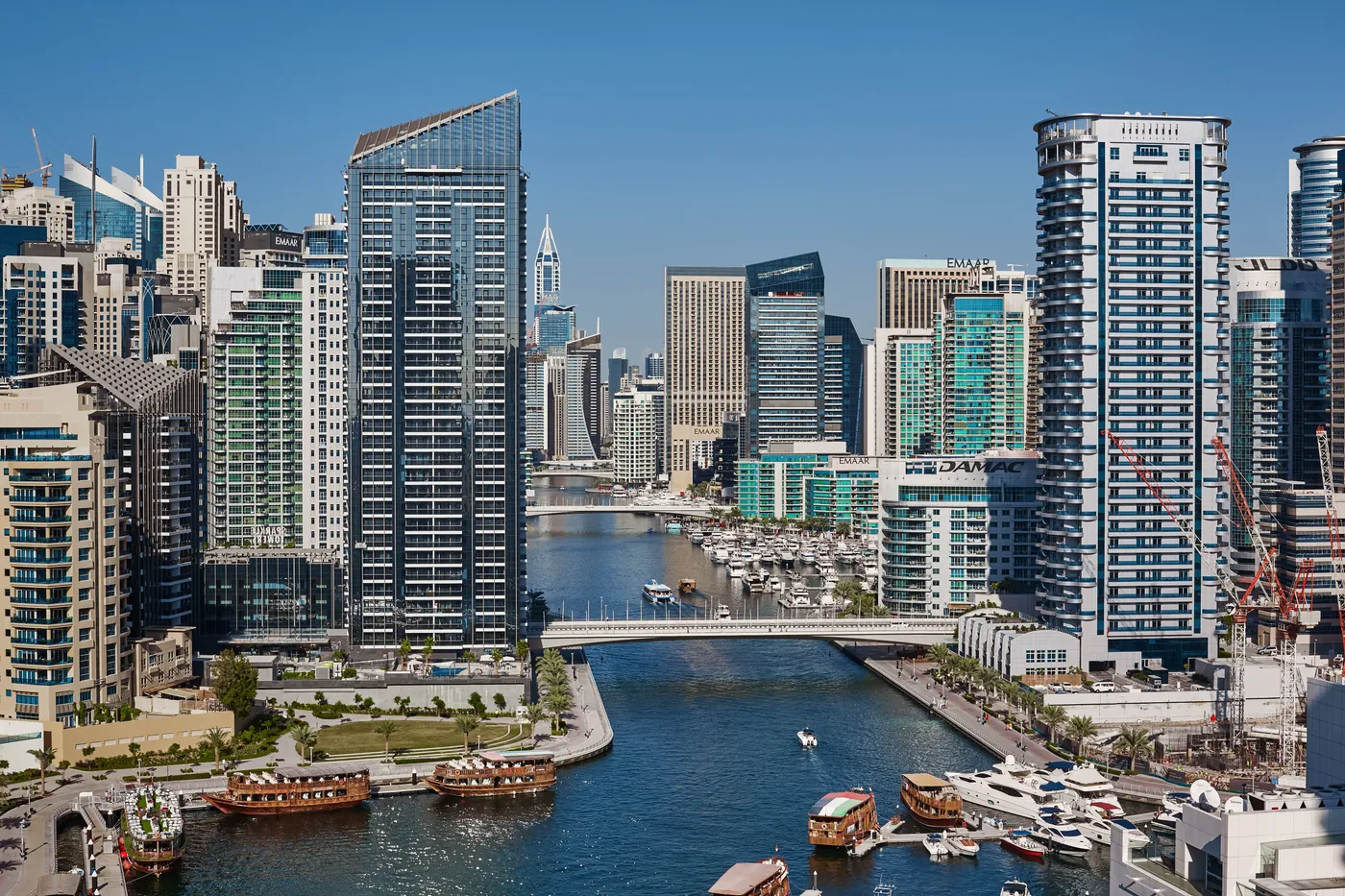
- Apartment towers in Dubai Marina, JBR, Downtown Dubai, Business Bay and Palm Jumeirah are more permissive as a category. Individual towers within those areas still enforce outright bans.
Neither line above is a rule about your building. Treat both as a reason to ask. Get the no objection certificate first, then apply to DET, then buy hardware. That order saves money if the answer comes back no.
Tenants have one more check. Dubai tenancy contracts often ban subletting or short term reletting, and a landlord no objection certificate is part of the DET application anyway.[3]
Can you put a camera inside your Dubai Airbnb?
No. Never. Airbnb bans indoor security cameras and recording devices in every listing worldwide, and has done since 30 April 2024, regardless of their location, purpose, or prior disclosure.[4][5]
Read that scope carefully, because it is wider than most hosts think. The old policy allowed a disclosed, visible camera in a common indoor area such as a hallway. That rule is gone. An indoor camera is now allowed nowhere in the unit, not in the hallway, not in the living room, not switched off in a cupboard. Hidden cameras were never allowed and never will be.
UAE practice points the same way. A host generally cannot install cameras inside a rented space without the occupant's knowledge and consent, and SIRA's Dubai rules keep cameras out of private interiors and off neighbours' property.[6] Airbnb is stricter than the general law on interiors, and Airbnb's rule is what governs your listing. Our SIRA CCTV guide covers Dubai camera law in full.
| Device or placement | Allowed on Airbnb | Disclose before booking | Placement rule |
|---|---|---|---|
| Camera inside the unit, any room | No, never | Disclosure does not make it allowed | Banned platform wide since 30 April 2024, whatever the purpose |
| Hidden or concealed camera | No, never | Not applicable | Prohibited in all contexts, indoors and out |
| Doorbell or entry camera outside the door | Yes | Yes, presence and general location | Must not be angled to see indoors, including through a window |
| Outdoor camera at a gate, driveway or pool | Yes | Yes, presence and general location | Exterior view only, and must not cover a neighbour's property |
| Camera at an enclosed outdoor shower or sauna | No | Disclosure does not make it allowed | High privacy outdoor areas are off limits |
| Decibel only noise monitor | Yes | Yes | Shared areas only. Never a bedroom or bathroom |
| Audio recording of any kind | No | Disclosure does not make it allowed | No device may capture or transmit conversation |
| Smart speaker or voice assistant | Yes | Encouraged | Give guests a way to switch it off. Never use it to listen in |
| Smart lock access log | Yes | Good practice | Records an entry event only, not a person or a picture |
The instinct behind an indoor camera is understandable. It is your property, and you are far away. Move that instinct to tools that work without a lens on a guest: access logs, an entry camera at the door, a decibel level, a leak sensor. Exterior camera work sits on our security and surveillance page, and we design them entry facing, never indoors.
Do you need guest consent to run any monitoring?
Yes, and the practical way to get it is disclosure on the listing before the guest books. That single step satisfies Airbnb's own requirement and lines up with UAE data protection principles at the same time.
The UAE Personal Data Protection Law, Federal Decree-Law No. 45 of 2021, treats camera images and other data that identify a person as personal data. Where consent is the basis for handling that data, it has to be clear, specific and informed, and the person handling it has to be able to show consent was given.[7] An exterior camera and a decibel monitor both capture data about an identifiable guest, so both belong in the disclosure.
What good disclosure looks like in a Dubai listing:
- In the listing, not the door: the guest sees it before booking, not on arrival when they have already paid.
- Specific: "an entry camera faces the front door" and "a decibel level noise monitor is in the living room, it does not record audio".
- Honest about what it captures: the door camera sees arrivals at the entrance, the noise device reads a level and nothing else.
- Complete: nothing undisclosed anywhere in or around the property.
We do not read PDPL as giving short term hosts a carve out, and we will not invent one. The principle that matters: if a device captures something about a person, tell them plainly, before they agree to stay.
What does smart home automation cost for a Dubai holiday home?
A one room starter setup runs AED 2,000 to 5,000, and a full one to three bedroom apartment runs AED 8,000 to 15,000, installed in 2 to 4 days.[9] Most hosts do not need the top of that range on day one.
- AED 2,000 to 5,000: the three that pay for themselves. Smart lock with per stay codes, smart thermostat with a door contact, leak sensors at the sink and heater.
- AED 8,000 to 15,000: a full apartment. The above plus lighting scenes, vacancy scheduling, an entry camera, a decibel monitor and proper Wi-Fi.
- From AED 30,000: villa essentials. Gate and video intercom, zone AC control, exterior cameras, pool and outdoor areas.
- 5 to 10 percent a year: optional support cover, so a fault gets fixed between bookings rather than during one.
Start with the lock, the thermostat and the leak sensors. Those three cover the access problem, the cooling problem and the expensive one.
We will not print a return on investment figure for a short term rental, because we have no verified Dubai holiday home data behind one. The cooling figure we can stand behind: smart AC and lighting control cut cooling costs 20 to 30 percent, and a property paying AED 4,000 a month to DEWA in summer saves AED 800 to 1,200.[8][9]
Our team has worked on 100+ smart home automation projects across Dubai, UAE since 2016, and our role on each one runs from design through to handover. We are rated 4.9/5 by Dubai homeowners, and enquiries are answered within 2 hours. Systems run in English and Arabic.
Send us the unit details and your check in and checkout times, and we will map the access, cooling and alert setup around your booking calendar. Book a free consultation, or message the team on WhatsApp.