For eleven months of the year, a Dubai smart home runs on one assumption: the house is empty by day and busy in the evening. Every setback, every schedule, every occupancy rule is built on it. Ramadan turns that assumption around. The UAE officially reduces working hours for the month[1], so people are home earlier. The day is quieter. The evening becomes the busiest and most time-critical stretch of the day. It is pinned to a Maghrib time that moves by a few minutes every date on the calendar.
A system still running its year-round schedule spends the month fighting the household. This guide covers what to change and when, from the week before the month starts through suhoor, the fasting day, iftar, taraweeh, and the late night after it.
What does it mean to get a Dubai smart home ready for Ramadan?
Getting a Dubai smart home ready for Ramadan means building a second schedule profile. It runs for the month, then hands back to your normal one. Nothing more complicated than that. On a system that already controls lighting, AC zones, and audio, this is programming work, not a shopping list.
Four things move during the month:
- Occupied hours: the home is used earlier in the afternoon and later at night than usual.
- Lighting: two new scenes matter most, a pre-dawn one and an iftar one.
- Audio: zoned behaviour around the call to prayer, then a chosen source afterwards.
- Access: gate and intercom traffic clusters into a tighter window before sunset.
Real talk: most homes we look at in Ramadan do not need a single new device. They need the schedule rewritten. If a company quotes you hardware first for this, ask what schedule change they are proposing and why the existing kit cannot do it. If you want the ground-up view of how these systems fit together, start with our smart home guide for Dubai.
Why does your normal automation schedule stop working in Ramadan?
Your normal schedule stops working because the hours the house is occupied change, and your automation does not know that. MOHRE reduces private-sector working hours by two hours a day for the month, and public-sector hours are announced separately each year[1][2]. This is UAE-wide policy, applied to all employees, and it is set fresh every year.
So the family that used to walk in at 7pm is now home by 3pm. The AC setback that was supposed to end at 6pm is still holding while the kitchen fills up. The evening wind-down scene that dims the majlis at 10pm now fires in the middle of taraweeh night. None of that is a fault. It is a schedule doing exactly what it was told in a month it was not written for.
Common mistake: switching the whole system to manual for the month. It is the most common one we see. It works for three days, then someone forgets the AC in the majlis and it runs all night. A second profile costs one visit and holds for the full month.
| What the system controls | Normal year-round logic | Ramadan logic |
|---|---|---|
| Daytime AC setback | Holds 9am to 6pm, ends when people get home | Holds through a quieter day, ends earlier because people are home earlier |
| Evening climate ramp-up | Starts around 6pm on a fixed clock | Starts ahead of Maghrib, which shifts a few minutes daily |
| Daytime lighting | Mostly off, daylight and occupancy sensors | Same, plus a pre-dawn scene that did not exist before |
| Evening lighting wind-down | Dims from about 10pm toward bedtime | Pushed later, because the house goes quiet later |
| Whole-home audio | Runs where someone starts it, no timed behaviour | Zoned pause or fade around the call to prayer, then a chosen source |
| Gate and intercom | Steady low traffic, spread across the evening | Heavy traffic in a 30 to 60 minute window before sunset |
| Night security arming | Arms at a fixed late hour | Arms later, and must not trip on the suhoor wake-up |
What does the Ramadan daily rhythm look like, phase by phase?
The Ramadan day runs in six phases, and each one asks something different of the house. This is the table to keep. Every other section below refers back to it.
| Phase | Rough window | What the household is doing | What automation can reasonably do |
|---|---|---|---|
| Suhoor | 1 to 2 hours before Fajr | Waking before dawn, eating, getting back to bed | Warm light that fades up gradually in the hallway and kitchen; kettle, coffee machine, or water heater on a plug set a few minutes ahead |
| The fasting day | Fajr to late afternoon | Quieter and emptier for stretches; official working hours are shorter | Cooling and lighting setbacks tuned to the month's real occupancy, not a 9-to-6 guess |
| Before Maghrib | 60 to 90 minutes before sunset | Heavy cooking, deliveries arriving, guests at the gate | Kitchen task lighting and extraction scene; gate, intercom, and staff PINs ready for a tight, busy window |
| Iftar | At Maghrib, a few minutes earlier each day | Breaking the fast, often with guests in the majlis | Warm dining and majlis lighting scene; audio faded or paused around the call to prayer, then a chosen source in chosen zones |
| Taraweeh and evening | After iftar into the night | Prayers, family visits, socialising later than usual | Comfort held later in living and prayer areas; wind-down lighting pushed back to match when the home really quietens |
| Late night | Toward the next suhoor | A shorter, later sleep window before the cycle repeats | Night setback and security arming shifted later, and set not to conflict with the pre-dawn wake |
Dubai's own health guidance describes the same shape from the other side. It recommends at least four hours of sleep before the suhoor wake, and light activity in the hour before iftar[9]. The house should not be the thing making that harder.
How do I prepare my smart home before Ramadan starts?
Start preparing your smart home a week to ten days before Ramadan. That is enough time to load the profile, run each scene once or twice on a normal evening, and fix whatever fires at the wrong moment before it matters.
A short checklist that covers most homes:
- Write down the household's real hours. Who is home at 3pm, who is out until 5pm, when does the kitchen get busy. The schedule is only as good as this answer.
- Build the two new lighting scenes. A pre-dawn scene and an iftar scene. Test both in the dark, not at noon.
- Move the AC setbacks. Earlier end to the daytime hold, later start to the night setback.
- Check the gate and intercom. Video working on every phone that needs it, staff and family PINs current, notifications going to someone who will actually answer.
- Test the smart plugs. Kettle, coffee machine, water heater. Confirm each has a physical override and a hard off time.
- Confirm the audio zones. Which rooms play, which stay silent, and who can change it from a keypad.
From our projects: the single most common fix in the first week is a wind-down scene nobody moved. The majlis dims to 20 percent at 10pm with fifteen guests in it. It takes two minutes to change and it is the first thing to check.
Can smart lighting make your suhoor routine easier?
Yes. A suhoor lighting scene is the cheapest change on this list. One overhead light switched on in a dark house at 3am is a jolt. A warm, low light that fades up over two or three minutes in the bedroom hallway and the kitchen is not.
Keep it deliberately small. Warm colour, low brightness, and only the rooms being used. The rest of the home stays dark so anyone still asleep stays asleep. If you have motorised blinds, leave them shut through the whole phase.
The kitchen side is smart plugs. A kettle or coffee machine set to switch on a few minutes before the alarm means nobody stands waiting at 3:15am. Use plugs with a physical button on them, and put a hard off time on every one, so a forgotten appliance cannot run through the fasting day.
Warm light before dawn and cooler light in the day is the same tunable-white principle. We cover the detail in our guide to circadian lighting in Dubai. That article carries the colour-temperature curve. This one just says where in the month to use it. The scene programming itself sits under smart lighting control.
Should AC and lighting behave differently during the fasting day?
Usually yes, in two directions at once. The house is quieter for longer stretches, so setbacks can hold longer. But it fills up earlier in the afternoon, so the ramp-up has to start sooner than your normal schedule expects.
Occupancy sensors do the heavy lifting here, because they work off what is actually happening rather than a clock. Empty bedrooms let their AC drift up. The majlis stays in setback until the pre-iftar window. Corridor lighting stays off on daylight sensing. None of that needs a person to remember anything.
DEWA's standing guidance is a set point of 24C, with roughly 5 percent saved on AC consumption for each additional degree[6]. Its Ramadan-specific advice adds the ordinary habits: clean AC filters, seal doors and windows, use daylight where you can, and switch off lighting nobody is under[5]. Zone-based control just makes those decisions automatic instead of manual. That is what smart lighting and climate control is doing all day.
How does a smart home handle the rush in the hour before iftar?
The hour before iftar is the busiest 60 to 90 minutes in the house, every day for a month. It is where automation earns its keep. Three things happen at once: heavy cooking, a spike in people at the door, and a kitchen that is fighting its own AC zone.
A single kitchen scene handles the first two problems. It lifts task lighting over the counters and hob and runs extraction. It also stops the AC chasing a stove that will be hot for the next hour anyway. It fires on a timer set against the day's Maghrib and ends when the iftar scene takes over.
Real talk: the gate is the part people forget. A villa hosting nightly runs that arrival crush every evening for the whole month, not once or twice. Deliveries, family, and staff all land inside the same half hour. A video intercom puts the notifications on the right phones. Add timed PIN codes so regular visitors are not left standing at the gate. That is the difference between a calm hour and a shouting match on the driveway. That sits under smart gate and access control, and the PIN-code side overlaps with how we handle domestic staff access in Dubai.
What does an iftar lighting and audio scene actually look like?
An iftar lighting scene is one button that runs two systems. The lighting side drops the dining area and majlis to a warm, softer level than daytime task light. Bright enough to eat by, low enough to sit in for two hours. The audio side decides what plays where, and what goes quiet and when.
The audio behaviour is the part worth setting carefully. Systems can fade or pause music in chosen rooms around the call to prayer. Afterwards they can move to a station, a playlist, or recitation, in whichever zones the household picks. Zoning means the majlis can run one source while the bedrooms stay silent. Which rooms, what plays, and whether anything plays at all is entirely the household's decision, set once during programming and left alone.

The test of a good iftar scene is not how clever it is. It is whether the person nearest the keypad can run it without opening an app, on night nineteen, with guests already sitting down. Put it on a physical keypad and on voice in English and Arabic. Both matter. We build this under whole-home audio and smart lighting control.
Where do Dubai's prayer times come from, and how does automation use them?
Dubai's official daily prayer times are published by IACAD, the Islamic Affairs and Charitable Activities Department, the Dubai government body for Islamic affairs[3]. They appear on the IACAD website, in its Dulook DXB app, and in an open data listing on the Dubai government's data platform[4].
Why this matters for automation is precision. Maghrib moves by a few minutes every day of the month. A scene set to a fixed clock time on night one is out of step by night seven, and drifting further after that. So the schedule has to be tied to the official Dubai prayer-times feed, not to a number someone typed in once.
Worth being straight about: scheduling home automation against prayer times is a well-documented general pattern, not something anyone invented for Dubai. Home Assistant, the widely used open home-automation platform, ships an official Islamic Prayer Times integration that exposes Fajr, Dhuhr, Asr, Maghrib, and Isha as scheduling triggers[7]. The engineering is ordinary. What matters in Dubai is that your source lines up with the officially published times. For a fasting household, a few minutes is not a rounding error.
How do I set up the majlis for guests every night, not just once?
Three levers, in this order: climate sized for a full room, one warm lighting scene, and its own audio zone. A majlis used every night for a month is a different problem from a majlis used twice a year.
Climate is the one people get wrong. A room set for two people does not hold at 24C with fifteen in it. The zone needs to start cooling ahead of the guests rather than chasing them. Pre-cooling from the pre-iftar window solves it, and it costs less than running the zone hard for three hours afterwards.
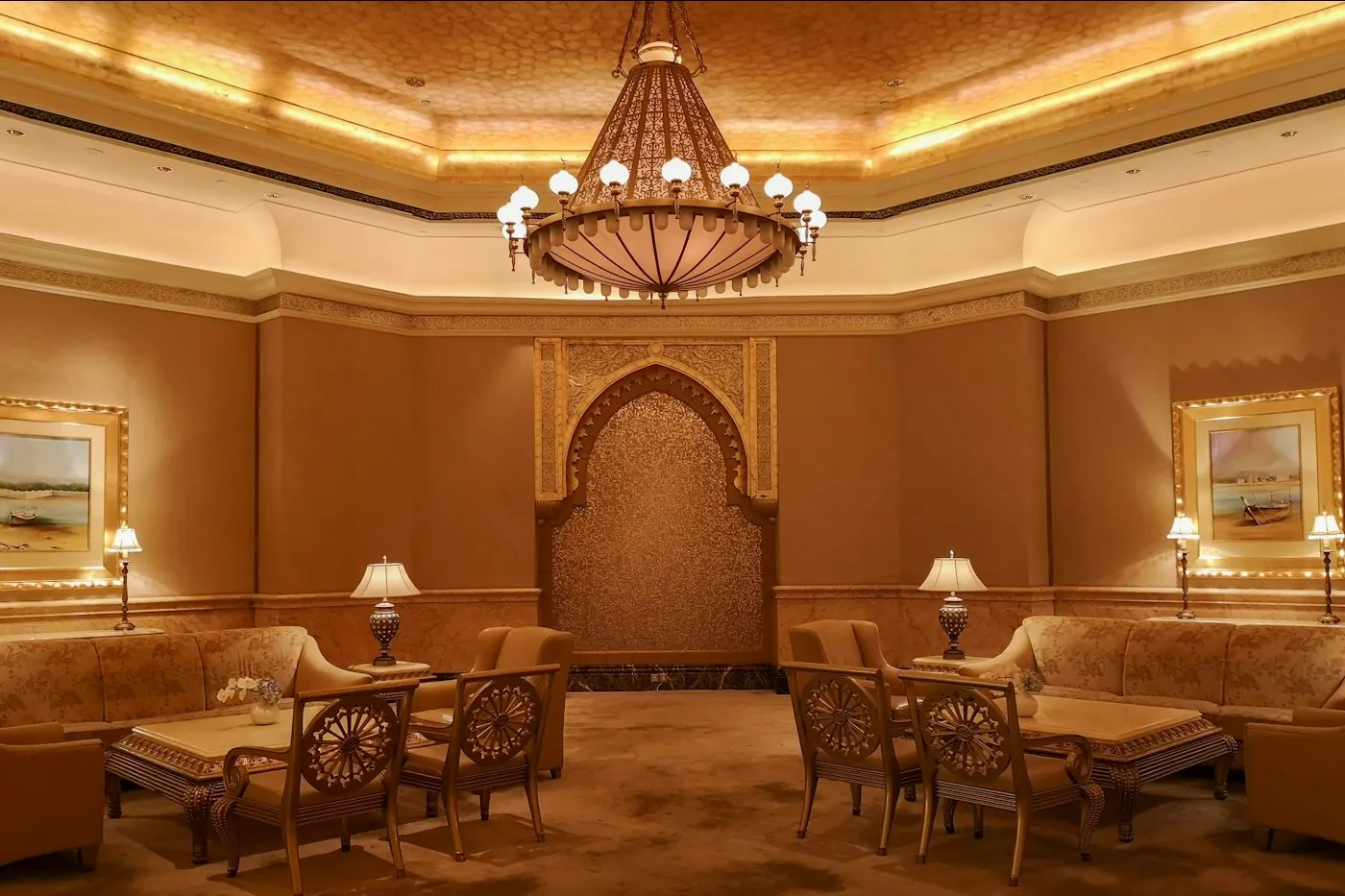
The lighting scene should be calmer than a party setting: warm, steady, no colour effects, and repeatable to the same level every night. The audio zone should be independent, so the majlis can play while the rest of the villa stays quiet. For the acoustic side of a large majlis, speaker placement and room treatment, our luxury smart home guide goes deeper than this article needs to.
One practical point: whoever actually runs the house should be able to trigger the scene. That means a wall keypad and a voice command, in English and Arabic, not a phone in one person's pocket. Book a site visit and we will map the majlis zone before any quote is prepared.
What changes for taraweeh and the late-night hours?
In the late evening, everything shifts later, and that is the whole change. Taraweeh and the family time after it run past the hour your system normally treats as bedtime, so three schedules need moving.
- Lighting wind-down: pushed back to when the house actually quietens, not the clock time you set last year.
- Night AC setback: living and prayer areas held comfortable later, then the deep setback starts on the new, later hour.
- Security arming: armed later, and configured so the suhoor wake-up two or three hours later does not trip an internal sensor.
That last point causes more late-night phone alerts than anything else on this list. If your alarm arms interior sensors at midnight and someone walks to the kitchen at 3am, you will hear about it. Sort it before night one.
Does a Ramadan smart home schedule cut your DEWA bill?
A Ramadan smart home schedule saves through the same mechanisms as any other month, applied to a different daily pattern. Smart AC and lighting control cut cooling costs 20 to 30 percent, and smart blinds add roughly 15 to 20 percent[11]. Ramadan does not change those figures. It changes the hours they apply to.
There is no published Ramadan-specific saving percentage from DEWA. Anyone quoting you one made it up.
What genuinely shifts is the shape of the load. The day is quieter, which makes the daytime setback worth more than usual. The evening is heavier, with a concentrated cooking period and a full majlis, which makes zone control worth more than usual. Those two roughly trade against each other, and the net result depends on your home and your hours.
DEWA publishes its own Ramadan conservation guidance every year, covering AC set points and filters, sealing doors and windows, using daylight, and water-saving habits at the tap[5]. Automation does not replace any of that. It just makes the lighting and cooling parts happen without anyone remembering. For the underlying savings mechanics year-round, read how to reduce your DEWA bill with a smart home. For the hot months, see our summer DEWA bill guide. If you are looking at solar or whole-home consumption monitoring alongside this, that sits under energy management.
One more thing on timing. Ramadan moves roughly 10 to 11 days earlier each year, so it passes through the seasons. A Ramadan in the hot months carries a heavy cooling load in that 12pm to 6pm window. A Ramadan in winter barely does. Your profile should be rebuilt each year, not copied forward.
What is different in a villa compared with an apartment?
Scale, mostly. Lighting scenes, audio zoning, and smart plugs work in both. Gate traffic and majlis-scale climate are villa problems. Here is the honest split, with the standard installed price tiers from our projects[11].
| Home type | Ramadan-relevant scope | How it installs | Typical installed cost |
|---|---|---|---|
| One room, rented or owned | Suhoor light scene, smart plugs, one AC zone | Wireless retrofit, Zigbee or Matter, no drilling | AED 2,000 to 5,000, same day |
| Apartment, 1 to 3 bedrooms | Lighting scenes, audio zoning, blind schedules, AC zones | Wireless retrofit, no landlord wiring approval needed | AED 8,000 to 15,000, 2 to 4 days |
| Villa, essentials | All of the above, plus gate and intercom, plus majlis climate and audio zone | Mixed wired and wireless, depending on what exists | From AED 30,000 |
| Villa, fully wired | Whole-home scenes, multi-zone audio, full access control, energy monitoring | Wired backbone such as KNX, which runs without the internet | AED 150,000 to 250,000+, 5 to 14 days |
KNX, for anyone meeting the term for the first time, is a wired system that keeps working when the internet drops, with a lifespan past 30 years. Zigbee and Matter are wireless standards that need no drilling, which is why they suit apartments and renters. If you are in a villa, our guide for villa owners in Dubai covers the gate and outdoor side in more depth.
What does a Ramadan-ready setup cost in Dubai?
A Ramadan-ready setup usually costs nothing but a service visit, if you already have a working system. The Ramadan profile is programming, and on most systems it is a few hours of an engineer's time, not a new install.
If you are adding something, the numbers above are the honest starting points. Three additions come up most often before Ramadan. A dedicated majlis audio zone, a video intercom at the gate, and motorised blinds for the bedrooms. Gate and access control starts at AED 4,500, zone climate control starts at AED 4,500, and motorised curtains start at AED 2,800[11].
Common mistake: booking the work in the last week before the month starts. Every installer in Dubai is busy then. Book it two to three weeks out and you get a normal slot at a normal price. We answer sales enquiries within 2 hours, and Dubai Smart Home is rated 4.9/5 by homeowners here. Message us on WhatsApp if you want a straight answer on whether your system can do this without new hardware.
What should smart home automation not try to do during Ramadan?
It should not touch the observance itself. Automation adjusts lighting, climate, audio, and door access around the household's practical routine. That is the whole of its role here, and we set it up that way on purpose.
So a few clear lines. A system should not prompt anyone, track anyone, or keep a record of who did what and when. It should not be built to correct, remind, or score a person's practice. And it should never be the thing that decides a time that matters religiously. Where a household wants a cue at Maghrib, that cue follows the officially published Dubai times[3]. The household decides what it does, in which rooms, and whether it happens at all.
Two practical limits are worth stating plainly as well. Ramadan's dates are not fixed on the Gregorian calendar. The month moves roughly 10 to 11 days earlier each year, and the exact start is confirmed by the moon sighting announced by the UAE authorities[8]. No system should be set to a date guessed a year in advance. Check IACAD or the official UAE announcement close to the time, then load the profile.
The second limit is privacy. If a gate camera records guests arriving every evening, that footage is personal data under the UAE's data protection law[10], and it deserves the same care as any other month. Keep retention sensible and access limited to the household.
What happens to the schedule after Eid?
It reverts. A properly built Ramadan profile has an end, and when it ends the system hands back to your normal year-round schedule with nothing left behind. That is the point of building it as a separate profile rather than editing the main one.
Two things to check in the first week after Eid. The daytime AC setback should be back on its normal hours, and the night security arming should be back at its usual time. If either was edited by hand mid-month, it will not revert on its own.
Keep the scenes, though. The iftar scene is a good dinner scene. The majlis scene is a good guest scene. The pre-dawn light suits anyone catching an early flight from DXB. They cost nothing to leave sitting there.
If you want the Ramadan profile built and tested before the month starts, we do this as a scheduled programming visit with our team based in Dubai, UAE. Book a consultation or message us on WhatsApp, and tell us what system you already have. Half the time the answer is that it can already do all of this, and nobody has set it up.