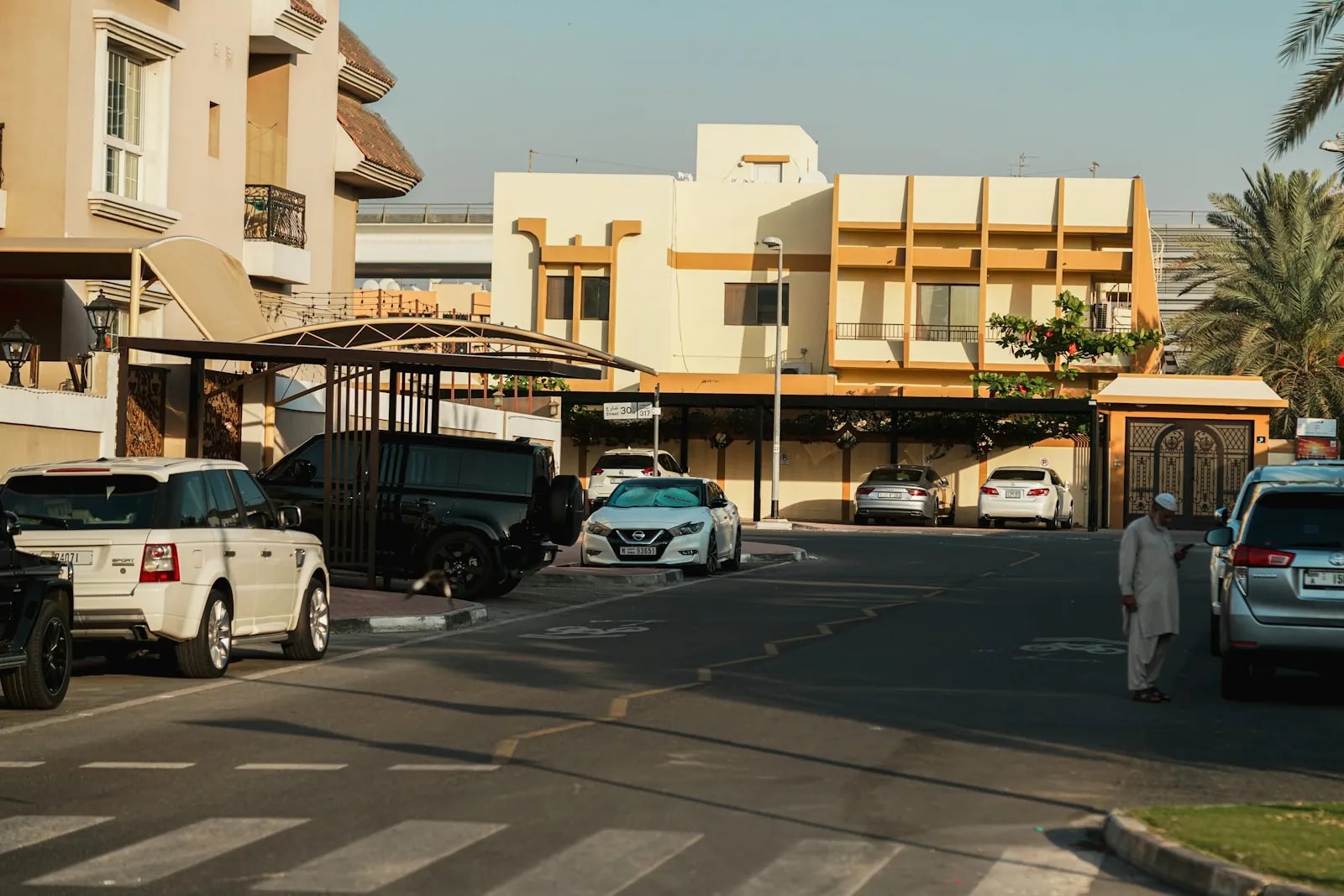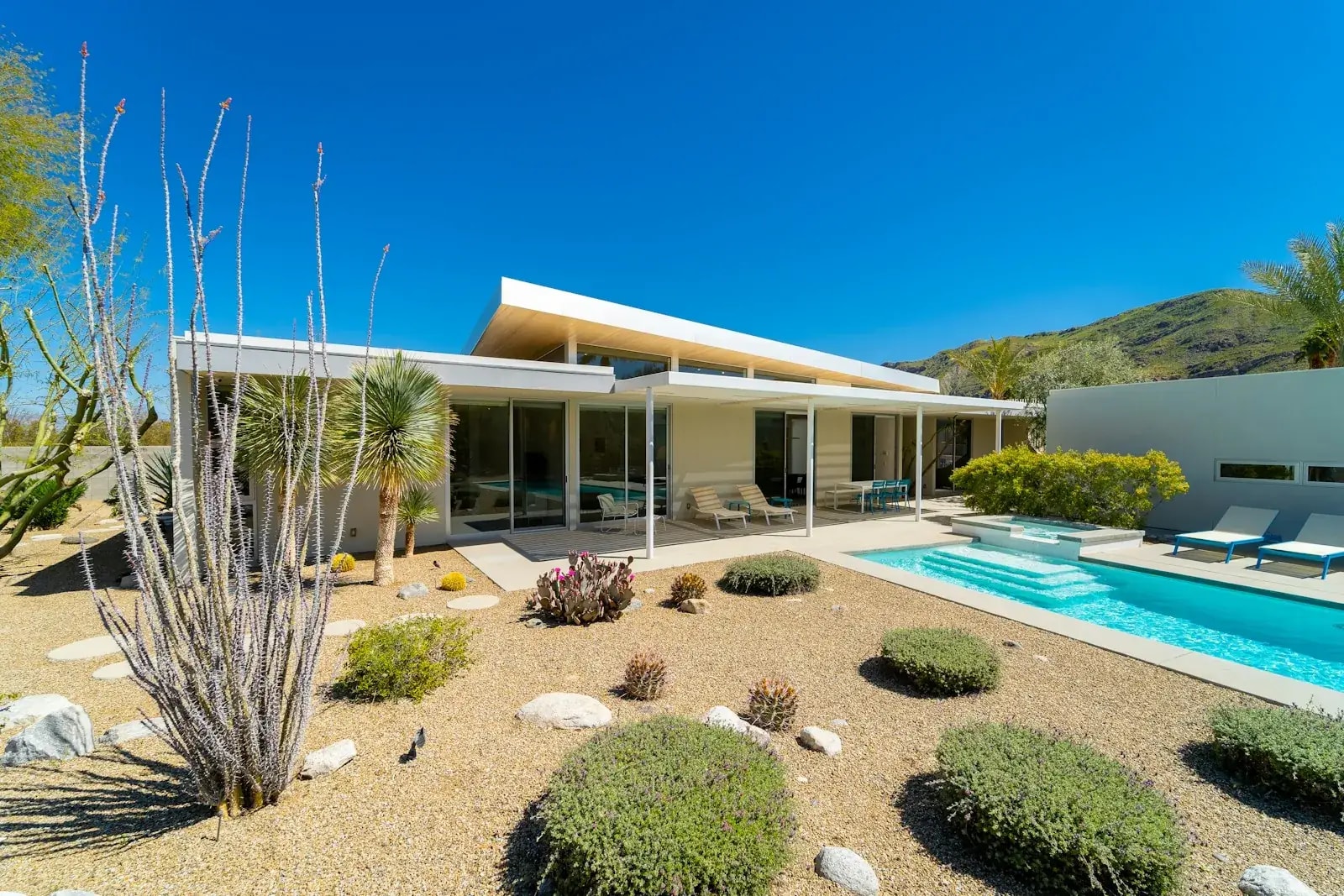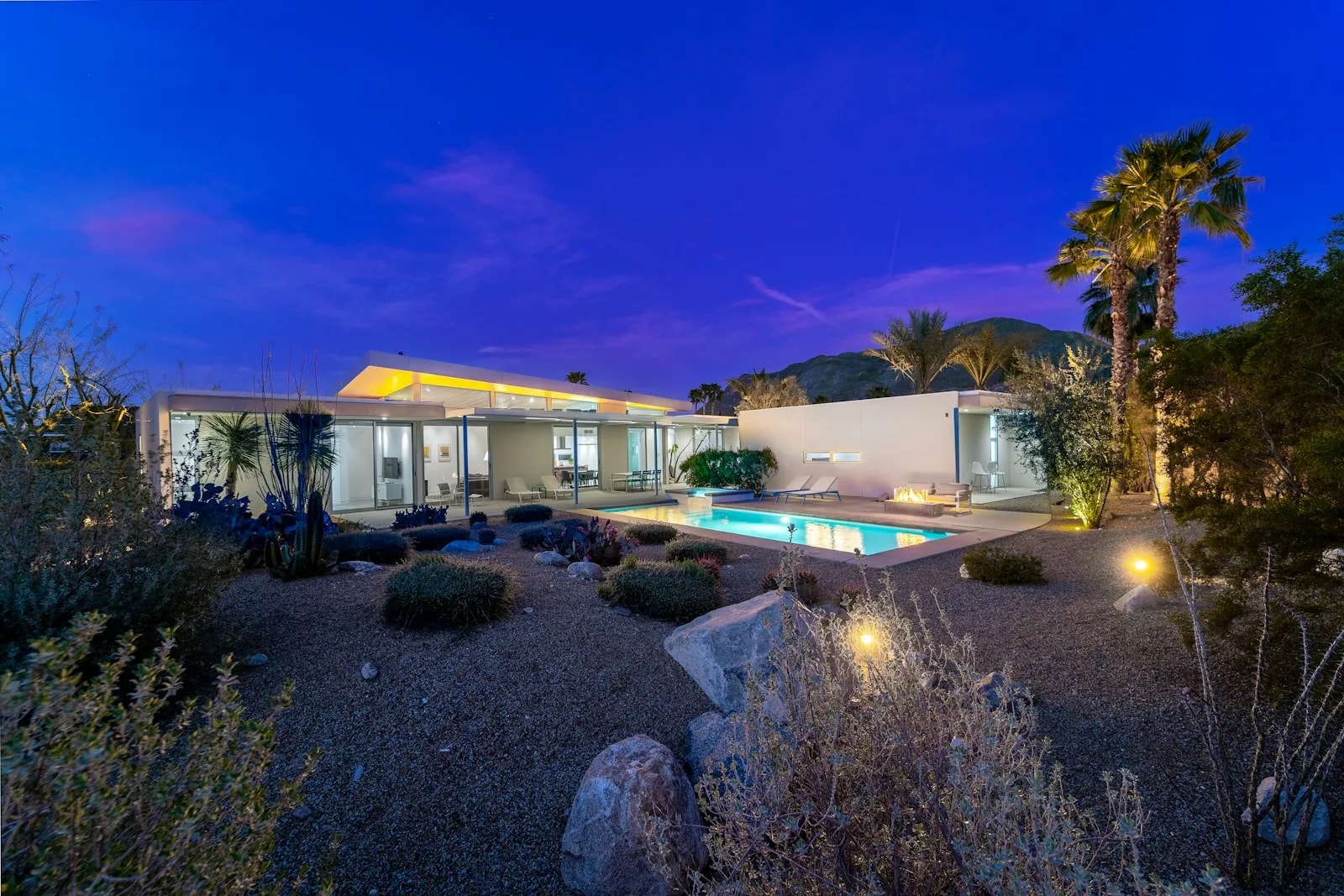
A Dubai villa's garden, pool and terrace can run as one automated zone. Most owners end up running five. A landscaper handles the irrigation and a pool company owns the pump. A pest-control firm fits the misting, a pergola supplier wires the shade, and an audio shop drops in speakers. Five controllers, five apps, five service visits, and nothing that talks to anything else.
This guide covers what you can automate outside a Dubai villa's walls. It covers what heat, salt air and dust do to that equipment, and what it costs in AED. If you are earlier in the process, start with our complete smart home guide for Dubai.
What is an outdoor smart home in Dubai?
An outdoor smart home in Dubai is the automation of everything past the villa walls, run from one app. That covers garden and pool lighting, irrigation, pool pumps, heating and chilling, water chemistry, outdoor audio, motorized shade, cameras, gate access, misting and outdoor fans.
The design brief here is not the brief you would write in London or Singapore. Four local pressures shape it:
- Heat: unshaded pool water commonly passes 35C from roughly May to September.
- Salt air: coastal plots on Palm Jumeirah corrode outdoor metal and electronics faster.
- Dust: the seasonal Shamal wind carries sand across the Gulf and coats outdoor sensors[2].
- A short season: the genuinely comfortable outdoor window runs roughly October to April.
That last point is the real reason people automate outside. Left alone, a Dubai garden gets used for about six months a year. Chilling the pool, watering before sunrise, closing the pergola ahead of a gust and cooling a seating area is what stretches that window.
Why is outdoor automation different in Dubai?
Outdoor equipment fails faster in Dubai because three stresses stack on top of each other: heat, dust and salt.
Heat comes first. Any sealed box sitting in direct summer sun runs hotter inside than the temperature it is rated for. That is why good installers shade or ventilate the equipment pad instead of bolting a controller to a bare south-facing wall. Heat also shortens the life of the LED drivers inside garden fixtures. We do not repeat those numbers here, because our Dubai lighting guide already covers driver life and fixture materials in detail.
Dust comes second. The Shamal is a northwesterly wind that blows across the Arabian Gulf carrying large clouds of sand. It is most active during the spring to summer change[2]. Rain gauges, wind vanes and soil probes collect that dust. Wipe them down twice a year or the schedules they drive quietly stop matching reality.
Salt comes third, and only on the coast. Salt settles on metal and electronics and speeds up rust and pitting. On Palm Jumeirah and other waterfront plots, solid brass, stainless steel and purpose-built marine finishes outlast standard powder-coated aluminium by a wide margin. The same rule applies to speakers, camera housings and pool-deck hardware, not just light fittings.
Real talk: the IP ratings you will see quoted are what installers specify, not a law Dubai enforces on private villa work. IP is an international code under IEC 60529[1]. The first digit rates dust protection, the second rates water protection. IP66 means dust-tight and protected against strong water jets from any direction.
What can you automate outside a Dubai villa?
Eight categories cover almost every Dubai villa garden. Most owners start with one and add the rest over two or three years.
- Lighting: path, tree, facade, pool-deck and underwater fixtures, zoned and scheduled.
- Irrigation: drip and spray zones driven by soil moisture and weather instead of a fixed clock.
- Pool equipment: variable-speed pumps, filtration, heating and chilling, salt cells and dosing.
- Outdoor audio: weatherproof speakers and buried subwoofers zoned with the indoor system.
- Shade: louvred pergolas, awnings and screens with wind, rain and sun sensors.
- Security and access: cameras, gate operators, video intercom and driveway lighting.
- Misting: two different technologies, one for mosquitoes and one for comfort cooling.
- Fans and heaters: outdoor-rated fans for the shoulder months, patio heaters for January evenings.
Running them together is not about novelty. It is about shared inputs. One weather station can pause the irrigation, close the pergola and hold the misting in the same instant. Five contractors give you five sensors that never speak to each other.
Common mistake: assuming the signal reaches. Wi-Fi from inside the villa rarely covers a pump room 30 metres down the garden. Most outdoor work starts with a buried Cat 6A run and an outdoor access point, which is home networking work, not pool work.
Which weather rating does each outdoor system need?
The matrix below covers 14 outdoor zones with the weather rating a careful installer specifies for each position. Read the ratings as installer practice, not as a Dubai legal requirement.
| Zone or system | What it does | Weather rating to specify | Key Dubai point |
|---|---|---|---|
| Garden and path lighting | Zoned, scheduled low-voltage fixtures | IP65 minimum | Heat shortens driver life, so ventilation matters |
| Pool-adjacent lighting | Deck, step and water-feature fixtures | IP67 or IP68 | Splash plus chlorine mist attacks finishes |
| Underwater pool lights | Colour scenes inside the pool shell | IP68 only, pressure-rated | Must be fully submersible, no exceptions |
| Pool pump and filtration | Variable-speed water turnover on a schedule | Weatherproof outdoor enclosure | Usually the biggest electrical load after the AC |
| Pool heating and chilling | Holds a set water temperature year round | Outdoor-rated unit on a shaded pad | Chilling matters more than heating, May to September |
| Water chemistry and dosing | Salt cell plus pH and ORP correction | Sealed outdoor controller | Chemical demand peaks in summer heat |
| Irrigation controller | Schedules by soil moisture and weather data | IP54 minimum, IP66 preferred | Evaporation is high, so timing beats volume |
| Soil and weather sensors | Feed moisture, rain and wind data back | Sealed outdoor sensor housings | Need cleaning after Shamal dust season |
| Outdoor audio | Zoned speakers tied to the indoor system | Purpose-built outdoor hardware | Marine-grade parts on coastal plots |
| Motorized shade and pergola | Opens, closes and angles on sensor input | Weatherproof housing, not submersion-rated | Auto-close on high wind is the point of it |
| Outdoor cameras | Recording and alerts around the plot | IP66 typical for exposed positions | Dust on the lens and low-sun glare |
| Gate and access control | Gate operator, video intercom, staff PINs | Weatherproof enclosure | Driveway lighting can trigger on the same event |
| Mosquito misting | Timed treatment through garden foliage | Weatherproof pump cabinet | Runs to a schedule, needs refills and servicing |
| Comfort misting and fans | Fine-mist cooling plus outdoor-rated fans | Weatherproof pump and fan motors | Loses effect when humidity is already high |
The lighting rows follow the IP tiers set out in our lighting guide, which goes deeper on transformers, fixture materials and driver life. The non-lighting rows follow standard outdoor-enclosure practice under IEC 60529[1]. For a pergola motor housing there is no single published figure, so specify a weatherproof enclosure and accept that it is not built for submersion.
How does smart pool automation work in Dubai?
Pool automation replaces the timer box and the manual valves with one controller. That controller runs the pump, the heater, the lights, the salt cell and the water features on a schedule you set from an app.
Two platforms dominate Dubai villas. Pentair IntelliCenter runs IntelliFlo variable-speed pumps, IntelliChlor salt chlorination and UltraTemp heat and cool pumps[3]. Hayward OmniLogic controls up to four bodies of water, 16 variable-speed pumps and up to five heaters. It adds salt chlorination and voice control through Alexa and Google Home[4]. Dubai Smart Home designs and supports both through pool and outdoor automation, and coordinates their installation as part of the project.
Three parts do most of the work:
- Variable-speed pump: a single-speed pump on a timer is usually the largest electrical load in a villa after the air conditioning. A variable-speed pump hits the same daily turnover by running longer at a lower speed, using a fraction of the power and running much quieter.
- Automated dosing: a salt cell plus pH and ORP monitoring corrects chemistry continuously in small amounts, instead of swinging between weekly manual test-and-dose visits. That steadiness matters most in July, when chemical demand is highest.
- Remote control: both platforms let you check water temperature and pump status from outside the UAE. For owners who spend summers abroad, that is often the trigger for the whole project.
Pool control also folds into the wider villa system. The pool lights can join an evening scene with the garden lighting instead of sitting on their own app. That phased build-out is covered in our villa automation roadmap, where outdoor work usually lands as a later, additive layer.
Do you need to chill your pool in Dubai?
Yes, if you want to swim in it between May and September. This is the single biggest difference between a Dubai pool and a pool almost anywhere else. Most pool marketing still treats cooling as an afterthought to heating.
Without active cooling, an unshaded Dubai pool commonly sits above 35C from roughly May to September. That is bath temperature, not swimming temperature.
Warm water is not only unpleasant. It speeds up algae growth and eats through chlorine faster. The running cost of the pool rises at exactly the point you stop using it. In winter the opposite happens and water can drop under 20C, which is too cold for most people. A genuinely year-round Dubai pool needs both directions.
| Type | What it does | When a Dubai villa needs it |
|---|---|---|
| Heater only | Raises water temperature | Useful for the short winter, roughly December to February. Does nothing for the summer problem. |
| Chiller only | Removes heat to lower water temperature | Essential from May to September. Leaves winter swimming cold unless you accept a short season. |
| Reversible heat and cool | Both, from one unit and one control | The standard current approach for a pool used all 12 months. One pad, one pipe run, one app. |
Pentair's UltraTemp line is a real example, with models rated from 70,000 to 140,000 BTU, a titanium heat exchanger and control through IntelliCenter[3]. Hayward has equivalent heat pumps that sit under OmniLogic[4].
Quick math: pool plus climate control through Dubai Smart Home, which adds chiller control and a variable-speed pump, typically runs AED 20,000 to AED 50,000, depending on pool volume and unit size[9]. Other Dubai pool companies publish market-reported figures in a similar band. Treat those as directional and get your own pool measured.
How does smart irrigation work in a Dubai villa garden?
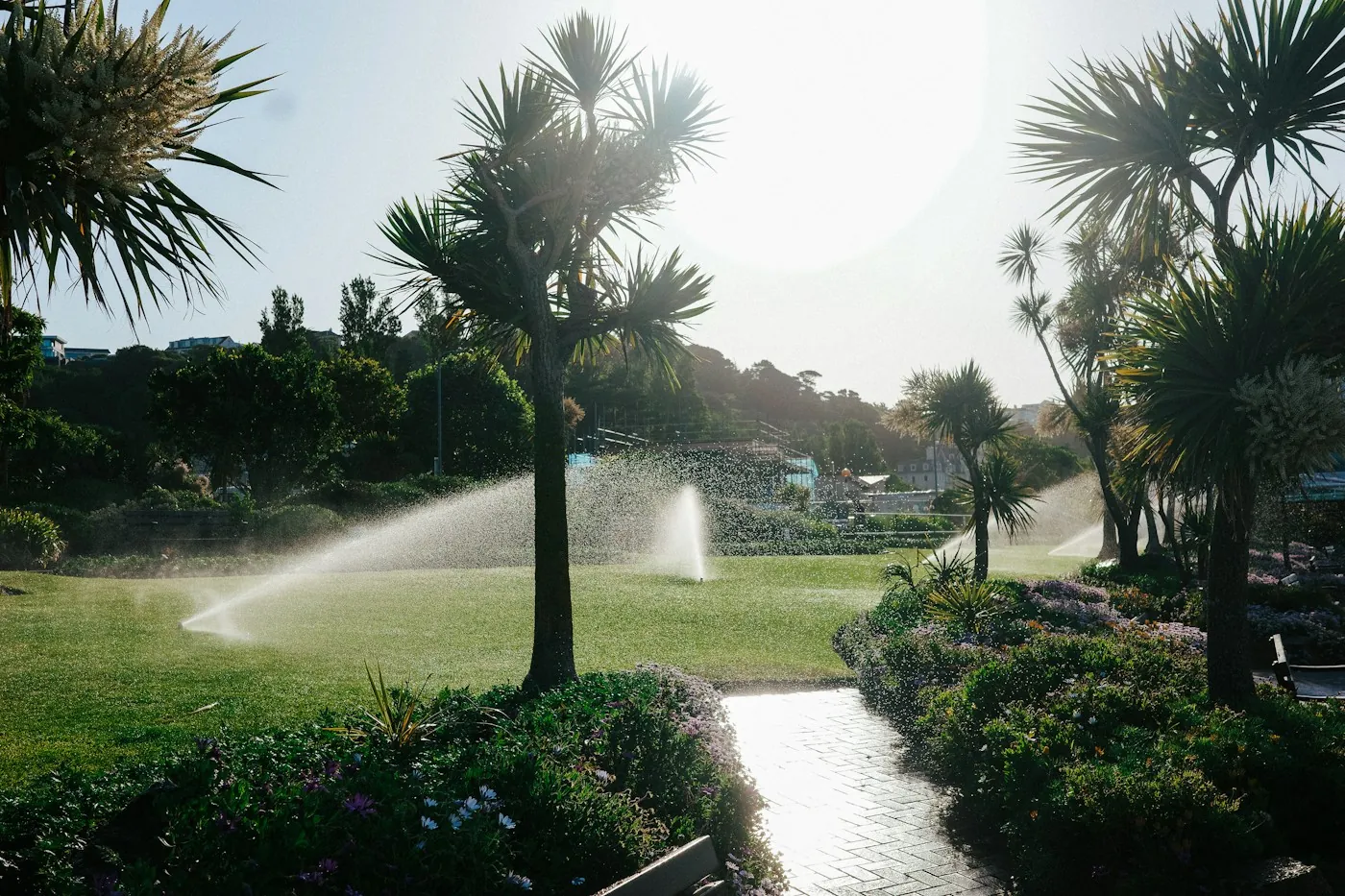
A smart irrigation controller waters from data instead of a clock. It reads soil moisture, live weather and evapotranspiration, which is how fast water is lost to heat and wind. Then it decides whether a zone needs watering at all.
In practice that means four behaviours a plain timer cannot manage:
- Pre-dawn watering when evaporation is at its lowest, rather than a fixed hour someone set in March.
- Zone-by-zone scheduling, so the lawn, the palms and the potted terrace beds each get their own run time.
- Rain and wind holds, which pause the schedule rather than spraying into a gust and losing most of it to drift.
- Leak and flow alerts, which flag a broken drip line before it shows up on the bill.
The controllers most used at villa scale are Hunter Hydrawise, Rachio and Rain Bird's two-wire decoders. Each is usually paired with a local weather station or a rain and wind sensor. Dubai Smart Home's published figure for smart drip irrigation with soil-moisture sensors is 40 to 60 percent less water than a plain timer[9]. Wider industry claims sit at 30 to 50 percent. Treat 40 to 60 as the number we stand behind, and the rest as context.
From our projects: the wind sensor earns its keep in Shamal season[2]. We set the pause point per garden when we set the system up. A walled garden in Arabian Ranches and an open plot in Jumeirah Golf Estates behave nothing alike. There is no public standard figure to copy.
Water rules, DEWA and Al Sa'fat
Smart irrigation cuts the water line of your utility bill, not the electricity line. Those are two separate charges and it helps to keep them apart in your head.
DEWA bills home water use in tiers, so the rate climbs as you use more. Sewerage and municipality fees are added on top[6]. A villa garden on a badly timed sprinkler schedule is the fastest way into a higher tier. Rates change, so check the current DEWA tariff page rather than a figure copied from a blog.
Dubai Municipality's Al Sa'fat green building system pushes the same direction. It calls for efficient irrigation and encourages native, drought-tolerant planting. Its higher tiers ask for rainwater harvesting and greywater reuse that can feed the garden[5]. Choosing planting that suits the climate does more for your water bill than any controller.
Some villas get treated water for the garden on a flat monthly fee tied to plot size, not a metered rate. Billing differs by property and community, so check your own supply rather than assume. For the electricity side of the bill, see how smart controls cut a DEWA bill.
What makes landscape lighting last in Dubai?
Landscape lighting in Dubai lasts when three things are right: the IP rating, a properly sized low-voltage transformer, and fixtures that suit heat and salt. It is the outdoor category most people start with, and the easiest to get wrong.
Most villa gardens run on 12V or 24V low-voltage circuits, which are safer around water and easier to extend later. Zone the garden the way you use it: path and entry, tree uplighting, pool deck, and the seating area. Then build two or three scenes rather than 20 switches.
Full detail on IP tiers, transformer sizing, driver life and brass versus aluminium fixtures lives in our Dubai smart lighting guide. For scene design and keypads that cover indoors and out, see smart lighting control.
Can outdoor audio survive a Dubai garden?
Yes, if you buy hardware built for outdoors. The most common failure we are called out to fix is an indoor speaker mounted under a soffit and quietly cooked over one summer.
Outdoor speakers face a harder job than indoor ones. There are no walls to reflect sound, so a pair of speakers on a terrace wall gives you a loud spot and a dead spot. The better pattern in a large garden is more speakers at lower volume. Small satellites on stakes in the planting beds, plus a buried subwoofer for weight, beat two loud boxes on a wall.
On the coast, materials decide lifespan. Brands built around marine-grade construction, such as Coastal Source with its brass fittings and tinned marine wire, exist because salt destroys ordinary outdoor hardware. Sonos and Sonance outdoor ranges are the more common pick inland. Either way, the outdoor zones should sit inside the same whole-home audio system as the majlis and living room. One app then covers the whole property.
Real talk: check your community's noise expectations before planning a garden party system. Villa plots in Dubai sit closer together than the brochure images suggest.
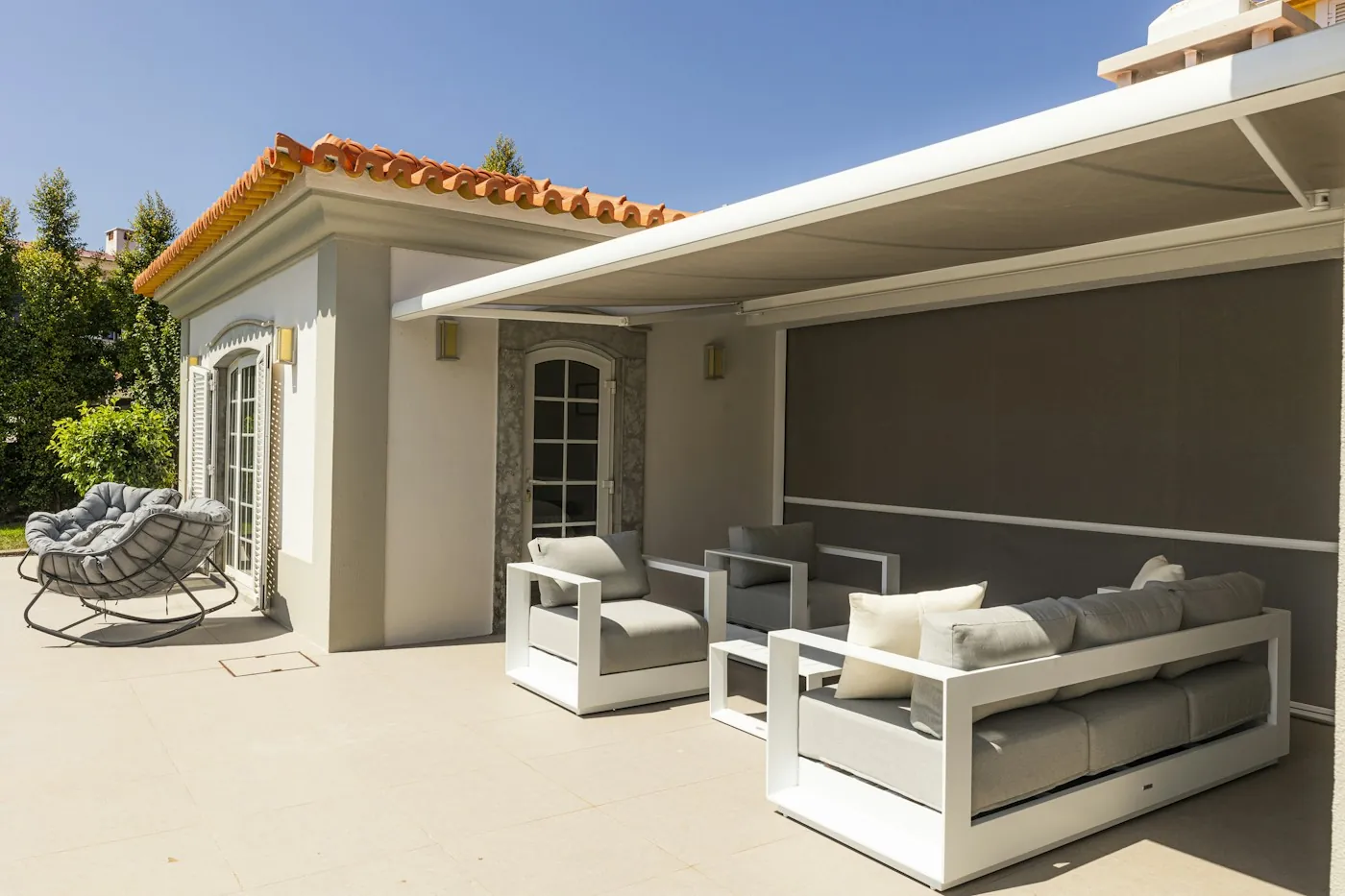
Shade, pergolas and awnings that close themselves
Motorized shade is what makes an outdoor seating area usable in the shoulder months. Louvred bioclimatic pergolas rotate their blades to control sun angle, close fully against rain, and retract to open sky on a January evening.
The automation part is the sensors. These systems ship with wind, rain and sun sensors that shut the roof with nobody touching an app. That matters here because Shamal gusts arrive with little warning[2], often while the house is empty. The exact wind trigger is a setting for your own pergola and how exposed it is, not a fixed public number.
Retractable awnings and motorized outdoor screens do a similar job for less money. Screens have a second use: they cut low western sun off a terrace in the hour before sunset. That is exactly when a west-facing Dubai garden is least usable.
The efficient version: one weather station, shared. If the pergola has its own wind sensor and the irrigation has another, you are paying twice and maintaining two devices. Wire one station into the automation system and let the pergola, the irrigation and the misting all read it.
Misting, fans and outdoor comfort
Two different systems get called misting in Dubai, and they solve different problems.
Mosquito misting sprays a fine treatment through garden foliage on a timed schedule, usually at dawn and dusk when insects are most active. It is a service product: it needs refills, nozzle cleaning and a regular visit. Suppliers print big reduction figures in their ads. Treat those as sales claims, not tested results, and ask what the yearly service costs before you sign.
Comfort misting is a different technology. High-pressure pumps push water through fine nozzles so it evaporates before it lands, which drops the felt temperature in a shaded seating area. The catch is physics. Mist cooling weakens as the air gets damper, and Dubai's coastal summer air is often damp enough to blunt it. A good system reads the humidity and eases off rather than leaving your cushions wet.
Outdoor-rated fans are the cheaper comfort layer and often the more useful one. Moving air makes a shaded majlis feel cooler without adding damp. Fans also group neatly into scenes with the shade and lights. A single evening scene can lower the pergola louvres, start the fans and set the garden lights. One keypad by the door, not four apps.
Outdoor cameras and gate access
A private villa owner can put cameras on their own plot without a separate permit. SIRA licensing rules apply to commercial installers and commercial premises. The standard SIRA sets is 1080p HD minimum with 31 days of stored footage[8]. Our SIRA CCTV guide covers the full regulatory picture.
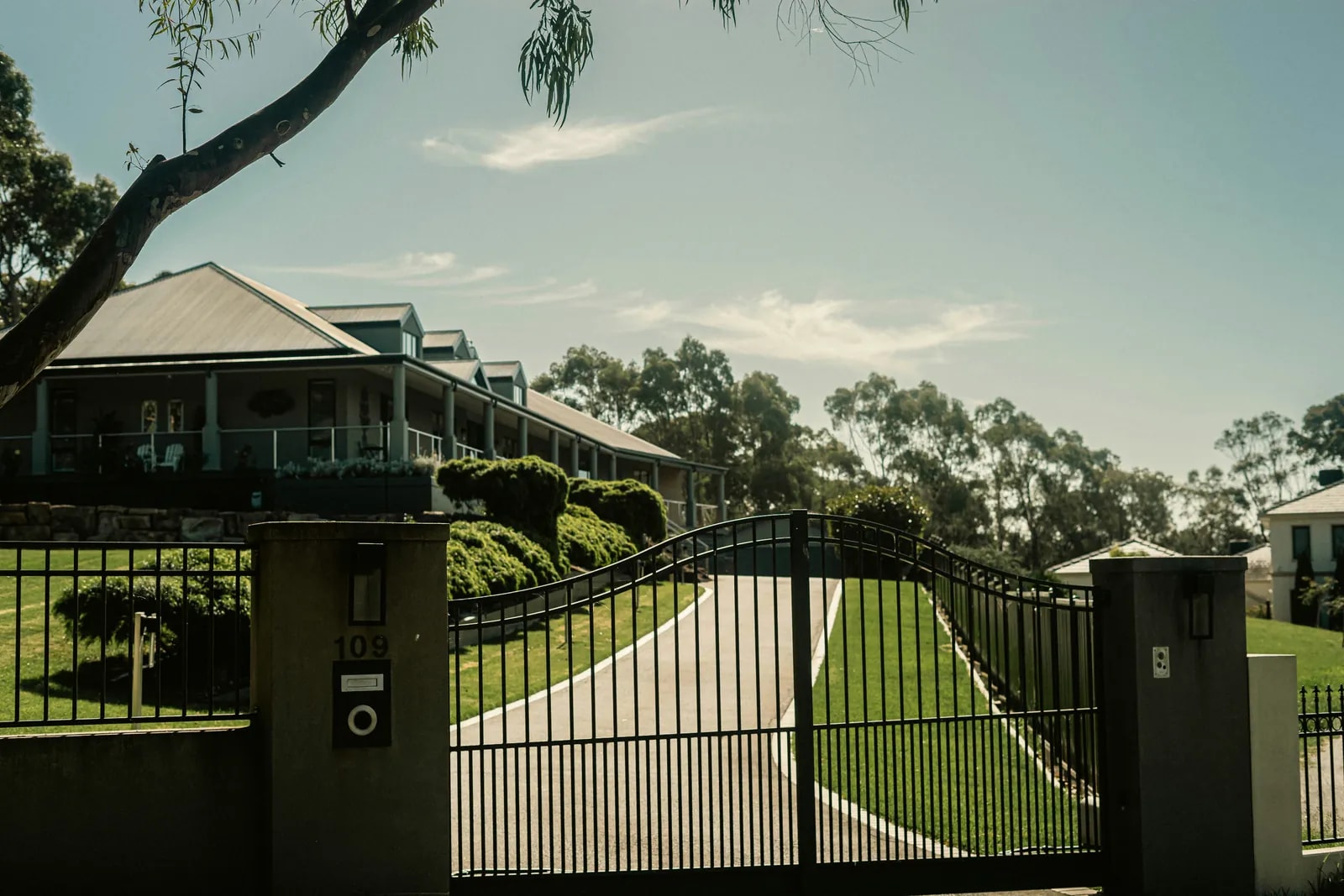
Outdoors, the job is placement and wiring. Cameras on exposed walls collect dust on the lens and take direct low sun. Position and cleaning schedule matter as much as the spec sheet. Gate operators, video intercom and driveway lighting should fire on one event: a car arrives, the gate opens, the driveway lights come up. Our automatic gate cost guide prices the motor, the safety parts and phone control as separate jobs.
Dubai Police also run an optional monitored service, Smart Home Security, from around AED 147 per month on a three-year plan[7]. It sits alongside your own cameras rather than replacing them. See security and surveillance for how the camera, alarm and gate layers fit together.
Does your community allow outdoor changes?
It depends on whether the change is structural, and the honest answer is that only your community can tell you.
The useful distinction is this. Retrofitting smart controls onto equipment you already own is an electronics change. Think of a new irrigation controller on existing pipework, app control added to an existing pool pump, or smart fixtures on existing garden wiring. That work rarely triggers a review. Building something new, such as a pergola, a pool or a water feature, usually does.
Emaar, Nakheel, Damac and the other master developers each run their own approval process, and those rules change. Confirm with your community or master developer before any structural work. Do it early, because approval timing can decide your install date. We do not publish a threshold table here: a rule that fits Dubai Hills Estate may be wrong for Tilal Al Ghaf.
Which communities benefit most? Private-plot villa areas. Palm Jumeirah and Emirates Hills sit at the top tier. Dubai Hills Estate, Arabian Ranches, Jumeirah Golf Estates and Tilal Al Ghaf cover the family villa bracket. The Springs, The Meadows and Jumeirah Park hold the older larger-plot stock. For readiness by area, connectivity and cooling type, read our Dubai smart home communities guide.
How much does an outdoor smart home cost in Dubai?
An outdoor smart home in Dubai starts from AED 6,800 for a pool controller retrofit, with a full pool and outdoor package from AED 50,000. Costs vary more outdoors, because a garden is not a fixed size the way a bedroom is. The table below separates the figures Dubai Smart Home publishes from figures reported elsewhere in the Dubai market.
| System | Typical AED range | Where the figure comes from |
|---|---|---|
| Pool controller retrofit | From AED 6,800 | Dubai Smart Home published figure |
| Pool plus climate control | AED 20,000 to AED 50,000 | Dubai Smart Home published figure, adds chiller control and a variable-speed pump |
| Smart irrigation, small to estate garden | AED 2,500 to 25,000 or more | Market-reported Dubai ranges, treat as directional |
| Motorized pergola | From about AED 18,000 | Market-reported Dubai entry pricing, not our own figure |
| Outdoor and multi-room audio | From about AED 15,000 | Market-reported entry pricing, scales with zone count |
| Full pool and outdoor retrofit package | From AED 50,000 | Dubai Smart Home service page starting price |
Do not add these rows together. Nobody buys all six at once, and a blended total would be a made-up number. Price the layer you actually want first, then add the next one when it earns its place.
One cost rule holds outdoors as strongly as indoors. Running conduit and cable while the garden is open costs a fraction of cutting it back in later. Pre-wiring during construction runs 60 to 70 percent cheaper than retrofitting a finished property[9]. If you are landscaping anyway, put the sleeves in now even if the equipment comes in two years. For how quoting and installer selection work more generally, see our Dubai home automation buying guide.
One system instead of five contractors
The argument of this whole article is simple. A garden, a pool and a terrace are one space. They should run on one system, with one app, one weather station, and one company answering the phone when something stops.
Our team has worked on smart home automation in Dubai, UAE since 2016, across 100+ projects. We design each pool and garden project and coordinate the work until it runs as planned. We are rated 4.9/5 by Dubai homeowners, and sales enquiries are answered within 2 hours. Our pool and outdoor automation service covers Pentair and Hayward pool control, irrigation, garden lighting and outdoor comfort as one scope of work.
If you want a scoped number for your own plot, we map every zone before any quote is prepared. Book a site visit or send a photo of your garden on WhatsApp and we will tell you honestly what is worth doing first. If your villa's indoor systems are still on the list too, our villa owner's roadmap sets out the order most Dubai homeowners follow. Either way, start with a conversation, not a shopping list.