Every villa and townhouse in the UAE must have Hassantuk, yet much of what you read about it online is wrong. Some websites call it a police burglar alarm. Others quote prices from the wrong emirate or the wrong scheme. Meanwhile, homes are where fires are rising: the UAE recorded 1,636 residential fires in 2023, up from 1,385 in 2022, while total fires fell[1].
Dubai Smart Home is not a Hassantuk provider. We do not supply, install, register or certify it. Our design team has planned smart homes in Dubai since 2016, across 100+ projects. On 7 October 2026 we read the three Cabinet resolutions behind it and the Ministry of Interior's own price list and FAQ.
This guide covers who must have Hassantuk, who pays, device prices, fines, Bukhoor mode, power cuts and the smart sensors worth adding. It is one part of our complete smart home guide for Dubai.
What is Hassantuk, and does my villa legally need it?
Yes, your villa needs it. Hassantuk is the fire alarm system that UAE villa owners must install and subscribe to under Cabinet Resolution No. 61 of 2020[2]. Smoke and heat detectors report to a 24-hour centre, which passes real fires to Civil Defence[3]. The rule took effect on 3 January 2021, and officials applied it to existing villas from 1 January 2024.
The Ministry of Interior (MOI) runs Hassantuk with Etisalat by e&, so it is a government programme delivered through a telecom company[4]. The MOI's Hassantuk site lists more than 84,000 villas protected and more than 600 fires detected[3].
Three Cabinet resolutions sit behind Hassantuk, and all three took effect on 3 January 2021:
- Cabinet Resolution No. 61 of 2020, the mandate. Owners must install fire detectors, subscribe to the system and pay for it[2].
- Cabinet Resolution No. 85 of 2020, the fines. It sets the fines in an attached schedule, and a fine can double if the violation is repeated or continues within a year[5].
- Cabinet Resolution No. 90 of 2020, the duties. Only establishments licensed by the Directorate General of Civil Defence may install and maintain the system, and tenants have duties too[6].
In 2019, home fires caused 68 deaths, 66% of all building fire deaths that year, The National reported[7].
You will see two deadlines online: September 2023 and 1 January 2024. Resolution No. 61 gave existing homes three years, which some counted from the September 2020 decision. The deadline that counts is three years after the rule took effect in January 2021, which officials applied from 1 January 2024[2][8].
Hassantuk also has an older, separate scheme for commercial buildings. It rests on Cabinet Resolution No. 24 of 2012 and covers shops, malls, warehouses, apartment buildings, hotels, schools and hospitals[9]. This guide covers only the villa programme.
Common mistake: calling Hassantuk a Dubai Police burglar alarm. One installer page describes it with door sensors, motion detectors and a police response time. Hassantuk is the MOI and Civil Defence fire system, built from smoke and heat detectors[3]. Dubai Police Smart Home Security, run with e&, is a separate paid home security service, and our guide to Dubai Police Smart Home Security covers it.
For CCTV, privacy and other smart home rules, read our guide to smart home laws in Dubai.
Which homes need Hassantuk, and who pays: owner, landlord or tenant?
Every villa and townhouse owner needs Hassantuk, and the owner pays, not the tenant. Cabinet Resolution No. 61 of 2020 covers standalone houses and villas, and says owners install, subscribe and bear the cost[2]. Apartments are not included, officials said in January 2024, because apartment buildings already have mandatory fire detection systems[8].
The MOI's FAQ says the home owner should apply and pay[3]. Officials said the duty falls on landlords too[8].
Tenants still have duties. Resolution No. 90 of 2020 says tenants must follow the installation rules and answer calls from the Civil Defence operations rooms[6].
Dubai's tenancy law, Law No. 26 of 2007, makes the landlord responsible for maintenance unless the contract says otherwise[10]. The Hassantuk duty goes further: Resolution No. 61 puts it on the owner directly[2]. If a landlord passes you the bill, ask which contract clause allows it.
For new homes, the licensing authority must see the devices and the subscription before it issues a completion certificate[2]. The table sets out who must do what.
| Who | Requirement | Authority | Applies to you if |
|---|---|---|---|
| Villa or townhouse owner | Install Hassantuk, subscribe and pay. Keep the contact details current[2][6] | MOI and Civil Defence, Resolutions No. 61 and 90 of 2020 | You own a villa or townhouse, lived in or rented out |
| Landlord renting out a villa | All owner duties, plus updating the tenant's details when a tenant changes[6] | Resolution No. 90 of 2020 | A new tenant moves in, or you sell |
| Villa tenant | Answer the verification calls[6]. Never damage or disable the devices[8] | Resolution No. 90 of 2020, with fines under No. 85 | You live in a villa that has Hassantuk |
| Apartment owner or tenant | No separate Hassantuk subscription[8] | The separate building scheme | You live in an apartment building |
| Owner of a new or extended villa | New villa: devices and subscription before the completion certificate[2]. Extension: a completion certificate showing fire safety is met[6] | The licensing authority | Your villa is new, or you modify or add to it |
| Low-income family | Free installation where eligible[3] | MOI | You get Ministry of Community Development benefits (the MOI's wording), or own a Sharjah housing programme villa |
If you are planning other upgrades too, our smart home roadmap for villa owners sets out what to do first.
How much does Hassantuk cost in Dubai, Abu Dhabi and the other emirates?
Hassantuk for a three-bedroom villa costs AED 5,903.10 as a one-time plan including VAT, as quoted by the Abu Dhabi Civil Defence Authority in June 2025[11][12]. Monthly plans cost AED 233.10 a month for 24 months or AED 416.85 for 12, plus AED 1,000 upfront. After two prepaid years, monitoring is AED 415 a year before VAT[13]. Dubai's last official quote was different.
Three Hassantuk price schedules circulate, each with its own source and date. Do not average them.
| Schedule | Amount | VAT | What it covers | Source and date |
|---|---|---|---|---|
| MOI per-device price list | Panel and installation AED 1,950. Smoke detector AED 298 each. Kitchen heat detector AED 160. Repeater AED 245 per floor. Monitoring AED 415 a year | Before VAT | Each device priced separately. First two years of monitoring paid in advance | MOI Pricing Guide, undated, read 7 October 2026[13] |
| One-time plan, three-bedroom villa | AED 5,903.10 once | Included | Installation, monitoring and maintenance | Abu Dhabi Civil Defence, June 2025[11]. Khaleej Times, May 2025[12] |
| 12-month plan, three-bedroom villa | AED 416.85 a month plus AED 1,000 upfront. AED 6,002.20 over the term (our sum) | Included | As the one-time plan | Same two sources[11][12] |
| 24-month plan, three-bedroom villa | AED 233.10 a month plus AED 1,000 upfront. AED 6,594.40 over the term (our sum) | Included | As the one-time plan | Same two sources[11][12] |
| Dubai Civil Defence quote | AED 1,800 to 2,200 one-off | Not stated | Installation for a Dubai villa | Dubai Civil Defence via The National, January 2024[14] |
| Year three onwards | AED 415 a year, or AED 435.75 with 5% VAT (our sum) | Before VAT | Monitoring and maintenance, yearly | MOI Pricing Guide and FAQ[13][3] |
In January 2024, a senior Dubai Civil Defence official put the one-off cost for a Dubai villa at AED 1,800 to 2,200[14]. A Dubai owner in the same report had paid AED 5,903 through e&. The MOI's price list gives a higher total for a typical kit, and we could not find an official explanation of the gap. So treat the quotation you receive at registration as the figure that counts.
Quick math: take the kit Abu Dhabi Civil Defence describes for a three-bedroom villa: one panel, nine smoke detectors and one heat detector[11]. On the MOI price list, that is AED 1,950 + AED 2,682 (nine at AED 298) + AED 160 = AED 4,792[13]. Add two prepaid years of monitoring at AED 415 each (AED 830) and you reach AED 5,622 before VAT. Add 5% VAT and it adds up exactly to AED 5,903.10, the one-time plan price. The sum is ours; the MOI does not publish it.
Your own price comes from a quotation built at registration from your home's size and details. It may change after the survey, and extra devices found there go on a new quotation[3].
This pricing structure dates from 2018, when Hassantuk was optional: Gulf News reported AED 5,814 for a four-bedroom villa with two years of monitoring, then AED 415 a year[15].
Separately, AED 10 million is funding Hassantuk maintenance for more than 25,000 low-income families from 2026 through the Emirates Red Crescent, at no cost to them[16].
Common mistake: trusting a price with no emirate, date or scheme next to it. Many pages print the AED 5,903.10 plan that way, yet its newest official quote came from Abu Dhabi Civil Defence, for one villa size[11]. One AI search box we tested went further and gave commercial building fees as a villa price. Those fees belong to the separate building scheme under Resolution No. 24 of 2012[9], not to your villa.
Hassantuk is priced through the MOI, not by us. If you want smoke, gas or leak sensors planned around your Hassantuk panel, book a free design consultation.
What is in the Hassantuk kit, and what does each device cost?
A typical Hassantuk kit has one entrance alarm panel and a wireless smoke detector in each living room, majlis, bedroom and dining room. It adds one wireless heat detector in the kitchen and a wireless repeater on each floor[13]. On the MOI price list, the panel with installation costs AED 1,950 and each smoke detector AED 298, before VAT.
| Device | Where it goes | MOI price before VAT | Notes |
|---|---|---|---|
| Entrance alarm panel (ATE) with system installation | By the main entrance, next to a power socket | AED 1,950 | Own SIM card and a backup battery of up to 24 hours[3] |
| Wireless smoke detector | Living room, majlis, bedrooms, dining room | AED 298 each | The count follows room and home size |
| Wireless heat detector | Kitchen | AED 160 | Senses heat, not smoke |
| Floor wireless repeater | One on each floor | AED 245 | Carries signals between floors |
| Monitoring and maintenance | A service, not a device | AED 415 a year | First two years paid in advance[13] |
ATE stands for alarm transmission equipment. It is the panel itself, not an extra box. The Hassantuk app groups the devices as ATE, indoor siren, smoke detector, heat detector and repeater[17].
The number of detectors follows the UAE fire alarm code according to room and home size, the Ministry of Interior says[17]. In January 2024, Dubai Civil Defence described the Dubai kit as a fire alarm panel, one wireless heat detector and up to nine wireless smoke detectors[14].
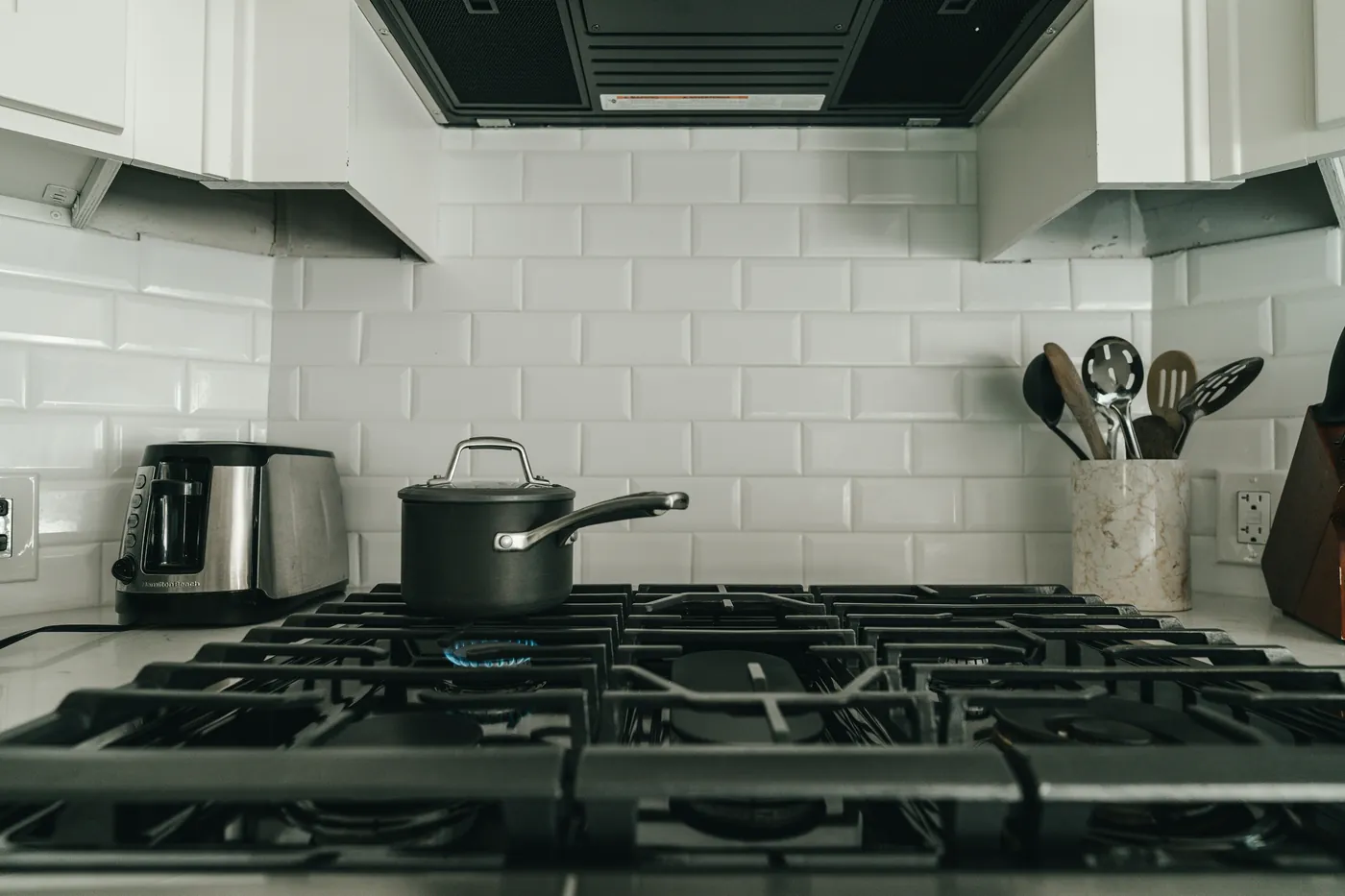
Cooking makes smoke and steam, so the kitchen gets a heat detector instead[13]. The MOI says the devices carry a 5-year warranty, and a maintenance visit follows only when a maintenance alarm is raised[3].
The quick math above leaves out repeaters, at AED 245 per floor before VAT[13], so ask whether your quotation includes them.
Before the survey, make sure there is a power socket near the main entrance for the panel[3].
What are the Hassantuk fines, and what triggers each one?
Cabinet Resolution No. 85 of 2020 lists the Hassantuk fines in a schedule[5]. As reported by The National in January 2024, the MOI's figures are AED 1,000 for not installing the system, after a first warning. Anyone who damages or disables it, tenants included, faces AED 1,000. When all three verification calls go unanswered, the fine is AED 200[8].
The table shows who each fine falls on.
| Violation | Who the duty falls on | Fine as reported | Legal basis |
|---|---|---|---|
| Not installing or subscribing | The owner | A first warning, then AED 1,000[8] | Resolution No. 61, Article 3, and the Resolution No. 85 schedule |
| Damaging or disabling the system | Anyone, tenants included | AED 1,000[8] | The Resolution No. 85 schedule |
| All three verification calls unanswered | The owner, and the tenants who live there[6] | AED 200[8] | Resolution No. 90, Article 1, and the Resolution No. 85 schedule |
| Repeating or continuing a violation within one year | Whoever was fined | May be doubled, up to twice the first fine[5] | Resolution No. 85, Article 2 |
If your villa still has no Hassantuk, register now. The National said the time between the warning and the fine was not made clear[8].
These are federal rules, so the same fines apply in Dubai, Abu Dhabi and every other emirate. If you think a fine is wrong, Resolution No. 85 lets you send a written grievance to the Minister of Interior within 15 days of being notified. A decision is due within 30 days[5].
Real talk: the reported AED 200 fine is the one most likely to catch a careful owner. If you rent your villa out and the MOI still has your number, the verification calls come to you, perhaps abroad, while your tenant hears the alarm. Officials said landlords must update the contact details so the tenant gets the call[8], and Resolution No. 90 makes that update an owner duty[6].
How does a Hassantuk alarm reach Civil Defence?
A Hassantuk alarm reaches Civil Defence in four steps. A smoke or heat detector sounds in the villa and alerts the panel. The Command and Control Centre then calls you to check. If the fire is real, the centre sends the alarm to the authorities within 120 seconds at most, with your location and contacts[3].
- Sensing. A detector picks up smoke or heat.
- Two alerts. The detectors sound inside the villa, and the panel sends the alarm out over its own SIM card.
- Phone check. The centre calls the contacts on the account to confirm the alarm.
- Civil Defence. For a real fire, Civil Defence is sent with the home's location and contacts[3].
The app adds a manual route. Holding its Activate button for 5 seconds raises a fire alarm, and the app then tells you a Civil Defence representative will contact you shortly[17].
Keep the numbers on the account current[3], and answer unknown calls while an alarm sounds. If an older parent lives alone, add a family member's number to the emergency contacts too. Our guide to smart homes for older parents in Dubai covers the rest of that setup.
How do you register, pay for and get a Hassantuk certificate?
You register Hassantuk on the MOI's Hassantuk portal or at selected business centres, with your Emirates ID or passport[3]. You give the home address, the owner's billing contact, emergency contacts, and the number of floors and rooms. You then receive a quotation and pay it, and the survey and installation follow.
- Register and get a quotation based on the size and details of the home.
- Pay in full at a business centre by cash or card, or online by card, in full or in instalments with selected bank credit cards.
- Have the survey. The quotation may change, and snags must be cleared within 5 days.
- A licensed establishment installs the devices, and monitoring starts[3][6].
People often search for a "Hassantuk certificate". For a new villa, the document that matters is the completion certificate, which is issued only after the devices and subscription are in place[2]. For an extension or other change to an existing villa, Resolution No. 90 asks for a completion certificate showing that fire safety requirements are met[6].
What people call renewal is the monitoring fee, due every year after the first two[3]. Abu Dhabi homeowners have their own Hassantuk for Abu Dhabi Homes portal[18].
Check your name, email and phone number before you submit. One App Store reviewer said more than 10 requests to correct a wrong name and email got no result[19].
Real talk: in one 2016 expat forum thread, a caller's quote to link an office alarm to Civil Defence was first taken for a scam. Before you pay anyone for Hassantuk, check the quote on the official Hassantuk portal or call the MOI support line, 80022220[3]. The portal and selected business centres are the payment routes the MOI lists. Treat a request to pay any other way as a reason to stop and check.
Can you install Hassantuk yourself or keep your existing fire alarm?
No to both. Resolution No. 90 of 2020 says owners must install fire detectors through establishments licensed by Civil Defence, and have them maintained the same way[6]. The MOI says the law needs a system linked directly to Civil Defence, and that Hassantuk is currently the only one[3]. A standalone alarm you already own does not meet the rule.
If your villa already has a wired fire alarm panel, ask the licensed establishment at the survey how Hassantuk will work with it. Connecting one panel to another is licensed work, not a weekend job[6].
Once the devices are in, leave them alone. The MOI tells owners not to tamper with or remove them[3], and disabling them carries the reported AED 1,000 fine[8]. If renovation work means a detector has to move, call 80022220 before anyone touches it.
Does bukhoor or cooking set off Hassantuk, and how does Bukhoor mode work?
Bukhoor smoke can set off a smoke detector, which is why Hassantuk has a Bukhoor mode. You press a button on the panel, under the panic button. While the mode is on, smoke does not trigger an alarm to Civil Defence, for 5 to 15 minutes at most, and only between 5:00am and midnight[3].
You can switch off all zones, or just one zone or floor. The receiving centre is told when the mode is on, and the detector nearest the burner may still beep[3]. Older systems need an upgrade before Bukhoor mode works.
If a false alarm does go off, the MOI says you can silence the panel yourself[3]. Since app version 2.3 in July 2024, the app can also silence the alarm remotely[19].
Some App Store reviewers say the app does not show which detector went off, and one could not start Bukhoor mode from it[19]. Use the button on the panel. App trouble is not a system failure, because the panel reports over its own SIM card[3]. For login problems, call 80022220.
If the centre calls during a bukhoor false alarm, answer and explain. A short call costs nothing, while three missed calls carry the reported AED 200 fine[8].
Pro tip: before you light bukhoor in one room, switch on Bukhoor mode for that floor only, not the whole villa. The detectors on the other floors stay live. Watch the clock too: the mode works only until midnight[3], so late-night bukhoor gets no cover.
What happens to Hassantuk in a power cut or an internet outage?
Hassantuk keeps working in a power cut and does not need your home internet. The panel has a backup battery that lasts up to 24 hours, depending on how much the alarm is used, and it reports through its own dedicated SIM card[3]. The Abu Dhabi Hassantuk portal gives the same figures[18].
If the panel is cut off, a maintenance alarm goes to the Command and Control Centre, which then calls you[3]. Neither portal says what happens if the battery runs flat while the SIM has no signal, so we will not guess.
Most smart sensors send their phone alerts through a hub and your router, so those alerts stop when the router loses power or internet. The Hassantuk panel depends on neither.
Our power cut guide for smart homes lists which devices keep working. If you want your smart alerts to last through a short cut, the router and hub need backup power, which is part of our home networking and Wi-Fi design work.
Does a smart smoke detector replace Hassantuk?
No. A smart smoke detector from Aqara, Meross or any other brand does not replace Hassantuk, and it never connects to Civil Defence. The MOI says the law needs a system linked directly to Civil Defence[3]. A smart detector sends an alert to your phone. Hassantuk sends a confirmed fire to the authorities.
The devices in our sensors and safety range are consumer sensors. They add an early warning and a phone alert, and they do not replace a mandated fire or gas detection system. Even the Aqara Hub M1S Gen 2, which has a built-in siren, is not a real alarm system: it has no monitoring centre and no tamper-proof panel.
Common mistake: buying a cheap Wi-Fi smoke detector "to be covered". It never meets the law, and it may not even work as sold. The UAE reviews we read on amazon.ae for one budget Wi-Fi model all described the same fault: it would not pair with its app. A detector that cannot reach your phone is just a battery smoke alarm, and the reported AED 1,000 fine for not installing Hassantuk still applies[8].
Which smart smoke, gas, leak and CO sensors are worth adding to a villa?
The sensors worth adding cover what Hassantuk does not: gas, water and carbon monoxide. Neither the MOI price list nor the app's device list includes a gas or carbon monoxide detector[13][17]. A gas detector matched to your kitchen's fuel, leak sensors in wet areas and a CO alarm fill those gaps. Smart smoke detectors add phone alerts.
Carbon monoxide is the cheapest gap to close. A battery carbon monoxide alarm certified to EN 50291 sells on amazon.ae for under AED 100 (October 2026)[20]. We do not list one in our catalogue.
For gas, our catalogue lists the Aqara Smart Gas Detector at AED 320 (price checked 19 July 2026). It runs on mains power and needs an Aqara hub[21].
Real talk: check your gas supply before you buy a gas detector. The Aqara unit senses natural gas (methane) only, is not LPG-rated, and mounts high, within about 30 cm of the ceiling[21]. Many villa kitchens run on LPG cylinders instead, and LPG needs an LPG-rated detector mounted low. Buy the wrong type, and it may not usefully warn you.
For phone alerts on smoke, the Meross Smart Smoke Alarm With Hub is listed at AED 140 (checked 19 July 2026). Its hub is included, it sounds locally with no network, and several units interlink. The Aqara Smart Smoke Detector costs AED 270 (checked 19 July 2026), runs on a sealed lithium battery and needs an Aqara hub[21].
Water is the other gap. The Aqara Water Leak Sensor T1 was AED 105 on amazon.ae (checked 23 September 2026) and is rated IP67. The Meross Smart Water Leak Sensor is AED 80 (checked 19 July 2026) and pairs to a Meross hub[21]. Our water leak detection guide covers where sensors and shut-off valves go.
Installation of add-on sensors is quoted separately after a free site survey. If you also want cameras to check a room from your phone after an alert, our security and CCTV design service plans that side of the villa. For other everyday safety steps, see our child-safe smart home guide.
Not sure whether your kitchen runs on LPG or piped gas? Send a photo of the gas supply on WhatsApp, and we will tell you which detector type fits.
What changes when you sell, rent out or extend a villa with Hassantuk?
Selling, renting out or extending a villa each brings a Hassantuk duty. Resolution No. 90 of 2020 says owners must update the owner and tenant details when ownership transfers or a tenant changes. Owners who modify or add to a villa need a completion certificate showing that fire safety requirements are met[6].
When you sell, agree in the sale who updates the Hassantuk record, so the calls reach the new owner. When a tenant moves in, update the contact details straight away, because the reported AED 200 fine follows unanswered calls[8].
An extension brings the fire requirements back into the approval[6]. Each villa community also has its own route for approving works. If you own in Arabian Ranches, our Arabian Ranches area page sets out the local details. Our page on The Springs does the same for that community.
Our landlord's guide to smart home technology covers the owner's side of other upgrades in a rented villa.
Is Hassantuk different in Abu Dhabi, Sharjah and the Northern Emirates?
The Hassantuk rules are the same in every emirate, because Resolutions No. 61, 85 and 90 are federal[2]. What differs is the portal and the published prices. Abu Dhabi runs its own Hassantuk portal[18], and Abu Dhabi Civil Defence quoted the plan prices that many sites print.
In Abu Dhabi, Emiratis on social support have installation covered by the Social Support Authority[11]. The Abu Dhabi portal's plans page did not load for us, so check it on the day you register. If you own on Saadiyat Island, our Saadiyat Island area page covers the local details for smart home work.
Hassantuk applies in Sharjah and the Northern Emirates under the same federal resolutions, but we found no separate published price for them. The quotation at registration is the figure that counts. The MOI lists villas under the Sharjah housing programme as eligible for free installation[3].
In January 2024, Dubai Civil Defence said about 60% of Dubai villas had the system and aimed to cover all of them by the end of that year. It also said 11,000 villas of low-income families were covered through the Community Development Authority[14]. We found no newer Dubai figure.
How Dubai Smart Home helps villa owners around Hassantuk
Three decisions matter most. Register through the official channels and keep the contact details current, because the reported fines punish missed calls as well as missing systems. Budget from your own quotation, not from an article, this one included. And treat smart detectors as extras for gas, water and phone alerts, never as a substitute.
Dubai Smart Home does not supply, install, register, maintain or certify Hassantuk. For a villa that has Hassantuk, we survey the house and specify the smart smoke, gas, leak and CO sensors that sit alongside it. We plan where the hub goes and who gets which alert, and coordinate the work through to handover. The sensors are mounted and tested, then we configure the app alerts with you. A 12-month workmanship warranty covers that work, though the term can vary by product.
Every smart sensor named in this guide, apart from the CO alarm, is in our sensors and safety catalogue with its price and check date[21]. If you want cameras planned in the same pass, that is our security and surveillance design work.
We are rated 4.9/5 by Dubai homeowners. To plan sensors around your Hassantuk panel, ask for a free site survey, or send your floor plan on WhatsApp.