You have probably heard both names from different people. A Dubai lighting consultant may have written Dynalite into your villa's drawings. A smart-home dealer may have quoted you Lutron. This guide gives you a straight answer on where each one fits, checked against named sources and what we see on real Dubai villa projects since 2016.
Both systems sit at the top tier of lighting control. Neither is a starter choice, and neither is something you buy off a shelf and set up yourself. Both are installed and programmed by a trained dealer. If you want the full picture of how lighting control fits the rest of a home first, start with our best smart lighting guide for Dubai, then come back here for the head-to-head.
Lutron or Dynalite: which pro lighting control for a Dubai villa?
Quick take: pick Lutron for a homeowner-chosen luxury villa that wants proven dimming, dedicated motorized shades, and Ketra tunable light. Pick Dynalite for a very large, consultant-specified estate that needs to control thousands of fixtures at commercial scale. Very often, though, the architect, lighting consultant, or integrator has already made this call before you start shopping.
Here is the honest framing. This is not "which brand is best." It is three questions. How big is your villa, and how many lighting circuits does it have? How much do dimming quality, shading, and tunable light matter to you? And who is specifying your project? Answer those three and the choice usually makes itself.
Choose Lutron if: you are picking the system yourself, you want the widest bench of Dubai dealers to choose from, and dimming, shading, or circadian light rank high on your list.
Choose Dynalite if: your villa is very large, an architect or lighting consultant has already specified it, or your project sits next to hospitality work that already runs Dynalite.
What professional lighting control actually is
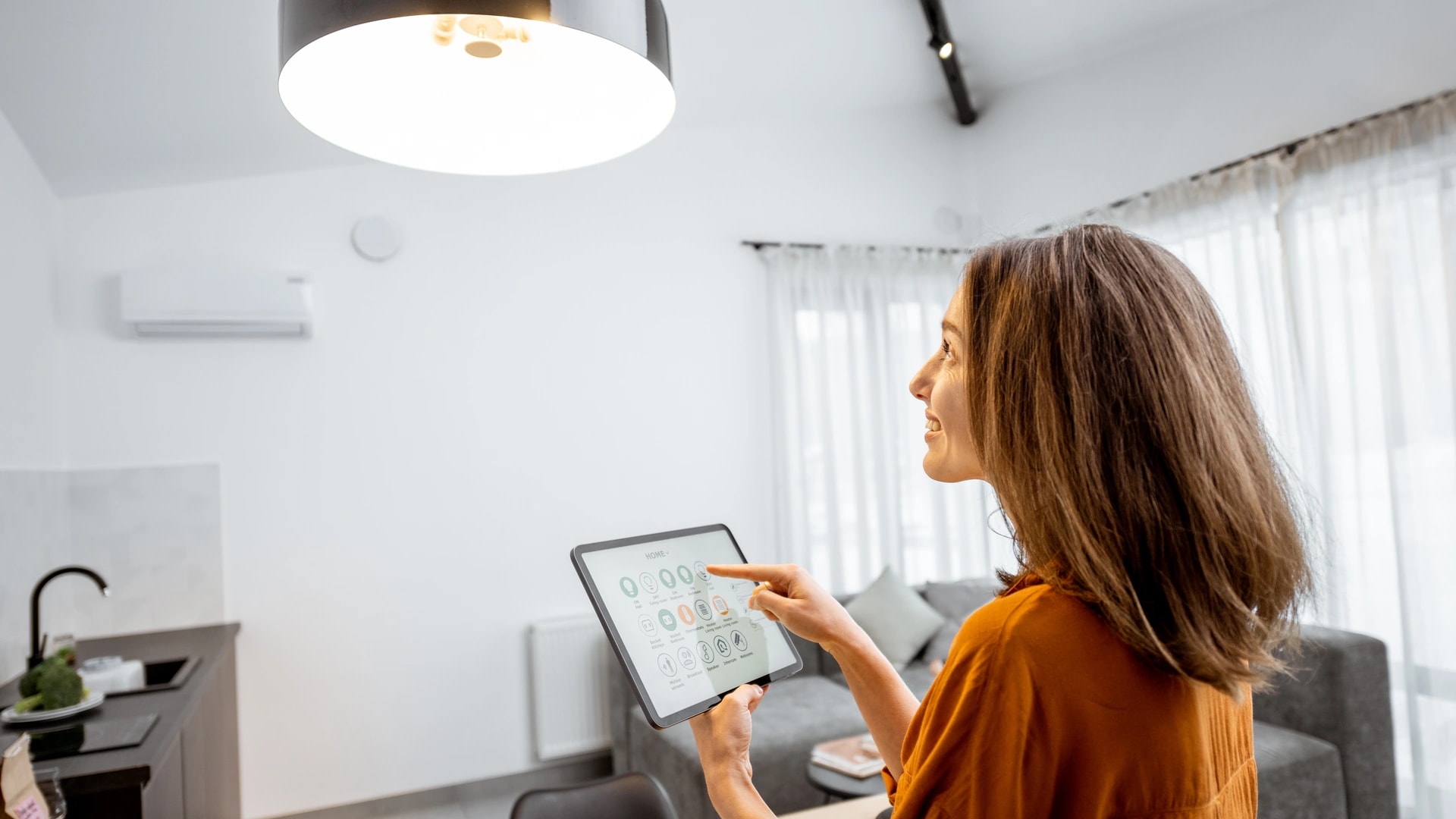
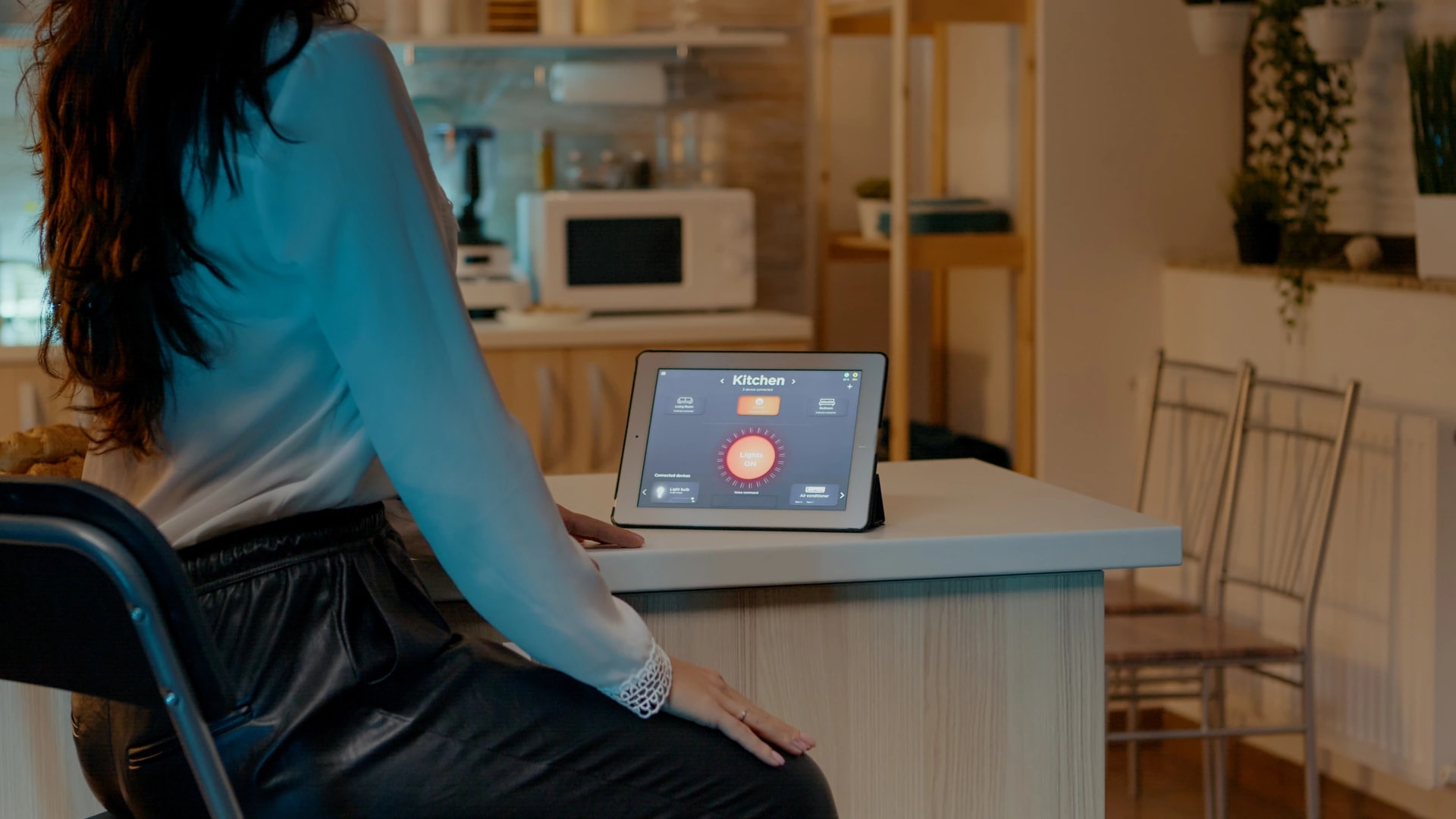
Professional lighting control replaces your wall switches with a wired or wireless system of keypads, dimmer modules, and scenes, all programmed by a dealer. It is a different thing from smart bulbs or a single smart switch. You are controlling whole rooms and the whole villa, not one lamp at a time.
Smart bulbs, like Philips Hue, and single smart switches are fine for an apartment or a few rooms. They get expensive and messy once a villa has 20 or more lighting circuits. At that point one coordinated system is cheaper per point and far more reliable than dozens of separate gadgets. That is the line where Tier 3 systems like Lutron, Dynalite, and KNX with DALI start to make sense. Our three-tier smart lighting guide walks through where that line sits.
A few plain terms first, so the rest of this reads clearly.
- Scene. One button that sets several lights at once, like "Dinner" or "Movie," each at its own level.
- Dimming quality. How smoothly a light fades, with no flicker and no buzz, from full down to very low.
- Keypad. A wall panel with labelled buttons for scenes and rooms, so no one needs a phone to turn on a light.
- DALI. Digital Addressable Lighting Interface, an open standard for talking to each light fitting one by one. More on this below.
What Lutron is, in plain English
Lutron is a US lighting-control maker known for dimming quality, motorized shades, and a product line that scales from one apartment switch to a 50,000 square foot estate. Its systems run through a central processor, so one brain coordinates the villa.
Lutron has three residential tiers. Knowing them stops you over-buying or under-buying.
- Caseta. The entry tier. Wireless, hub-based, app-controlled, sized for an apartment or a few rooms.
- RadioRA 3. The wireless flagship for homes. It caps around 200 devices and suits homes up to roughly 7,500 square feet.[9] Because it is wireless, it is the more retrofit-friendly Lutron tier.
- HomeWorks QSX. The estate-scale tier. It combines wired and wireless on one system, scales to 10,000 zones and homes up to about 50,000 square feet, and is the only Lutron tier that carries Ketra tunable light.[9]
Lutron's wireless tiers use Clear Connect RF, a sub-GHz radio that sits below the crowded 2.4 and 5 GHz bands your Wi-Fi uses, so it does not fight with the villa's network.[8] Its dimming reputation is the reason many Dubai dealers lead with it. It also carries a dedicated shading line and Ketra circadian light, both covered below. The trade-off is the same one every professional system carries: a licensed dealer, not a general electrician, makes the meaningful changes.

What Dynalite is, in plain English
Dynalite is a commercial-grade lighting-control system, owned by Signify (formerly Philips), built to run anything from a single villa to a whole skyscraper on one network. It was founded in Sydney in 1987, bought by Philips in 2009, and renamed Signify Dynalite in 2018.[5]
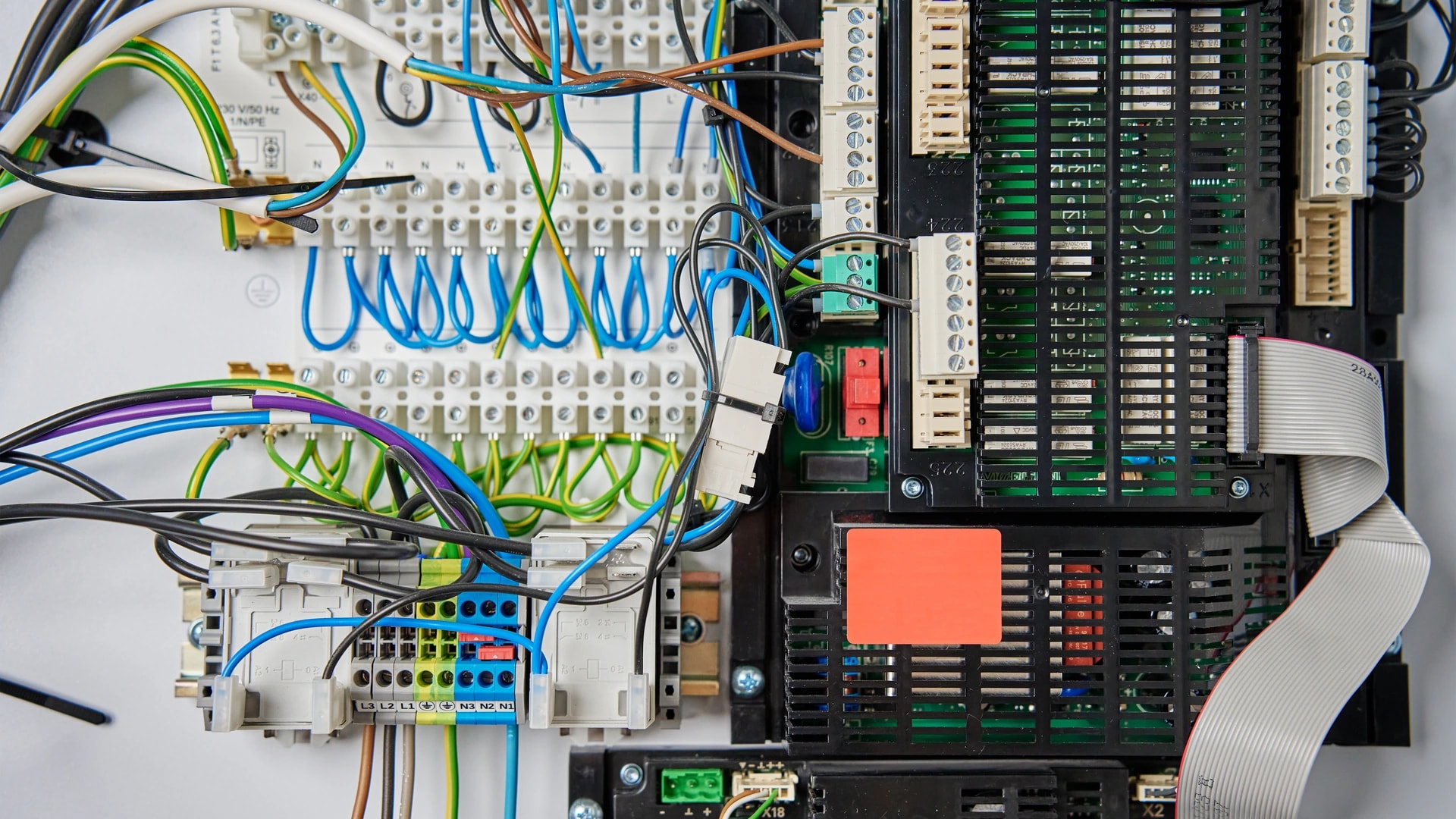
Its key difference is architecture. Dynalite has no central processor. The programming lives inside the keypads and dimmer modules themselves, and every device on its DyNet network can talk directly to any other device without a central brain in the middle.[6] That decentralized design is the same "no single point of failure" idea the wired KNX standard is known for. If one device drops, the rest keep working.
Dynalite carries DALI at the fixture level, alongside other standards like 0-10V and phase dimming, and it is DALI-2 certified.[2] In Dubai it is best known for landmark projects. The Burj Khalifa runs over 7,000 Dynalite controllers and more than 32,000 devices across 170 floors on one DyNet network.[3] Atlantis the Royal on Palm Jumeirah is another documented Dynalite project.[4] Those are commercial and hospitality buildings. They are useful as proof of scale, never as a price guide for a villa.
One honest note. Dynalite is not in our own installed-brands list, so we treat it as a system our team can work with and advise on as an integrator, not one we hold a dealer badge for. More on what that means for you below.
Lutron vs Dynalite: the full comparison
Here is the head-to-head on the dimensions that actually decide a villa project. Read it as different strengths, not a scoreboard. Both are reputable, and the right answer depends on your home.
| Dimension | Lutron | Dynalite |
|---|---|---|
| Architecture | Centralized. A processor coordinates the system. | Decentralized. No central processor; logic lives in the keypads and modules. |
| Protocol | Clear Connect RF (wireless) for RadioRA 3; HomeWorks QSX adds a wired backbone. | DyNet, carrying DALI-2, 0-10V, phase, PWM, or DMX at the fixture. |
| Scale | RadioRA 3 to about 200 devices; HomeWorks QSX to 10,000 zones. | No practical residential ceiling; 32,000-plus devices at the Burj Khalifa. |
| Dimming | Deep, published LED compatibility testing library. | DALI-2 certified, with Green-DALI zero-standby dimming. |
| Tunable / circadian | Ketra (HomeWorks QSX only): 1,400K to 10,000K. | No equivalent named product found. |
| Shading | Dedicated lines: Serena, Sivoia, Palladiom. | Controls shades as one of several systems; no dedicated line. |
| Keypads | Dealer-programmed keypads and app control. | Dealer-programmed keypads and app control. |
| Commissioning | Programmed by a licensed Lutron dealer. | Programmed by a certified Signify integrator. |
| Who specifies it | Often the homeowner or their integrator. | Often the architect or lighting consultant. |
| Dubai dealer bench | Wide; many named Dubai dealers. | Narrow; two confirmed Dubai integrators. |
Dimming quality: is Lutron or Dynalite better?
Neither wins outright. Both dim beautifully, and no independent head-to-head test names a winner. They are strong in different ways, so treat any "one always dims better" claim with care.
Lutron's edge is its published testing library. Its LED+ dimming has been tested across thousands of bulbs and dozens of brands for smooth, flicker-free fades from full down to very low.[8] If you care about exactly how a specific bulb behaves, Lutron has likely already documented it. That is why Dubai dealers market it against consumer brands on dimming alone.
Dynalite's edge is its commercial-grade energy toolkit. It is DALI-2 certified, with scene control, daylight harvesting, and a Green-DALI feature that cuts a fitting's standby power to zero when it dims to off, by switching off a relay.[2] That matters more on a large estate with hundreds of fittings than in a small home.
The honest number: there is no verified flicker score that ranks one above the other. Anyone who tells you Lutron always dims better, or Dynalite always dims better, is guessing. Judge it on your own fittings, with a dealer demo, before you decide.
Scale: how big can each system go?
Dynalite goes bigger, by a wide margin. But most villas never reach the ceiling where that matters, so scale decides fewer projects than you might expect.
Lutron RadioRA 3 caps around 200 devices and homes up to roughly 7,500 square feet. HomeWorks QSX lifts that to 10,000 zones and homes up to about 50,000 square feet.[9] That covers all but the very largest Dubai estates. Dynalite has no practical residential ceiling. Its direct DALI-to-DyNet mapping removes DALI's normal group-size limits, which is why it scales to the 32,000-plus devices running the Burj Khalifa.[3][2]
Common mistake: buying scale you will never use. A four or five bedroom family villa in Dubai Hills Estate or Arabian Ranches does not need a 32,000-device architecture. HomeWorks QSX, or even RadioRA 3, covers it with room to spare. Scale only becomes the deciding factor on a signature estate or a multi-building compound. Our villa owners guide covers sizing the system to the home.
Shading and circadian lighting
This is Lutron's clearest advantage. It has both a dedicated shading line and a named circadian-light product. Dynalite has neither in an equivalent form.
Lutron makes three shade lines: Serena, the affordable tier; Sivoia, premium and custom-built for any window shape, including skylights; and Palladiom, the top tier. In a Dubai villa, motorized shades do real work. They cut heat gain on sun-facing glass, drop the cooling load, and tie into the same keypads and scenes as the lights. See our motorized curtains and blinds service for how that fits a villa.
Ketra is Lutron's tunable-white and color line, available on HomeWorks QSX only. It runs from 1,400K warm light to 10,000K cool daylight, with 16.7 million colors, and is built to follow the natural progression of daylight through the day.[1] That is the feature people mean when they say circadian lighting: warmer and dimmer at night, cooler and brighter by day. Our circadian lighting guide explains why that matters in Dubai, where you spend long hours indoors in summer.
Dynalite can control shades as one of several systems it manages, and it does DALI-2 dimming and scenes well. But no research pass found a dedicated Dynalite shading line or a named circadian product to match Ketra. If shading depth or tunable light is high on your list, that points to Lutron.
How Lutron and Dynalite fit KNX and Control4 or Crestron
Neither system is an "instead of KNX" choice in most serious villa designs. They fit alongside a whole-home backbone in different ways, and DALI plays a role in both.
First, plain terms. KNX is a wired backbone that runs the whole villa (lighting, climate, blinds, security) without needing the internet, with a 30-year-plus lifespan. DALI is the fine-grained layer that talks to each light fitting one by one. In many Dubai villas, KNX runs the home and a KNX-DALI gateway handles per-fixture dimming underneath, where one gateway channel manages up to 64 DALI fittings.[7] Our smart home protocols guide covers KNX and DALI in full.
Lutron can run as its own self-contained lighting-and-shading system next to a KNX backbone, or as the only lighting layer in a villa without a full KNX build. It integrates with KNX, Control4, and Crestron, confirmed by Dubai dealer documentation. So a common pattern is KNX, Control4, or Crestron running the whole home, with Lutron handling lighting and shades specifically.
Dynalite more often runs as its own end-to-end DyNet system, as it does at the Burj Khalifa, rather than sitting under KNX. Here is the part no one explains clearly. A villa can reach "DALI-based lighting" two different ways. One is a KNX backbone with a DALI gateway. The other is a self-contained Dynalite system that speaks DALI natively over DyNet.[2] Both are legitimate. Which one you end up with usually traces back to who specified the lighting in the first place. If you are weighing whole-home platforms too, our Control4 vs Crestron vs Savant guide covers the backbone side.
What it costs in a Dubai villa
Straight answer: there is no single fixed price for either, and Dynalite has no published Dubai residential figure at all. Both are scoped and quoted per villa. Here is what can honestly be said.
Our own smart lighting and climate service starts from AED 4,500 for a defined scope, and it names Lutron among its brands.[10] That is a starting point for a room-level scope, not a whole-villa figure. A full villa Lutron install runs much higher and depends on your circuit count, the tier (RadioRA 3 or HomeWorks QSX), the shading, and whether Ketra is included. One Dubai integrator has floated whole-villa Lutron figures in the tens of thousands of dirhams and up, but that is a single, non-primary estimate, not verified market data. Treat it as directional and get a scoped quote for your home.
The Dubai reality: Dynalite is genuinely project-quoted only here. No confirmed Dubai residential price for it exists in any research pass to date, and we will not invent one. Its Dubai dealer bench is small, and its price depends heavily on scale and scope. Ask for a direct quote rather than anchor on a number you saw online. For how lighting fits a full home budget, see our smart home cost guide.
Want a real number for your villa? Book a free site visit and quote →
The Dubai reality: who specifies it, and pre-wire
The single most useful Dubai-specific fact here: this choice is often made by an architect or lighting consultant, not the homeowner. Signify runs dedicated pages for architects and specifiers, and Dynalite tends to arrive in a villa because the design firm already specified it, often carrying the spec over from a hotel or commercial job.
Lutron, by contrast, is far more often the system a homeowner or their integrator chooses directly. It has the wider Dubai dealer bench and the homeowner-facing marketing to match. So if a lighting consultant is running your project, ask them straight what they have specified and why. If you are choosing independently, which is most family-villa projects, Lutron's wider bench makes it the more accessible starting point.
Pre-wire is the other big factor. Pre-wiring during construction is 60 to 70 percent cheaper than retrofitting a finished villa.[10] This matters most for Dynalite, whose wired DyNet architecture is a "decide before the walls close" system, the same as KNX. Lutron RadioRA 3 is more forgiving, since it is wireless and can go into a finished villa without pulling new cable through the walls.
Dealer depth matters too, more for Dynalite than Lutron. Both systems are dealer-programmed, so you are tied to whoever can service them. Dynalite's confirmed Dubai dealer bench is narrow, so ask how many other local integrators could take over your exact system if the original installer stopped answering calls. That "the installer disappeared" risk is real, and it is why an in-house team with 24/7 support matters. If you are still picking a company, our guide to choosing a smart home company in Dubai covers what to check.
Which should you choose?
Match the system to your villa's scale, your priorities, and who is specifying the job. This table maps common Dubai situations to a typical fit.
| Your situation | Typical fit | Why |
|---|---|---|
| Mid-size family villa, choosing it yourself | Lutron (RadioRA 3 or HomeWorks QSX) | Widest dealer bench, best-known dimming, no consultant spec needed. |
| Shading is a priority throughout the home | Lutron | Serena, Sivoia, and Palladiom form the deeper shading line. |
| You want tunable or circadian light as a named feature | Lutron (Ketra, HomeWorks QSX) | No equivalent Dynalite product was found. |
| Very large estate, consultant already specified DALI or DyNet | Dynalite | Decentralized design scales cleanly to huge fixture counts. |
| Villa built by a team that also does hotel work | Dynalite (or ask the consultant) | The same spec often carries over from hospitality projects. |
| Retrofit, no major rewiring planned | Lutron RadioRA 3 | Wireless, so it installs without pulling new cable. |
| New build at pre-wire stage | Either, with KNX and DALI also on the table | This is the best moment to decide, before the walls close. |
And the honest catch that runs through all of it: on many Dubai projects the integrator or consultant has already made this call for a good reason. Understand their spec before you override it on brand preference alone.
Common mistakes to avoid
Most regrets on a villa lighting-control project trace back to a few avoidable errors. Here are the ones we see most across Dubai homes.
- Over-speccing the system. A family villa does not need Dynalite's skyscraper-scale architecture. Buy for your circuit count, not for a landmark building's spec sheet.
- No pre-wire plan. Both systems, and especially wired Dynalite, cost far more to retrofit than to pre-wire. Decide before the walls close and save 60 to 70 percent.[10]
- Choosing on brand name, not on dimming, shading, and scale. The name you have heard most is not automatically the right fit for your home.
- Not asking who specified it. If an architect or consultant is on the project, their spec usually has a reason. Understand it first.
- Skipping the local dealer check. Ask how many Dubai integrators could service your system later. This matters more for Dynalite's narrow bench.
- Expecting a dealer badge no one has claimed. Ask any integrator, including us, to be honest about which brands they are certified for versus which they can work with.
How Dubai Smart Home delivers professional lighting control
We design and install professional lighting control as part of a whole villa, tied to shading, climate, and scenes in one system. Our engineers are in-house and based in Dubai, we do not subcontract, and our systems run in English and Arabic. If a specific app's Arabic support matters to you, confirm it with your integrator, since neither brand publishes clear detail on it.
We work with professional lighting-control systems as an experienced integrator, not as a certified dealer for any one brand. That means we help you pick the fit that suits your villa's scale and budget, and we are straight about the trade-offs. Since 2016 we have completed 100+ projects across Dubai villas and apartments, and we are rated 4.9/5 by Dubai homeowners. Our smart lighting control and smart lighting and climate pages show the scope, and our Dubai Smart Home homepage covers the rest of what we do.
Not sure which system your villa should use? For the wider picture, read our complete smart home guide for Dubai. When you are ready for a real plan, book a free site visit and quote → or message our team on WhatsApp →. Enquiries are answered within 2 hours.