A smart home contract decides who can open your system once the installer has left. Sign a weak one and one company can end up holding the project file (the saved programming of your system), the passwords and the accounts. Every new scene or extra room then goes through that company, and a replacement installer may have to start again.
Dubai Smart Home read the texts for this guide on 13 October 2026: the UAE's Civil Transactions Law, the Consumer Protection Law, the copyright law and the makers' own documents. Since 2016 our design team has worked on 100+ smart home projects across the city.
This guide tells you what the texts say; it is not legal advice. Ask a UAE lawyer before you sign a large contract or once a dispute has started. Ask one too if your contract predates June 2026, if you are buying through a company, or if the intellectual-property terms are written specially for your project.
What should a smart home contract in Dubai cover before you sign?
A smart home contract in Dubai should cover 12 clauses, from the company you are contracting with to how the contract ends. The core ask is a copy of the project file and the credentials, plus ownership or a perpetual licence that lets any installer you choose maintain the system after handover.
The Civil Transactions Law, Federal Decree-Law No. 25 of 2025, has been in force since mid-2026 (the UAE Legislation portal gives 1 June 2026). Its Articles 812 to 839 cover contracts for work[1]. The Consumer Protection Law, Federal Law No. 15 of 2020, covers goods and services supplied in the UAE, free zones included[2]. Cabinet Decision No. 66 of 2023 is its Executive Regulation[3].
A home supply-and-installation contract fits both laws on their wording. How a court would treat a mixed supply, installation and software deal is for a lawyer to say.
None of the UAE laws we read for this guide sets payment percentages, a retention amount or a deposit cap for a private smart home contract. None bans a dealer-locked platform. Those points are settled by what you sign. A retention is money you hold back until the work is accepted.
The wording in the table is a plain-English example to adapt with your lawyer, not legal drafting.
| Clause | Example wording to adapt | What it rests on |
|---|---|---|
| 1. Contracting party | "This contract is with (full legal name), trade licence (number). Any subcontractor is named here." | A contractor may subcontract unless the contract forbids it, and stays liable. Civil Transactions Law Art. 832[1] |
| 2. Scope and specification | "Schedule 1 lists every point room by room, each model number, the completion date and the price." | A contract for work states its subject, quantity, method, completion period and price. Art. 813[1] |
| 3. Programming file and licence | "At handover you give me the project file in the platform's own format. I own it, or hold a perpetual licence that lets any installer I choose maintain the system." | A software transfer or licence must be written and specific. Copyright law Art. 9[4] |
| 4. Passwords and accounts | "You give me every admin password in writing. The maker account and any app home are created on my email." | Crestron's guide says the Advanced User password is "Set by the dealer"[5] |
| 5. Hand-off to another installer | "At completion the project is handed off to my own maker account. You help a new installer take over if I ask." | Control4 lets a customer change integrator only if the project was handed off to them[6] |
| 6. Subscriptions and licences | "Schedule 2 lists every yearly fee, whose name it is in and what stops if it lapses." | Control4 lists remote access and voice control among the features lost without its Connect service[7] |
| 7. Payments | "Each payment follows a stage I can check. The last is due after the acceptance test and the handover pack." | Payment is due on delivery unless agreed otherwise. Arts. 826 and 827[1]. No percentages are set |
| 8. Variations and substitutions | "No extra is charged without a priced change order I have signed. Any substitute is equal or better." | A lump-sum price does not rise because materials or labour cost more. Art. 829[1] |
| 9. Acceptance test | "The system is complete when it passes the written test sheet in Schedule 3, witnessed by me." | A term letting the supplier alone decide whether the work matches the contract is listed as void. Executive Regulation Art. 34[3] |
| 10. Warranty | "The warranty document states the period, what is covered, what cancels it and the repair time." | The regulation lists what a warranty states and sets no minimum period. Arts. 12 and 13[3] |
| 11. Support after the warranty | "Schedule 4 sets the call-out rate, the programming rate and the time to respond. I get the updated file after each visit." | A supplier's contracts state a time limit for repair and after-sales service. Consumer Protection Law Art. 15[2] |
| 12. Ending the contract | "This clause says what cancelling costs, that my data is erased or handed back, which language prevails and where disputes go." | The customer may withdraw before completion but compensates the contractor. Art. 836[1] |
Clauses 3, 4 and 5 decide whether you are locked in. If you are still choosing a system, our guide to home automation in Dubai covers what a proper quote includes.
What does dealer-locked mean for a Dubai smart home?
Dealer-locked means only an authorised dealer can change how your smart home works. Three locks sit behind the term: the programming tool, the project file, and the accounts with their passwords. Control4 says its Composer Pro licences are "for dealers and their employees only"[8], so the first lock is built into the platform and is not your installer's choice.
A dealer is a company the maker has approved to sell and set up its system. Vendor lock-in is the wider term: a proprietary smart home system ties you to one brand. Crestron, too, describes its configuration tool as a tool for dealers[9]. The other two locks are different: your installer holds the file and creates the accounts, so your contract can move them to you.
An open standard removes only the first lock. KNX Association says its standard does not tie you to one brand[10] and that anyone can order its ETS programming licence[11]. It also says a forgotten project password cannot be recovered[12], so a KNX villa with no file and no password is still locked.
Which platforms can only a dealer program, and what can you hold yourself?
The makers' own documents describe Control4, Crestron Home, Savant, Lutron RadioRA 3 and HomeWorks QSX as systems that dealers or trained professionals program. KNX and Loxone software is open to anyone. Apple Home, Google Home and Aqara belong to whoever created the home. On every one, the contract should say which files, passwords and accounts end up in your name.
Every cell comes from the maker's own pages, read on 13 October 2026. Fees are in the maker's currency: no maker publishes an AED price.
| Platform | Who can program it | What you can hold | What stops, and yearly fees |
|---|---|---|---|
| Control4 | Dealers only. Composer Pro licences are "for dealers and their employees only"[8] | Your owner profile, and the right to change integrator if the project was handed off to you[6] | Without Connect: remote access, mobile notifications and voice control[7]. Control4 says systems work locally without a subscription[13]. Connect is listed at USD 249 a year[14] |
| Crestron Home | Dealers. Crestron calls its configuration tool a tool for dealers[9] | The Owner role once you claim the home[15], and an Advanced User login with a password "Set by the dealer"[5] | The configuration backup sits in a service only a Crestron residential dealer can open[16]. No yearly fee to the homeowner is published |
| Savant | A Savant dealer, within the permissions you set in the app[17] | The "My Savant Dealer" settings. Dealer system access expires after 1 day by default[17] | Remove Dealer cannot be undone without a Savant dealer[17]. The Home Restore backup needs a paid Essentials subscription, price not published[18] |
| Lutron RadioRA 3 and HomeWorks QSX | Trained professionals. Designer software access follows qualification training[19] | The homeowner account, which only you or Lutron support can remove[20], plus scenes and schedules in the app[19] | The Designer project file "is not backed up to the cloud". Without it the project is remade[20] |
| KNX | Anyone with an ETS licence[11]. KNX Association points owners to a certified installer[21] | The exported ETS project file, the project password and the keyring backup[12] | Certified devices work across brands[22]. Without the file, the route is a paid third-party rebuilding tool[23]. No yearly fee: ETS6 is a one-time purchase[24] |
| Loxone | Installers trained by Loxone are the maker's stated route[25]. The Config software is free to anyone[26] | The Miniserver and app logins. Loxone does not say who keeps your project, so put it in the contract | Loxone says app control and remote access are free. Two optional services are paid, prices not published[25] |
| Apple Home, Google Home, Aqara | The account owner, in the app | The home itself, if it was created on your account[27][28][29] | If the installer created the home on its own account, you are only an invited user |
Our Control4, Crestron and Savant comparison covers what each costs in Dubai. If one is planned for your cinema room, read our home cinema design page first. For a smaller Aqara home, our hubs and control panels range lists the hubs.
Pro tip: on Savant, leave dealer access time-limited. Savant's app guide says system access granted to a dealer expires after 1 day by default, and the owner can choose 1, 2 or 3 days or Never[17]. Choosing Never gives away the one control the platform gives you.
Who owns the programming file and the passwords under UAE law?
Who owns the programming file and the passwords is for your contract to say. UAE copyright law protects software without registration and lets the parties settle ownership in writing. A transfer or licence takes effect only if it is written and specific[4]. So ask the contract to name the owner and the licence you hold. None of the laws we read names project files.
The law is Federal Decree-Law No. 38 of 2021[4]. Article 28 says that, unless agreed otherwise in writing, the copyright in a work made in favour of another person is attributed to that person. Article 9 says a transfer or licence must be written and must name the right, the purpose, the duration and the place. Article 12 says the licence terms shown on or in software bind its user. Article 40 makes getting around a technical lock an offence, so do not try to bypass one.
How those rules apply to a project built on a maker's licensed tool is a question for a lawyer. Passwords are a practical point these laws do not settle, so write them into clause 4.
Our lighting control system page says we hand you the full programming file and as-built, the record of what was finally installed[30]. Our Terms of Service add that the design material, programming files included, stays our intellectual property. Once the project is complete, you hold a perpetual, royalty-free licence to use it for the system installed in your home[31].
Common mistake: asking for the programming file after a dispute has started, when the contract never promised it. By then nothing in writing says it must be handed over. Put it in clause 3 and make the final payment wait until you have it.
What should be in the handover pack?
A handover pack should hold seven things: the project file, the passwords and keys, accounts in your name, the as-built documents, the invoice and warranty document, the yearly-fee schedule and the signed test sheet. Ask for each in writing before the final payment, and keep a second copy.
| Item | What to ask for | Why it matters |
|---|---|---|
| Project or configuration file | KNX: the exported ETS project. Lutron: the Designer project file. Crestron: a copy of the configuration. Control4: the project handed off to your customer account | Lutron's file is not backed up to the cloud[20]. Crestron's backup sits in a dealer portal[16] |
| Passwords and keys | The KNX project password and keyring backup (the exported security keys), the Crestron Advanced User password, and the admin logins for controllers, network and Wi-Fi | A forgotten KNX project password cannot be recovered[12] |
| Accounts in your name | The maker account, any Apple, Google or Aqara home and any cloud plan, created on your email, with the installer as a user you can remove | Aqara makes the first account that adds a lock its administrator[29] |
| As-built documents | A device list with model and serial numbers, a wiring and network diagram, and the group-address or zone schedule | A second installer can read the system without tracing every cable |
| Invoice and warranty document | The warranty period, the serial numbers, what is covered and what cancels it | Executive Regulation Arts. 6, 12 and 19 list these items[3] |
| Schedule of yearly fees | What is paid each year, to whom, in whose name, and the renewal dates | Features can stop when a yearly service lapses[7] |
| Signed test sheet | The acceptance test results and the snag list, with dates | It records what worked on handover day |
For KNX, our KNX cost guide lists the five handover items. Network logins matter as much as the controller's, because remote access runs through your router: our home networking and Wi-Fi page covers that design.
If you want the handover pack mapped for the platform named in your quotation, book a free design consultation.
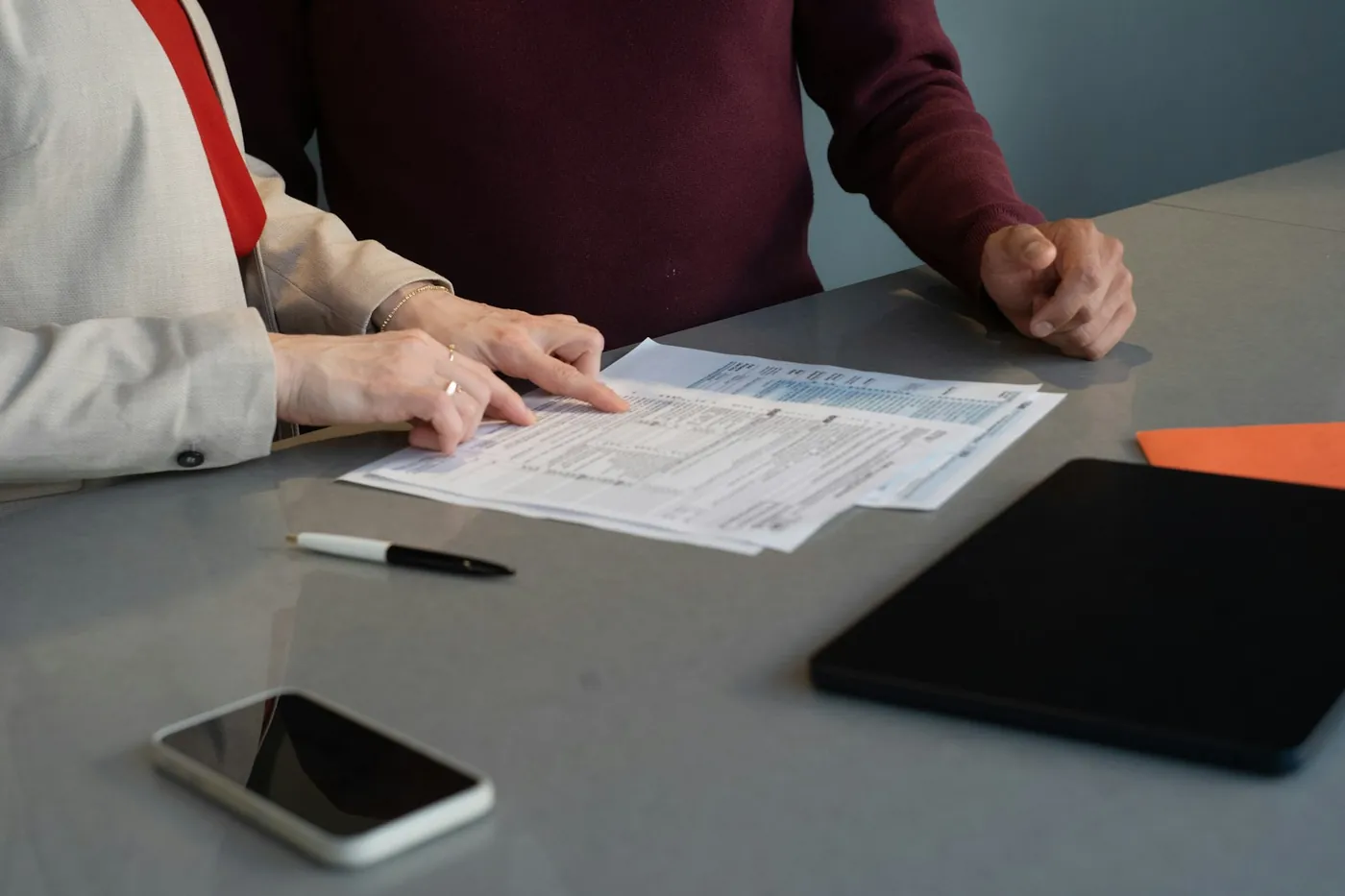
How should payments and sign-off be staged when the law sets no percentages?
Tie each payment to a stage you can check, and hold the last one until the acceptance test and the handover pack are done. UAE law sets no standard split. The Civil Transactions Law's default is payment on delivery (Article 826), with part payment for distinct parts once they are inspected and accepted (Article 827)[1].
Commissioning is the stage when the system is programmed, switched on and tested. The acceptance test ends it: a written list of checks, run with you present. Under the Executive Regulation, a service delivered in phases comes with a schedule of payments linked to each phase (Article 6)[3].
We found no rule that protects a deposit paid to an installer, so keep your payments behind the work, not ahead of it. One published example of stages you can see is the typical schedule in our guide to smart home financing in the UAE. It is a 50 percent deposit on order, 30 percent when the hardware reaches site, 15 percent on commissioning and a 5 percent retention released at the day-30 return visit. That is our example, not a legal standard, and your installation contract sets the exact split.
Real talk: anyone quoting "the standard percentages" for a Dubai smart home contract is quoting habit, not law. None of the laws we read sets a split, a retention or a deposit cap. One AI search answer we tested printed a percentage table that none of its cited pages contained.
How do you pin down scope, substitutions and variations?
Pin the scope down with a points schedule, named models, a completion period and one price. A points schedule lists every controlled light, blind, AC zone and keypad, room by room. Article 813 of the Civil Transactions Law says a contract for work states its subject, nature and quantity, the method, the completion period and the price[1].
- Price. Under an agreed design and a lump sum, the contractor may not claim more because materials or labour cost more (Article 829).
- Extras. A change raises the price only if it is your fault, or you authorised it and agreed the increase. The text does not say that agreement must be written, so write that in.
- Unit prices. If work priced per point or per keypad goes over the estimate, the contractor must tell you the expected increase (Article 828).
- Substitutes. A contractor who supplies the materials is responsible for their quality (Article 815). Name each model, and require any substitute to be equal or better.
Also name who prepares any community approval paperwork. On a new build, say who supplies the conduit, power points, cabling and network switches: main contractor, electrician or smart home company. Ask for a written list of any part only this installer can supply or service.
Which yearly fees and subscriptions should the contract list?
The contract should list every yearly fee, whose name it is in and what stops if it lapses. Control4's dealer news lists Control4 Connect at USD 249 a year[14], or USD 1,245 over five years by our sum. Without Connect, the maker's FAQ says you lose remote access, mobile notifications and voice control[7]. Ask your dealer for the AED price and whether VAT is included.
KNX has no yearly software fee[24]. ETS6 is a one-time EUR 200, EUR 350 or EUR 1,000 before VAT, as listed on 12 October 2026[11], and is normally the installer's own tool.
Our Terms of Service say manufacturer software and licence terms apply directly between you and the manufacturer[31], so ask for each plan to be in your name.
What does UAE law say about the warranty, and about support after it ends?
UAE consumer law sets no minimum warranty period. The Executive Regulation says a service is warranted for a period that fits its nature or the period you agreed, whichever is longer (Article 13). It also lists what a warranty document states (Article 12)[3]. A Baker McKenzie note confirms that the regulation sets no minimum period[32].
You hold two warranties. Workmanship is covered by the company you contract with. Hardware is covered by the maker, for example:
- Crestron: three years from shipment. It does not pass to a later owner and excludes labour to diagnose, reinstall or program a product[33].
- Lutron: published by region and product. RadioRA 3 is two years in its Europe and Asia sheet dated March 2025[34]. Ask for the term that applies to you in writing.
A warranty can lapse when another company works on the system: Crestron's and Lutron's own warranties exclude improper or unauthorised repair. Article 19 of the regulation says the cases that cancel a warranty must be set out and disclosed before you buy, so ask for that list[3]. Crestron's also lapses for equipment kept outside its temperature limits or exposed to humidity or salt[33]. In a Dubai villa, ask where the rack will sit and how it is cooled.
The ten-year liability in the Civil Transactions Law is about collapse and defects that threaten a building's structural safety (Articles 821 to 824)[1]. Do not read it as a ten-year warranty on a smart home system.
After the warranty, Article 15 of the Consumer Protection Law says a supplier's contracts must state a time limit for repair, maintenance or after-sales service once a defect appears[2]. Agree the call-out rate, the programming rate and the time to respond before you sign. Our AMC guide for Dubai smart homes covers annual maintenance contracts (AMCs).
What happens if your installer stops trading?
If your installer stops trading, you lose the company that could change your system, not the system itself. Control4 says its systems work locally without a subscription[13]. It lets you change integrator from your account only if the project was handed off to you in OvrC, the remote management tool dealers use[6].
- Gather what you hold. The contract, the invoices, the handover pack and the accounts in your name. Change the passwords you control.
- Control4. Change integrator in your account. Without a hand-off, Control4's guidance for buyers of an existing system says a professional may need to come on site and register the account to you[35].
- Savant. Give a new integrator a Claim Code. Remove Dealer cannot be undone without a Savant dealer[17].
- Crestron and Lutron. Crestron's backup sits in the dealer's portal, so you need a Crestron dealer[16]. With Lutron, share the Place from the app; without the Designer file the project is remade[20].
- KNX. Any certified installer can work from the file. Without it, KNX Association points to a paid third-party tool that can rebuild a project from the installation, and says it cannot support that tool[23].
If the company still exists but has stopped performing, the Civil Transactions Law sets out steps in Article 818[1]. They are written notice, a reasonable time to correct, then ending the contract or having another contractor finish at the first contractor's cost. Ask a UAE lawyer before you rely on that.

Which contract terms does UAE law treat as void, and what does cancelling cost?
The Consumer Protection Law says any term that exempts the supplier from its duties under that law is null and void (Article 21)[2]. Under Article 836 of the Civil Transactions Law, you may withdraw before completion if you pay the contractor's costs, the work done and the profit it would have earned[1].
Article 34 of the Executive Regulation lists void terms[3]. Four matter here:
- the supplier may amend or interpret the contract alone, or end it without referring to you;
- the supplier alone decides whether the work matches the contract;
- you waive a right the law gives you, or pay compensation out of proportion to the real harm;
- maintenance must be done at the agency only.
That last item says nothing about programming files or dealer access, so it is not a ban on dealer-locked systems. The law lets a court reduce the lost-profit part of a cancellation bill, and an agreed penalty that is excessive (Articles 836 and 340)[1].
Article 24 of the Consumer Protection Law voids any agreement to give up your right to claim compensation for damage[2]. Some limits on liability may not hold against a consumer, so ask a lawyer about a specific cap.
The article numbers here come from the 2025 law. If your contract was signed before June 2026, ask a UAE lawyer which version of the law applies to it.
At the end of the contract, ask for your data to be erased or handed back and remote access removed. Federal Decree-Law No. 45 of 2021, the UAE's personal data law, asks a processor to erase personal data, or hand it back, when the work ends (Article 8)[36]. Which rules bind a particular company is for a lawyer.
Where can you complain in Dubai if the installer will not put things right?
Dubai's Department of Economy and Tourism (DET) takes consumer complaints through consumerrights.ae and asks for the invoice or the contract as proof[37]. Its pages have quoted different handling times, so check the current figure there. Under Dubai's 2021 Conciliation Law, a claim within the remit of the Centre for Amicable Settlement of Disputes, set at up to AED 500,000, goes there before the courts[38][39].
| Route | Who it is for | Limits and what you need |
|---|---|---|
| Written notice to the installer | Anyone with a contract | A reasonable time to fix. Keep the contract, invoices, test sheet and photos. Civil Transactions Law Art. 818[1] |
| DET consumer complaint | A consumer complaining about a business with a Dubai-issued trade licence | Proof of purchase is mandatory. Construction companies are among the activities not covered[37] |
| Ministry of Economy on 800 1222, or the emirate's economic department | Suppliers outside the Dubai channel, and the other emirates[40] | The consumer law applies across the UAE, free zones included[2] |
| Centre for Amicable Settlement of Disputes, Dubai Courts | Claims up to AED 500,000, with some exclusions[39] | Registration costs AED 250 under the 2021 law, refunded if a settlement is approved[38] |
| The courts, or the forum named in your contract | Larger or unresolved claims | Ask a UAE lawyer first |
Check on consumerrights.ae whether your supplier qualifies, and check the current fee and steps for the settlement centre with Dubai Courts. An approved settlement can be enforced like a judgment (Law No. 18 of 2021, Article 6)[38].
What should you check about the installer before you sign?
Check the legal name on the contract, the trade licence, the security licence if cameras or alarms are included, and the maker's confirmation of dealer status. Dubai Law No. 12 of 2016 requires a licence from the Security Industry Regulatory Agency (SIRA) to sell and install security equipment and systems[41]. You, the homeowner, need no approval.
- The trade licence. Ask to see it, and check who issued it and which activities it lists.
- Electrical work. For electrical equipment in Dubai, the Dubai Electricity and Water Authority (DEWA) says approved electrical contractors should be used[42].
- Dealer status. Control4 says it sells only through authorised dealers[43], and KNX Association says its certified installers have passed its exams[21].
- Language. UAE law asks for a consumer contract and invoice in Arabic, with other languages allowed alongside (Consumer Protection Law, Articles 8 and 26)[2]. Ask which version prevails if the two differ.
If cameras are in the scope, our security and CCTV design page explains how that is planned. To shortlist companies, read how to choose a smart home company in Dubai and our smart home buyer's guide for Dubai.
What mistakes do Dubai villa owners make with smart home contracts?
The mistakes that cost most are made before signing. Four stand out: a contract that is silent on the project file, an app home created on the installer's account, payments that run ahead of the work and yearly fees nobody listed. Each is free to fix on paper.
- Reading "open standard" as "I hold the file". A KNX file and its password still have to be handed over.
- Assuming your tools match the installer's. Control4's programming tool is licensed to dealers only[8].
- Trusting a guide that cites the 2006 consumer law. Article 37 of the 2020 law repealed it[2].
If you are still planning the system itself, our complete smart home guide for Dubai covers costs, systems and savings.
How Dubai Smart Home helps
Three decisions matter most. Get the project file, the credentials and the ownership or licence terms in writing. Hold the last payment until the acceptance test and the handover pack are done. List every yearly fee and what stops without it.
We survey your home, design and specify the system, prepare the approval paperwork, configure the software and coordinate the work through to handover[44]. Our lighting control page says we hand you the full programming file and as-built[30], and our Terms of Service add a perpetual, royalty-free licence to the design material on completion[31]. The work is covered by a 12-month workmanship warranty that can vary by product. The contract for the works is signed with the contracting company named on your quotation, so run this checklist on it too.
Dubai Smart Home is rated 4.9/5 by Dubai homeowners. To see what a first project includes, read our smart lighting and climate control page. For the legal reading of a large contract, ask a UAE lawyer. For the technical side of a quote, ask us to review it, or send the scope pages on WhatsApp.