Get the main-door lock wrong on a Dubai holiday home and a DET inspector can warn or fine you, with two weeks to fix it after a warning. Sellers and AI answers quote lock fines that appear in no official table, and say "Keyless.ae is mandatory from 2025" without naming a law.
This guide quotes the three official texts row by row, then covers the app, safe, entrance cameras, guest records, fines, inspection, prices, existing locks and long-term rentals. Dubai Smart Home plans locks and access for Dubai homes, with 100+ projects our team has worked on since 2016. This is general information from the published texts, not legal advice; DET has the final word on your unit.
Do Dubai holiday homes need a SIRA-approved smart lock?
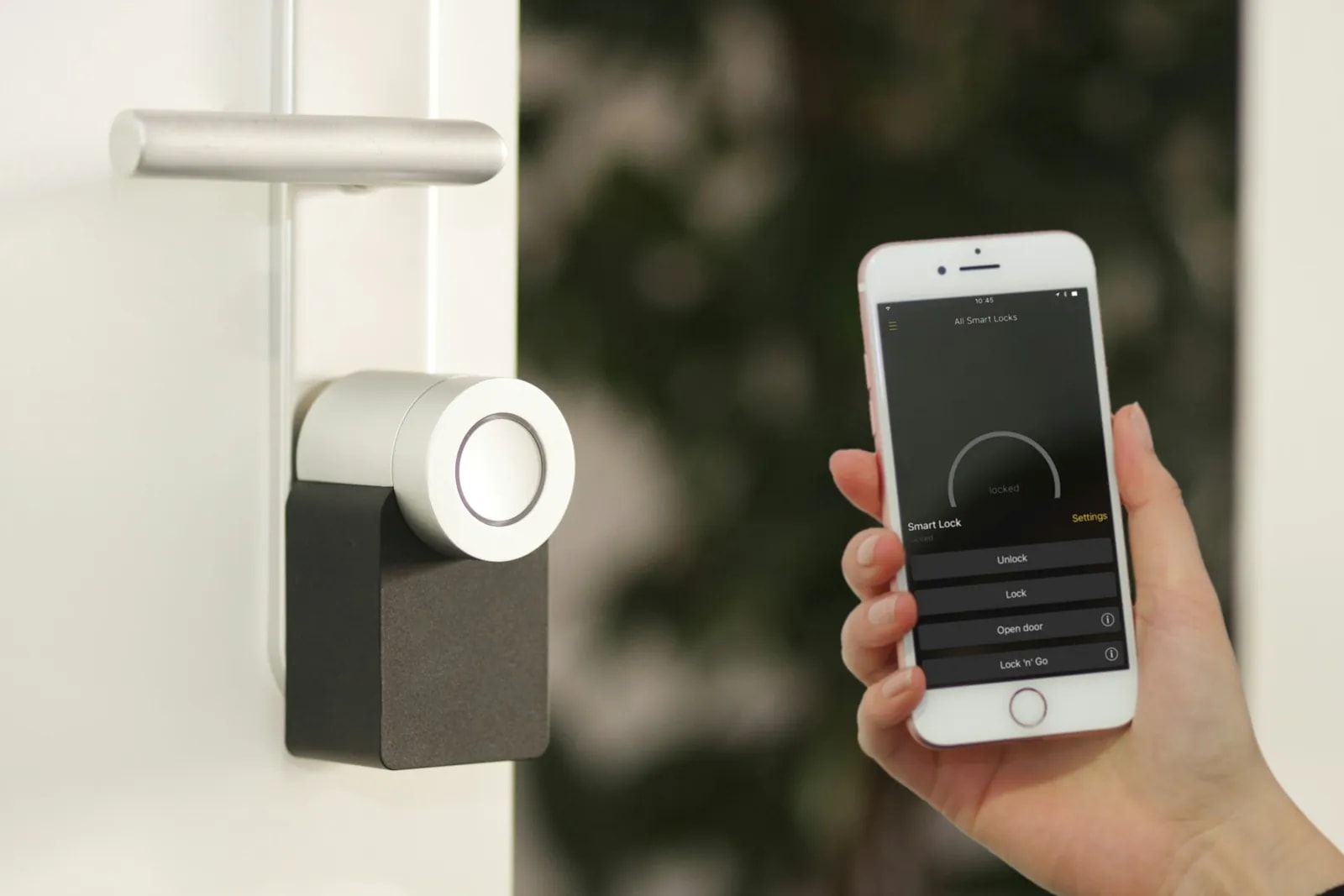
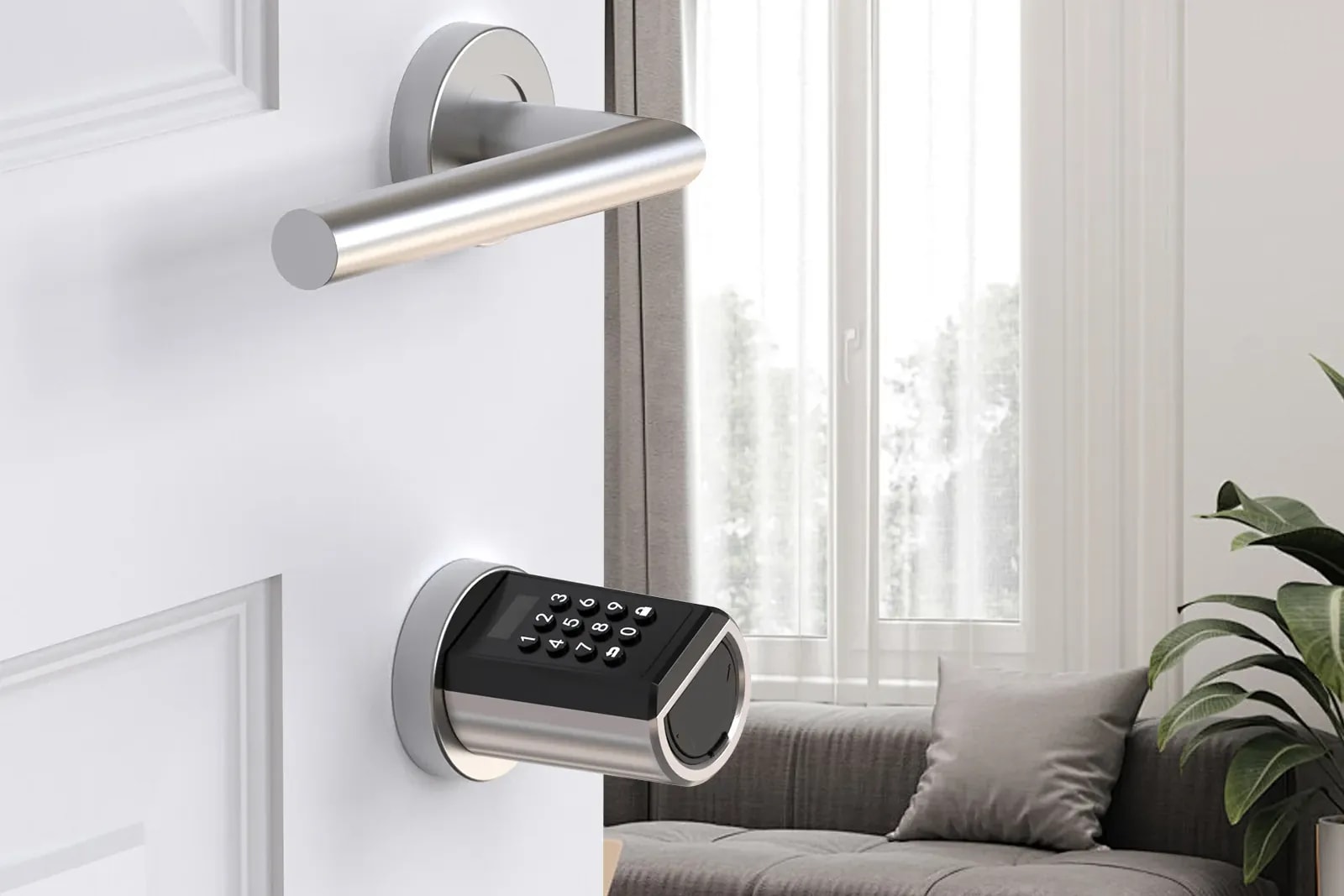
Yes. A Dubai holiday home licensed by DET needs a SIRA-approved smart lock connected to the Keyless system on its main door, and DET ticks this for all five classes[1]. SIRA's 2025 manual adds a SIRA-approved lock app and a SIRA-approved safe[2]. SIRA's 2023 requirements name the KEYLESS smart solution[3].
SIRA is the Security Industry Regulatory Agency. DET is the Department of Economy and Tourism, which licenses holiday homes. Three texts carry the rule:
- SIRA's Preventive Systems Manual, issued under Administrative Resolution No. 13 of 2025 on 14 April 2025, Chapter Twenty-Three: Security Requirements for Vacation Homes[2].
- SIRA's Security Conditions and Requirements of the Hotels and Similar Facilities, version 4.1, released 27 February 2023[3].
- DET's Leasing Out Holiday Homes User Guide, version 1.1, in a January 2026 file[1].
The table puts the three texts side by side, in their own words.
| Item | SIRA manual 2025 | SIRA v4.1 (2023) | DET guide V1.1 |
|---|---|---|---|
| Lock | "Installation of SIRA-approved secure locks." | "Installing smart locks device approved by SIRA" | Row 1.18: "SIRA-approved smart lock connected to the Keyless system on the main door (point of ingress/egress) of the unit" |
| App or platform | "Use the SIRA approved smart lock App" | "Using “KEYLESS” smart solution approved from SIRA" | Section 3.1: "SIRA-approved smart locks that are connected to the Keyless system" |
| Safe | "Installation of a safe approved by SIRA", fitted so it is "difficult to remove" | No safe row | Row 3.8: "Safe box inside the wardrobe or in a hidden place, per studio and main bedroom" |
| Cameras | No camera row | No camera row for vacation homes | Row 7.5: "CCTV for all main entrances" |
| Which units | Homes "rented on a daily, weekly, or monthly basis" | "Vacation homes", listed among hotels and similar facilities | All five classes: farms, deluxe and standard villas, deluxe and standard apartments |
The texts agree on the lock and the app, and differ on the safe and cameras. None publishes a list of approved models or sets a fine for the lock. We found no published deadline either. The lock rows appear in SIRA's requirements of February 2023, SIRA's manual of April 2025 (the latest version we found) and DET's guide dated January 2026.
Pro tip: when a seller or building manager says "keyless.ae is the law", ask which text they mean. The official wording is "the Keyless system" in DET's guide and "KEYLESS" smart solution in SIRA's 2023 requirements. Quoting the exact row, such as DET's 1.18, ends most arguments.
Who sets the holiday-home lock rule, SIRA or DET?
Two Dubai bodies set the rule, and DET checks it. SIRA writes the security specification, and Law No. 12 of 2016 lets SIRA license security devices[4]. DET licenses holiday homes under Decree No. 41 of 2013, and DET staff inspect them[5].
The 2018 bylaw, Resolution No. 1 of 2018, lists "hotels and similar entities" as a Vital Sector that must meet the manual (Article 24)[6]. SIRA's 2023 document lists "Vacation homes" as one of those hotels and similar facilities[3]. The 2025 resolution then applies the manual to every establishment in that bylaw[2].
DET was formerly DTCM, a name many websites still use. Its guide says permit holders "must abide by and adhere to the guide"[1]. Our complete smart home guide for Dubai shows which authority covers which device.
What is Dubai's Keyless system, and who runs it?
Keyless is a smart lock platform: an app and online system that lets owners issue digital keys and see entry and exit history[7]. DET's guide and SIRA's 2023 requirements both name it. A private company runs it: the platform's terms name Al Muhark Security Services LLC, which describes Keyless as an online marketplace for electronic locks and device licences[8].
Gulf News reported the launch of the Keyless Security Project with SIRA and DET in May 2023, with Assa Abloy, ISEO and Dormakaba among the lock makers taking part[7]. Gulf Today said Al Muhark launched it "in association with" SIRA and DET, and that any maker meeting the project's quality criteria may join[9]. ISEO's own release says SIRA "developed" Keyless[10]. SIRA's website also has a page for Keyless that links to keyless.ae[11].
Neither DET's guide nor SIRA's 2023 requirements says whether any other app is accepted, so check with DET before you buy a lock that does not connect to Keyless.
Keyless lists a free basic plan for up to three locks, each with up to three users and 150 history events. The premium plan is a yearly subscription with 10 active users and 3,000 history events per lock, priced when you sign up[12]. Keyless says there is no refund policy[12] and all sales of licences and hardware are final[8].
Common mistake: believing that Keyless is a government app, or that physical keys are now banned. No official text we read names keyless.ae, a 2025 start date or a key ban. DET's guide still tells the licensee to "hand over the keys to the Unit"[1]. The real rule is narrower: an approved smart lock on the main door, connected to the Keyless system.
What does SIRA-approved mean, and how do you check a lock model?
SIRA-approved means SIRA has certified that exact lock model, not the brand or the shop. SIRA's certification service checks devices against its own specifications, one device at a time. The maker or a SIRA-licensed company applies, and approval can take from one working day to eight months[13].
Two kinds of SIRA approval get mixed up. A product is certified. A company is licensed: Law No. 12 of 2016 says nobody may sell or install security systems in Dubai without a SIRA licence[4].
The device types named on SIRA's certification page include cameras, recorders, padlocks and alarm panels, but not smart locks[13]. SIRA publishes a Certified Devices and Equipment list on its website, but we could not confirm from the public page whether it covers smart locks[14]. So ask the seller for SIRA's approval document for the exact model, or ask SIRA. The Keyless hardware page lists locks that work with the platform, including ISEO, Tedee, LinkO, Messerschmitt and Rayonics models[15]. It is the platform's list, not SIRA's register. Keyless sells only ISEO and Rayonics locks through its portal and tells buyers of the other brands to contact the maker[15].
Before you pay, ask the seller for these answers in writing:
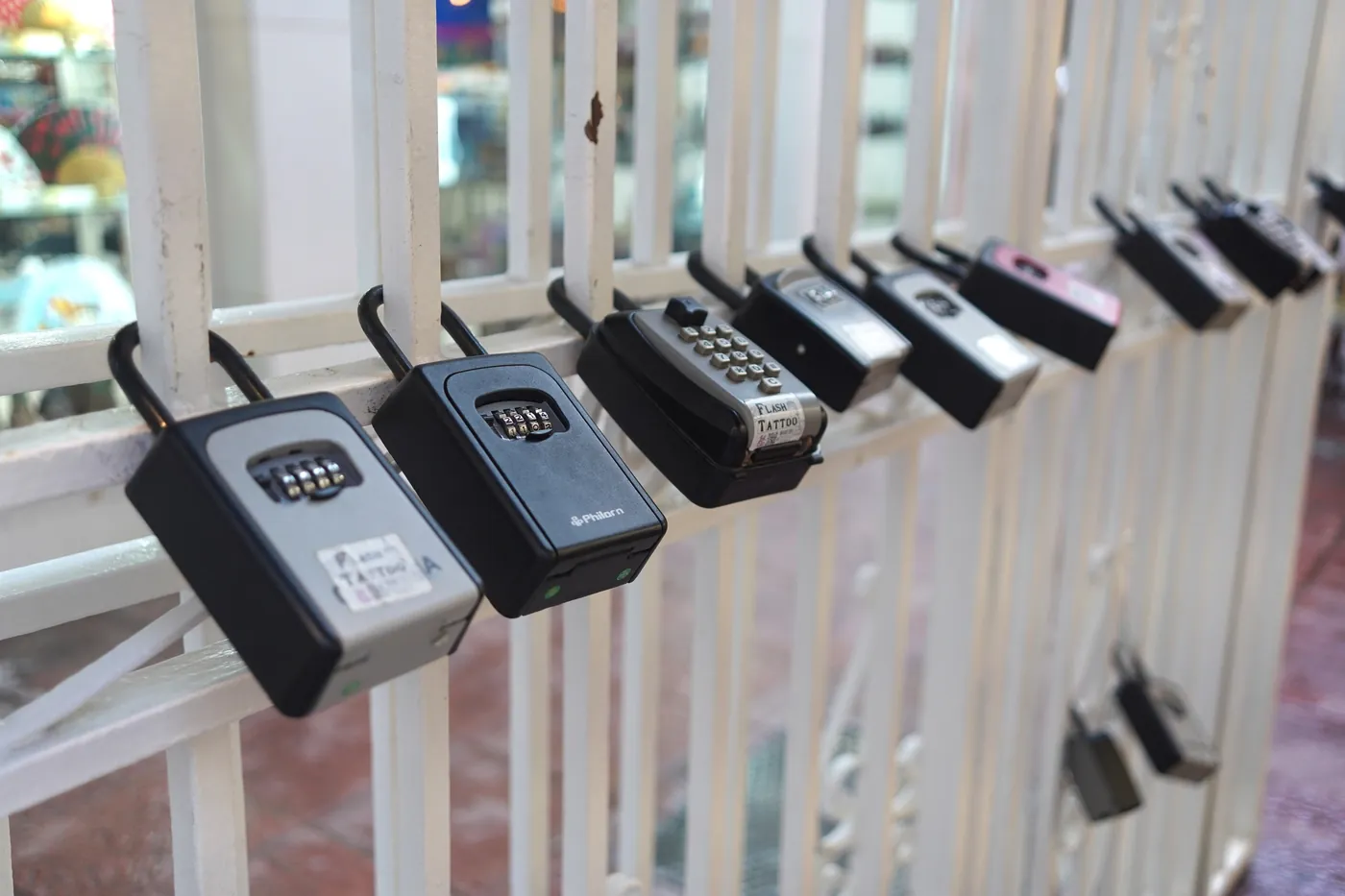
- The exact model number, with SIRA's approval document for it.
- Whether it is on the Keyless hardware page and pairs with the Keyless app.
- Which doors and thicknesses it fits.
- Whether guest codes work offline, and whether it sends battery alerts.
- How to power it in an emergency, and who honours the warranty in the UAE.
To compare door fit, hubs and UAE prices before you check a model against Keyless, our smart locks and access range lists each lock we cover. Lock apps can be attacked like any account, so read our advice on protecting a smart home from hackers before you share admin access.
Pro tip: some sellers put "SIRA-approved" in the product title. Treat that as a claim until you see SIRA's document for the exact model and find the same model on the Keyless hardware list. If a seller cannot show you both, keep looking.
What do the lock, safe, CCTV and check-in rules mean in practice?
Each of DET's holiday home permit requirements turns into one job, and DET checks all of them. The lock and the Keyless app go on the main door. A SIRA-approved safe, fixed in place, goes in each studio and main bedroom. Entrance CCTV is mostly a building question. Guest check-in happens in DET's system within three hours of arrival[1].
The table turns each row into what to do and who checks it.
| Requirement | What the text asks | What to do | Who checks |
|---|---|---|---|
| Lock on the main door | DET row 1.18: SIRA-approved smart lock connected to Keyless | Fit an approved, Keyless-listed model; test it at handover | DET inspector |
| Keyless or the approved app | SIRA: "the SIRA approved smart lock App"; DET: "the Keyless system" | Register the lock on Keyless; pick a plan | DET inspector |
| Safe | SIRA: approved, "difficult to remove"; DET row 3.8: hidden safe box per studio and main bedroom | Fix one safe that meets both wordings | DET inspector |
| CCTV | DET row 7.5: "CCTV for all main entrances" | Ask the building what covers its main entrances | DET inspector |
| Guest check-in and records | Check in each guest within 3 hours; keep guest records for 3 years | Record every arrival; store records safely | DET's system |
| Peep-hole or intercom | DET row 1.12, a secondary item | One on each unit door | DET inspector |
SIRA's manual asks for a safe approved by SIRA, installed so it is difficult to remove[2]. DET's table asks for a safe box inside the wardrobe or a hidden place in each studio and main bedroom[1]. Fit one safe that meets both.
Which door needs the lock, and does the rule cover apartments and villas alike?
The main door needs it, in every class of holiday home. DET's row 1.18 asks for the lock "on the main door (point of ingress/egress) of the unit". The row is ticked for farms, deluxe villas, standard villas, deluxe apartments and standard apartments alike[1]. Choosing the standard class instead of deluxe does not remove the lock.
The row says nothing about side, garden or garage doors. If guests use another door to come and go, ask DET whether that door needs the same lock.
Row 1.12 lists a peep-hole or intercom system on each unit, villa or farm door as a secondary item[1]. Section 3.2 asks for the permit's QR code as a 5 cm by 5 cm laminated sticker. It goes beneath the Dubai Electricity and Water Authority (DEWA) plaque, outside the unit door[1]. If the door hardware changes, put the sticker back. For the intercom option, our video doorbells and intercoms range covers apartment and villa models.
Are cameras required, or allowed, inside a Dubai holiday home?
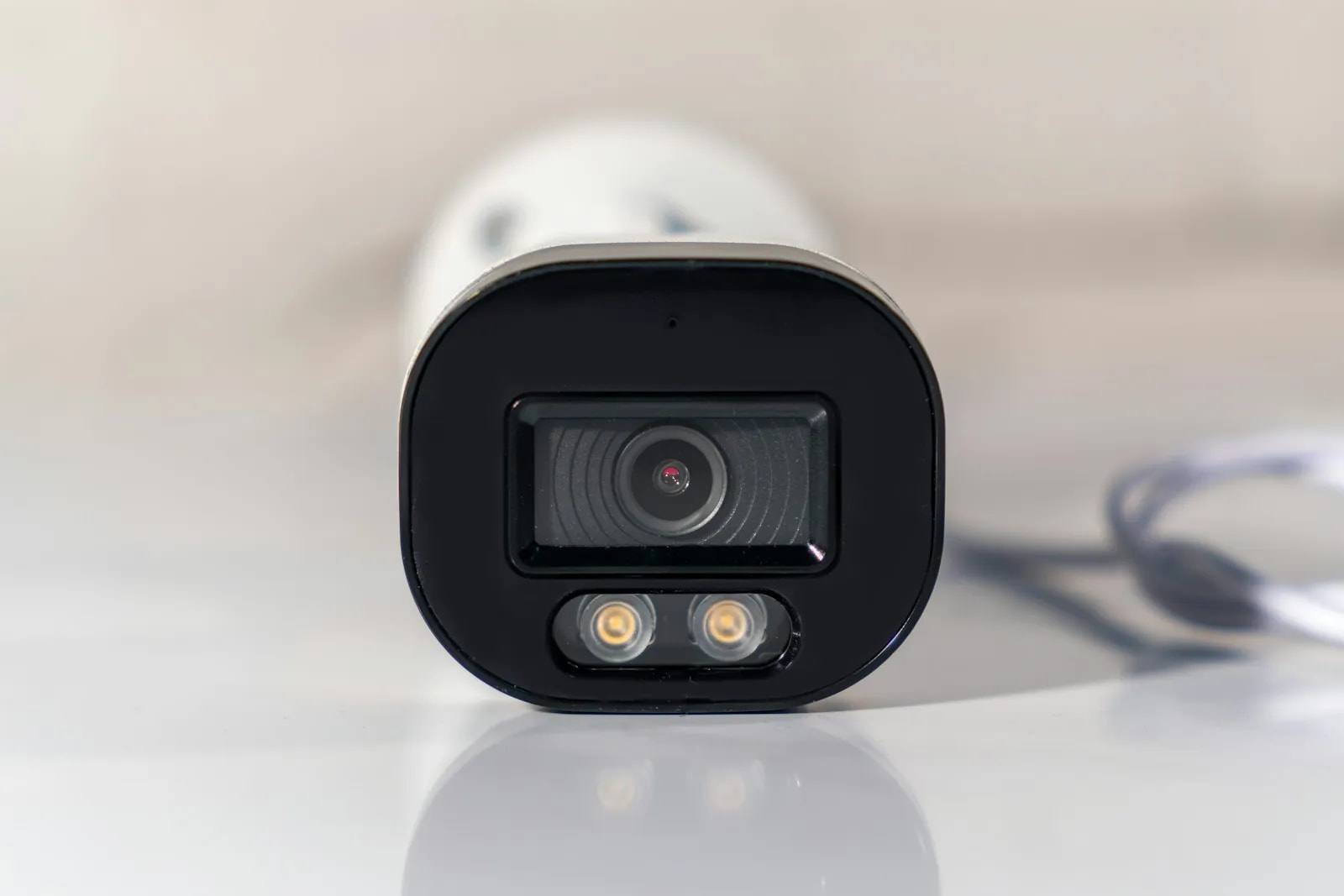
No official text requires a camera inside a holiday home. SIRA's vacation homes chapter has no camera row[2]. DET's row 7.5 asks for "CCTV for all main entrances", listed next to building lighting, a security guard and lifts[1]. Inside the unit, the legal risk runs the other way: recording guests without consent.
DET's placement of row 7.5 reads as the building's entrances, but the guide does not define the term. Ask DET if your unit has its own street entrance. Where units in a complex are used as holiday homes, SIRA's manual asks the complex to fit approved number-plate recognition (ANPR) cameras at vehicle entrances and exits[2]. That is the complex's duty, not yours.
Federal Decree-Law No. 34 of 2021, Article 44, punishes photographing or recording people in a private place without consent. The penalty is at least six months in prison and/or a fine of AED 150,000 to AED 500,000[16]. We found no DET rule on cameras inside a holiday home. Keep cameras to entrances and shared outdoor areas, and tell guests where they are.
Our SIRA CCTV requirements guide explains where SIRA's camera specification applies, and our smart home privacy guide covers consent. If entrance cameras are left to you, our security and CCTV design service plans them.
What are the fines, and are the AED 20,000 and AED 50,000 figures real?
We found no published fine specific to the lock. DET can warn, fine, suspend or cancel a permit. Its published fine for failing a primary classification criterion is AED 500, and repeat fines are capped at AED 100,000[1][17]. Ask DET which applies to your case.
The table checks the fine figures that circulate online against the official texts.
| Claim | Who says it | What the official text says |
|---|---|---|
| "Up to AED 20,000 for a non-certified lock" | A lock seller, repeated by Google's AI Overview (October 2026) | AED 20,000 is DET's fine for operating a unit DET has suspended. No DET fine row names a lock |
| "Up to AED 50,000 for no Keyless link" | One lock seller | No such figure in DET's guide, SIRA's texts or Law No. 12 of 2016 |
| "A missing lock costs AED 500" | An easy reading of DET's table | AED 500 is the fine for failing a primary classification criterion. The guide does not say the lock is one |
| "Fines can reach AED 100,000" | Several holiday-home guides | The cap on doubled repeat fines (Resolution No. 49 of 2014; Decree No. 41 of 2013) |
| "SIRA can fine up to AED 500,000" | A reading of Dubai's security law | The ceiling for security-industry breaches in general, capped at AED 1,000,000 on repeat. Not a lock fine |
Law No. 3 of 2018 rewrote the security law's fine article: no more than AED 500,000, with no minimum[18]. The Dubai Legislation Portal's copy of Law No. 12 of 2016 still shows the older AED 10,000 minimum[19]. SIRA's published violations table has no row for holiday homes or locks[20]. Running a holiday home with no licence at all is AED 5,000 in DET's table[1].
Common mistake: reading DET's AED 20,000 row as a lock fine. That row is for operating a unit after DET has suspended it, and no row in DET's fine table names a lock[1]. Treat any page that prints a lock fine without naming the row as a sales pitch.
Who inspects the lock, and what happens if it fails?
A DET inspector checks the lock, not SIRA. DET's guide says everything must be in place before you apply, and the unit must be empty of guests at the inspection. An unmet condition brings a warning or a penalty, then two weeks from the warning to fix it and a second visit[1].
Decree No. 41 of 2013 lets DET staff inspect holiday homes and review records[5], and the guide adds unannounced visits[1]. SIRA staff can record security-law breaches in general[4], but we found no text describing SIRA inspections of holiday homes.
DET's permit page asks for a title deed or ID, a trade licence, a management letter and a DEWA bill, with no lock document[21]. DET's system guide asks the owner to pledge that unmet criteria will be completed before guests arrive[22]. Unsure about your door before the visit? Ask for a site survey.
Which smart locks do Dubai holiday homes use, and what do they cost?
Locks on the Keyless hardware page or sold as SIRA-approved were advertised at about AED 600 before VAT to AED 2,100 including VAT on 27 October 2026[15]. That range covers 22 listings on five UAE sites, with most between about AED 900 and AED 1,450. Prices exclude fitting, and sellers' approval labels are their own claims.
Four price layers are easy to mix up: what sellers advertise for Keyless-listed locks (above), our own published price, retail prices for mainstream locks, and software fees. Our smart gate and access control page lists "One door: From AED 1,200" for "a single smart lock, supplied and fitted". Whether a model is on the Keyless list is confirmed at the survey.
The table shows mainstream locks as listed on Sharaf DG and amazon.ae on 27 October 2026, hardware only[23]. "Not seen" means the brand did not appear on the Keyless hardware page as we read it, so these locks are not confirmed on the Keyless list.
| Lock | Fits | Offline guest codes | Hub or bridge | Keyless list | UAE price |
|---|---|---|---|---|---|
| Tedee GO | Interior retrofit; needs a compatible cylinder | Keyless: no internet needed to unlock after setup | Not checked | Listed | Inside the seller range above |
| igloohome Smart Mortise 2+ | Wooden doors, 40 to 70 mm | Yes (algoPIN) | Wi-Fi Bridge, extra | Not seen | AED 1,799, Sharaf DG |
| Nuki Smart Lock Pro 4th Gen with Keypad 2 | Inside of a euro cylinder | Stored keypad codes keep working | Built-in Wi-Fi | Not seen | AED 1,199, Sharaf DG, plus AED 649, amazon.ae |
| Philips EasyKey DDL615 | Lever mortise | Yes, offline PINs | None (Bluetooth) | Not seen | AED 750, Sharaf DG |
| Aqara A100 Zigbee | Handle mortise, 40 to 80 mm doors | Not stated by Aqara | Aqara Zigbee 3.0 hub | Not seen | AED 899.99, amazon.ae |
| SwitchBot Lock Ultra with Keypad Touch | Over an inside thumbturn | Temporary and one-time keypad codes | Hub for remote codes (not priced) | Not seen | AED 399.99 plus AED 231, amazon.ae |
Door fit and code details come from each maker's page[24][25][26][27]. Batteries are the running cost: igloohome and Aqara quote up to 18 months on eight AA cells, and Philips about 5 months in its own testing. Software comes on top, as each maker lists it on 27 October 2026:
- Keyless: basic plan free for up to three locks; premium is yearly, priced at sign-up[12].
- Nuki Smart Hosting: EUR 69 a year per lock, for booking-platform sync[28].
- igloohome: free app; integrations from USD 2 per active lock a month, so confirm in the app whether Airbnb sync is included[29].
- RemoteLock: USD 6 to 15 per door a month, a US product[30].
Fitting labour is the layer nobody publishes: no official or maker source we read gives a market rate, so we do not print one. To have your main door surveyed and a Keyless-listed model specified, book a free design consultation. You can also message a photo of the door edge and lock on WhatsApp.
What happens when the battery dies, the power cuts or the Wi-Fi drops?
A power cut does not stop a battery smart lock, and a Wi-Fi outage stops only remote changes on the locks we checked. Keyless says unlocking needs no internet once set up[12]. igloohome's algoPIN codes are offline PINs: the lock checks each code by itself, with its validity built in[31]. A flat battery is the real lockout risk.
Nuki's Keypad 2 stores codes on the device, so existing codes keep working while new ones need a connection or Bluetooth[25]. Remote help from abroad always needs a connection.
Heat matters on a sun-facing villa door. igloohome rates the Smart Mortise 2+ batteries for -10 to 50°C and advises use under shelter[24]. Nuki rates the Smart Lock Ultra for 10 to 40°C, in dry interior spaces only[32]. For a flat battery, the Smart Mortise 2+ takes a 9V battery from outside, and the Aqara A100 takes USB-C power and has a mechanical key[24][27].
Real talk: the low-battery alert is the feature that fails quietly. In the host forums and video comments we read, the repeated story is a lock that died without warning. The cleaner found it, not the app. Put battery swaps on the cleaning calendar, every few months for a 5-month lock, and keep the emergency power kit with whoever answers guest calls.
How should guest, cleaner and building access work for a Dubai Airbnb?
Give every stay its own code that ends at check-out, and give each cleaner a timed code. The lock does not do your DET duties. Record each guest's check-in on DET's Holiday Homes system within three hours of arrival and check their documents[1]. Keep guest records for at least three years[33].
The Keyless pages we read do not say whether guests can use a code instead of the app on a Keyless-connected lock, so ask the seller.
Our Dubai Airbnb hosts guide covers code routines and overstays, and our domestic staff access guide covers maids and drivers.
An audit log is the lock's record of who opened the door and when. Keyless keeps it with no expiry date, and a property manager cannot delete it[12]. That log is personal data. The UAE's personal data law, Federal Decree-Law No. 45 of 2021 (PDPL), expects personal data to be kept only as long as its purpose needs[34]. DET's own rule keeps guest records for at least three years[33]. Share logs and ID copies only with the authorities DET's rules allow.
Buildings must let licensed guests in: DET's guide says building management "must facilitate Guest entry"[1]. But the guide also says the licensee receives the guest and hands over the keys, and some communities add their own rules. Gulf News reported in February 2025 that Emaar Community Management asked operators to be at the concierge for check-ins[35]. Check your community's current rules before relying on self check-in, for example in Downtown Dubai.
Common mistake: buying a lock because a seller says holiday homes must keep a six-month log of 3,000 entries. SIRA's 2023 document has that wording only in an optional row for three- to five-star hotels and hotel apartments[3]. Choose the lock for its Keyless link, offline codes and battery alerts instead.
What should you do with an existing lock that is not approved?
The rule asks for an approved smart lock on the main door, not a particular lock body. Some interior retrofit locks, such as Tedee GO and PRO, appear on the Keyless list[15]. Whether yours is accepted depends on the exact model, so check it before you buy.
A mortise lock is a lock body set into a pocket cut in the door edge. A euro cylinder is the replaceable key barrel that passes through it. igloohome's Smart Mortise 2+ suits wooden doors only, 40 to 70 mm thick[24]. Aqara's A100 fits handle mortise doors of 40 to 80 mm[27]. Aqara's U100 replaces a US-style deadbolt, so measure before planning it for a euro cylinder or mortise door[36]. Door types are covered in our smart locks guide for Dubai.
Tower doors need extra care. SIRA's manual says security devices must not defeat fire-resistant doors[2]. Nuki's instructions for the Smart Lock Ultra say not to fit it on fire or escape doors[32], so check the sheet for your model. Confirm the door rules with the building manager or Dubai Civil Defence before changing the lock, whether the unit is in Dubai Marina, Business Bay or another tower district.
Holiday home or long-term rental: when does the lock rule not apply?
The lock rule follows the DET permit, not the building. If you let a unit by the night, week or month under a DET permit, it applies. A long-term rental registered on Ejari, Dubai's official tenancy registration, is outside all three texts. So is a home you live in yourself[2][1].
The table sets out who needs what.
| You are | Requirement | Authority | Applies to you if |
|---|---|---|---|
| Holiday-home permit holder (owner or operator) | Approved smart lock on Keyless, safe, guest check-in | DET and SIRA | You let the unit under a DET permit |
| Tenant running a holiday home | The same, plus written landlord consent | DET; your landlord | Your landlord agrees in writing |
| Landlord with an Ejari tenant | No lock rule in these texts | Tenancy law | Only if the unit moves to a holiday-home permit |
| Ejari tenant | No lock rule; landlord's permission for changes | Your landlord | You want to change the lock |
| Owner living in the home | No SIRA lock rule | None | Never, for your own home |
| Hotel apartment owner | No holiday-home permit is issued | Hotel rules instead | The unit is classed as a hotel apartment |
Dubai's main tenancy law (Law No. 26 of 2007) sets no rule on locks; your lease and your landlord's consent decide. It bars a tenant from making changes without the landlord's permission, or subletting without written consent[37]. DET asks for proof that you have the right to use the unit this way[33]. If you rent the unit, get your landlord's written agreement before you apply. See our smart home guide for Dubai landlords and our Dubai smart home laws guide for the wider permissions. Other emirates license holiday homes separately, so check locally.
How do you make a Dubai holiday home lock-compliant, step by step?
Work from the building inward and apply last. Check the unit can be permitted, survey the main door, pick an approved Keyless-listed model and order it early. Apply only when everything is fitted, because DET inspects after you apply[1].
- Check the unit can be permitted. DET issues no permits for hotel rooms, hotel apartments or units whose sale agreement bans holiday-home use[1].
- Ask the building about check-in rules and entrance CCTV.
- Measure the main door, and ask whether it is fire-rated.
- Pick an exact model, check it on the Keyless hardware page and get SIRA's approval document.
- Order the lock (see the tip below).
- Have it fitted and paired with Keyless, then test a guest code, the app, offline unlocking and the battery alert.
- Fix a safe that meets both SIRA's and DET's wording.
- Add the peep-hole or intercom, the QR sticker and the insurance policy DET asks for[1].
- Apply on DET's system, and fix anything flagged within two weeks of a warning.
- Check every guest in within three hours of arrival.
DET publishes its fees on its registration page; check the current amount there when you apply[38].
Pro tip: order the lock before you start the permit application, not after. Keyless lists 3 to 5 working days for stock locks and 10 to 16 weeks for pre-orders[15]. The inspection only comes after you apply, so a late order holds up the whole permit.
How Dubai Smart Home helps with holiday-home access
Three choices decide whether your main door passes: an approved model that connects to Keyless, a lock that fits your door, and a battery and code routine someone runs. Get those right and the fine tables will not matter to you.
SIRA approves lock models, Keyless runs the platform and DET inspects the unit. Dubai Smart Home does none of those three jobs. We survey the main door, specify a lock model that fits it and appears on the Keyless list, and prepare the paperwork the building asks for. The lock is fitted and paired as part of the works, with a 12-month workmanship warranty that can vary by product. We coordinate the work through to handover and configure the guest and cleaner codes.
Our smart lock and access control design covers the door, from AED 1,200 for one door, supplied and fitted[39]. DET lists smart lighting, AC and noise alerts only as optional items[1], and our home networking and Wi-Fi work keeps remote code changes reachable. Our design work is rated 4.9/5 by Dubai homeowners. To have your unit checked before the inspection, send us your floor plan, or share a photo of the main door on WhatsApp.