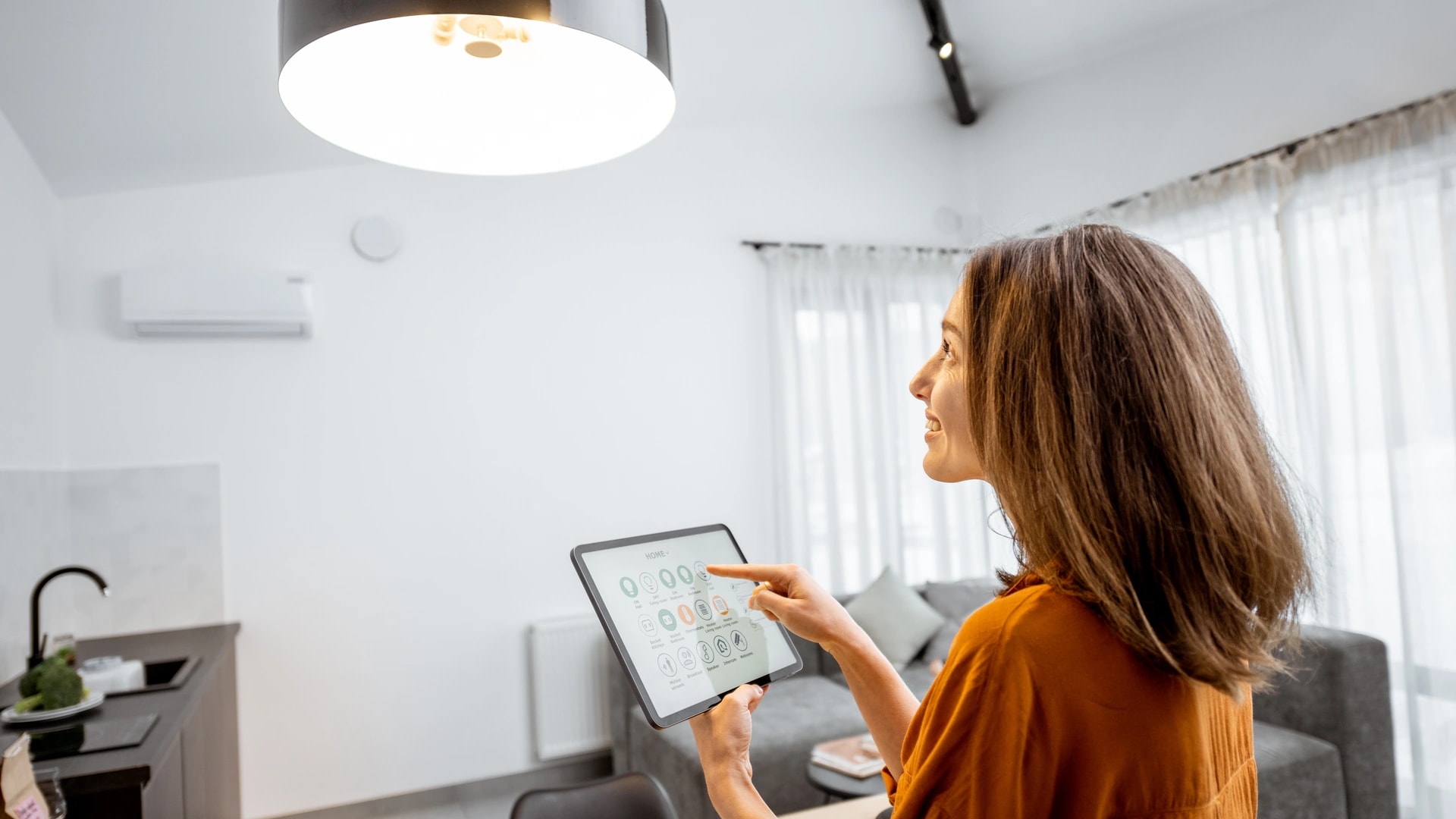
Most smart-home advice for pet owners opens with a camera. In Dubai it should open with a thermometer. A camera lets you look at a problem. A sensor tells you there is one.
We have installed climate control, cameras and access systems in Dubai homes since 2016, across 100+ projects. This guide puts the kit in the order that matters for a pet left alone. For the wider picture, start with our complete smart home guide for Dubai.
What does a pet owner in Dubai actually need?
You need three things, in this order. A temperature alert on your phone. A plan for who you call when it fires. A camera to check what is happening. The rest is convenience.
Start here: a Wi-Fi temperature sensor in the room your pet spends the day in. Basic Govee models start at roughly AED 140 on Amazon.ae and need no hub. That one device does more for a pet home alone than a AED 900 camera does.
Here is the full stack, ranked by how much it protects the animal.
- Temperature sensor with a push alert. Tells you the room is hot before anyone is home to notice.
- A smart AC controller. Lets you restart the unit or drop the setpoint from your phone.
- A camera with two-way audio. Lets you see the pet, talk to them, and confirm the alert is real.
- An automatic feeder and a water fountain. Keeps meals and water steady on long days.
- Time-boxed door access. Lets a sitter in for a set window, without a shared key.
A one-room setup with a sensor, a camera and an AC controller sits in the usual Dubai starter band: roughly AED 2,000 to 5,000 installed, often in a day.
The Dubai risk is heat, not burglars
The thing most likely to hurt a pet left home alone in Dubai is the air conditioning stopping, not someone breaking in. From May to September, outdoor highs sit in the mid-40s Celsius. A flat with the AC off does not stay comfortable.
The Dubai risk: your pet cannot open a window, switch on a fan, or call anyone. If the AC trips at 10am and you get home at 7pm, nine hours pass with nobody checking. That gap is the problem, and a sensor closes it.
This is not a scare story. It is a small, cheap gap that is easy to close. Three things switch the cooling off while you are out:
- A tripped breaker or a lapsed schedule. The most common cause, and the easiest to fix remotely.
- A fault in the AC unit. A failed compressor or a refrigerant leak needs a technician, not an app.
- A power cut. Rare in Dubai, but not impossible.
On that last one, the grid data is reassuring. DEWA reported an average of 0.82 minutes of outage per customer in 2025, about 49 seconds, described as the world's lowest published figure[3]. A breaker inside your own home has nothing to do with that statistic. Our guide on what keeps working in a power cut covers the rest of the house.
Set a high-temperature alert first
A temperature sensor with a phone alert is the most useful way to keep a pet cool in Dubai while you are out, and it costs less than a good dog bed. You set a threshold, and the app messages you when the room crosses it.
Set this alert: pick a threshold a few degrees above the setpoint you normally leave the AC at. It then fires early enough to act, without nagging you every afternoon. The right number is yours, not a figure from a blog.
All four devices below send a push alert on a threshold. The differences are mechanical and they matter.
| Device | What it does | Approx. AED | Notes |
|---|---|---|---|
| Govee Wi-Fi Thermometer Hygrometer | Connects straight to Wi-Fi, app alert on your set range | From about 140 | No hub needed. The simplest working alert you can buy. |
| Aqara Temperature and Humidity Sensor (or W100) | Zigbee sensor, app alert, can trigger an automation | Sensor 60 to 120, hub 150 to 300 | Needs an Aqara hub. The same hub runs Aqara cameras and locks. |
| SwitchBot Meter or Meter Pro | Sensor with a small screen, alerts set in the app | Meter 80 to 150, hub 150 to 220 | A Hub Mini or Hub 2 is required for a phone push. Without it the reading only turns red on the device itself. |
| Sensibo Sky or Air (AC controller with a built-in sensor) | Alerts you and can act: a rule can restart the AC or drop its setpoint | About 400 to 700 | No hub, but needs line of sight to the AC's infrared receiver. The only one here that responds. |
Zigbee is a low-power wireless standard that needs a small hub to reach the internet. Wi-Fi is what your phone uses, so a Wi-Fi sensor talks to the app alone.
Four setup details decide whether the alert reaches you:
- Place it where the pet lives. The living room, the kitchen, or whichever room the door is left open to.
- Keep it off the vent and out of the sun. A sensor under an AC vent reads the AC's output, not the room.
- Switch on notifications for that rule. A threshold set with app alerts muted is the mistake we see most.
- Test it once on purpose. An untested alert is not an alert.

What to do when you get a heat alert
Have the answer written down before the alert fires. The table below is our own practical checklist, built from Dubai installs. It is not an official protocol, and not veterinary guidance.
| Step | What to do | Why it matters |
|---|---|---|
| 1. Look | Open the camera and check the room and the pet | Confirms the alert is real, not a sensor in a sunbeam. |
| 2. Act remotely | If you have a smart AC controller, restart the AC or drop the setpoint | Fixes the most common cause: the unit was simply off. |
| 3. Call someone closer | A neighbour, building security, a maid, or a sitter with access | Someone 5 minutes away beats you 40 minutes away in traffic. |
| 4. Call maintenance | If the AC will not restart, call AC or building maintenance | A controller cannot repair a unit. Only a technician can. |
| 5. Decide about going home | If nobody can get in and the room is still warming, leave | No app fixes an empty plan. Going home is a valid step. |
Know the documented warning signs of heatstroke, so you know what you are looking at on the camera. Veterinary sources list heavy panting, drooling, lethargy or restlessness, bright red or blue-tinged gums, and stumbling[1][2]. A cat panting at all is not normal. Heatstroke is fast-moving, and both AAHA and the RSPCA describe it as life-threatening[1][2]. If you see those signs, contact a vet immediately. Treatment is out of any smart-home guide's lane.
Honest limit: we do not publish a safe room temperature for pets, because no government or veterinary body publishes one number. Keep the room at a temperature a person would find comfortable, and ask your vet what is right for your animal. Flat-faced breeds such as pugs, French bulldogs and Persian cats cool themselves less well through panting. Seniors, puppies and pets with heart or breathing conditions need more margin[1].
The honest limit of smart AC control
A smart AC controller can check the room, change the setpoint, and switch the unit back on. It cannot fix a broken compressor, reset a tripped breaker, or restore power in an outage. Say that out loud before you rely on one.
Most of these controllers are infrared devices. They sit in the room, see the AC unit, and send the same signals your remote sends. That is a control layer on top of the AC, not a repair for it. Our guide to automating air conditioning in Dubai covers the brands and the setpoint discipline.
Best value: pair a controller with a sensor rather than choosing. The sensor watches the room honestly. The controller gives you one remote move to try before you call people.
For a villa, wired zone control is a level up. KNX or Lutron gives per-room setpoints that do not depend on line of sight or a cloud service. KNX is a wired system that runs without the internet and lasts 30 years or more. Our smart lighting and climate control starts at AED 4,500.
For power cuts, a home battery set up at install to back the AC circuit is a real option, though not a default recommendation, given how low Dubai's outage numbers are[3]. A battery-powered smart lock never ran on mains power, so it keeps working through a cut and a sitter can still get in.
Pet cameras: what to look for
A pet camera is the second device you buy, not the first. Its job is to answer the question the alert raises: what does the room look like right now? Five features are worth paying for, and one is not.
- Two-way audio. You hear the room and talk to the pet. The feature owners use most.
- Night vision. Infrared, so you can see in a dark flat. Petcube's models see roughly 9 metres.
- Motion or pet detection. A notification with a clip beats a camera you must remember to open.
- Local storage. A microSD slot, as on the TP-Link Tapo C200, keeps recording when the internet drops.
- A wide or rotating view. Furbo's 360 model rotates and follows a moving dog.
- Treat toss. Fun, and useful for training a dog to settle. Not a safety feature. Do not pay for it first.
Petcube models run roughly AED 180 to 680. Furbo's 360 dog camera sits around AED 800 to 980. A pan-and-tilt camera like the Tapo C200 covers the basics under AED 150. All three are stocked in the UAE[4].
Common mistake: buying one cloud-only camera and calling it a plan. If your internet drops, a cloud camera stops notifying and stops streaming, even with power. A camera with local recording keeps the footage, but cannot show it to you until the connection is back.
Point it at the pet's own space, from a corner, high enough to see the room. Keep it off any area a domestic worker treats as private. Our guide to the best security cameras in Dubai goes deeper, and our security and surveillance page covers a whole-home install from AED 15,000.

Automatic feeders and water fountains
An automatic feeder solves the long-workday problem and the portion problem at once. It dispenses a set amount at set times, and the app logs each meal.
PetLibro and Aqara both make Wi-Fi and Zigbee feeders sold in the UAE. The useful models add a 1080p camera on the bowl, night vision, two-way audio, a recorded call to eat, and a sensor for low food or a blocked chute. Aqara's Pet Feeder C1 holds 4 litres and tracks grams eaten per day. We could not confirm current UAE pricing, so check it before you pick a model.
Honest limit: a feeder's battery backup keeps it feeding, not connected. On a power or Wi-Fi cut, most models keep dispensing on schedule, but switch the camera and remote controls off to save power. That is feeding continuity, not monitoring continuity. Aqara's C1 is one exception that stays connected on battery, so check model by model.
Water matters more than food over a hot day. A circulating fountain keeps water moving and filtered, and cats drink more from it. Basic motion-sensor fountains run roughly AED 40 to 200 on Amazon.ae. App models that track level and flow, such as PetLibro's 2.5 litre fountain, sit around AED 400.
Common mistake: relying on one water source. Leave an ordinary bowl out as well. A fountain is a pump, and a pump can stop. A bowl cannot.
Other pet kit worth the money
Past the core four, here is our honest read on each category.
Smart pet doors. A microchip door reads the ID chip your pet already has, or an RFID collar tag, and opens only for them. App models add remote locking and an activity log. They suit a ground-floor villa with a fenced garden, and a high-rise flat far less. Treat any exterior pet door as a security question too, and check your building policy first[4].
GPS trackers. A cellular tracker such as Tractive gives live location, escape alerts and geofencing, but needs mobile coverage and a subscription. We could not confirm UAE pricing, so check it directly. An AirTag in a collar holder, roughly AED 50 to 100 for the holder, is not a live GPS tracker. It reports where it last passed another Apple device, which works well in dense Dubai and poorly elsewhere.
Automatic litter boxes. The confirmed prices are the Litter-Robot 3 at roughly AED 2,980 to 3,000 on Amazon.ae, and the Petkit Purobot Ultra at AED 3,999 from the brand's UAE store. The Purobot adds a camera that recognises up to 15 cats and flags possible health issues from waste images. The Litter-Robot 4's UAE price was not confirmed, so check it rather than converting a US figure.
Air purifiers. Worth it in a closed, AC-cooled flat where windows rarely open. Look for an activated-carbon layer, the part that handles dander and odour. Xiaomi's pet model is sold in the UAE, at a price we could not confirm.
Smart scales. A connected pet scale tracks weight over time, catching gradual change. UAE pricing was not confirmed. Useful, not urgent.
What a pet setup costs in Dubai
A working pet-safety setup starts at roughly AED 200 for a sensor and a budget camera. A full installed climate system runs from AED 4,500. Every device figure below is approximate.
| Item | What it does | Approx. AED | Notes |
|---|---|---|---|
| Wi-Fi temperature sensor | High-temperature alert | From 140 | Govee, no hub. Start here. |
| Zigbee sensor plus hub | Alert plus automations | 210 to 420 | Aqara or SwitchBot. Worth it if the hub runs more. |
| Smart AC controller | Remote restart, setpoint change | 400 to 700 | Sensibo. Needs line of sight to the AC. |
| Budget pet camera | 1080p, two-way audio, local SD | Under 150 | Tapo C200 tier. Price not re-verified, so check. |
| Dedicated pet camera | Pet tracking, treat toss, alerts | 180 to 980 | Petcube at the lower end, Furbo 360 at the top. |
| Automatic feeder | Scheduled portions, some with camera | Check current pricing | PetLibro and Aqara sold in the UAE. No AED figure confirmed. |
| Water fountain | Filtered, circulating water | 40 to 400 | Basic motion models low, app-connected near 400. |
| Automatic litter box | Self-cleaning, health tracking | 2,980 to 3,999 | Litter-Robot 3 and Petkit Purobot Ultra, both UAE-confirmed. |
| Microchip pet door | Opens for your pet's chip only | Check current pricing | SureFlap and PetSafe sold in the UAE, price not confirmed. |
| Dubai Municipality pet registration | Required yearly for dogs and cats | About 10 | Municipal microchipping about 50. Clinics charge more. |
| Installed climate control | Zone AC control, schedules, one app | From 4,500 | Dubai Smart Home installed price. |
| Installed security and cameras | Full camera system, smart locks, alarms | From 15,000 | Dubai Smart Home installed price. |
Registration and microchipping fees come from Dubai Municipality's published pet rules[6]. Device prices are retail snapshots, not quotes. Want a real number for your own home? Book a free site visit and quote →
The automations worth setting
Six automations cover almost everything a pet owner needs, in the order we would set them up. Our guide to smart home scenes and automations explains the triggers.
- The high-temperature alert. Room crosses your threshold, your phone buzzes. Set it first, test it once, check the notification is not muted.
- Pet mode when you leave. The one people get wrong. A standard away or eco scene drops the AC hard, because it assumes nobody is home. Your home is not empty. A pet mode holds a comfortable setpoint, closer to what you run when you are there. It can still kill the lights and arm the camera.
- Camera motion alerts. A clip when the camera sees movement. Good for the daily check-in, and it catches the odd event: a knocked-over lamp, an open door.
- The feeder schedule. Set on the feeder itself. Confirm the portion and the times, then leave it alone.
- The balcony door sensor. One contact sensor flags a balcony or window left open while the AC runs. That single trigger covers two Dubai problems: wasted cooling and a pet getting out.
- Vacation mode. Armed by hand before a trip. The AC holds a pet-safe setpoint, lighting runs a varied pattern, and the camera and alert stay on throughout.
Best value: the pet mode setpoint costs nothing. It is one number in a scene you already have, and changing it removes the most likely way a smart home hurts an animal.
One honest note on savings. Smart AC and lighting control cut cooling costs 20 to 30 percent in Dubai homes, and a villa paying AED 4,000 a month to DEWA saves AED 800 to 1,200[10]. A pet mode gives up a slice of that on purpose. That is the right trade.
Cameras, staff and the law
You do not need a SIRA permit for a camera inside your own home. SIRA, Dubai's security regulator, covers commercial premises and shared building infrastructure, not a homeowner's indoor camera[9].
What does apply is the UAE Personal Data Protection Law, Federal Decree-Law 45 of 2021. It requires consent for capturing an identifiable person[8]. In a home with a maid, a nanny or a pet sitter, that means two rules:
- Tell them the camera is there. If your pet camera sees a space a staff member works in, they should know it exists and what it is for. Do it when they start.
- Never point one into a private space. A staff bedroom or a bathroom is off limits, for anyone, whatever the reason.
PDPL fines scale with severity and look high on paper. For one household, the realistic outcome of a badly placed camera is a dispute and a lost employee. Our guide to smart home privacy in Dubai covers consent and camera placement.
Pet sitters, travel and access
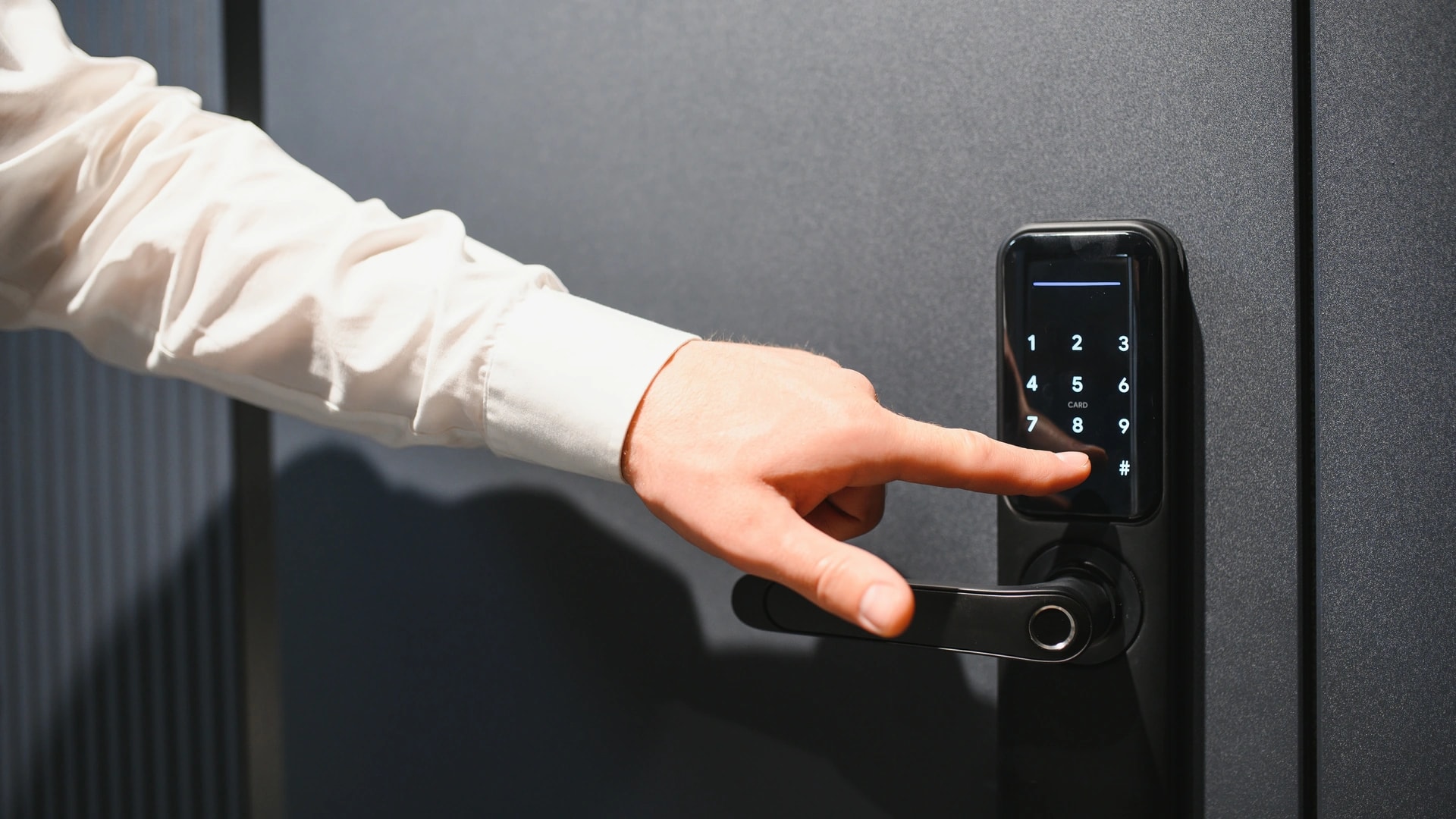
Give a sitter a time-boxed door code, not a key. A smart lock code that works only during the visit window, logs every entry, and gets deleted when the arrangement ends is cleaner than a key somebody could copy.
It is the same access problem as a part-time cleaner. Our guide to managing domestic staff access sets out the pattern, and our smart gate and access control work covers locks and video intercom from AED 4,500.
For a trip, set three things up before you fly:
- A person, not just a camera. Someone visiting on an agreed schedule. Remote monitoring catches a problem early. It does not open a door or fill a bowl.
- Access codes with an end date. One for the sitter's window, one spare for your backup.
- The alert on more than one phone. If you are on a flight, the sitter should get it too.
DEWA's free Away Mode is a useful extra layer. You opt in through the DEWA app before you travel, and it sends consumption reports that can flag an odd spike[7]. It reports. It does not act, and it will not restart your AC. Our guide to monitoring your home remotely covers what to check and how often.
A camera and an alert are a way to catch a problem early. They are not a substitute for a person who can open the door.
Apartment or villa: what changes
The heat risk is identical in both. What changes is the balcony, the escape routes and the rules.
In an apartment, the balcony is the main thing to think about. A closed, sun-facing balcony gets very hot, so it is not a safe place to leave a pet in summer. An open balcony door wastes cooling and gives a cat a way out, so railing gaps are worth a look. One contact sensor handles both. Renters can run this setup with no drilling, which our guide to a smart home in a Dubai rental apartment covers.
In a villa, you have more rooms than you can sensibly sensor. Put one sensor where the pet spends the day. Zone AC control matters more here, because a villa can cool most rooms well and still leave one warm.
Two sets of rules apply, and they are separate. Dubai Municipality requires dogs and cats to be registered with an ISO-compliant microchip, at roughly AED 10 for registration and about AED 50 for municipal microchipping, renewed each year[6]. Your building then sets its own pet policy on top, and weight or breed limits are common in towers[5]. Check that with management directly, because it varies.
Common mistakes pet owners make
These are the six we see most, and every one is cheap to fix.
- No temperature alert at all. A camera waits for you to check. A sensor tells you. If you buy one device this year, buy the sensor.
- One cloud camera and no backup plan. When the internet drops, a cloud camera goes quiet. Add local SD recording, and a number for someone nearby.
- A feeder with no battery backup. Or assuming the backup covers the camera. It usually does not. Check your model's spec.
- No plan for a power cut. Dubai's grid is excellent[3], and excellent is not guaranteed. A neighbour's number counts as a plan.
- A camera on a staff area with no disclosure. The most avoidable mistake here, and a PDPL issue rather than a courtesy lapse[8].
- Running the empty-house eco setpoint with a pet at home. Your away scene was written for an empty flat. Give it a pet mode setpoint.
Common mistake: setting all of this up and never testing it. Trigger the alert on purpose. Ask the sitter to use their code while you watch the log. Ten minutes of testing turns a pile of devices into a system you trust.
How Dubai Smart Home helps
We build the climate control and the cameras as one system, so the alert, the AC and the camera live in one app instead of four. Reliable cooling is the core of our lighting and climate work, and monitoring sits in security and surveillance.
Our engineers are in-house and based in Dubai, and we do not subcontract. Systems run in English and Arabic. Support is 24/7, enquiries are answered within 2 hours, and we are rated 4.9/5 by Dubai homeowners. Dubai Smart Home has run 100+ projects since 2016, across Palm Jumeirah villas and Marina apartments.
For a pet owner, what we recommend is small: a sensor in the right room, an AC controller or zone control, one camera, and the alert on two phones. It closes the gap that matters most.
Want the alert and climate control set up properly? Book a free site visit and quote → or message our team on WhatsApp →. Tell us which room your pet uses, and we will say what is worth adding.