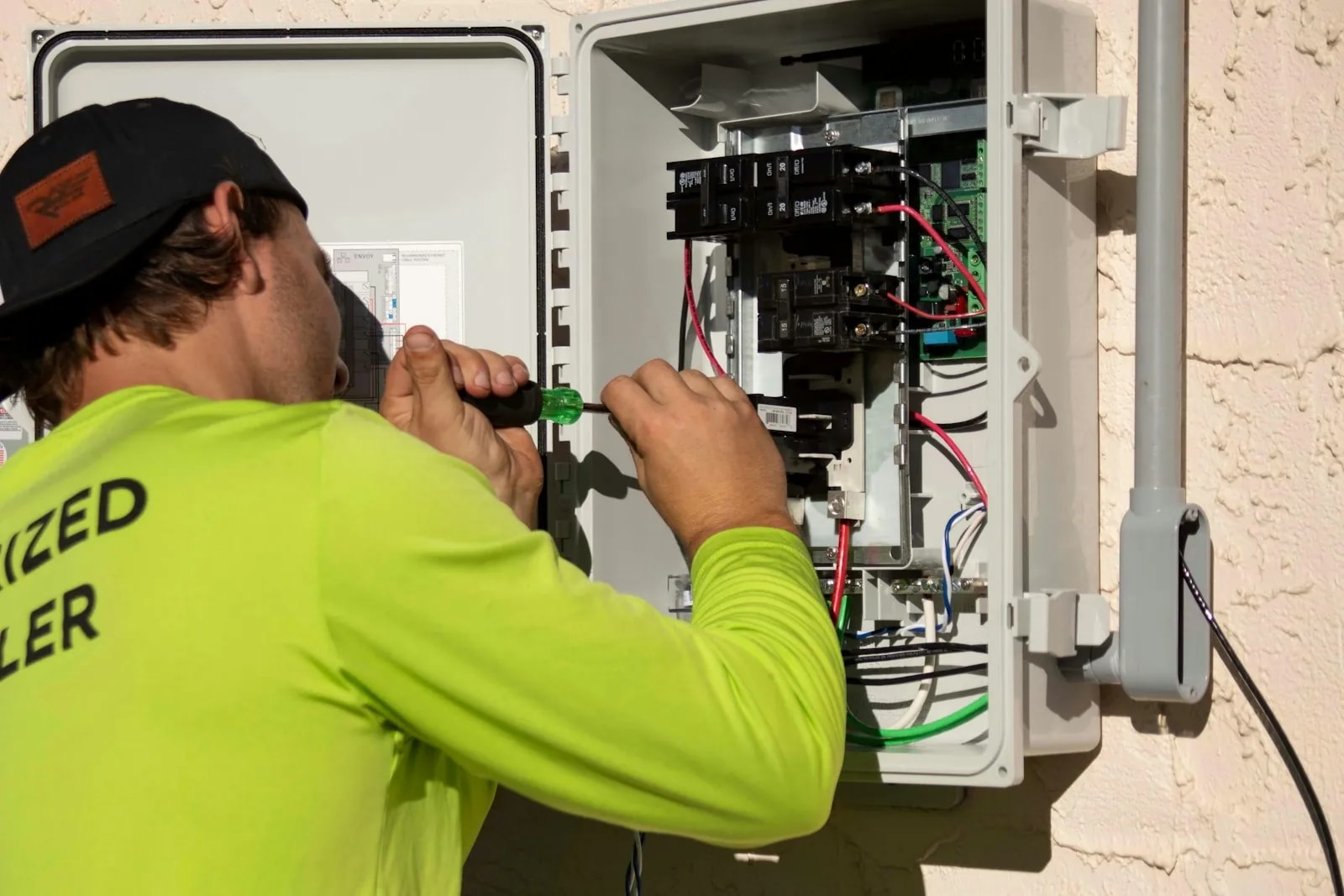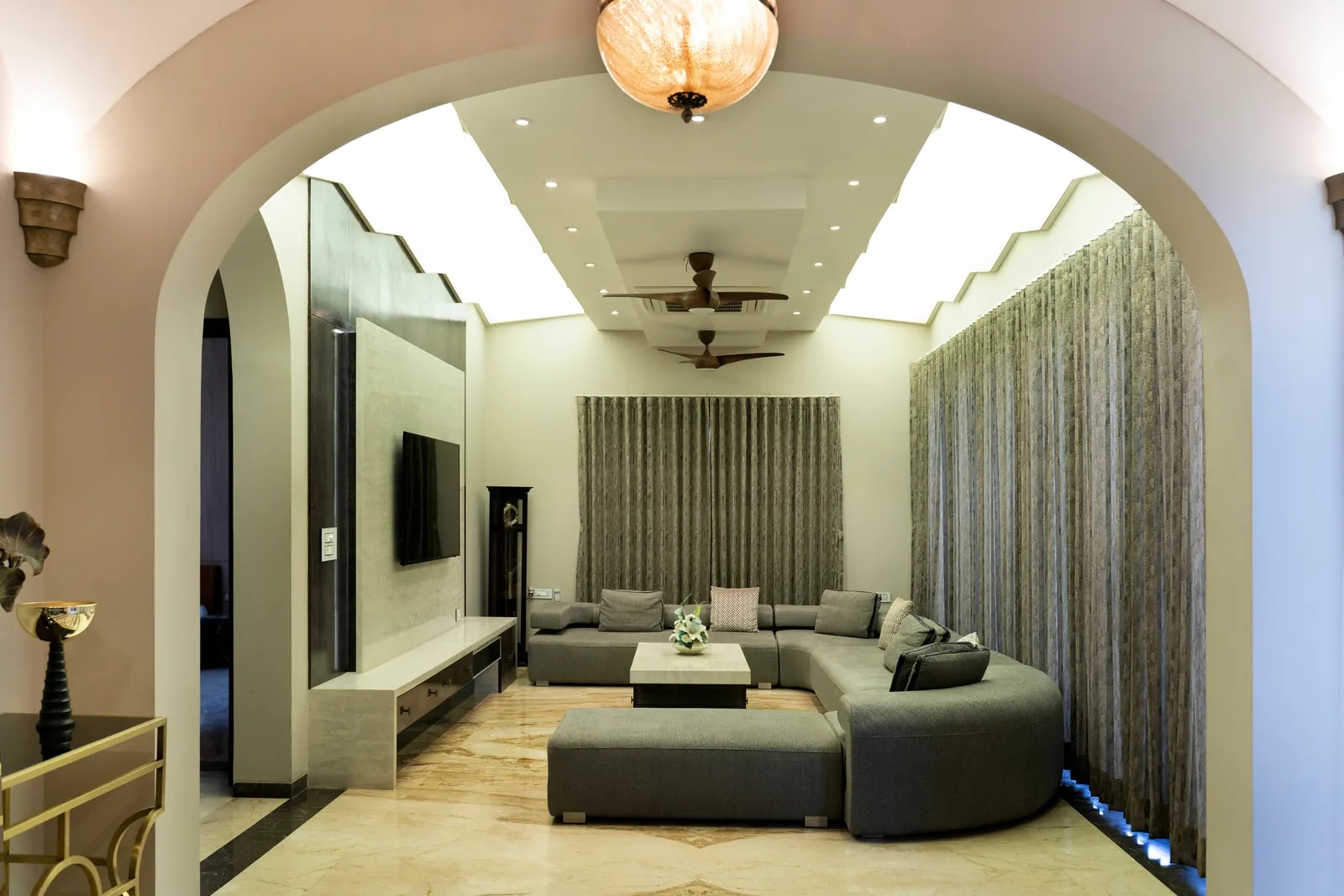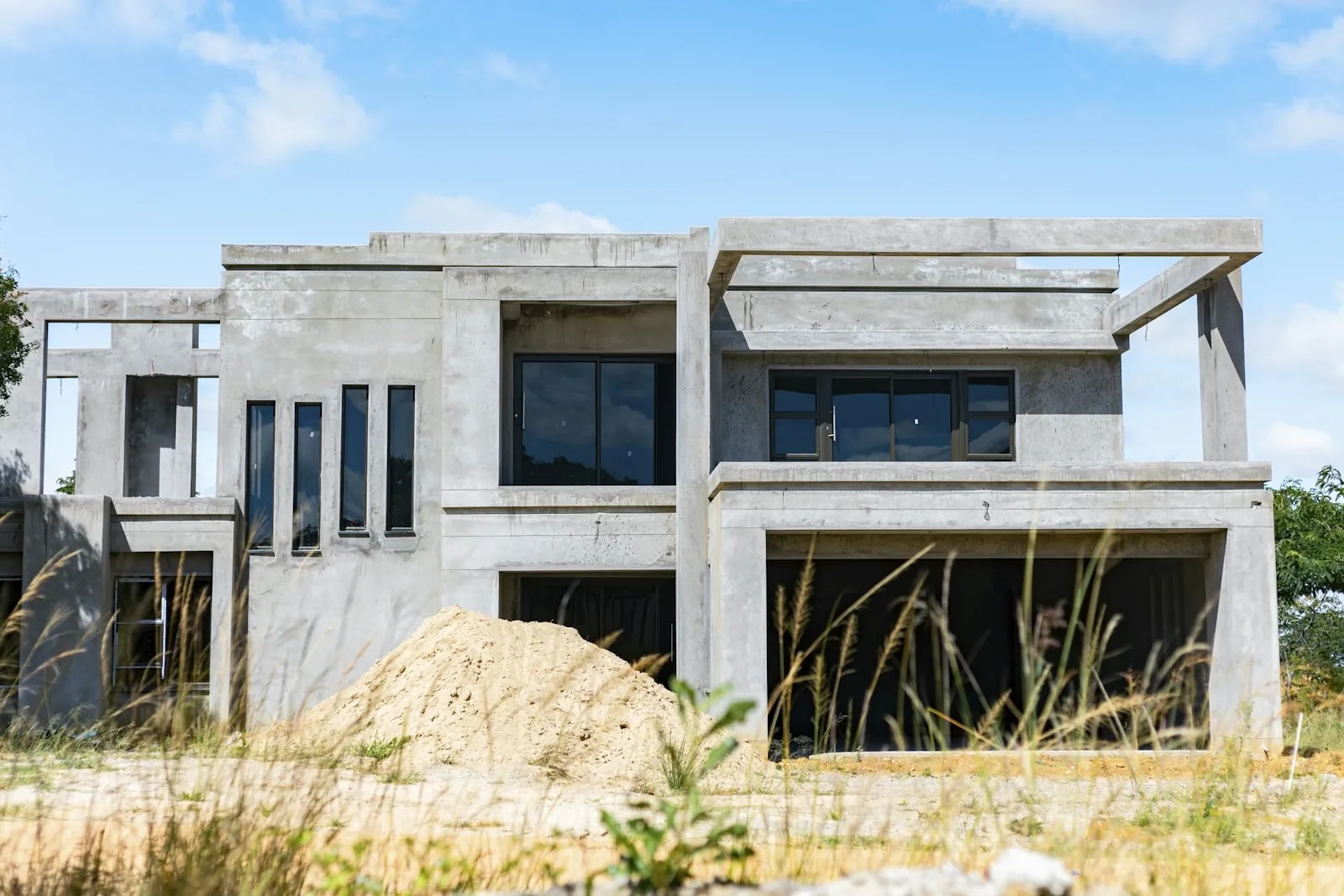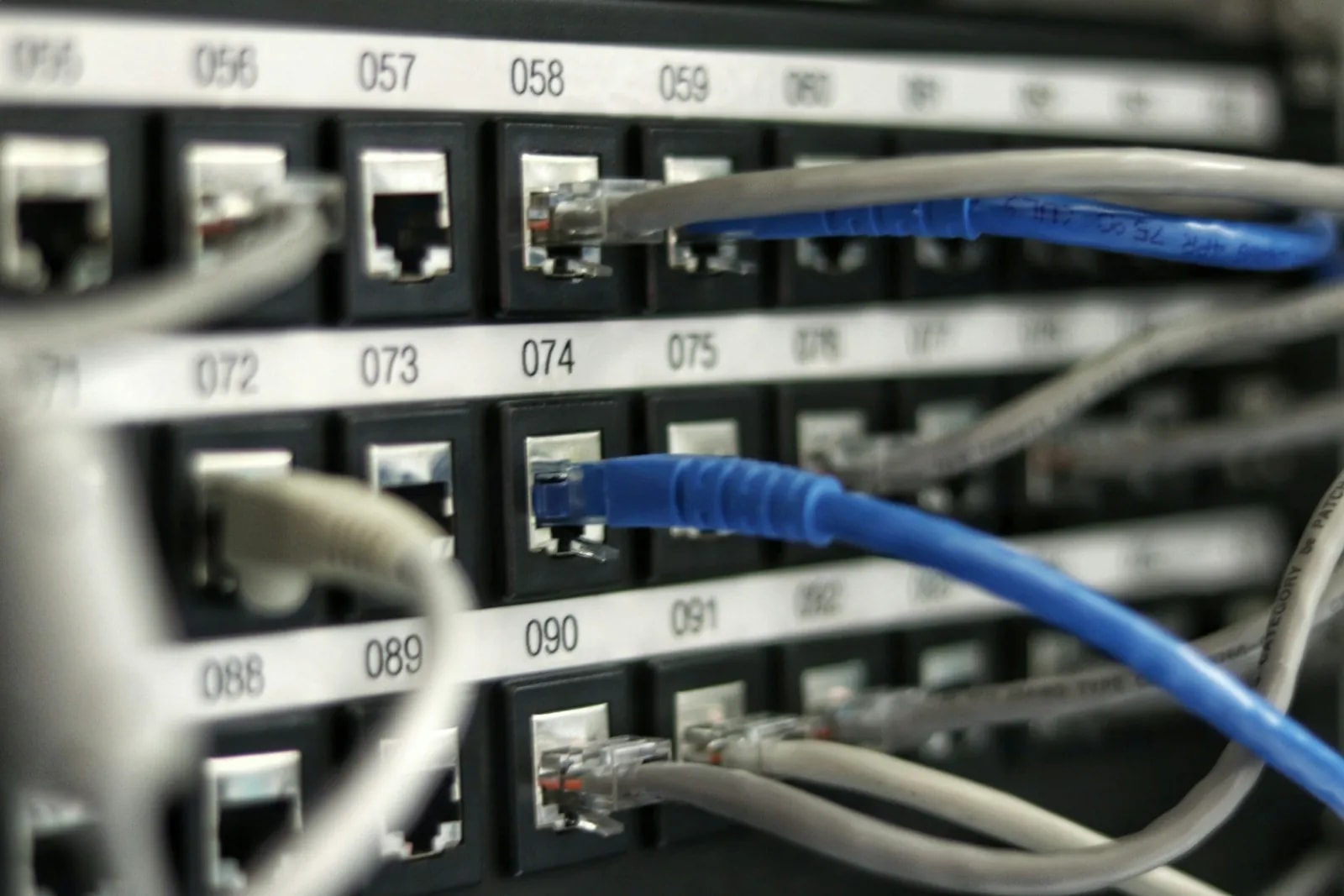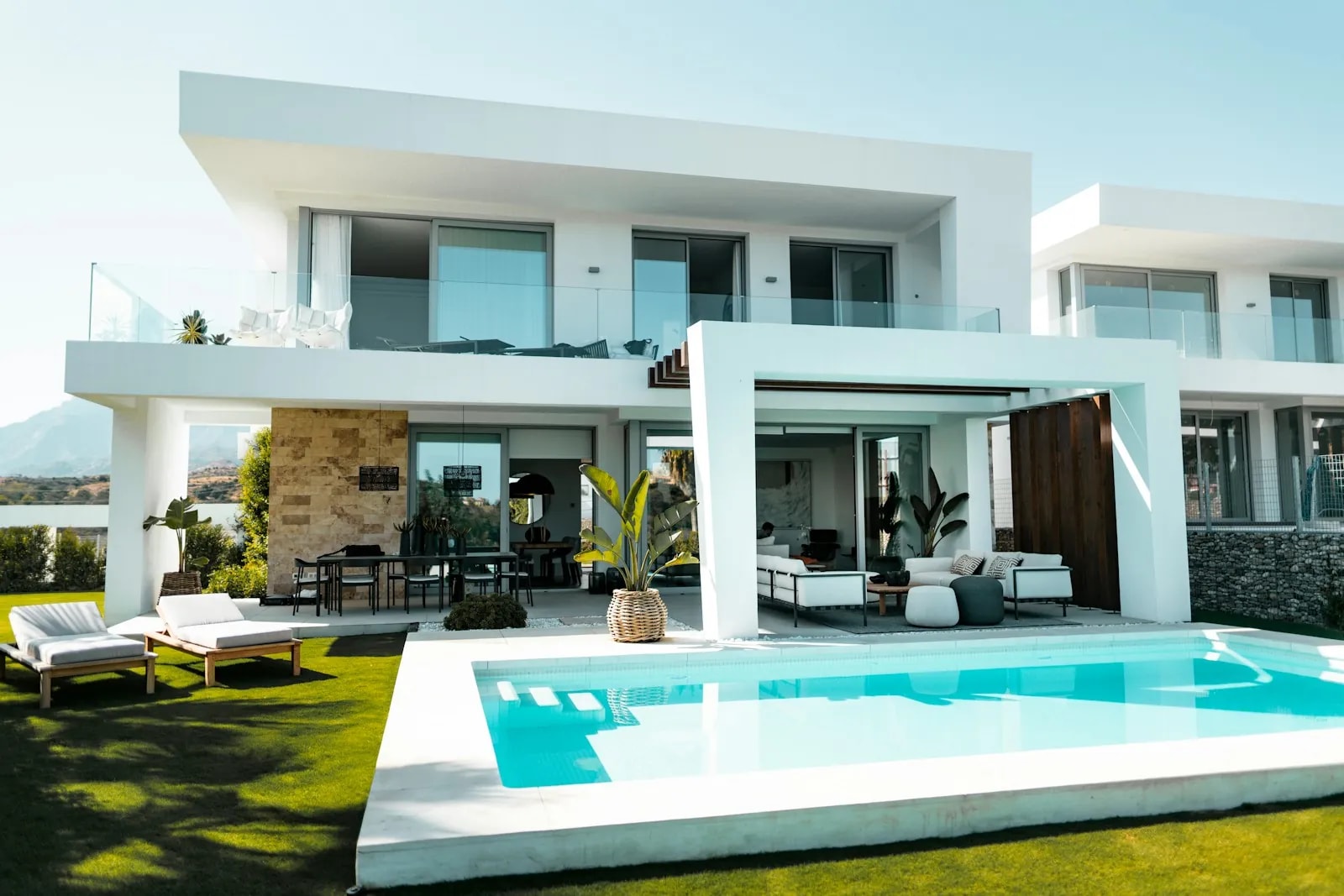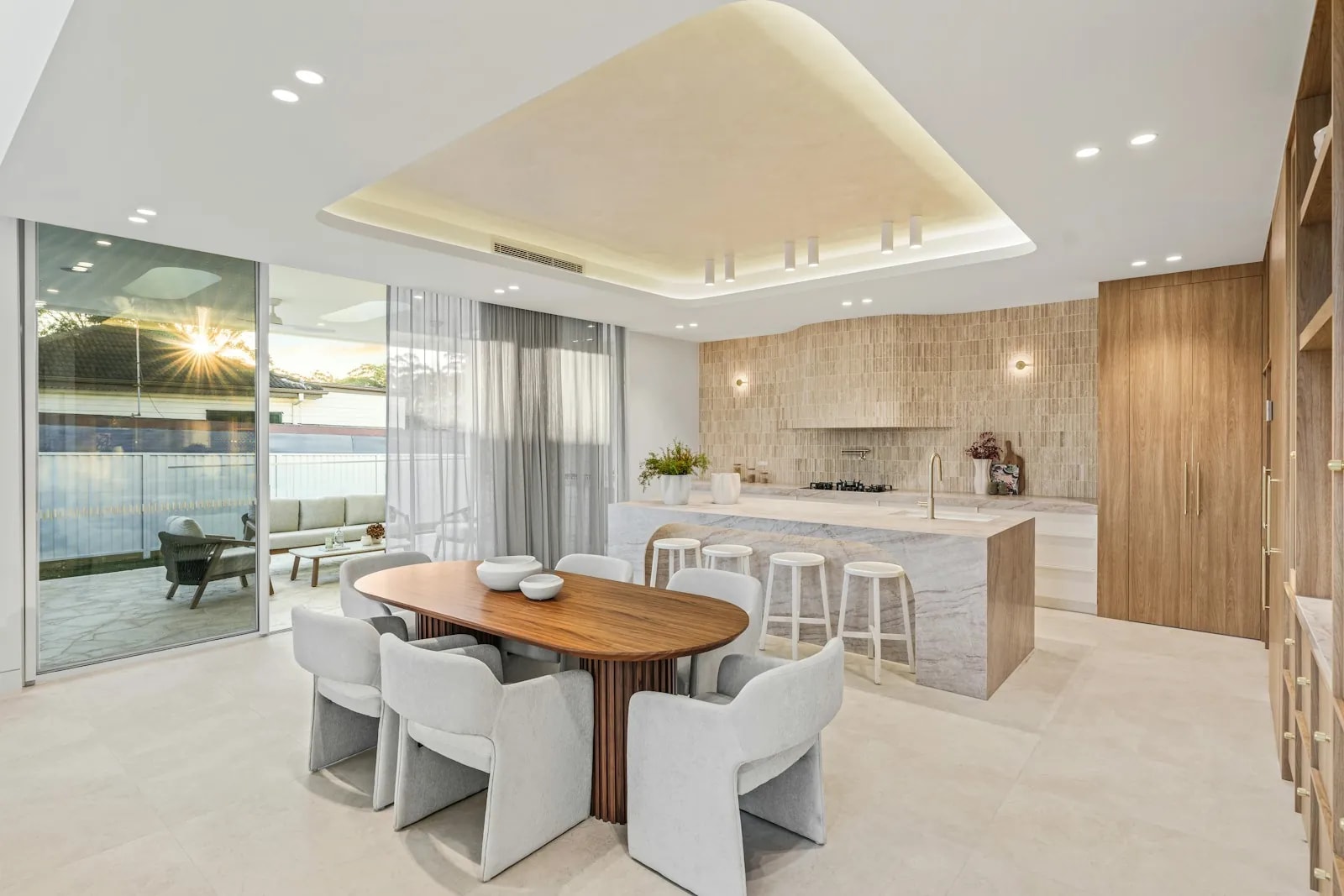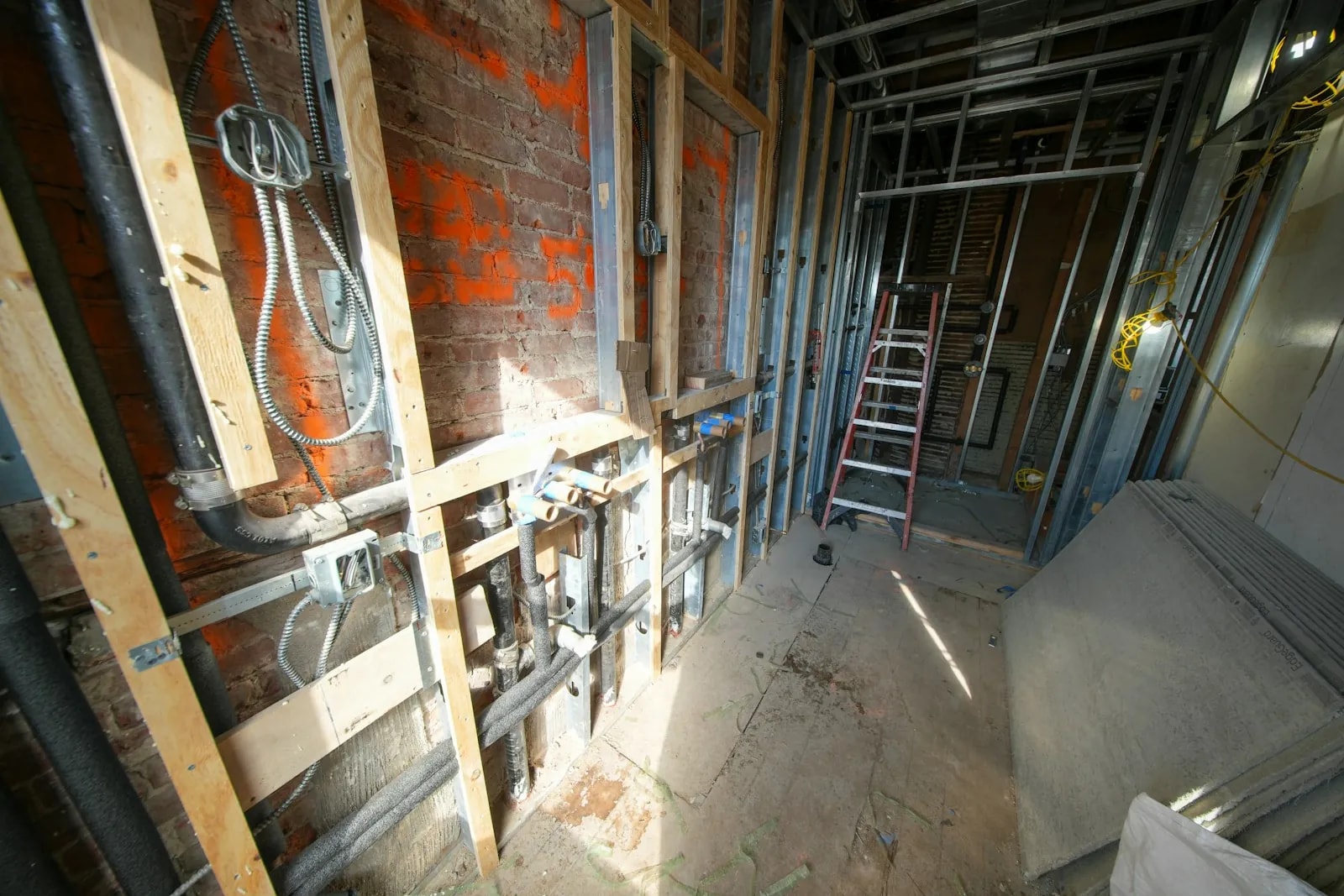
Most villa extension guides stop at the permit. The costly mistakes come later, inside the wall. A missing conduit, the plastic pipe a cable runs through, means cutting into a finished room. A distribution board, the villa's panel of breakers, leaves no room for control gear if it is ordered too small.
Dubai Smart Home designs smart-home systems for villas, and our team has worked on 100+ projects in Dubai since 2016. For this guide we read the authorities' own pages on 13 October 2026. Our complete smart home guide for Dubai is the wider map, and this page covers Dubai extensions only.
Do you need a permit to extend a villa in Dubai, and when is the cabling decided?
Yes. Dubai's construction-works order is Local Order No. 3 of 1999, as amended. It says no one may carry out construction works without first obtaining a permit, and any addition or modification to a building counts[1]. In a master community you also need a no-objection certificate (NOC), which is the developer's written approval.
The cabling has two deadlines. The first is the day your consultant freezes the permit drawings, because Article 14 says works must follow the approved plans[1]. The second is plaster. After that, a new cable means chasing: cutting a channel into the finished wall, then patching and repainting it.
Law No. 3 of 2026 still lists the order among the legislation it relies on[2]. The other rules a connected villa meets are in our smart home laws in Dubai guide.
Which approvals does a villa extension need, and who applies for each?
A villa extension in Dubai needs a developer NOC in a master community and a building permit from the authority for your plot. Structural and final inspections follow, then a completion certificate, the document that closes the permit. You do not file the permit yourself. Dubai Municipality's villa procedure has the consultant request it[3].
That procedure has three online steps: permit, structural inspection and final inspection[3]. Dubai Municipality also lists a service called Permit to Build Extensions to Private Villas on its Build in Dubai platform[4]. Older documents call the platform the Dubai Building Permit System, or Dubai BPS.
We could not open the service page from outside the UAE in October 2026, so these steps come from the published villa procedure. The directory describes the service as for private citizens' villas and lists a second service for modifications or additions to buildings; your consultant will confirm which fits your villa.
The table lists each approval, who applies and what is published.
| Approval | Applies to you if | Who applies | Official fee or time |
|---|---|---|---|
| Developer NOC | Your villa is in a master community | The owner, on the community portal. Emaar Community Management asks for the contractor's trade licence, a scope of works and plans[5] | Emaar's 2022 sheet: AED 500 review fee plus AED 1,000 for minor or AED 2,000 for major works. Floor-area rate not printed[5]. Nakheel: not published[6] |
| Building permit, Dubai Municipality plot | Dubai Municipality is your plot's authority | A registered consultant, through Build in Dubai[3] | Fee and timing not published |
| Building modification, Dubai Development Authority (DDA) plot | The DDA is your plot's authority | The consultant for the design review, the contractor for the permit | Design review AED 1,500, estimated 5 working days[7]. Permit AED 1.0 per sq ft of added built-up area, estimated 2 working days[8]. Each plus AED 20 in knowledge and innovation dirhams |
| Modification permit or NOC, Trakhees area | Trakhees is your plot's authority | The consultant and a Trakhees-accredited contractor[9] | Permit fee not found. Completion inspection fee depends on built-up area, not printed[9] |
| Dubai Electricity and Water Authority (DEWA) building NOC, plus any network change | Part of the permit approvals. A network change only if meters or cables must move | An enrolled consultant or contractor. On plots outside Dubai Municipality, through DEWA's website[10] | Network change: free to apply, work charged by DEWA's estimate[10] |
| Inspections and completion certificate | Every permitted extension | The contractor and the consultant[3] | Trakhees targets 3 working days for its completion certificate[9] |
Emaar's sheet also sets the order: its NOC, then the authority's approval if one is required, then an entry permit for the contractor[5].
Which authority covers my plot: Dubai Municipality, DDA or Trakhees?
Which authority issues your permit depends on your plot, not on your developer's name. One online platform handles the building permits of four licensing authorities: Dubai Municipality, the Dubai Development Authority (DDA), Trakhees and the Dubai Integrated Economic Zones Authority[11]. Your plot document from the developer or the Dubai Land Department shows which one is yours.
An affection plan is Dubai Municipality's planning sheet for a plot; the Dubai Building Code says its limits override the code's defaults[12]. A site plan can come from the DDA, which says only it issues site plans in its jurisdiction[13]. Emaar's NOC checklist asks for whichever your plot has[5].
Nakheel's contractor rules call for both a Nakheel and a Trakhees NOC on extension work[6]. Dubai Municipality's building permits app shows owners their plot details and the registered consultants and contractors[14].
If you are unsure, your community office or consultant can confirm it in one call. We print no community-by-authority list: no authority page we read gives one, and contractor sites contradict each other.
What do the approvals cost, and how long do they take?
It depends on the authority, and most publish nothing. Dubai Municipality does not publish a current fee for a villa extension permit on any page we could open in October 2026. The DDA charges AED 1,500 for a design review and AED 1.0 per square foot of added built-up area for the permit[7][8].
The last Dubai Municipality fee schedule we could find is from 1999. Treat any online figure as unconfirmed and ask your consultant for the live fee when the application is filed.
Emaar's 2022 sheet lists a AED 500 review fee plus an NOC fee of AED 1,000 or AED 2,000[5]. Its floor-area fee has no printed rate, so ask for it in writing before you pay for drawings. Trakhees and Nakheel print none on the pages we read.
Other master developers run their own NOC process: ask your community office for its form, fee sheet and any deposit.
The published times are targets for single services, not for the whole approval. The DDA estimates 5 working days for the design review and 2 for the permit[7][8]. Emaar's sheet gives 3 business days from complete documents[5], and owners on forums report longer.
DEWA's building NOC goes through your consultant or contractor. We found no DEWA timing for it on any page we could open, so ask your consultant.
Since 2022 Dubai has asked the contractor for an insurance policy instead of a cash deposit. As we read the rule's Arabic text, it covers additions of 300 square metres or more; ask your consultant to confirm this[15]. A Dubai Municipality permit lasts six months and can be renewed three times, but it can be cancelled if work has not started within three months[1].
Real talk: the fee tables you find online copy each other. Among the 67 search result pages we read, three contractor pages gave the same approvals total and cited no authority. Budget from your consultant's written fee proposal and your developer's current fee sheet.
At which build stage must pre-wiring decisions be made?
Pre-wiring decisions are due at two points. Routes, box positions and board space must be settled before the consultant freezes the permit drawings. The cable must be in the wall, tested and labelled, before plaster. Dubai Municipality's villa process inspects the structure, then the finished work, and names no inspection in between[3].
First fix is when conduits, cables and back boxes, the metal boxes behind switches and sockets, go into the open walls. Second fix comes after plaster and paint, when faceplates, keypads and devices go on. The comms cabinet is the wall cabinet where the villa's data cables meet.
The order of the stages is trade practice, set by your consultant's programme, not an official rule. The table sets that trade practice beside the official milestones.
| Build stage | Permit milestone | Cabling decision due | If you miss it |
|---|---|---|---|
| Brief and concept | NOC application | Choose the systems. Write the low-voltage cabling (data, control and speaker cables) into the scope of works | No one prices or owns the cabling |
| Detailed design | Permit drawings and the electrical load | Freeze conduit routes, box positions, board space, the comms cabinet and window-head power. Give the consultant the low-voltage layout | A later change needs approval again[1] |
| Substructure and slab | Structural inspections[3] | Anything cast into or under the slab: floor boxes, and ducts to the garden, pool plant or gate | Breaking concrete |
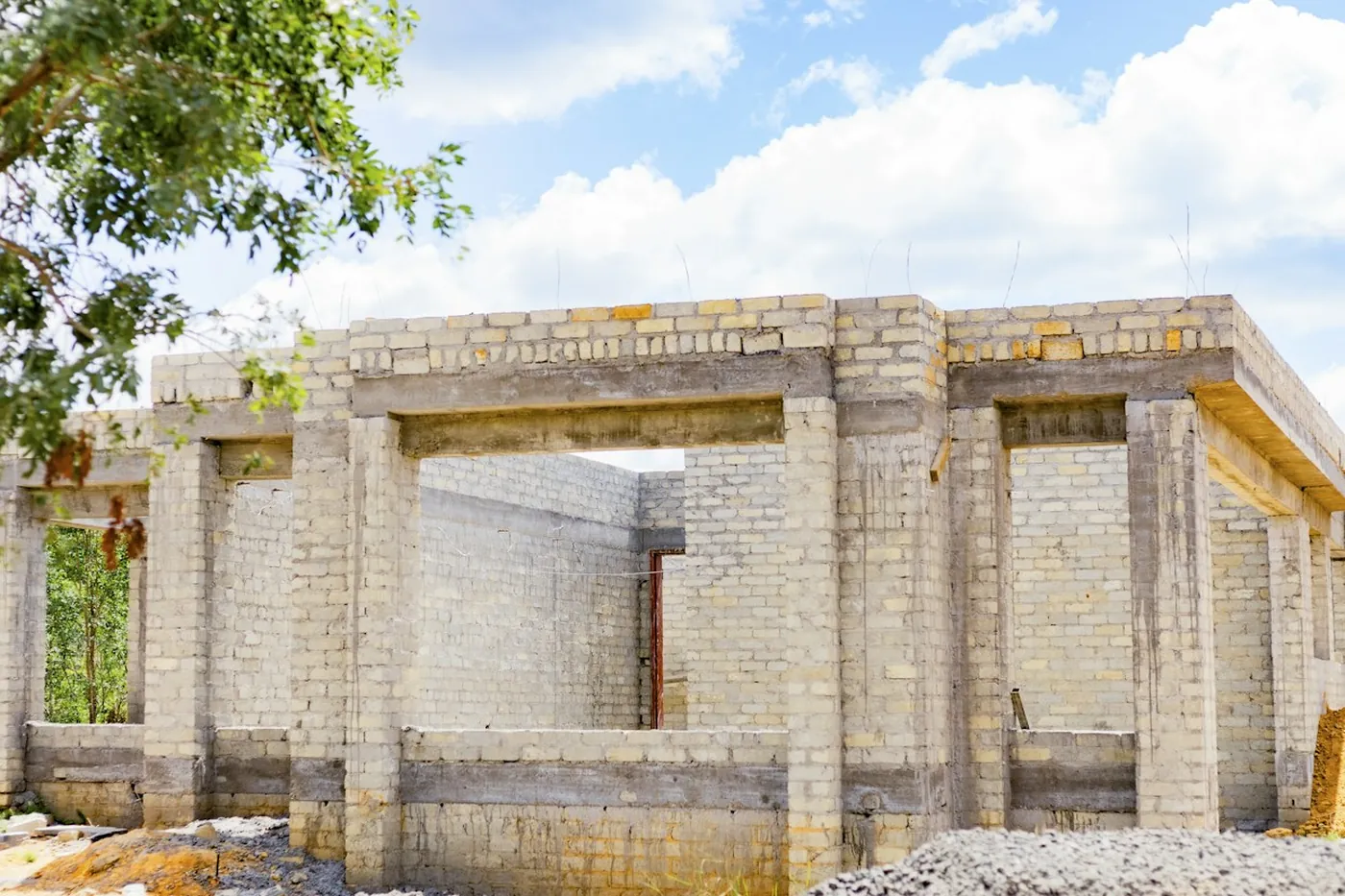
| Blockwork and first fix | None named | Conduits, deeper boxes, a neutral at each switch, draw wires, cables pulled, walls photographed | Chasing new blockwork |
| Plaster and ceilings | None named. This is the deadline | Test and label every cable before they close | Chasing, patching, repainting and new fire stopping[12] |
| Final inspection | Completion certificate | Test results and as-built drawings (what was actually built) kept with the approved set | No record of what is in the wall |
Rows two and five are the two deadlines. Article 17 adds a third for anything in the slab: Dubai Municipality's procedures must be met before any main part of a building is concreted[1].
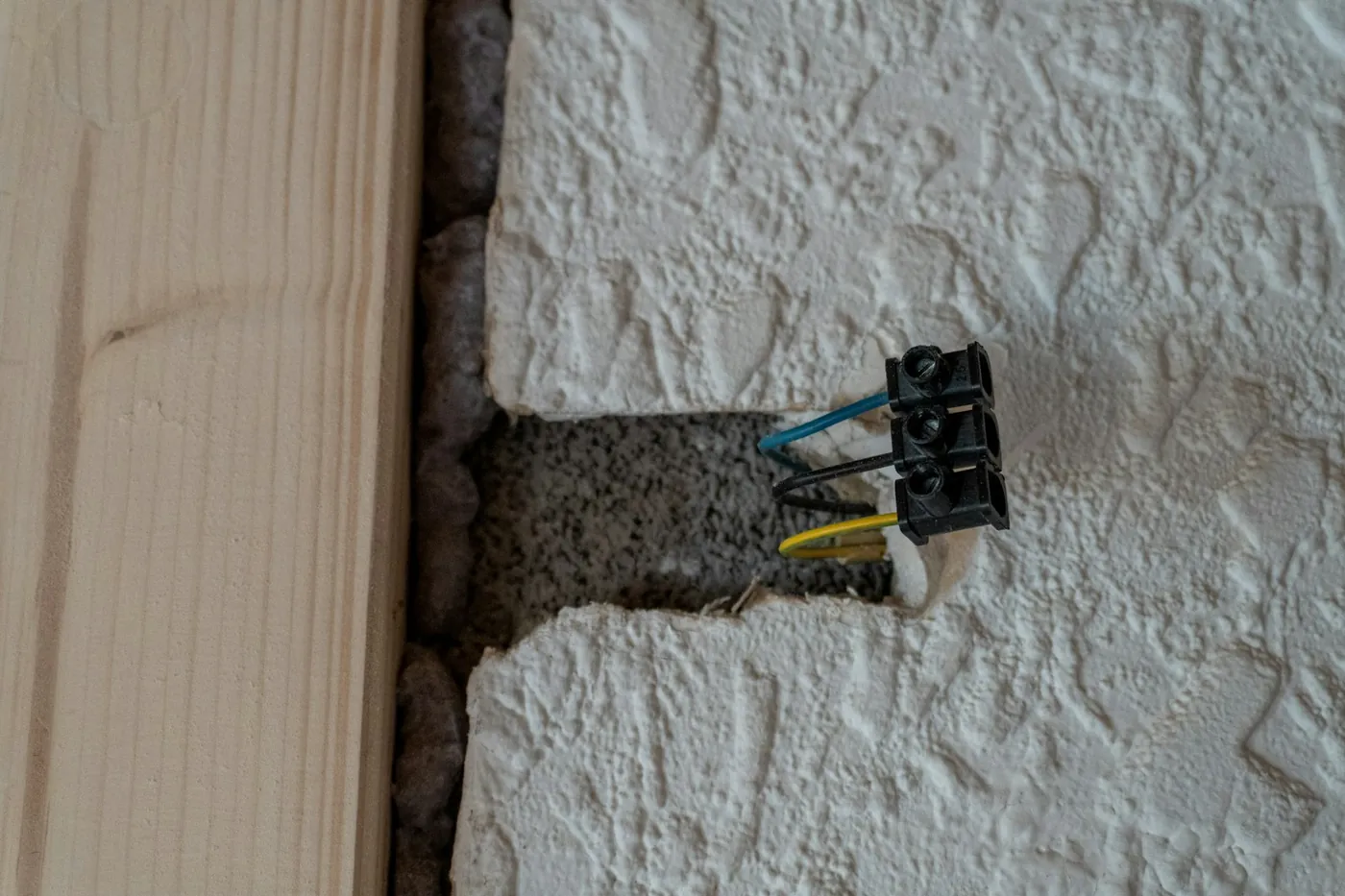
Lighting control costs most to reverse, so our lighting control design work starts at drawing stage. If your consultant has not frozen the drawings yet, send us the extension drawings and we will mark up the low-voltage layout for them.
Pro tip: before plaster, photograph every wall and ceiling with the cable labels in view, and keep the photos with the as-built drawings. It costs nothing and is the only record of where each conduit runs once the walls close.
What should you pre-wire in a villa extension?
Pre-wire what cannot be added without opening a wall. That means data points and a conduit route back to the comms cabinet, a neutral wire and deeper back boxes at the switches, and power at every window head. Add the lighting control cable and speaker cable too. A wireless device can come later. A missing conduit cannot.
The main villa usually has a comms cabinet already, so the first question is whether the new room can reach it. Two terms in the table: KNX is wired control that needs no internet to run, and DALI is the control wiring for dimmable light fittings. The table gives the spec to ask for.
| Item | Spec to ask for | Why it matters in an extension |
|---|---|---|
| Data outlets and ceiling Wi-Fi points | Cat 6A data cable, solid copper, low-smoke halogen-free sheath. Each outlet on its own cable back to the cabinet | The code's limit is 90 m of fixed cable per link[12]. A hot ceiling void can shorten it: Fluke Networks' worked example gives 84 m at an average 40°C[16] |
| Route back to the comms cabinet | A conduit route to the existing cabinet, or a second cabinet with a 13 A socket on its own circuit and at least one air change per hour[12] | It decides whether the new room joins the villa's network |
| Conduit | One 25 mm conduit per dual outlet, no more than 50% full on day one[12]. A draw wire, a pull cord left inside, in every spare | Spare conduit lets a cable be added later without chasing |
| Switch boxes | A neutral wire at every box. Deeper boxes where a keypad or dimmer will go | The depth each device needs is on its maker's installation sheet |
| Window heads | Power at every head that may be motorised. Mains or low voltage depends on the motor | Somfy's Glydea Ultra is a mains motor, 110 to 240 V AC[17]. Pick the motor type first |
| KNX bus | KNX bus cable to every keypad and sensor position | One maker's rule for a 640 mA supply: 64 devices and 1,000 m of cable per line[18] |
| DALI lighting | Mains-rated cable: up to 300 m at 1.5 mm2, 64 addresses per line[19] | Never KNX bus cable. Tridonic says it is not suitable for DALI[19] |
| Speakers | Cable to every ceiling and wall speaker position | The audio designer sets the gauge for each run |
Run a data cable to every camera and intercom position, including the gate; a Power over Ethernet (PoE) switch powers them over that cable.
The neutral wire is the return wire many smart switches need. The Aqara Z1 Pro wall switch in our catalogue needs one (AED 230 to 300, device only, checked 19 July 2026). The no-neutral Aqara H1, at AED 199 to 280, can make low-wattage LEDs glow or flicker.
Our pre-wiring checklist for off-plan buyers and structured cabling guide go deeper on rooms and testing. Our home networking and Wi-Fi design settles where the access points and cabinet sit, and our motorised curtains and blinds service settles the motor before the cable goes in.
Common mistake: buying the cheapest box of cable. Specify solid copper conductors, not copper-clad aluminium, and ask for the data sheet. Cable-test vendor Fluke Networks calls copper-clad aluminium non-compliant with the cabling standards[20], and the cheapest boxes on amazon.ae say CCA in the title[21]. "Cca" on a data sheet is different: a European fire class for the sheath, which the Dubai Building Code asks for[12].
What does the Dubai Building Code say about villa cabling?
The Dubai Building Code 2021 sets a telecom cabling standard for private villas and townhouses in its Part K. It asks for Category 6 cable as the minimum, star wiring from one cabinet, each socket on its own cable, and a fixed link of no more than 90 m[12]. The rules were written for new villas.
For an extension, treat them as the benchmark to wire to, and ask your consultant whether the permit drawings apply them. Its Table A.1 does apply the code to additions in general[12].
The clauses worth writing into your scope of works[12]:
- Cable. Category 6A is allowed. Fixed cable is halogen-free, and no outlet is looped from another.
- Conduit. One 25 mm conduit per dual outlet, a pull box at sharp bends and on routes over 30 m, and no more than 50% fill on day one.
- Cabinet. Flush in a wall near the entrance, not in a kitchen, laundry room or bedroom, with a 13 A twin socket on its own breaker.
- Power beside data. Separation to ISO/IEC 14763-2. Ask your electrician to follow it, not a rule of thumb.
So Dubai does set a cable category, at least for new villas. On the power side it bases villa wiring on BS 7671 and asks for conduit suited to 48°C ambient. It tells designers to consult DEWA where a case is not covered[12].
Can the distribution board and DEWA supply take the extension?
It depends on the added load, so check both before the drawings are frozen. The distribution board has to carry the new room's air conditioning, the control gear and the comms cabinet's own circuit. For a new villa, the Dubai Building Code tells the consumer to confirm with DEWA that supply is available before design starts[12].
For an extension, size the added load with your consultant. If the extension adds air conditioning, an EV charger or a pool, or sits over the meter cabinet or a cable route, your consultant raises it with DEWA. DEWA takes these requests only from enrolled consultants and contractors and prices the work by estimate, so no flat fee is published[10]. The owner pays that estimate, and a build quote may not include it.
Board space is the part owners miss. KNX control devices sit on 35 mm DIN rail, the metal strip inside a board[22], with one channel per lighting circuit. Our lighting control page puts a large living room at four to six circuits. It says adding wired control before first fix is "mostly the cost of extra cable and a larger distribution board".
Our smart lighting and climate control survey checks for a neutral wire behind each switch plate, and our home EV charger guide explains what a charger adds to the load.
What does pre-wiring cost now compared with after the finishes?
The parts cost little now. A 305 m box of solid-copper Cat 6A cable was AED 757 to 899 on amazon.ae on 13 October 2026, about AED 2.48 to 2.95 a metre[23]. No published price exists for adding the same cable after the finishes, because by then the cost is the wall.
The table shows parts prices on amazon.ae on 13 October 2026, unless a row says otherwise. Installation is quoted separately after a free site survey.
| Item | UAE price | Notes |
|---|---|---|
| Cat 6A cable, 305 m box | AED 757 to 899 | Listed as solid copper. The AED 899 box has a low-smoke, zero-halogen sheath[23] |
| Cat 6 cable, 305 m box, brand-name | AED 384 to 590 | About AED 1.26 to 1.93 a metre. Conductor not stated, so confirm solid copper[24] |
| Copper-clad aluminium Cat 6 box | AED 141.64 to 295 | Shown only to explain the price floor. Avoid[21] |
| KNX bus cable, 305 m roll | AED 320 to 740 | UAE stockists, checked 2 October 2026[25]. See our KNX cost guide |
| 20 mm PVC conduit | AED 31.50 for an 18 m flexible roll. AED 27.99 for three rigid 95 cm lengths | Fittings are extra[26] |
| Ceiling Wi-Fi access point | AED 340.95 to 656 | TP-Link Omada EAP723 to Ubiquiti UniFi U7-LR[26] |
| Lighting control, a room or two | AED 10,000 to 40,000 | Our published tier, not a parts price |
| Networking survey and targeted fix | AED 2,000 to 15,000 | Our published tier |
| The same cabling after the finishes | No published price | Chasing, patching, repainting and new fire stopping |
| Year two onwards | No running cost for cable or conduit | The switch, access points and UPS battery are what get replaced |
A room's pre-wiring cost depends on how far it sits from the comms cabinet, so the table gives prices per part, not per room. Our team's figure is that pre-wiring while the walls are open costs 60 to 70% less than getting the same result into a finished home afterwards.
The code says fire stopping, the seal where cables pass through fire-rated walls and slabs, must be reinstated whenever cables are added later[12]. Our retrofit versus new build guide lists what can still be added once the walls close.
Quick math: a comms-cabinet kit is four parts. A 6U wall cabinet is AED 195 and a 24-port panel with Cat 6A jacks is AED 371.40. An 8-port PoE+ switch was AED 170.46 and a small UPS battery backup AED 180 to 195 on 3 October 2026[26]. That is about AED 917 to 932 before the router. Our networking and Wi-Fi range lists access points and switches.
Real talk: a full wired system is not always worth it for one room. If the rest of your villa runs on wireless control, one wired room may not earn its cost. Still put in what you cannot add later: conduit, a neutral at each switch and one data point.
To get the pre-wiring priced for your extension, ask for a free site survey, or send a photo of your distribution board on WhatsApp.
Does low-voltage or smart-home cabling need its own renovation permit in Dubai?
No authority page we read names data, control or speaker cabling as needing its own permit, and none says it is exempt. Low-voltage here means those cables, as opposed to mains wiring. Inside a permitted extension the cabling rides on the consultant's drawings, so get it onto them.
In a finished room, swapping fixtures and accessories is treated as maintenance in Emaar communities[5]. New circuits, a changed distribution board or chased walls are a question for your consultant and developer before work starts. DEWA's wording is that DEWA-approved electrical contractors should be used for any electrical equipment in Dubai[27].
Emaar also says any cabling and switch equipment from the unit's distribution board inward is the owner's responsibility[28]. The order makes contractors and engineers jointly liable for the works[1], so the low-voltage layout belongs on the consultant's drawings and in the main contractor's programme.
No source we read says who coordinates the electrician with the low-voltage cabling. Name one owner for it in writing before first fix.
Which changes to a villa need no permit at all?
No Dubai Municipality page we could read lists which villa renovation works in Dubai need no permit. The clearest official wording comes from the developers. Emaar says internal painting, furniture, electrical fixtures and accessories, and regular maintenance need no NOC, although the contractor still needs an entry permit[5].
For anything that opens a wall, adds conduit or changes the distribution board, ask your consultant before work starts.
How big can a villa extension be, and what changed in 2025?
How much you can add is set by your plot's planning document, which your consultant obtains from the authority. Dubai Municipality's 2023 FAQ says a private villa has no maximum built-up area if it keeps the setbacks on the planning map, the required gaps to the plot edges[29]. In a master community the developer's guidelines can be stricter.
The Dubai Building Code caps total villa height at 16 m. Its 2021 edition limits an annex to 60% of the main building's gross area, and roof structures to 50% of the roof floor area[12].
In March 2025 Dubai Municipality's Home First initiative relaxed villa rules for Emirati families[30]. It set a minimum villa setback of 1.5 metres and removed the required gap between a service annex and the main villa. Service annexes may now reach eight metres over two floors.
The release is addressed to citizens' homes. In a master community your plot's planning rules and the developer's guidelines still decide.
Emaar does not allow extensions in townhouses[5], and another developer may refuse too, so ask before you pay for drawings. When an addition relies on the existing building, for escape routes for example, the code says the existing building must also be assessed[12].
Do pools and pergolas need a Dubai Municipality permit, and what cabling goes in?
Yes for pools. Dubai Municipality's safety guideline says every private villa pool must be registered with the municipality before construction or installation starts[31]. Pool plans are approved inside the building permit system[32]. The Dubai Building Code allows a pergola inside the setbacks, which is not the same as needing no approval[12].
The pool guideline says the fee follows the municipality's revenue policy and prints no figure[32]. The code asks for a pool fence at least 1.2 m high, with gates that close and latch by themselves[12].
In Emaar communities a garden pergola or a pool rework needs an Emaar NOC, as its Arabian Ranches FAQ says[33], and our Arabian Ranches area page covers that community. Elsewhere, ask your developer and consultant before a pergola is ordered.
For the cabling, conduit for power and data should reach the plant room and the seating area before the paving goes down, with outdoor-rated cable inside it. Keep the comms cabinet elsewhere, because the code bars a telecom space beneath or next to wet areas such as swimming pools[12]. Our pool and outdoor automation design starts from those routes.
What do the final inspection and completion certificate check?
The final inspection checks that the finished extension matches the permit. Dubai Municipality's villa procedure says additions are inspected by its Building Control Department only, with a Dubai Civil Defence task raised only if required[3]. The completion certificate follows, and the order bans occupying the new space before it is issued[1].
In Trakhees areas the equivalent is a Modification Completion Certificate, with a target of 3 working days[9]. A 2021 DDA FAQ calls Civil Defence approval mandatory for villas[13], so name your authority when you ask about fire safety.
A federal rule, Cabinet Resolution No. 90 of 2020, asks for a completion certificate showing fire safety requirements are met when a home is modified or added to[34]. Ask Hassantuk, the mandatory fire alarm scheme for UAE villas, whether the new rooms need detectors before the ceilings close. Our Hassantuk guide for villas explains it.
Al Sa'fat, Dubai's green building system, applies to permitted additions too[35]. A 2021 municipality circular says no completion certificate is issued if its standards are not met[36]. Your consultant checks which items of its mandatory Silver level apply to a private villa. Al Sa'fat does not require home automation.
What are the penalties for building without a permit, and what else goes wrong?
Building without a permit can bring a fine of up to AED 50,000, doubled for a repeat, under Article 28 of Local Order No. 3 of 1999. Dubai Municipality can also disconnect the utilities, and under Article 26 it can remove illegal works and charge the cost plus 20%[1].
The AED 50,000 is a ceiling. The amount for each kind of violation sits in a separate schedule that Dubai Municipality applies case by case. Khaleej Times reported more than 16,000 residential inspection visits and 2,395 violations since the start of 2026, with unpermitted building or alterations among the main types[37].
The developer's consequences reach the property itself. Emaar lists loss of any defect liability warranty, inability to transfer or resell, inability to apply for a title deed, and violation notices[5].
Four mistakes to avoid:
- Starting before the NOC or the entry permit. Emaar requires an entry permit for every contractor[5].
- An open application, or old unapproved works, on the plot. Dubai Municipality accepts no new project while an old one is open on the same plot[29]. Works a previous owner built without approval are a question for the developer before you design around them.
- A "full renovation" quote with no cabling in it. Ask where data, speaker and shading cables are priced.
- Drawings that do not match the site. A wrong as-built drawing surfaces at final inspection, so measure before the design is frozen.
How Dubai Smart Home helps with a villa extension
Three decisions matter most. Find out which authority covers your plot before you pay for drawings. Get the low-voltage layout onto the consultant's drawings before they are frozen. Have every cable in the wall, tested and labelled, before the plaster goes on.
We do not file permits: your registered consultant and contractor apply for them. We survey the villa, design and specify the systems for the new rooms, and prepare the cabling drawings and schedules they need. We coordinate that scope through first and second fix, then configure the software with you. Workmanship is under warranty for 12 months, and the term can vary by product.
For a room or two, lighting control on our lighting control page starts from AED 10,000. Our home networking and Wi-Fi page starts from AED 2,000 for a survey and targeted fix[38].
We are rated 4.9/5 by Dubai homeowners. To have the low-voltage layout ready before your drawings are frozen, send us your floor plan, or message us on WhatsApp.