This smart home glossary defines every term you will meet across our Dubai guides, from the protocol printed on the box to the regulator named on your CCTV invoice. Terms are grouped the way a Dubai home is built. Radios and standards come first, then the boxes on the wall, the cable behind them, the cooling, and the control ideas. The Dubai words that appear only on paperwork come last.
How do you use this smart home glossary?
Use it as a lookup, not a course. Every entry answers in two to four sentences, then links to the article that owns the topic. The link is where the depth lives.
Starting from zero? Read the complete smart home guide for Dubai first. If a term is blocking a decision this week, talk to an engineer instead of reading around it.
Dubai smart home terms: protocols and standards
A protocol is the language a device speaks. A standard is the rulebook protocols agree to follow. These nine cover almost every acronym on a smart device box sold in Dubai.
Matter. Matter is a shared language, not a radio, that lets devices from different brands work in one app. A Matter-certified plug, bulb, or lock can sit in Apple Home, Google Home, and Alexa at once. The Connectivity Standards Alliance runs it, and the current version is Matter 1.6, released 17 June 2026[1].
Thread and the Thread border router. Thread is a low-power wireless mesh built for battery devices such as sensors and locks. A Thread border router joins that mesh to your home network, so a battery sensor with no Wi-Fi radio still reaches your phone. A recent Apple TV, HomePod mini, Echo, or Nest Hub usually works as one[2].
Zigbee. Zigbee is a wireless mesh built for small, battery-powered devices: sensors, bulbs, and plugs. It runs on the global 2.4 GHz band, needs a hub, and its batteries last years. It has the largest device catalogue of any smart home radio and is the default for most Dubai retrofits.
Z-Wave. Z-Wave is a wireless mesh like Zigbee, but on a quieter sub-GHz band with tighter certification, which suits locks and sensors. In the UAE it runs on 868.4 and 869.85 MHz, the same band as Europe, not the 908.4 MHz used in the US[3]. A US-market Z-Wave device will not pair with a UAE hub.
Wi-Fi. Wi-Fi is the network your phone already uses, so a Wi-Fi device needs no hub. It suits devices that stay plugged in and move real data, such as cameras and speakers, because the radio stays busy and flattens a battery in weeks.
Bluetooth (BLE). Bluetooth Low Energy is the short-range radio that pairs a phone to headphones. Most BLE devices talk straight to a phone with no hub, which suits a single lock or sensor used close by. It runs on 2.4 GHz and reaches roughly 10 to 50 metres.
KNX. KNX is a wired standard, not wireless, where the control logic sits inside the devices and the bus cable itself[4]. It runs lighting, climate, and shading over a dedicated cable with no internet dependency and lasts 30 years or more. It is the wired core we design in most often for a villa.
DALI. DALI is a digital addressable lighting protocol that runs tunable-white and dimmable lighting from a keypad or a controller such as KNX or Lutron. DALI Device Type 8, under IEC 62386-209, is the standard behind most tunable-white installs in Dubai villas[5].
Infrared (IR) control. Infrared control copies the signal an AC's handheld remote already sends, so a device such as Sensibo Air can put a split or window unit into an app. It is one-way, so nothing confirms the AC ran the command and the app can say off while the unit keeps cooling. It cannot work on a fan coil panel with no remote.
| Protocol | Radio or wired | Hub needed | Best for |
|---|---|---|---|
| Matter | Neither, it rides on Wi-Fi or Thread | A controller, such as an Apple TV | Mixing Apple, Google and Alexa |
| Zigbee | Radio, 2.4 GHz mesh | Yes | Battery sensors and bulbs in a retrofit |
| Z-Wave | Radio, 868 MHz mesh in the UAE | Yes | Locks and sensors through thick walls |
| Thread | Radio, 2.4 GHz mesh | A border router | Battery devices that answer instantly |
| Wi-Fi | Radio, 2.4 and 5 GHz | No | Cameras and anything mains powered |
| Bluetooth (BLE) | Radio, 2.4 GHz, 10 to 50 metres | No, it pairs to a phone | One lock or sensor, close range |
| KNX | Wired bus cable | No, the logic sits in the devices | Villas that must run offline |
Hardware terms: hubs, bridges, controllers and gateways
These four get mixed up, and the difference decides what stops working when one box fails.
Hub. A hub is the small box that talks to your locks, sensors, and lighting keypads over its own radio, separate from Wi-Fi. A router only carries your internet. If the hub stops, everything paired to it stops too, even though the network stays healthy.
Bridge. A bridge is a type of hub that translates one brand's devices onto your home network, such as the Philips Hue Bridge. Signify calls it the heart and brain of the system, and it is a deliberate single point of failure: losing it takes every paired light with it.
Controller. A controller adds smart home gear to your network and sends it commands: an Apple TV, a HomePod mini, or a wall panel. In Matter's case, more than one controller can manage the same device at once.
Gateway. A gateway translates one system's language into another's, such as an Intesis gateway turning a Modbus fan coil controller into a native KNX device. It is the standard professional route when a home speaks one control language and needs to reach another.
Hardware terms: actuators, dimmers, keypads and sensors
Actuator and relay. An actuator carries out a command inside a wired system, such as a KNX actuator holding the logic for a light circuit on the bus cable. A relay is the type that switches a whole circuit off from a keypad or a scene, such as isolating a cooker socket. A relay only stops a circuit being switched on; it cannot stop a device already running.
Dimmer. A dimmer is a switch or keypad that adjusts brightness instead of only switching a light on or off, either as a battery remote or wired into the circuit. A battery dimmer answers the complaint that smart lighting still needs a real wall switch, with no wiring at all.
Keypad. A wall keypad is a panel of programmed buttons that fire scenes, such as movie night or leaving home, without opening an app. It suits anyone who does not want to hunt through a phone, and a wired keypad keeps working when the internet drops.
Sensor. A sensor reports a condition rather than acting on it: motion, an open door, water on the floor, or temperature. The best-fit protocol depends on the job. Zigbee and Z-Wave suit battery sensors, while cameras need the bandwidth only Wi-Fi gives.
Hardware terms: access points, patch panels and racks
The network side has its own vocabulary, and most of it lives in one cupboard.
Access point. An access point extends Wi-Fi into a room the router cannot reach, wired back over Cat 6A rather than relying on a weaker mesh hop. A typical Dubai villa needs six to nine of them for even coverage through concrete walls.
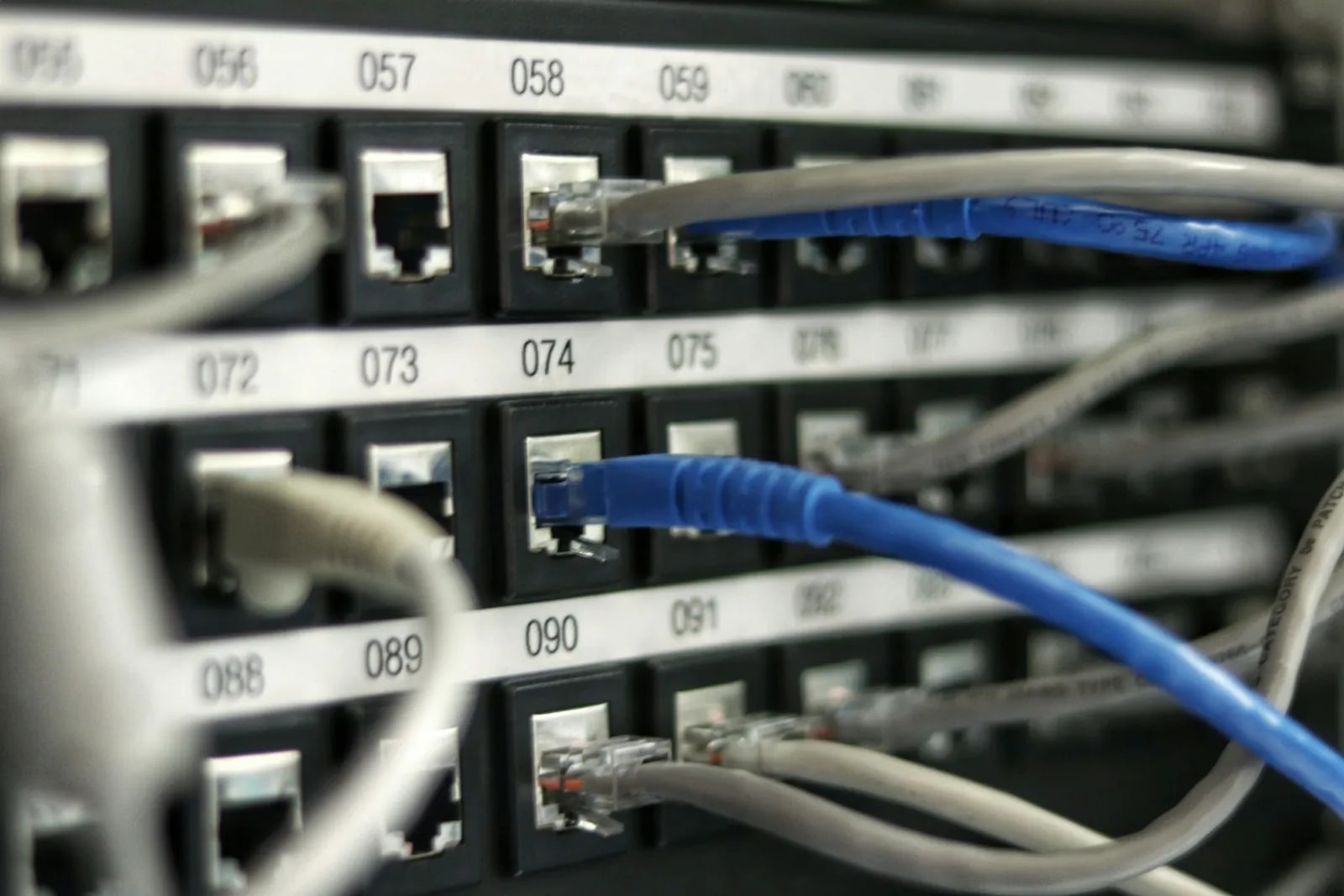
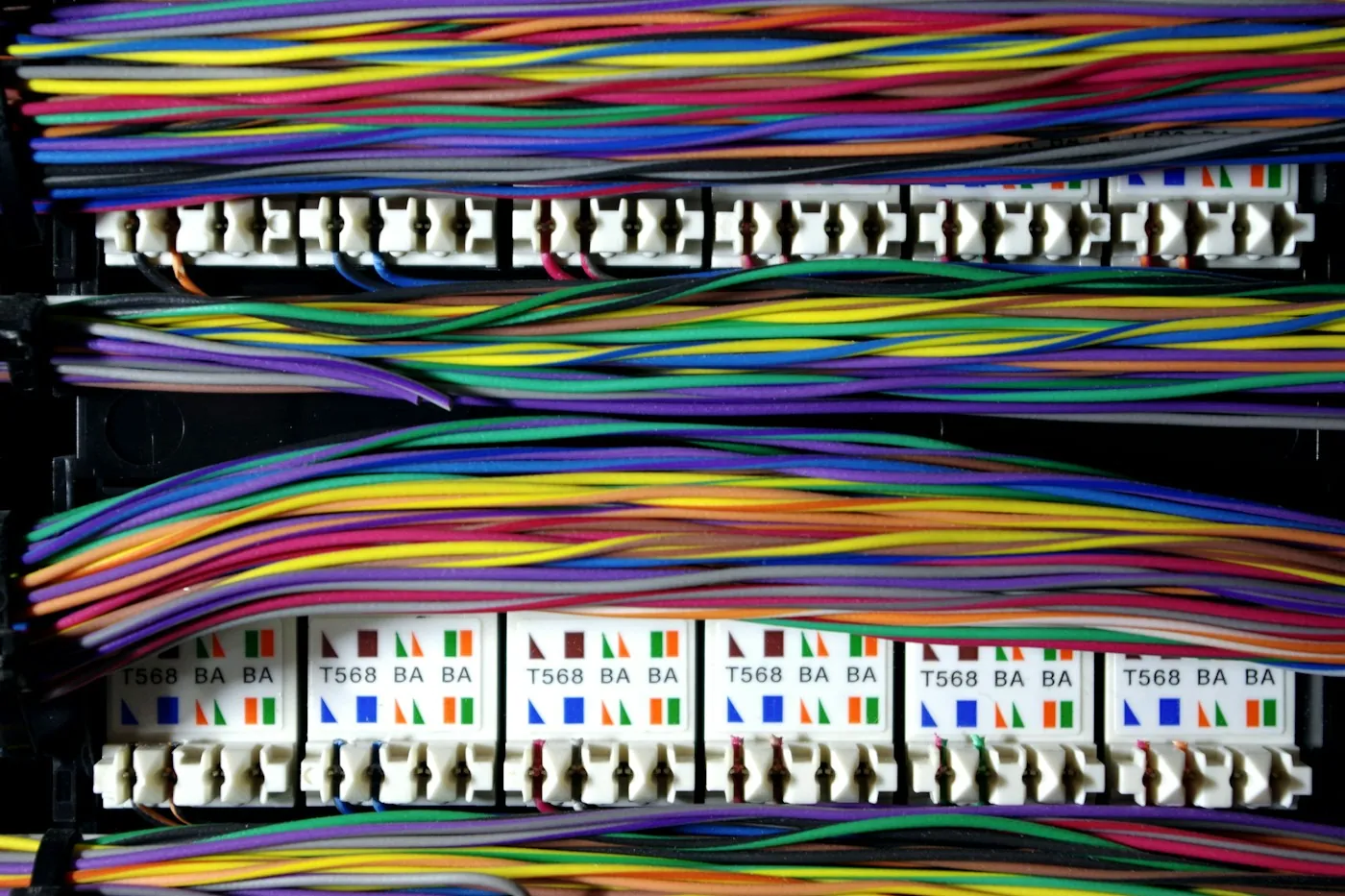
Patch panel and rack (RU). A patch panel is the block of labelled ports inside a rack where every cable run lands, so nothing is wired straight into a device or joined mid-run. Rack gear is sized in rack units (RU), where one RU is 1.75 inches or 44.45 mm[6], and a home rack usually runs 6U to 12U.
Electrical and wiring terms
These seven decide what is possible in a finished home before anyone picks a brand.
Neutral wire. A neutral wire completes the circuit that most smart switches need to power themselves. Whether one reaches a given switch box depends on how the original electrician wired that room, and it can differ room to room. Treat it as a survey question, never an assumption.
Permanent link and channel. The permanent link is the fixed cable built into walls and ceiling, capped at 90 metres. The channel is that same run plus the patch cords at each end, capped at 100 metres[7]. A certification test checks the permanent link against its own 90-metre limit, so 100 metres is not the number that decides whether a run passes.
Cat 6 and Cat 6A. Cat 6 and Cat 6A are two grades of network cable that both carry Gigabit internet over 100 metres, so on that job they behave the same. Cat 6A is rated to 500 MHz, double Cat 6's 250 MHz[8]. It is the only one that carries 10 Gigabit Ethernet over the full 100-metre channel[9]. Specify Cat 6A on every new run.
Conduit and draw wire. Conduit is the empty tube cast into a slab or chased into a block wall before any cable is pulled, standard practice in Dubai. A draw wire, left inside after each pull, lets a second cable be added later without breaking the wall open again.
Distribution board. A distribution board is the electrical panel a villa's circuits run back to. Work at one is a job for a licensed electrician or MEP contractor, never DIY. A villa built in more than one wing often has more than one board, which changes how the automation backbone is planned.
Three-phase supply. A three-phase supply carries more power than the single-phase feed most apartments use. Larger Dubai villas run one to support multiple AC zones and heavy appliances at once. Your MEP consultant plans around it in the plant room; it is not a smart home purchase.
Power over Ethernet (PoE). PoE sends power and data down the same network cable, so a Wi-Fi access point or an IP camera needs no power socket. It does not power a smart home controller; those stay plug or mains powered. PoE runs from IEEE 802.3af[10] up to 802.3bt[11], each guaranteeing a different wattage.
Climate terms: the cooling equipment in your home
What you can automate depends on which of these sits above your ceiling. Check the equipment before you buy a thermostat.
Fan coil unit (FCU). A fan coil unit is a metal box holding a coil of chilled water pipe and a fan. It sits in the ceiling or a service cupboard of most district-cooled Dubai apartments. It has no refrigerant gas and no outdoor unit; a fan simply blows room air across the cold coil.
Split unit. A split unit is the common Dubai setup of an indoor wall unit plus an outdoor compressor, worked by a handheld infrared remote. That remote is what an infrared controller copies, so no remote means no infrared control is possible.
Ducted and VRF system. A ducted system pushes cooled air through ceiling ductwork, and a VRF (variable refrigerant flow) system uses one outdoor unit to feed multiple indoor zones. Retrofitting either needs a zone controller or the AC brand's own gateway tied into KNX or Lutron, not a plug-in device.
FCU thermostat versus consumer thermostat. An FCU thermostat drives a chilled water valve and a multi-speed fan on mains voltage, a different electrical job from a consumer thermostat. A consumer thermostat such as Nest or Ecobee is built around a 24-volt call to a compressor, so it has nothing to command on a district cooling panel.
Climate terms: district cooling and how it is billed
District cooling is billed in units nobody meets elsewhere, and half the bill cannot be moved by any thermostat.
District cooling. District cooling makes chilled water at one large plant and pipes it to a building, moving the compressor off site instead of into each apartment. Dubai regulates it under Executive Council Resolution No. 6 of 2021[12], and it is billed separately from your DEWA invoice.
Refrigeration ton and refrigeration ton hour (RTH). A refrigeration ton is the unit district cooling is billed in, the chilled-water equivalent of a kilowatt hour on a DEWA bill. A refrigeration ton hour is one ton delivered for one hour, the figure on your invoice's consumption line.
Demand charge (capacity charge). A demand charge, also called a capacity charge, is a fixed fee billed on the cooling capacity reserved for an apartment, whether the AC runs or the home sits empty. Empower publishes its own demand charge at AED 750 per refrigeration ton per year[13]. That is Empower's rate, not a Dubai-wide tariff. Tabreed and Emicool bill their own buildings on their own terms.
Consumption charge. A consumption charge is the variable half of a cooling bill, billed on the cooling actually used. Empower publishes its own consumption charge at AED 0.568 per refrigeration ton hour[13]. A smart thermostat can only ever lower this half, never the fixed demand charge.
| Term | What it means | Who sets it |
|---|---|---|
| Refrigeration ton | The unit cooling is measured and billed in | Industry standard, used by every provider |
| Refrigeration ton hour (RTH) | One refrigeration ton of cooling for one hour | Industry standard, appears on your invoice |
| Demand charge (capacity charge) | Fixed fee on the capacity reserved for your unit | Your provider, under RSB rules. Empower publishes AED 750 per refrigeration ton per year |
| Consumption charge | Variable fee on the cooling you actually use | Your provider. Empower publishes AED 0.568 per refrigeration ton hour |
| Fan coil unit (FCU) | The chilled water box in your ceiling | Specified by the building developer, not by you |

Control terms: scenes, automations and triggers
Control versus automation comes down to one question: who pulled the trigger. CEDIA draws the line the same way we do[14].
Scene. A scene is a saved group of settings across two or more devices, fired by one button or command, such as movie night dimming the lights and lowering the blinds. Running a scene yourself, even by voice, is control rather than automation, because a person gave the order.
Automation (home automation). Home automation is the part of a home that runs on its own, started by a schedule or a sensor, with nobody touching an app or a switch. The defining test is who or what pulls the trigger: a clock or a sensor means automation, a person means control.
Trigger. A trigger is whatever starts an automated action: a schedule, a sensor reading, or a geofence crossing. If a person presses a button or speaks a command instead, that is control, not a trigger.
Geofencing. Geofencing uses a phone's location to start an automation, such as easing the AC as the last phone leaves home. It depends on the phone reporting its position accurately and on time, so a phone with location services switched off breaks the trigger silently.
Control terms: where the logic actually runs
This group answers what every Dubai homeowner asks after a bad internet week: does the house still work when the connection drops?
Local control. Local control means a device or scene keeps working over your own network with no live internet. The logic runs on a hub or a bus cable inside the home. A wired system such as KNX ignores the router entirely, since the wall switch is physically wired to the light.
Cloud control. Cloud control means a command must reach a server outside the home before a device responds. That is why some budget Wi-Fi plugs and voice routines stop the moment the internet drops. It sits at the opposite end of the same spectrum as local control.
Multi-admin. Multi-admin is a Matter feature that lets more than one controller manage the same device at once. One front door lock can sit in Apple Home for one person and in Alexa for the rest of the family, with no second lock and no bridge.
Firmware. Firmware is the software built into a device itself, separate from the app on your phone. Updating it before you travel, and buying through the proper UAE retail channel, prevent most avoidable device faults.
Home Assistant. Home Assistant is a free, open-source DIY platform that runs smart home logic locally on a small computer you own and maintain. It is a third-party hobbyist platform, and Dubai Smart Home does not install or support it. We design with KNX, Control4, Crestron and Lutron instead.
Handover terms: as-built documents and test reports
These decide whether another engineer can service your system in 2031 without opening a ceiling. Ask for both by name before final payment.
As-built documentation and the certification test report. As-built documentation is the device list, wiring diagram, network map, and labelling schedule handed over after an install. It lets another engineer service the system without rediscovering the house. A certification test report is the per-link proof, showing wire map, length, and signal loss against the cable's rated category, and it belongs in the same pack.
Dubai smart home terms: the regulators and what they cover
Seven bodies show up in Dubai smart home paperwork, and most never touch a private home.
DEWA. DEWA, the Dubai Electricity and Water Authority, bills electricity and water for a Dubai home and runs the smart meter programme behind most residential accounts[15]. It does not bill district cooling; that arrives separately from Empower, Emicool, or Tabreed.
SIRA. SIRA, the Security Industry Regulatory Agency, is a Dubai Police body that licenses security companies and sets camera standards for commercial premises such as malls, hotels, and banks[16]. It issues no permits for a private home's CCTV. Its 1080p and 31-day retention rule governs the premises it licenses[17], not villas or apartments, and no legal minimum resolution applies to a home.
TDRA. TDRA, the Telecommunications and Digital Government Regulatory Authority, is the UAE's telecom regulator. Wireless equipment sold commercially in the UAE, including routers, access points, and smart home hubs, needs TDRA type approval before it reaches a shelf[18].
Trakhees. Trakhees is the building permit authority for Nakheel and PCFC-governed communities such as Palm Jumeirah, Jumeirah Islands, and Al Furjan, standing in for Dubai Municipality there. Structural work such as a boundary-wall camera bracket usually needs a Trakhees no-objection certificate.
Al Sa'fat. Al Sa'fat is Dubai Municipality's green building system, setting insulation, glazing, and solar heat gain rules for new construction on the Dubai mainland[19]. A full demolition and rebuild triggers it; a cosmetic renovation does not.
Shams Dubai. Shams Dubai is DEWA's net-metering programme, connecting a villa's solar panels to the grid through a dedicated generation meter[20]. The home uses its own solar power first and DEWA offsets the surplus. A smart home does not generate power; it shifts big loads such as a pool pump into daylight hours.
NOC (no-objection certificate). An NOC is a written sign-off from the relevant authority, such as Trakhees or a master developer, that lets structural or exterior work start. Expect to need one for anything fixed to the outside of a villa: a camera bracket, a gate motor, or pool equipment.
| Body | What it regulates | Applies to a private home? |
|---|---|---|
| SIRA | Security companies and CCTV at commercial premises | No. Its 1080p and 31-day rule covers licensed premises |
| TDRA | Type approval for wireless equipment sold in the UAE | Indirectly. It governs what a retailer may sell you |
| DEWA | Electricity and water supply, smart meters, Shams Dubai solar | Yes, on every account |
| Trakhees and Dubai Municipality | Building permits, exterior work, Al Sa'fat | Yes, for exterior work and rebuilds |
| Dubai Land Department | Ejari, Oqood and jointly owned property | Yes, for renting, buying off-plan and shared buildings |
Dubai terms: property, tenancy and shared buildings
These five matter most in apartments, where the wall you want to drill may not be yours.
Ejari. Ejari is the Dubai Land Department's tenancy registration system[21]. Every residential lease outside the free zones is registered on it. DEWA, the telecom providers, and most building management offices want an Ejari certificate before they act.
Oqood. Oqood is the Dubai Land Department's e-service for registering an off-plan property's initial sale on the interim property register[22]. It protects your registration and your money in escrow. It does not define what smart home included means, which only the Sale and Purchase Agreement and its spec sheet do.
Common Parts. Common Parts are the shared elements of a jointly owned building: the facade, structural walls, risers, and shared cooling equipment, defined under Dubai's Jointly Owned Property Law[23]. You can fit anything inside your own unit, but anything reaching a Common Part is a building conversation.
Owners Committee. An Owners Committee is a group formed from the owners of a jointly owned building, defined in Dubai's Jointly Owned Property Law, that reviews budgets and maintenance priorities. People often say Owners Association, but Owners Committee is the law's own term.
Management Entity. A Management Entity runs a jointly owned building day to day under its own Building Management Regulation. Ask it before altering any shared hallway, wall, or ceiling outside your unit. No Dubai-wide rule sets what it must allow; that call sits with each building.
Dubai terms: cooling providers and data privacy
Empower, Emicool, and Tabreed. Empower, Emicool, and Tabreed are Dubai's three district cooling providers, each serving different buildings rather than one city-wide network. Tabreed runs Downtown Dubai[24], and Empower's published rates apply to Empower customers only. The provider name on the invoice decides the numbers.
PDPL. PDPL is the UAE's Personal Data Protection Law, Federal Decree-Law No. 45 of 2021, in force since 2 January 2022[25]. It treats a person's image, voice, or biometric data as personal data. So a camera or smart lock that captures a face or fingerprint needs the consent of the people it records, neighbours and domestic staff included.
How Dubai Smart Home uses these terms
Every term here describes something our team has specified, programmed, or handed over on a real Dubai job. Our team has completed 100+ projects since 2016 and we are rated 4.9/5, so none of this is borrowed textbook vocabulary[26].
When a term blocks a decision, a survey answers it faster than more reading. Which wall has a neutral, which company bills your cooling, whether your ceiling holds an FCU or a split. Dubai Smart Home answers enquiries within 2 hours. Book a free consultation or message us on WhatsApp.