Most smart home guides for Dubai villas are organised by system: lighting, then AC, then curtains, then security. That is an installer's price list, not how you live in the house.
This guide walks the villa instead, from the gate to the plant room. Each room gets the same four answers: the Dubai problem, what to automate, what to leave alone, and pre-wire or retrofit.
Real talk: about half the rooms in a typical Dubai villa do not need much automation. Working out which half is the point of this guide.
Why plan a Dubai smart villa room by room instead of system by system?
Because a room is a problem and a system is only an answer. Your majlis has a privacy problem. Your bathroom has a humidity problem. Your gate has a heat problem. A lighting quote cannot tell you which to fix first.
System-first planning also hides the rooms that get skipped. Since 2016, the two rooms owners forget at design stage are the same every time. The plant room, and the maid's room. Neither shows up on a lighting drawing.
Room-first planning lets you sort your own house. Walk it, mark the three rooms that annoy you daily, and start there. That is cheaper than automating everything at once and using a quarter of it.
The eleven rooms below cover a standard Dubai villa. Skip any you do not have.
What makes a Dubai villa different from anywhere else to automate?
Four things: heat, humidity, wall construction, and who else lives in the house. Each shapes more than one room below.
Heat and humidity. Dubai summers commonly run 40 to 48C, with relative humidity in the 70 to 90 percent range[1]. That decides hardware, not style: anything outdoors or in an unconditioned room needs a rated operating temperature you have checked. It also decides your bill, because cooling is the largest share of a Dubai home's summer electricity use[2].
Wall construction. Villas here are reinforced concrete with marble and granite finishes. Those materials weaken Wi-Fi, especially at 5GHz, so one router at the front will not reach the back bedroom. Most villas here need multiple access points.
Wiring era. A villa still under construction can be pre-wired for 60 to 70 percent less than the same work retrofitted later. A handed-over villa is a retrofit job, and that changes the answer in almost every room below.
Who else lives here. Villas often include a majlis for guests and a room for a live-in helper or driver. Both carry the same rule: no cameras, no always-listening microphones. UAE data protection law requires consent before you record an identifiable person[3], and majlis convention points the same way. Take that as read below.

How do you automate the entrance and majlis without turning it into surveillance?
Put the technology at the gate and the door, not inside the room. The majlis gets scenes and comfort control. Working out who is outside stays outside, on the intercom.
The Dubai problem. A majlis is not a second living room. It usually sits near the entrance on its own guest path. Visitors never walk past bedrooms, and family never have to dress for guests to reach the kitchen.
Automate. One guest arriving scene: majlis lights up, AC drops to occupied temperature, blinds close for privacy. Trigger it from a wall keypad, not a phone. Put the majlis on its own AC and lighting zone so it is not cooled around the clock while empty. Add a gate intercom with a snapshot log.
Leave alone. No indoor camera in the majlis. No five-scene mood programming a host has to work through mid-greeting. One button is the whole brief.
Scenes can also follow Dubai's daily prayer schedule from an official Dubai prayer-times feed, published by IACAD[4]. Our Ramadan smart home guide covers that month-long profile.
Pre-wire or retrofit: a keypad by the guest entrance, a majlis AC zone and shading power belong in the original drawing. In a finished villa, use wireless shading motors and a battery keypad. Our pre-wiring guide has the checklist.
What does a well-automated Dubai villa living room actually control?
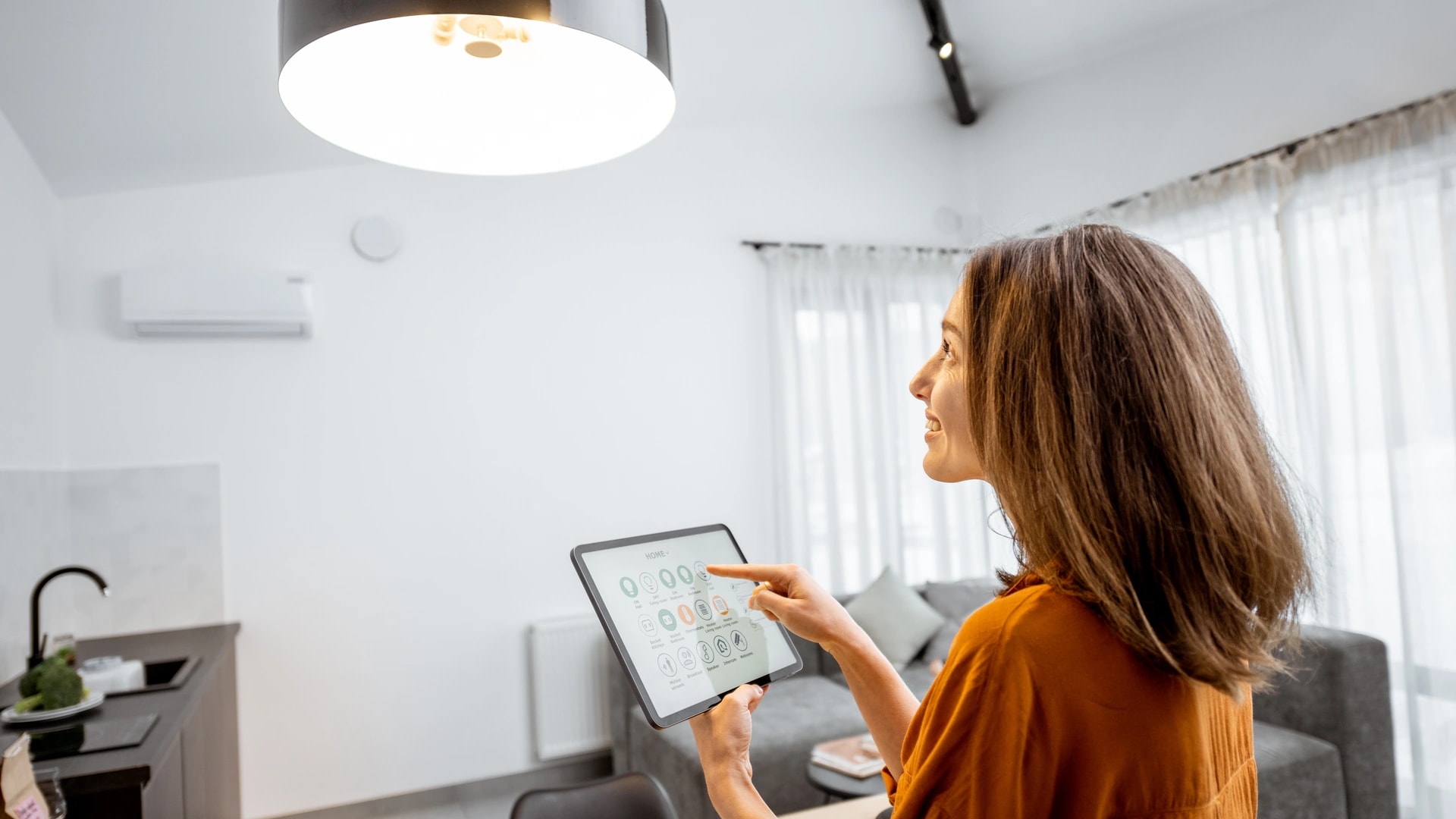
Lighting, AC and curtains together, from one keypad and one app. This is where "seven apps to run my house" hurts most, because the room is used at every hour by everyone.
The Dubai problem. Villa living rooms usually open onto the garden through large sliding glazing. That puts direct summer sun on one side for part of the day, so the AC fights the glass instead of the room.
Automate. One control for lighting scenes, AC and curtains, rather than three systems that share a wall. Shading that closes the garden-facing side past a set time or indoor temperature, paired with an AC setback. Voice control in English and Arabic. Smart blinds and shading save roughly 15 to 20 percent on cooling on their own.
Leave alone. Do not put every downlight on its own dimmer channel. Group by function instead: general, TV watching, reading. Tunable white lighting is real, covered in our circadian lighting guide, but it is a premium add, not a baseline.
Pre-wire or retrofit: this is the most expensive room to retrofit, because of the number of switch points. Route control cable to every switch location and shading power to every window head before the ceiling closes. See our smart lighting guide and smart lighting and climate control.
What should you automate in a Dubai villa kitchen, and what should you leave alone?
Task lighting and water leak protection. Those two earn their cost. Almost everything else marketed for kitchens does not.
The Dubai problem. Villa kitchens carry the most built-in appliances on separate circuits: ovens, induction hobs, extraction, sometimes a second working kitchen. Add daily steam and grease in the air, and anything not rated for it ages fast.
Automate. Under-cabinet task lighting on motion or time of day, so nobody hunts for a switch with full hands. Leak sensors under the sink and behind the dishwasher, wired to an automatic shutoff valve. A cooking mode scene that lifts lighting and quiets nearby audio.
Leave alone. No always-listening microphone above the hob or sink, because heat and steam kill consumer electronics quickly. A wall keypad beats a touchscreen in a wet-hands room. Do not bolt third-party smart plugs onto an oven, hob or fridge: that is a warranty and safety risk we do not recommend.
Pre-wire or retrofit: the shutoff valve sits inline, so plan it before the plumbing closes. Lighting control retrofits well either way, since kitchen circuits are usually reachable above the cabinetry. A separate working kitchen rarely needs the same tier as the main one.
What actually belongs in a smart bedroom, for adults and for kids?
A bedside keypad with two or three scenes, and low-level night lighting to the bathroom. That is the whole list.
The Dubai problem. At 2am nobody opens an app. Bedrooms need control you can reach without waking up. Children's rooms add a second job: holding a steady night temperature through a Dubai summer, where the inside to outside gap can pass 20C.
Automate. A bedside keypad with Night, Morning and Reading, nothing more. Motion-triggered night path lighting to the en-suite, the single most useful automation in any bedroom. AC scheduling that pre-cools before bedtime and sets back overnight instead of one flat setpoint. Blackout shading for anyone on an early prayer schedule or shift hours.
Leave alone. No camera and no smart speaker microphone in a bedroom by default. A nursery monitor is a deliberate choice by the household, not something an installer adds as standard. Do not over-programme children's rooms either. One reliable lights-off routine beats five clever scenes a child will never trigger.
Pre-wire or retrofit: keypad wiring and night-path circuits are cheap at pre-wire stage and awkward once the plaster is finished. The retrofit answer is a wireless keypad plus a battery motion sensor. Shading motors follow the same logic, in our curtains and blinds guide.
Can you automate a bathroom in Dubai's humidity, and how?
Yes, but only with IP-rated devices and only for two jobs: humidity-triggered exhaust and leak detection. Keep everything else out of the room.
The Dubai problem. Humidity is the whole story here. An unmanaged bathroom climbs well past the 60 percent level where mould and electronics corrosion both start. Summer outdoor humidity already sits in the 70 to 90 percent band[1]. Undersized fans, or fans venting into a ceiling void, make it worse.
Automate. Exhaust fan control driven by a humidity sensor reading, not by the light switch. Mirror demisting on a schedule or occupancy trigger. Motion-triggered low-level night lighting. Leak sensors near the shower tray and under the vanity, same as the kitchen.
Leave alone. No voice assistant and no camera in a bathroom, ever. There is no legitimate use case and it is a hard privacy line. Keep hubs and controllers outside the room, and use IP-rated hardware inside the wet zone.
Pre-wire or retrofit: ducted exhaust routing and wired sensor cable belong in the pre-wire stage, before waterproofing and tiling. After tiling, use a battery humidity sensor driving a smart relay on the fan circuit.
What does a smart home office in a villa actually need?
A wired network drop. Not lighting scenes, not a sensor suite. In a villa office, the network is the automation.
The Dubai problem. More villa owners now work from home part of the week, and the office is usually furthest from the network cabinet. Concrete and marble in between mean a single router at the front of the house drops calls at the back.
Automate. A wired Cat 6A drop to the desk where possible, backed by an access point in or near the room. Glare-aware lighting and shading for video calls: soft indirect light rather than one bright downlight or a backlit window. A focus mode scene that sends the doorbell to your phone instead of ringing the house.
Leave alone. Do not give the office its own scene and sensor package. It is a work room, and extra lighting zones add cost without adding function. Do not rely on Wi-Fi alone for a call-dependent office.
Pre-wire or retrofit: structured cabling is far cheaper before the walls close. In a finished villa, a wired backhaul node is the substitute. Our villa Wi-Fi guide covers coverage planning, and home networking and IT covers scope.
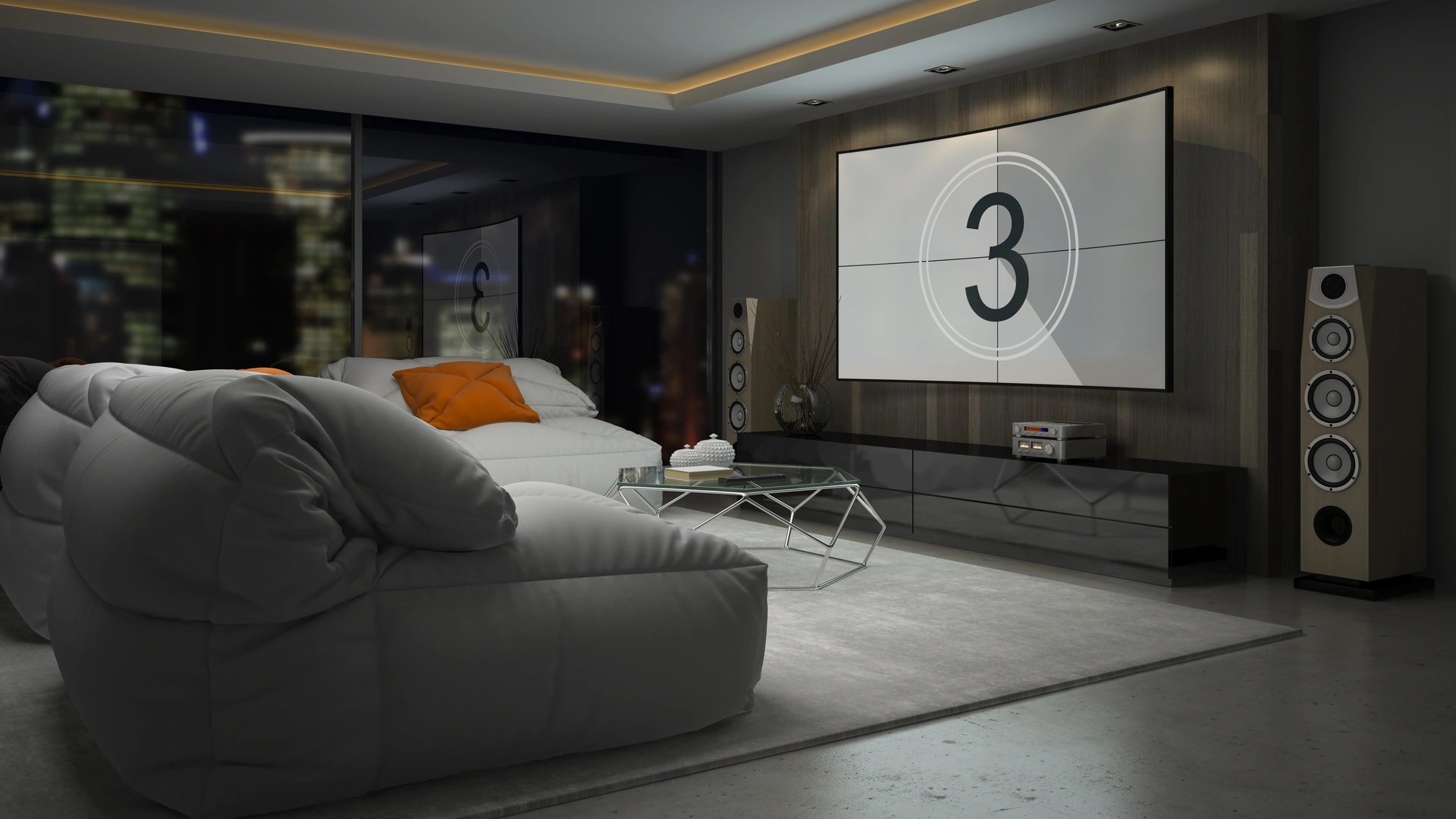
Why does a home cinema room need different automation from a media corner?
Because it is sealed, dark and full of equipment, so it needs its own AC zone and one scene that runs the whole room. A media corner needs neither.
The Dubai problem. A cinema has to be light-sealed and acoustically isolated, which fights a Dubai villa's bias toward large glazing and open plan space. A sealed, occupied, equipment-heavy room also heats faster than its neighbours.
Automate. One movie button handling the projector or TV, the receiver input, the lighting dim and the blackout shading. A dedicated AC zone with its own setpoint, sized for equipment heat plus a full room of people.
Leave alone. Acoustic isolation is a construction decision, not an automation one. Do not skip the dedicated AC zone to save money. A cinema sharing a zone with the room next door is the complaint we hear most often.
Three figures cover cost. A media room in an existing space runs AED 25,000 to 45,000. A dedicated cinema room runs AED 90,000 to 220,000, and a reference build starts from AED 250,000. Most of that gap is room construction, not electronics. Tiering is in our home cinema cost guide, control choice in our Control4, Crestron and Savant comparison.
Pre-wire or retrofit: speaker runs, projector power and data, and blackout motor power all go in before the ceiling and walls close. This is where the pre-wire decision changes cost most sharply. See home cinema.
How should you automate a maid's or driver's room the right way?
With access control, not comfort features, and with no camera inside the room. This room has an access problem, not a lifestyle problem.
The Dubai problem. A live-in helper needs daytime house access. A driver usually needs the gate and garage only. The room typically sits on the ground floor with its own bathroom and often its own entrance. Under UAE labour rules the worker keeps her own passport, gets daily rest and a weekly day off.
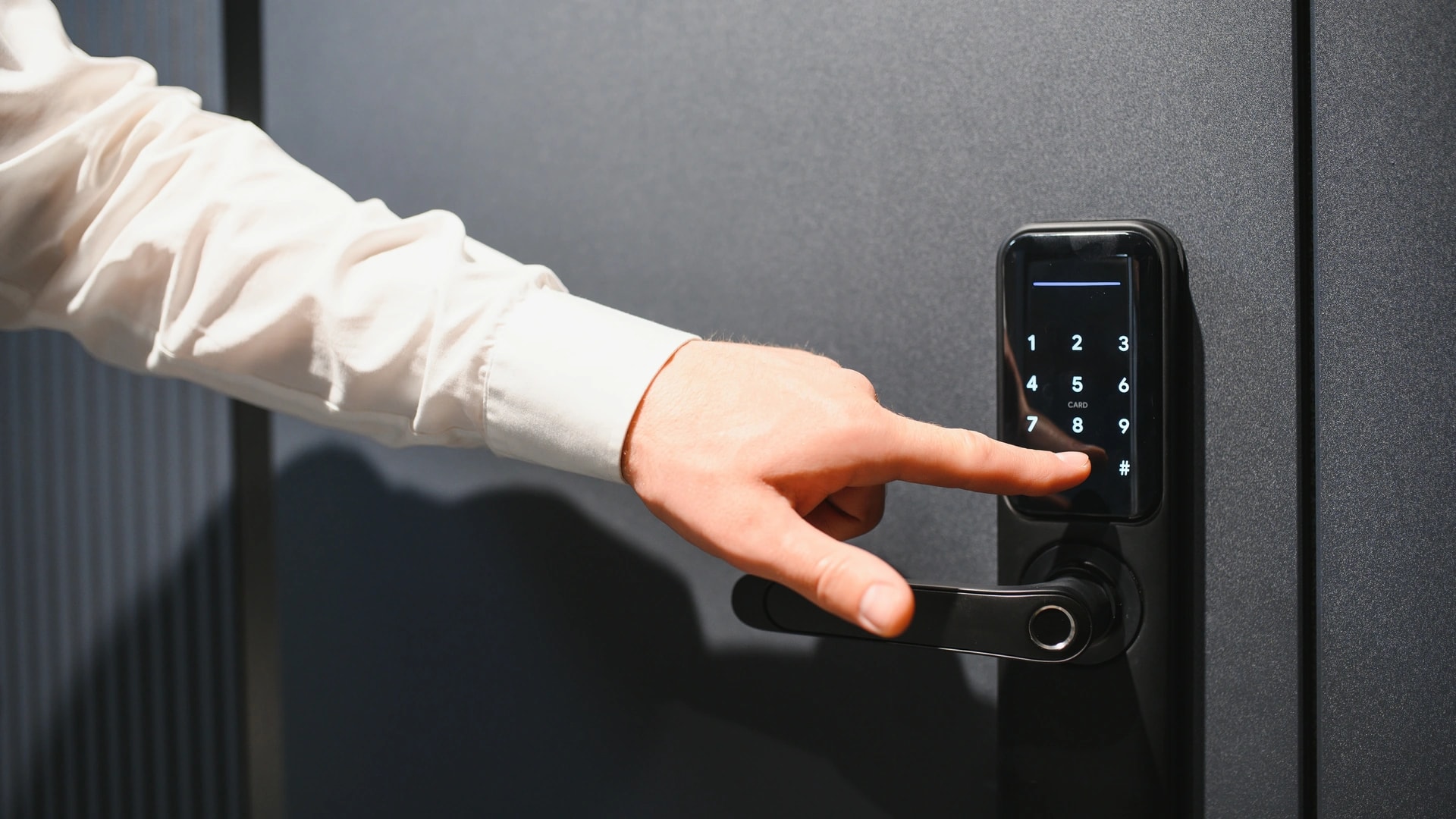
Automate. A scheduled access code tied to the individual, not the role, so access ends the day employment ends without rekeying the house. Independent AC and lighting for the room, so it is not running on the family's schedule while empty. A working lock, working AC and a working light are the requirement.
Leave alone. No camera inside the room. This is a privacy line, not a judgment call[3]. No shared PIN for all staff either, because per-person accountability is the point of smart access here. No scenes, no voice control.
Pre-wire or retrofit: access wiring for a separate staff entrance is easier before construction closes. Locks themselves retrofit well at any stage on standard mortise and cylinder doors. The full role by role matrix is in our domestic staff access guide, with hardware in our smart locks guide.
Want the access side mapped for your own household? Book a free site visit and quote →
What survives Dubai's heat and dust in the garden and pool?
IP-rated hardware, and nothing else. Outdoors, survivability decides the shortlist before features do.
The Dubai problem. Everything out here sits in full sun, heat and dust, with the occasional Shamal sandstorm on top. An uncovered pool also gains heat fast in summer and loses it fast on winter nights.
Automate. Irrigation on a moisture sensor rather than a fixed timer that waters an already-soaked bed. Pool pump, filtration and any heating or chilling on a schedule tied to real use. Garden and pool lighting on sunrise and sunset timing, not a fixed clock that drifts across the year. A sandstorm scene that retracts shading and pauses irrigation, covered in our sandstorm guide.
Leave alone. No indoor-rated consumer gear outdoors. This is where cheap hardware fails first and most visibly. No automated pool chemical dosing without a qualified technician, because water chemistry is not a DIY smart home task.
Pre-wire or retrofit: irrigation and pool control belong in the pool and garden build, before hardscaping is poured. In a finished garden, expect wireless control at the pump and valve. Outdoor work is priced per zone; see our outdoor automation guide and pool and outdoor automation.
What does a smart gate and garage setup need in a Dubai villa?
A video intercom with a snapshot log, and per-person access instead of one shared remote. This is the villa's real security boundary, and it is used by people who are not you.
The Dubai problem. The gate has to answer one question: who is this. Drivers, staff and deliveries all arrive here, often when nobody is home. A shared remote passed around cannot answer it, and cannot be revoked.
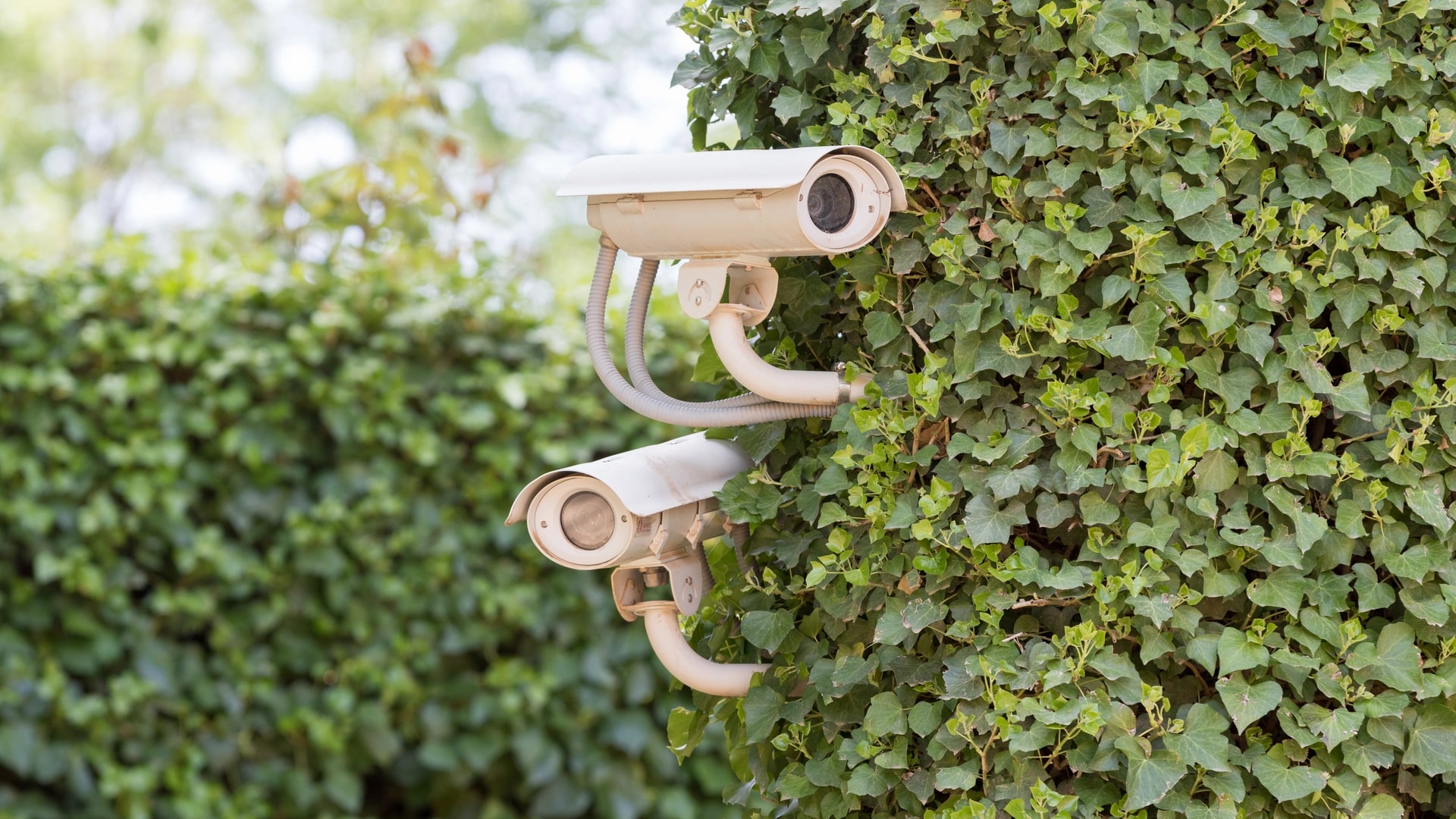
Automate. Video intercom at the pedestrian and vehicle gate, with a snapshot of every visitor. Gate and garage operation tied to a vehicle tag, a phone or a scheduled staff code rather than one shared remote. Motion-triggered lighting on the approach. If you add cameras, SIRA guidance in Dubai is 1080p Full HD minimum with around 31 days of retention[5]. Point them at your own property. Our SIRA CCTV guide covers home use.
Leave alone. Do not fit a battery lock or keypad in unshaded summer sun without checking its rated operating temperature. Dubai peaks pass the ceiling of some consumer hardware, and the gate is the worst place to fail. Keep the mechanical key override: full automation with no manual fallback is a lockout waiting for a power cut.
Pre-wire or retrofit: gate motor and intercom cabling are best run at build stage. Gate automation is still one of the friendlier retrofits, since most kits bolt onto existing motors. See our camera guide and smart gate and access control.
Why does the plant room matter more than any room you can see?
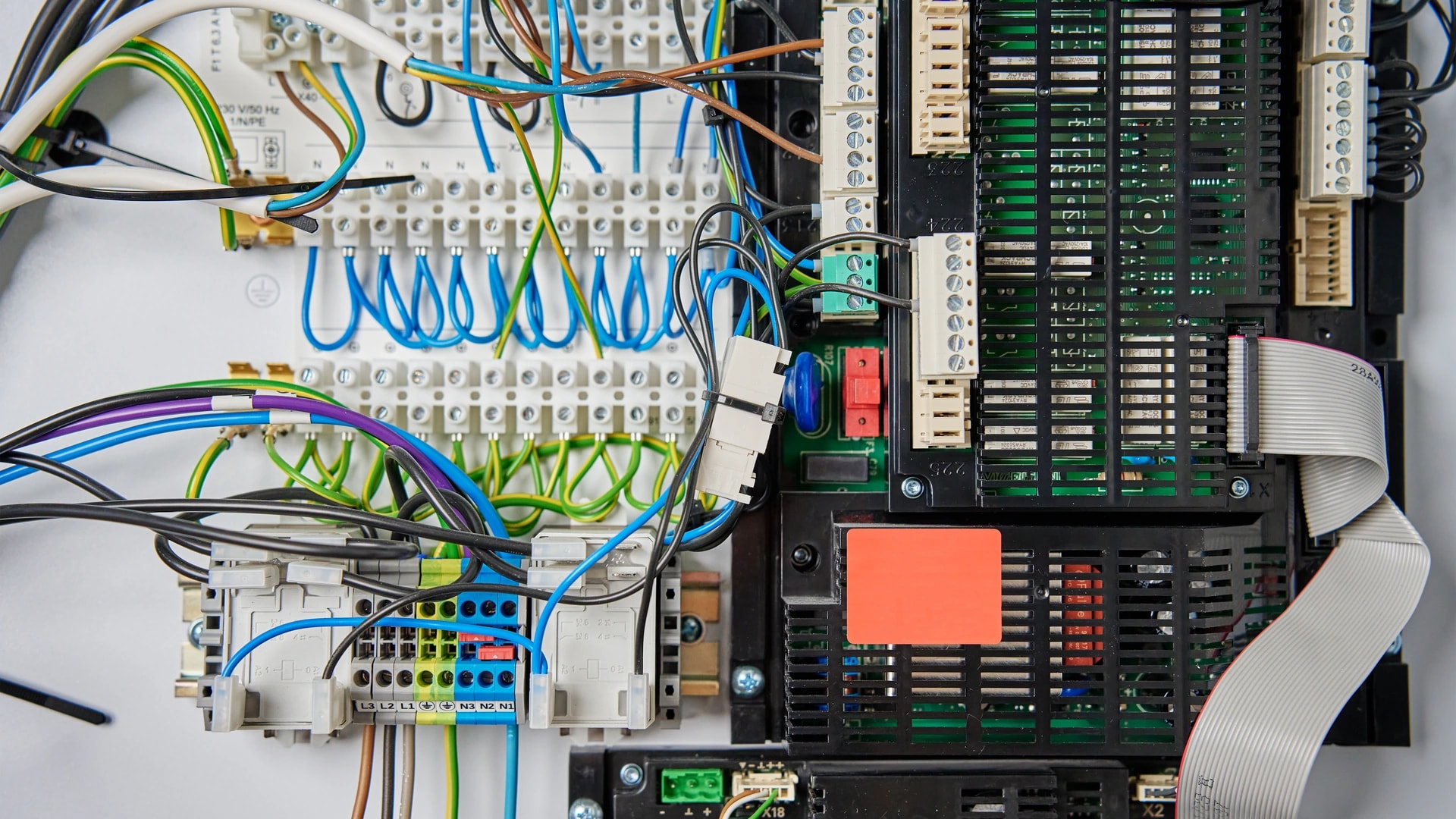
Because every other room's automation runs through it. The plant room holds the distribution board, the network rack and often the pool plant.
The Dubai problem. A network rack in a hot, unventilated utility room is a slow oven. Heat is the top cause of early hardware failure, and it shows up as dropped Wi-Fi in the office, not as a plant room fault. Larger villas also commonly run a three-phase supply to carry multiple AC zones and heavy appliances.
Automate. Temperature monitoring on the rack itself, plus humidity if the room is not separately cooled. A labelled UPS on the rack and any critical controller, so a short DEWA outage does not take the house offline.
Leave alone. Do not treat this as a storage cupboard, and do not skip ventilation to save floor space. Do not load the rack, pool plant and utility power onto one phase without a load calculation from a DEWA-approved electrician. Phase imbalance in a badly planned villa board is a real problem.
Pre-wire or retrofit: rack location and cable plan are among the first decisions to make with a developer or MEP contractor. Al Sa'fat, Dubai Municipality's green building system, sets energy and ventilation rules for new buildings[6]. Ask your MEP contractor whether it affects your utility room. Sequencing is in our pre-wiring guide.
Which rooms need wired control, and which are fine wireless?
Wired control suits rooms with heavy daily switch use. Wireless suits rooms you cannot open up, or rooms exposed to weather.
Two terms in plain English. KNX and Lutron are wired: control runs on cable, works without the internet, and lasts as long as the villa's own wiring. Zigbee and battery devices are wireless: no drilling, batteries that last years, and a far easier install in a finished house.
Most Dubai villas end up mixed, and that is not a compromise.
| Room | Wired control fits when | Wireless control fits when |
|---|---|---|
| Entrance and majlis | Still at drawing stage | Walls cannot be chased |
| Living room | Almost always, switch density is highest here | Handed-over villa with no cable route |
| Kitchen | Planned before the plumbing closes | Task lighting and leak sensors after handover |
| Bedrooms | Keypads and night-path circuits in the drawing | Retrofit keypad plus battery motion sensor |
| Bathrooms | Before waterproofing and tiling only | Already tiled, using IP-rated sensors |
| Home office | Always for the network drop | Lighting and shading only, never the network |
| Home cinema | Always, speaker and projector runs stay hidden | A media corner in an existing room |
| Maid's or driver's room | Staff entrance planned before construction | Most cases, smart locks fit standard doors |
| Garden and pool | Wired during the pool and garden build | Finished garden, using IP-rated outdoor devices |
| Garage and gate | Cable run at build stage | Retrofit kits on an existing gate motor |
| Plant room | Always, the cable plan starts here | Add-on temperature and humidity monitoring |
What does starting with one room cost, and in what order should you do them?
A single room runs AED 2,000 to 5,000 installed, usually in a day. Villa essentials across the house start from AED 30,000. A fully wired villa runs AED 150,000 to 250,000 or more, over 5 to 14 days[7].
Below is the starter scope we quote most often per room, not the ceiling. Each can grow later without being rebuilt.
| Room | Typical starter scope | Installed price | Pre-wire priority |
|---|---|---|---|
| Garage and gate | Video intercom, per-person access, lighting | Gate and access from AED 4,500 | Medium, retrofits well |
| Entrance and majlis | Guest scene, own AC and lighting zone | Lighting and climate from AED 4,500 | High |
| Living room | Grouped lighting, AC, shading, one app | AED 2,000 to 5,000 starter | Highest, most switch points |
| Kitchen | Task lighting, leak sensors, shutoff valve | AED 2,000 to 5,000 | High for the shutoff valve |
| Bedrooms | Bedside keypad, night light, AC schedule | AED 2,000 to 5,000 per room | High |
| Bathrooms | Humidity-driven exhaust, leak sensors | AED 2,000 to 5,000 | High, before tiling |
| Maid's or driver's room | Scheduled per-person code, own AC and light | Gate and access from AED 4,500 | Low, retrofits well |
| Home office | Wired drop, access point, glare control | Priced per cable run and access point | High for cabling |
| Home cinema | One-button scene, AC zone, blackout shading | Media room AED 25,000 to 45,000 | Highest, hidden runs |
| Garden and pool | Irrigation, pool schedule, outdoor lighting | Priced per zone | High, before hardscaping |
| Plant room | Rack monitoring, UPS, labelled load plan | Priced with the network scope | Highest, decided first |

The order that works. Start at the gate and entrance, because access and security touch every other system. Then the living room and kitchen, used every day. Then bedrooms and bathrooms, where comfort and water damage both live. Cinema and office serve one use each. Garden and plant room close it out.
One exception: if the villa is still being built, the plant room and cable plan come first. This is a room order for planning attention, not a spending plan. For the full phased budget version, read our villa owner's roadmap, and our smart home cost guide for pricing by home size.
Want a real number for your own villa? Get a fixed-price quote →
What mistakes do Dubai villa owners make going room by room, and how do we handle it?
Five mistakes come up again and again, and four are decided before a single device is bought.
| Mistake | Why it happens | The fix |
|---|---|---|
| Skipping the plant room | Nobody sees it, so nobody budgets for it | Decide rack location and ventilation first |
| A camera in the staff room | Treated as part of the house security package | Cameras cover shared and outdoor areas only |
| No AC zone for the cinema | Cut late to save on the MEP drawing | Give the room its own thermostat and setpoint |
| Wireless in a villa that could be pre-wired | Decided after handover, when the choice is gone | Pre-wire while you still can, at 60 to 70 percent less |
| One shared gate remote | Cheapest option at the time, passed around | Per-person codes or tags you can revoke |
A villa paying AED 4,000 a month to DEWA in summer saves AED 800 to 1,200 once smart AC and lighting control are in. That is a 20 to 30 percent cut in cooling.
How we help. Dubai Smart Home has run 100+ projects since 2016, with in-house engineers in Dubai and no subcontracting. We survey the villa room by room before quoting, so you see what each room costs. Support runs 24 hours a day, systems work in English and Arabic, and enquiries are answered within 2 hours[7].
Read our DIY versus professional guide and our common mistakes guide next. New to all of this? Start with our Dubai smart home guide.
Ready to map your villa? Book a room by room site visit → or message us on WhatsApp →